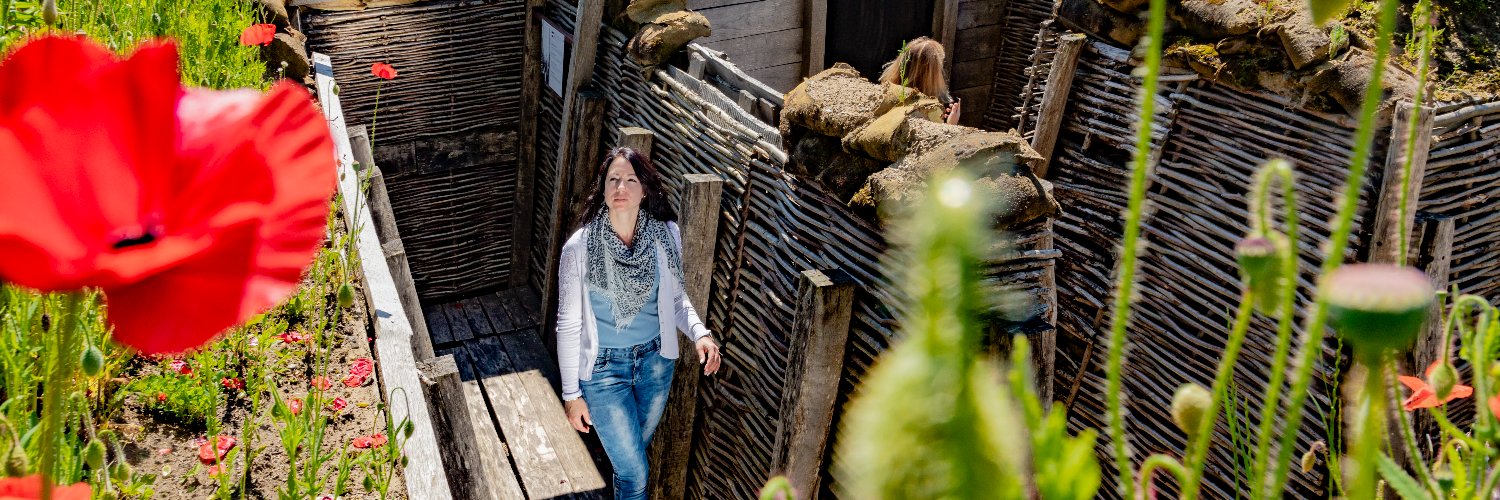
Walk through the Gasthuisbossen along the path beside the Kranenburgstraat and you'll come across an almost hidden monument: a wooden cross with a bronze plaque commemorating Edgar Robbert Mobbs. On 31 July 1917 he was killed in action, near the spot where his cross stands today.
Arguably the most amazing moment of the trip was when one of the pupils chosen to lay the school wreath at the Menin Gate discovered at @MMP1917 that their Great-Great-Uncle in the East Lancashire Regiment was killed on the first day of the battle of Passchendaele.
Today, we highlight this original two-colour, signed lithograph based on the original watercolour by Albert Reich. The lithograph depicts the capture of the Kemmelberg by the German Alpine Corps on the morning of 25 April 1918. (MZ 09805)
This original engraving of the Princess Patricia’s Canadian Light Infantry depicts their action on the Frezenberg on 8 May 1915. The English painter, William Barnes Wollen (Leipzig, 1857–London, 1936), was known for his paintings of historical and military scenes. (MZ 00760)
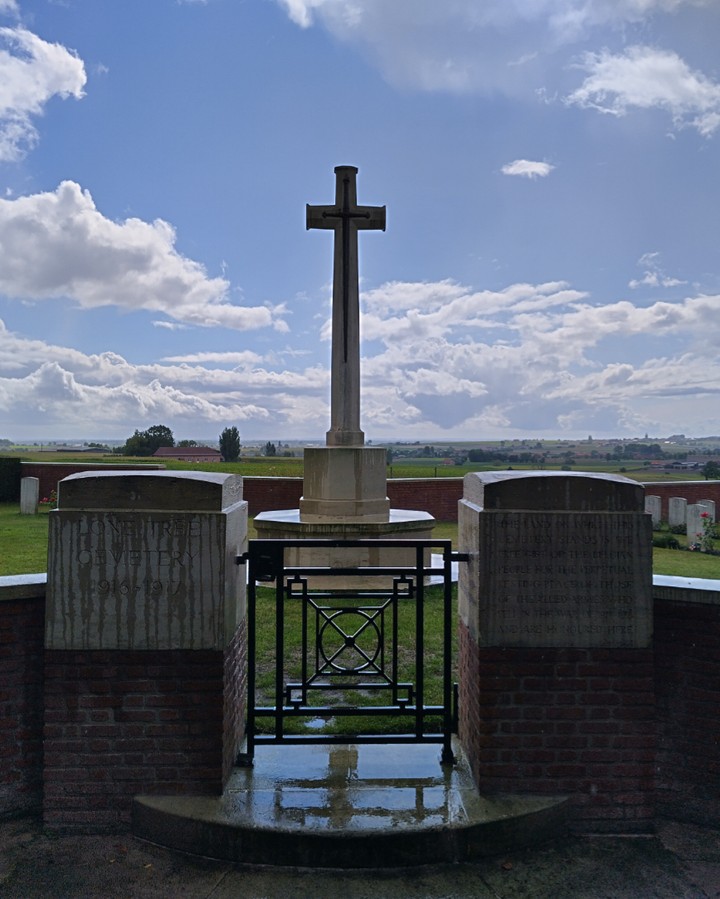
Right next to Pool of Peace (Spanbroekmolen Crater) lies a place that often goes unnoticed.
Lone Tree Cemetery contains 88 graves, 9 of which are unidentified. All the casualties fell in 1917.
This cracked cast iron clock, a German gas alarm clock, was found at Polderhoek Chateau (Passchendaele Museum, MZ 03109). You can discover this gas alarm clock in the immersive experience 'Passchendaele 1917' in the Passchendaele Museum.
In this renovated room, you'll discover how the Battle of Passchendaele reduced the green environment to a muddy moonscape. The armies experimented with new tactics and weapons.
Behind a farmhouse on Savaardlindestraat in Kemmel lies Irish House Cemetery. This cemetery was established in June 1917 by the 16th (Irish) Division but actually takes its name from the nearby farmhouse. By September 1918, 117 soldiers had been buried here.
During the Great War, prayer cards were printed for Catholic soldiers who had been killed. Their biographical content offers a glimpse into their prewar life. Furthermore, prayer cards often feature a photograph, giving the victim a face once again.
Did you know that German soldiers and civilians wrote mainly in Kurrent script well into the 20th century? Here's a page from the notebook of Ludwig Wittmann, who was wounded on 4 October 1917 and taken prisoner. 🔍 Can you decipher this handwriting?
On 20 December 1917, the 31-year-old William Raby Walker lost his life. He served as a Serjeant in the 12th (Nelson) Company, 2nd Battalion Canterbury Regiment. The Passchendaele Museum preserves a portrait photograph and the pocket watch of William Raby Walker.
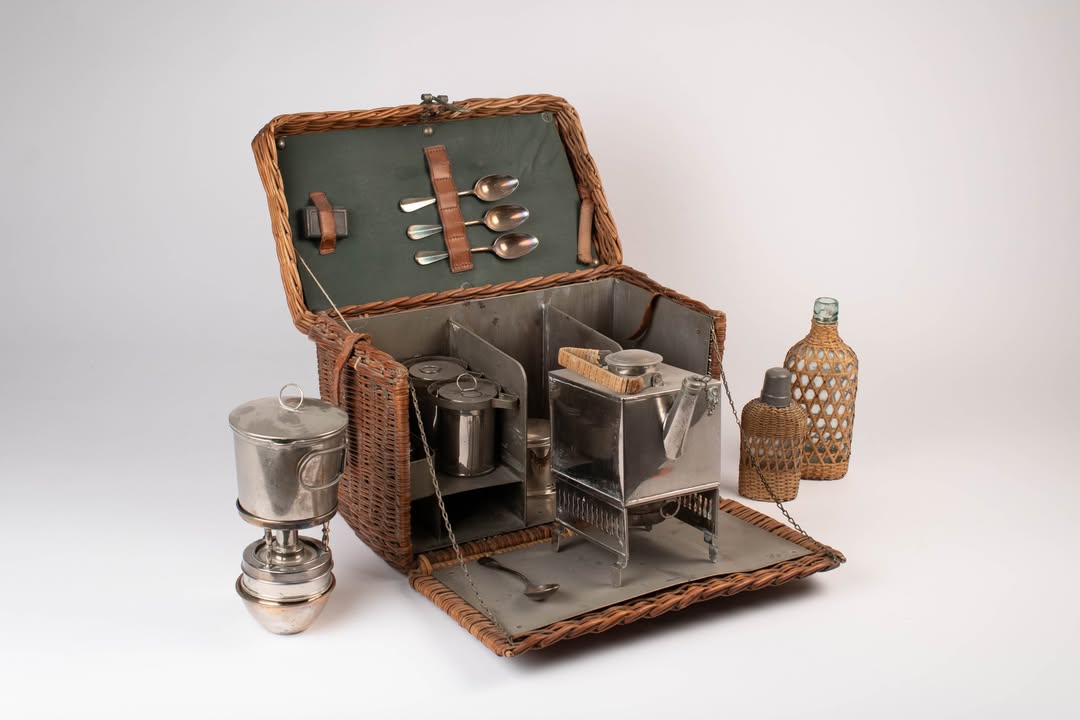
When war broke out, almost everyone was convinced that the fighting would last only a few months. ‘Home before Christmas’ was a rallying cry often heard. That feeling was reflected in this British tea set for officers. Sadly, the reality was very different. (MZ 01035)
Would you like to learn more about the Battle of Passchendaele? Dive into our new digi-expo "Dans les Flandres", where we take a closer look at the French operations in the region.
➡️ Visit the expo: https://t.co/qkZaG36C6s
The Pou Maumahara – Pohutokawa is an eight-metre-high and six-tonne Maori monument honouring New Zealand Maori from WWI. You find the monument in the chateau grounds in Zonnebeke, at walking distance from the museum.
Artillery had a crucial part to play in the Battle of Passchendaele. Massive preparatory bombardments did not succeed in destroying all German positions. The shelling did destroy the landscape, however, including the drainage systems.