Aquest cap de setmana, recorda les regles bàsiques de l'ABC de la calor:
🪭 𝗔ire: En espais exteriors ves per l'ombra i busca refugis climàtics.
💧 𝗕eure: Hidrata't sovint, fins i tot sense tenir set.
🏡 𝐂asa: Tanca persianes de dia i obre finestres de nit.
🔗 Consulta els consell per combatre-la: https://t.co/CJY8xJQHkB
@salutcat
Focused ultrasound application through the abdominal wall targets the subdiaphragmatic branches of the vagus nerve to modulate systemic immune responses. This modality engages the cholinergic anti-inflammatory pathway at the level of the visceral organs, bypassing the need for electrical stimulation of the cervical trunk. By delivering localized acoustic energy to these nerve branches, the intervention triggers a signaling cascade that regulates immune cell activity within the spleen and intestines. This anatomical targeting allows for the precise modulation of neuro-immune axes often inaccessible through standard pharmaceutical interventions.
The physiological impact is quantified by the reduction of circulating pro-inflammatory cytokines, specifically tumor necrosis factor-alpha and interleukin-6. This approach suppresses cytokine production directly within the visceral tissues where systemic inflammation originates, rather than relying on signals routed from the neck. This localized suppression interrupts the drivers of chronic inflammation, providing a molecular basis for therapeutic efficacy reflected in altered blood serum profiles. The resulting shift in the cytokine environment demonstrates a transition toward homeostasis, silencing the signaling pathways that characterize chronic disease states.
Clinical applications for subdiaphragmatic stimulation extend to inflammatory bowel disease, metabolic disorders, and autoimmune pathologies. This route provides a distinct physiological reach compared to cervical-only stimulation, as it avoids off-target activations associated with higher-level vagal modulation. Because the energy is focused on distal branches near the spleen and intestines, it addresses the local environment of the gut-brain axis directly. These sessions offer a repeatable method for maintaining immunological balance without the complications of implanted hardware or sustained pharmaceutical suppression.
https://t.co/71fuulCj7U
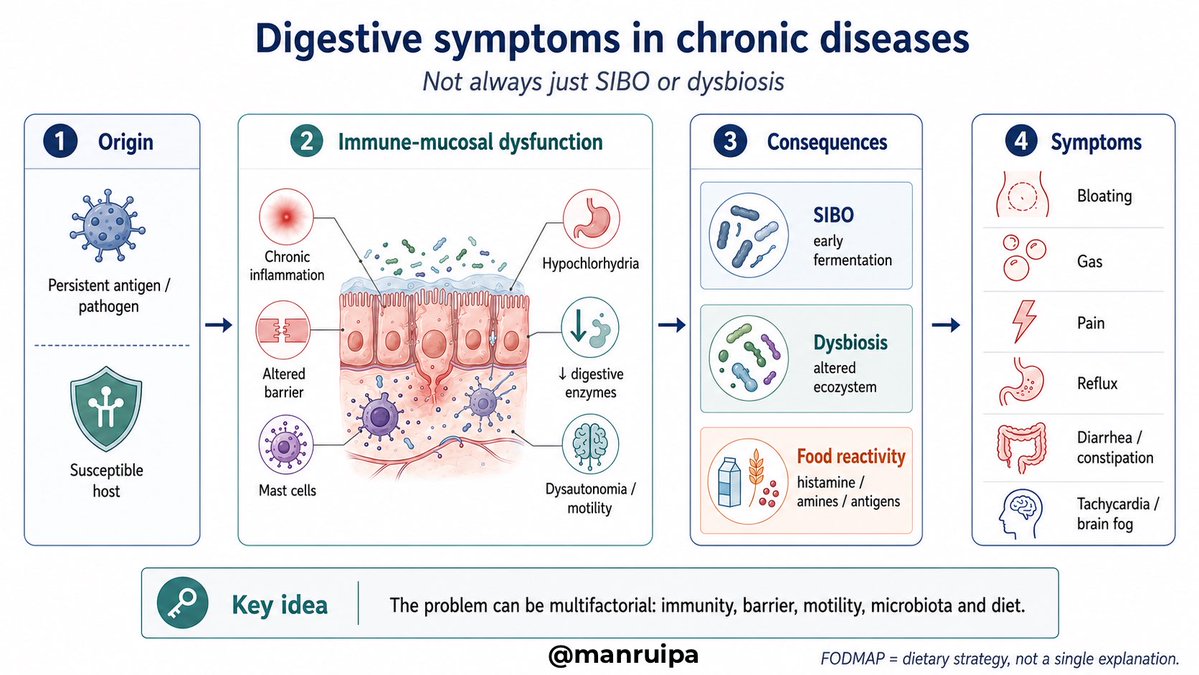
🔴⁉️Why do you keep getting SIBO or dysbiosis again and again?
Why does it feel like nothing sits well anymore?
Maybe the problem is not only what you eat.
Maybe the problem is what is happening in your gut barrier, immune system, mast cells, motility and microbiota.
Read this.👇🏻
Gut symptoms in chronic illness are not always “just SIBO” or “just dysbiosis”.
Low FODMAP is a dietary strategy.
Sometimes it helps because it reduces fermentable substrates for bacteria.
But it does not explain every food reaction.
And it does not necessarily fix the root mechanism.
This distinction matters a lot in Long COVID, ME/CFS, autoimmune diseases and other chronic inflammatory conditions.
Many patients are told:
“You have bloating because of SIBO.”
“You have dysbiosis.”
“Just try low FODMAP.”
But the gut is usually more complex than that.
SIBO means small intestinal bacterial overgrowth.
In simple terms: too many bacteria are present in the small intestine, where they should not be in high numbers.
Then carbohydrates can ferment too early.
That can cause:
gas, bloating, pain, diarrhea, constipation, reflux, pressure, motility changes.
Dysbiosis means an altered microbial ecosystem.
More of some microbes.
Less of others.
Different metabolites.
Different immune signals.
SIBO and dysbiosis are real.
But they are not always the first event.
One mistake is assuming:
“we found dysbiosis in autoimmune disease, therefore dysbiosis caused the disease.”
Sometimes it may contribute.
But very often, dysbiosis may be a consequence of a changed immune-mucosal environment.
If the immune system is chronically activated, the gut barrier changes.
If the mucosa is inflamed, the microbial environment changes.
If motility is altered, bacteria grow differently.
If stomach acid is low, more microbes survive.
If digestive enzymes are reduced, more food reaches bacteria undigested.
So the order is not always:
dysbiosis → disease.
Sometimes it is:
persistent antigen or pathogen
→ genetically susceptible host
→ chronic immune activation
→ mucosal inflammation
→ barrier dysfunction
→ altered motility and digestion
→ dysbiosis / SIBO
→ more fermentation
→ more inflammation.
This is especially relevant in Long COVID, ME/CFS and some autoimmune or post-infectious conditions.
The trigger may be viral persistence, herpesvirus reactivation, enteroviruses, intracellular pathogens, bacterial antigens or another chronic immune stimulus.
The host matters too.
(1/9)🧵
Per fer entrenaments esportius a casa d'intensitat #HIIT, sortir a córrer o a passejar, acompanyats d'instructors i música en #català! Fem l'esporta accessible per a tothom! Gràcies @gencat#fosbury
https://t.co/USMVA55Kj9
🫀Los ultraprocesados no solo aportan exceso de azúcar, sodio y grasas.
La evidencia reciente los relaciona con:
✔ inflamación crónica
✔ disbiosis intestinal
✔ estrés oxidativo
✔ mayor riesgo cardiovascular y metabólico
Cada +10% de consumo ↑ el riesgo cardiovascular.
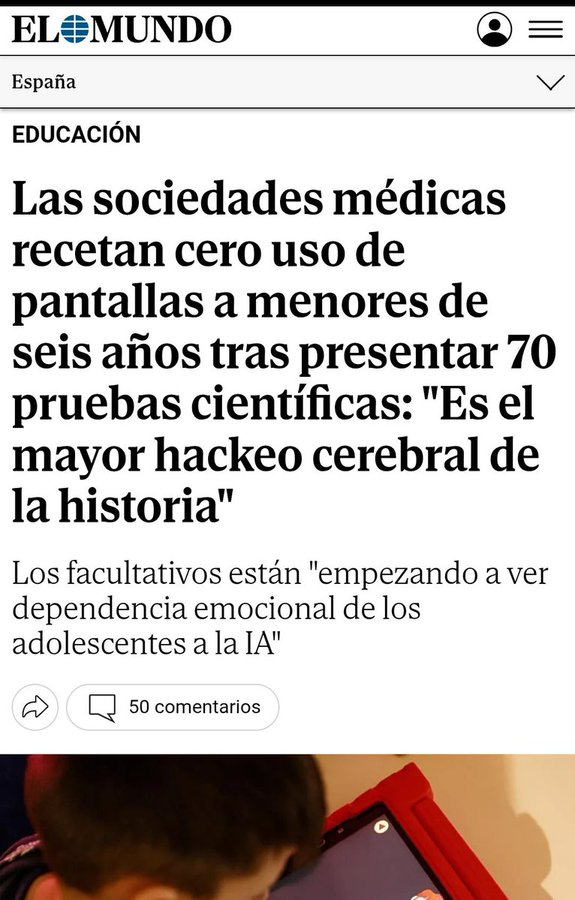
Es el mayor hackeo cerebral de la historia dónde es imposible autorregularse
Las sociedades científicas recomiendan exposición cero a las pantallas a los menores de seis años
Y para el resto de preadolescentes y adolescentes límites estrictos (1-2h.) https://t.co/CmR6pngxcF
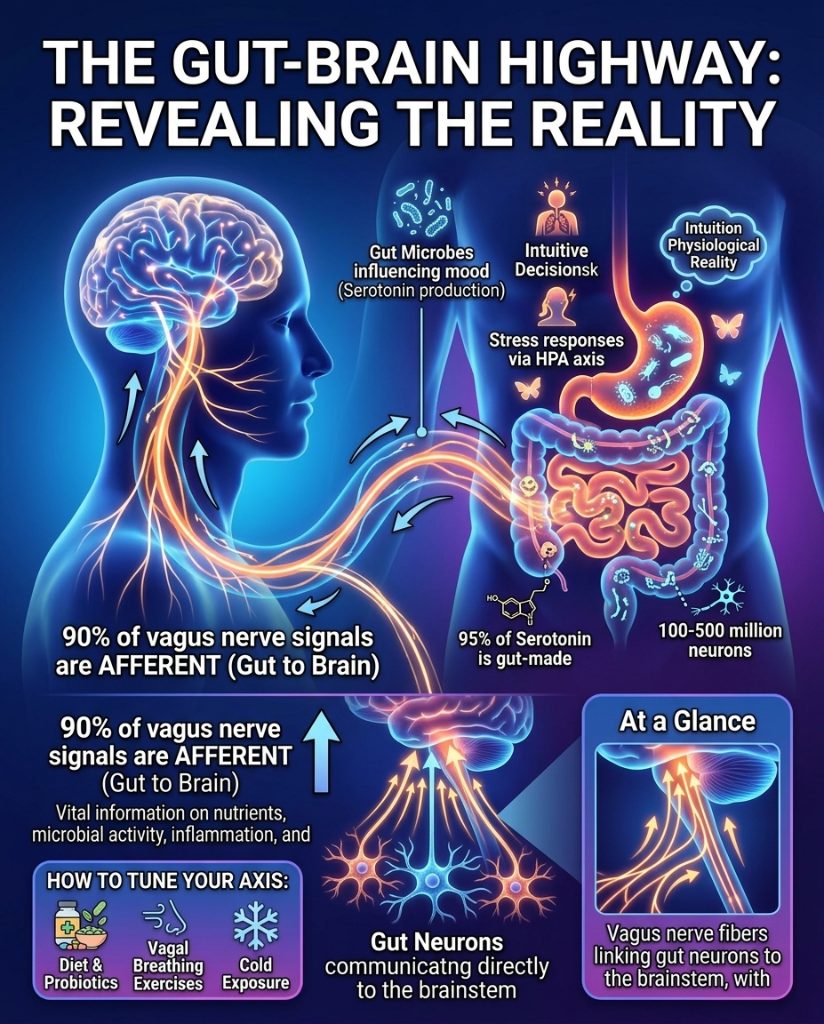
Ninety percent of the neural traffic between your gut and your brain is a one-way street moving upward.
The vagus nerve serves as a biological superhighway where afferent fibers outnumber efferent ones nine to one. This means your brain is primarily a receiver of gastrointestinal data, not just a sender of commands.
Your enteric nervous system contains over 100 million neurons, surpassing the neural density of the spinal cord. This "second brain" monitors microbial metabolites, inflammation markers, and hormonal shifts in real-time.
Approximately 95 percent of the body's serotonin is synthesized in the gut. When this axis is disrupted, the resulting neurochemical imbalance manifests as cognitive fog, clinical anxiety, or impaired decision-making.
Optimizing this pathway through vagal tone exercises, cold exposure, and targeted nutrition is a physiological necessity for mental resilience.
https://t.co/GUq4Uw9qwn
The vagus nerve functions as the primary conduit of the parasympathetic nervous system, serving as a bi-directional highway between the brainstem and the gastrointestinal tract.
With advancing age, vagal tone naturally declines. This physiological degradation often precipitates gut dysbiosis, marked by a significant reduction in essential microbial populations.
Of specific concern is the depletion of Akkermansia muciniphila. This mucin-degrading bacterium is critical for maintaining the gut barrier and mitigating systemic inflammation.
Low concentrations of Akkermansia are correlated with metabolic dysfunction, neurodegeneration, and accelerated biological aging.
Targeted vagal stimulation—through diaphragmatic breathing, cold thermogenesis, or gargling—can recalibrate the microbial landscape.
Increased vagal signaling fosters an environment conducive to Akkermansia proliferation and increased microbial diversity.
Prioritizing vagal health is a clinical necessity for longevity. It is a proactive strategy to restore immune resilience and metabolic stability.
https://t.co/TCcQM9dlVX
The vagus nerve serves as the primary bidirectional conduit between the enteric nervous system and the brain.
Emerging research indicates that Alzheimer’s progression may be fundamentally linked to the state of the gut microbiome.
Microbial dysbiosis generates systemic inflammatory signals that exploit this vagal highway to bypass the blood-brain barrier.
This chronic neuroinflammation destabilizes neuronal integrity, accelerating the deposition of amyloid-beta plaques and tau protein tangles.
Therapeutic interventions now focus on modulating this axis. Vagus nerve stimulation and targeted probiotics aim to restore homeostasis and enhance neuronal resilience.
With over 50 million individuals affected worldwide, leveraging the gut-brain connection represents a critical shift from symptom management to root-cause prevention.
https://t.co/L6OJRB4GiT
Micro- and Nanoplastics Exposure Across the Lifespan: One Health Implications for Aging and Longevity
⚠️ MNPs activate biological pathways central to aging, including oxidative stress, mitochondrial dysfunction, chronic inflammation, & impaired intercellular communication.
▶️ Aging can increase vulnerability through decreased barrier integrity, immune surveillance, & elimination capacity, positioning MNPs as potential modifiers of biological aging.
https://t.co/t18icMOeie @HealthyFellow
Conceptual framework linking environmental micro- and nanoplastic exposure to aging-related biological effects within a One Health perspective. Micro- and nanoplastics originate from environmental reservoirs such as marine systems, soils, and the food chain, leading to chronic human exposure primarily through ingestion and inhalation. After entering the body, these particles may distribute systemically and accumulate in multiple organs, including the brain, lungs, liver, and gastrointestinal tract. Experimental evidence indicates that MNP exposure can trigger cellular mechanisms associated with aging biology, including oxidative stress, mitochondrial dysfunction, chronic inflammation, immune dysregulation, and cellular senescence. These processes may contribute to functional decline across multiple physiological systems. Age-related factors such as cumulative exposure, reduced detoxification capacity, and immunosenescence may further increase vulnerability in older populations
Long COVID research is moving toward a clearer picture: this may not be one illness with one cause. It may be several overlapping problems involving the immune system, blood vessels, nerves, clotting, muscles, sleep, and viral remnants.
3 ways to increase your GLP-1 naturally:
1. Eat your food in the right order: veggies first, then protein and fats, and carbs last, which can increase GLP-1 production and help you feel fuller
2. Chew your food more, as this helps your body produce more GLP-1 naturally
3. Add lemon or vinegar to your meals
These simple habits can help reduce cravings and support your glucose levels! Save this if you need it
III JORNADA DE ACTUALIZACION EN SALUD Y #MEDICINAMBIENTAL. 📍14 de mayo 2026. Formato virtual. Acreditada por el CCFCPS. Inscripciones https://t.co/QrAOD9UoB7
Más información en nuestra https://t.co/BdN14X3O7a
Llibre: LA SALUD EN MIS MANOS. autor: M.Carmen Ruiz
Avui firmarà llibres a Sabadell plaça de l'ajuntament, de 18 a 20 hores.
Feliç diada de Sant Jordi! 🐲🌹
🔬📚 Revisión “state of the art” en enfermedad inflamatoria intestinal (EII)
(BMJ, diciembre 2025)
Un repaso actualizado y práctico sobre los aspectos clave de la EII:
1️⃣ Fisiopatología y nuevas dianas terapéuticas
2️⃣ Manifestaciones extraintestinales
3️⃣ Manejo de la colitis ulcerosa aguda grave
4️⃣ Enfermedad de Crohn postquirúrgica
Imprescindible para estar al día en el abordaje integral de la EII.
https://t.co/GubtZcSu5Q