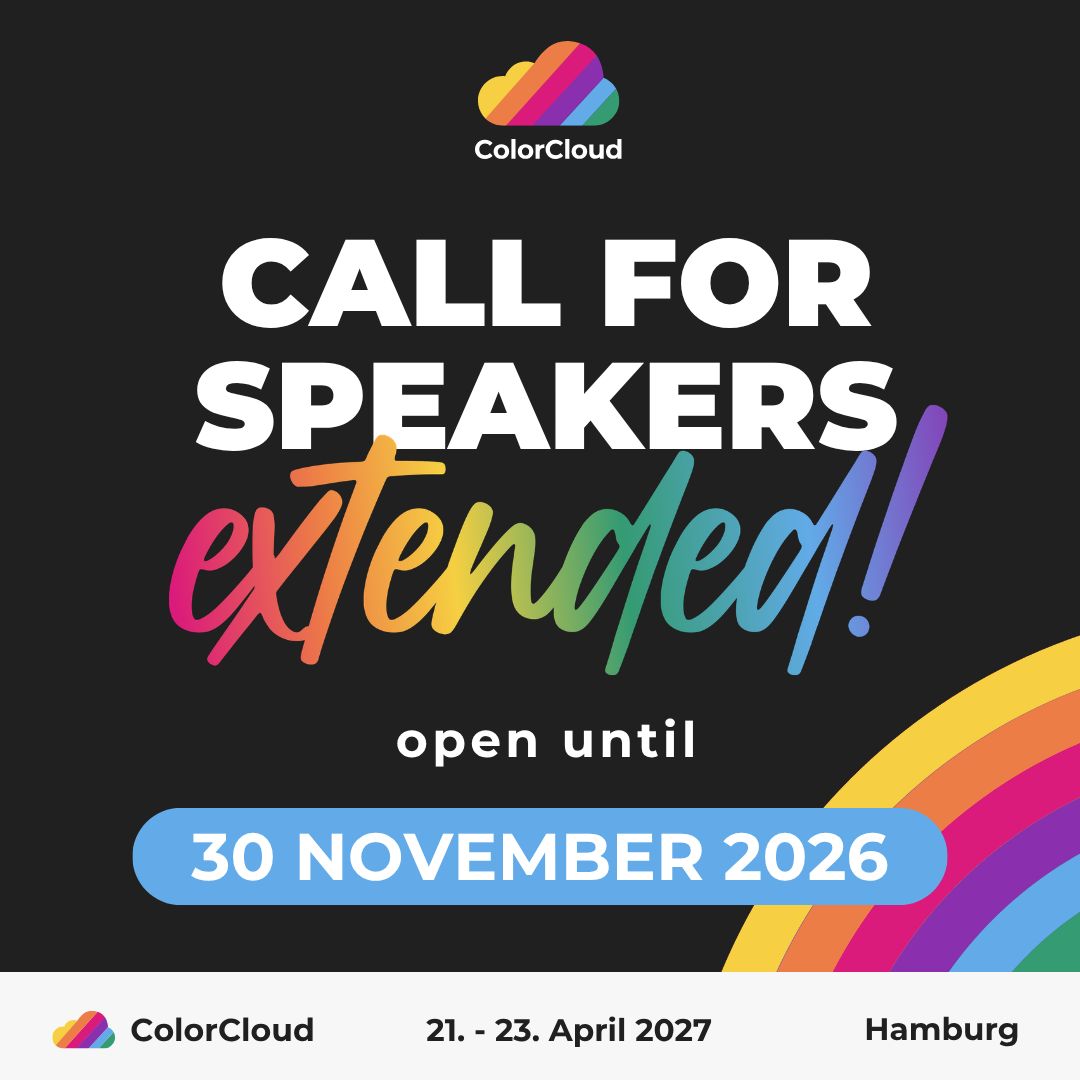
🌈 GOOD NEWS: Call for Speakers extended to November 30, 2026! 🎤
We’ve received amazing submissions for ColorCloud 2027 and heard many of you have more ideas to share—so we’re giving you extra time! 💜
🎤 Submit here: https://t.co/1Duqsiwz2B
🌐 https://t.co/lbXrdJIL7A
THIS IS AN ACTUAL F*CKING GOLDMINE
Anthropic just shared one of the best tricks for Claude Code.
The idea: run Sonnet, Haiku 5.5 and Opus 5.5 at once, each one doing only the job it's best at.
Better results and way fewer tokens, because every task lands on the right model.
You just launch Claude Code like this:
claude --model sonnet --advisor opus
here's the split:
→ Sonnet 5.5 runs the session, writes the code and applies the fixes
→ Haiku 5.5 swarms the repo in parallel: search, grep and diff audits
→ Opus 5.5 stays on call as advisor for the big calls and signs off on the diff
→ you stop burning Opus context on work that doesn't need it
Opus only steps in at three moments:
→ before a plan locks
→ when the same error shows up twice
→ before calling it done
Sonnet builds. Haiku swarms. Opus reviews.
JEV engineering is the same move one layer down: the forks that need no thinker (which file, which tool, retry or stop) go to JEV in milliseconds, and the big models only see the ones that split
the full tree
> Sonnet 5.5 runs the main session and coordinates the work
> search maps the repo on Haiku 5.5, read-only
> grep finds call sites on Haiku 5.5 in its own context
> audit checks the diff on Haiku 5.5 in a throwaway worktree
> Opus 5.5 on call as advisor, reviews the synthesized diff before sign-off
> JEV routes micro-forks in milliseconds
paste the tree and this prompt into Claude Code ↓
"Reconfigure my Claude Code setup around this tree:
1. Run the main session on Sonnet 5.5 with Opus 5.5 as advisor.
2. Create three Haiku 5.5 subagents in .claude/agents: search (maps the repo), grep (finds call sites), audit (checks the diff).
3. Set isolation: worktree on audit so its checks never touch my working branch.
4. Add one rule to CLAUDE.md: delegate every repo search and test run to the Haiku 5.5 subagents to keep the main context small.
5. Route fast deterministic forks (tool choice, path selection, retries) through JEV.
Show me every change as a diff first. No edits until I say go."
↳ https://t.co/YqkjQiqRGv
save it, it'll come in handy.
The Databricks connector in Power Automate has no file upload action. One HTTP call to the Files API fills the gap.
📖 #NeverStopLearning
👉 https://t.co/gAccCtejWK
#PowerAutomate#MVPBuzz
Databricks Free Edition without an Azure subscription: sign up, then build a catalog, schema, and volume in Unity Catalog.
📖 #NeverStopLearning
👉 https://t.co/EK0cEoJUjc
#MVPBuzz#Databricks
GPT-5.6 Sol burned a month's #Copilot budget on one Dataverse task. Instead of eating the loss, I turned it into a reusable #GitHub Copilot skill.
📖 #NeverStopLearning
👉 https://t.co/vJXxKJExIG
#Dataverse#MVPBuzz
Combine Dataverse with AI Foundry Content Understanding, straight from Power Platform. My demo broke, GitHub Copilot rebuilt it in minutes. #MVPBuzz#PowerPlatform
📖 #NeverStopLearning
👉 https://t.co/JUv79ZUcwZ
We’re building Copilot as a new OS for work that spans every model, every form factor, and every task. Today, we’re announcing our biggest update to Copilot to date, bringing four things together:
· Autopilot: proactive and long-running agent built for the enterprise
· Code: build apps with Copilot, hosted inside your company’s tenant
· Home: Chat + Cowork together
· Office: now fully embedded in Copilot (and Copilot embedded in Office, of course!)
Plus, you can invoke Copilot in Teams, and we’re introducing Today, a proactive experience that surfaces the most important information from across M365 without needing to ask for it.
The way we work is changing and so are our workflows. This update brings AI into that flow, from answering a question, to building an app, to getting work done on your behalf.
Ever design two systems before either exists? One Dataverse table fixed it: Power Platform and Azure hand off work asynchronously, no shared internals.
📖 #NeverStopLearning
👉 https://t.co/OHCF3XrftS
#Dataverse#MVPBuzz#SpecDrivenDevelopment
When technology communities come together, learning reaches farther.
Microsoft MVPs around the world helped extend the Microsoft Build experience to local communities through Build //localhost events, creating opportunities for developers to learn, connect, and collaborate in their own languages and regions.
Read how MVPs helped take Build from one event to a truly global community experience:
https://t.co/YZ6asaK2mk
#MVPBuzz
My 17-yo son had zero coding background. Using GitHub 🌱 SpecKit + Copilot, he shipped a real school carpool app in a few weekends.
📖 #NeverStopLearning
👉 https://t.co/LqYqeQATSt
#Hitzefrei#MVPBuzz#GitHub
🌈 ColorCloud 2027 is coming to CCH – Congress Center Hamburg – right in the heart of Hamburg! ❤️
We’re incredibly excited about this next chapter and can’t wait to fill CCH with the ColorCloud community energy 🌈✨
👉 Grab your Super Early Bird ticket: https://t.co/Xfp0rnhRGI
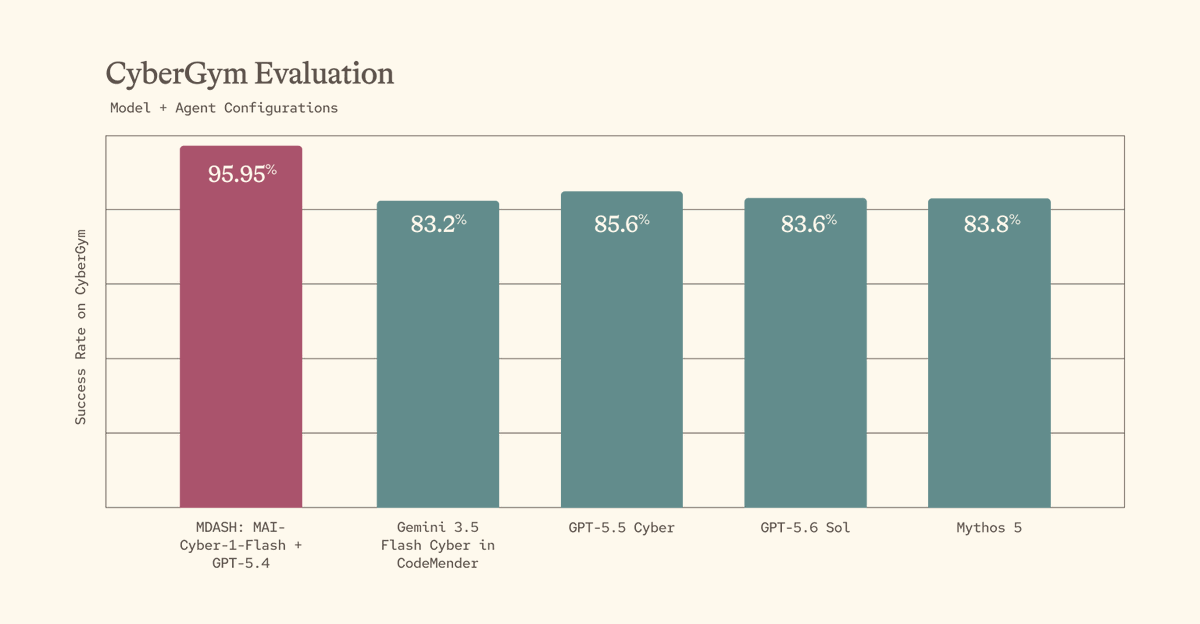
Introducing MAI-Cyber-1-Flash, our new in-house cybersecurity model running inside of MDASH, our multi-agent harness that detects and remediates vulnerabilities across large-scale code bases.
MDASH: MAI-Cyber-1-Flash+GPT-5.4 model combination out-performs Mythos by 12 points on the CyberGym benchmark.
We are offering this same model configuration in MDASH for 50% cheaper than our previous best offering (GPT-5.4 + 5.4 mini + 5.3 codex).
Meet Claude Opus 5, Anthropic's most advanced Opus model now in Microsoft Foundry. Combined with Microsoft Foundry, organizations can evaluate, build, deploy, and scale enterprise AI with native security controls, governance, and data controls.
Learn more: https://t.co/62vqpKOBtR