Something to think about if you happen to negotiate a new government programme (🇦🇹 👀) and need cost-effective measures to improve health and wellbeing AND save money.
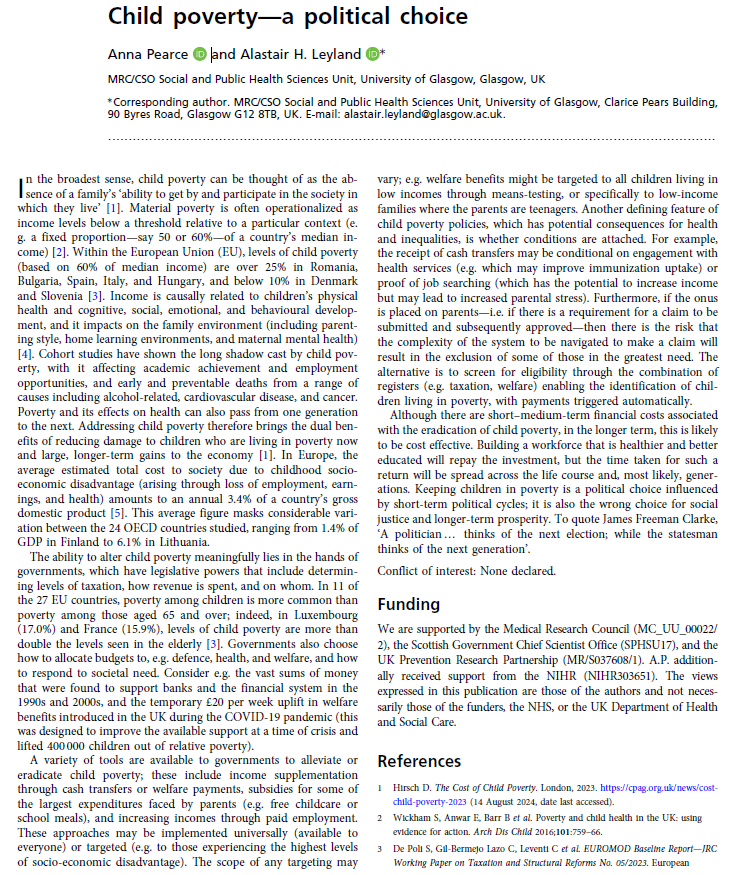
Our new editorial "Child poverty - a political choice" now available (£0) at https://t.co/Q5orwYU3RG
Governments choose how to spend money and have the tools to eradicate child poverty.
@OUPMedicine @theSPHSU@SPHSU_ineq@MatCHNet_
Explore some of the work of @SPHSU_ineq here including:
Implications of child poverty reduction targets for public health and health inequalities in England https://t.co/UonVilx9bK
Young people with care experience (video) https://t.co/OIVHxc0fZF
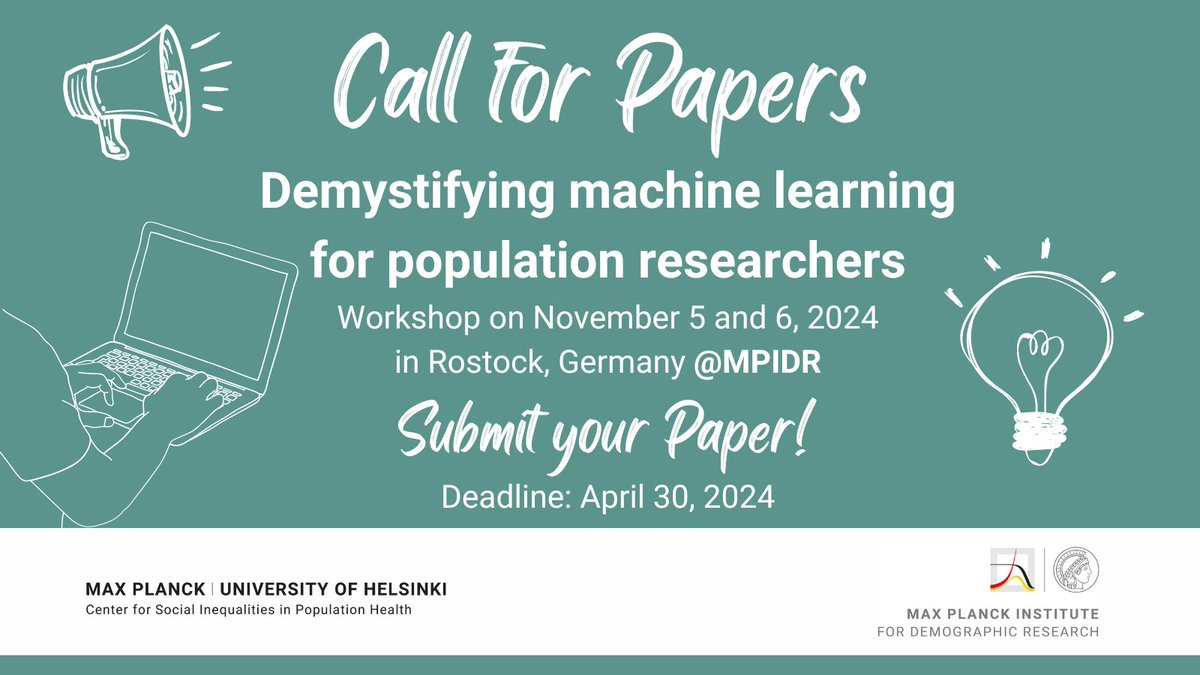
Angela Carollo, Aapo Hiilamo @waapol and Mikko Myrskylä recently hosted a workshop to "demystify machine learning for population researchers" @MPIDRnews. More than 50 researchers came together to learn about new research techniques.
https://t.co/wLw0rrwAEA
🆕 #OpenAccess article in @SHIjournal using @GrowingUpIre data to compare individual and structural-level explanations for inequalities in smoking @LayteRichard@TCDsociology
Findings support for the 'smoking exposure' and 'social resistance' model, see: https://t.co/izbE9dDYkp
We have just published a study on inequalities in late-life disabilities using full-population Austrian register-based data. (https://t.co/sk92u1ddZm) The higher level of education, the shorter the period for which a long-term care allowance was received. 1/3
Delighted to have @Rachel_Thomson as our next guest on the 15 Minutes on Health Inequalities podcast. Listen and learn about her research evaluating the impacts of #UBI on mental health inequalities. 🎙️
➡️https://t.co/g2S6KybN1K
#HealthInequalities#BasicIncome@SPHSU_ineq
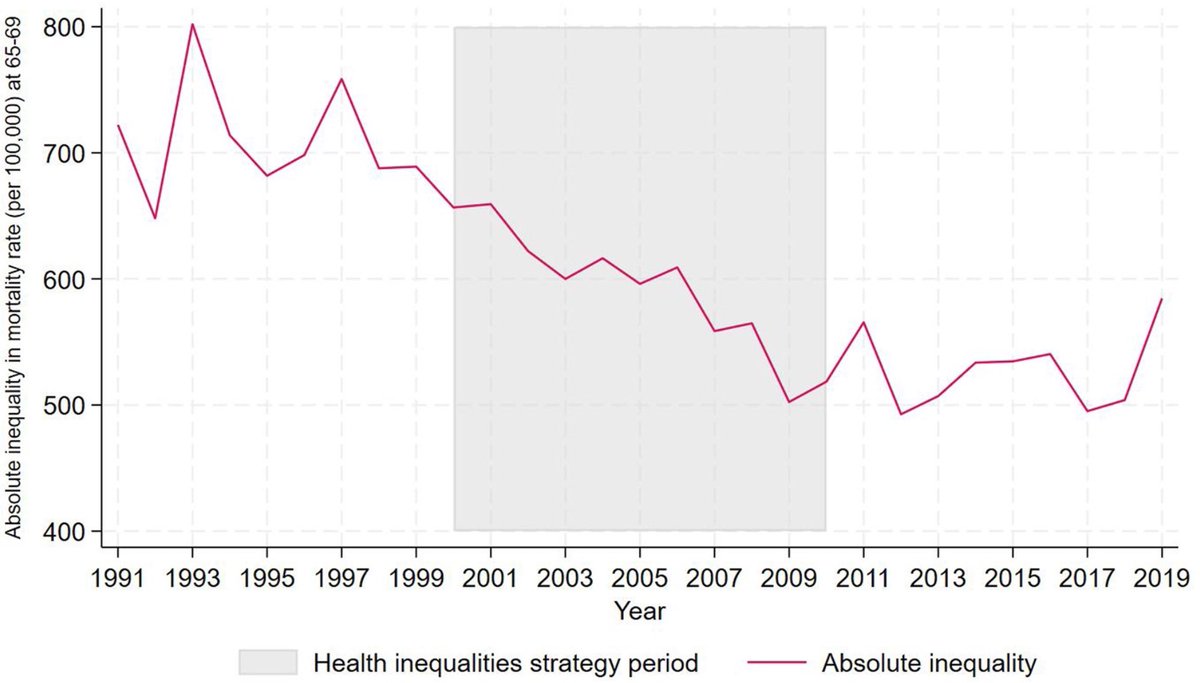
The 2000-2010 English health inequalities strategy worked for pensioners - our new paper finds that there was a significant decrease in absolute health inequalities
https://t.co/RSCCZHtlyG
Living in deprived areas is associated with structural differences in the brains of older people, as our study has shown using the @EdinUniLBC
🆕 publication in @molpsychiatry
🧠🧠🧠🧠🧠🧠
https://t.co/2iCJj37zLv
🧵
My colleagues @PRUhelsinkiuni at it again with another great display of how to make good scientific use of register-based data. Check it out: "Fatherhood timing and men's midlife earnings" https://t.co/wdGykGrDQH
📣Call for papers‼️ @AngelaCarollo89 @waapol & Mikko Myrskylä invite submissions for the workshop "Demystifying #machinelearning for population researchers" which aims to clarify goals, techniques, & applications of #ML methods for population research. https://t.co/43hW9PJ0HL
Personally, it amazes me how the Finnish data infrastructure allows such analysis of political reforms. In return for good data infrastructure, Finland gets better science and better science, in turn, can be used for better informed decisions.
A quite innovative take on evaluating a comprehensive school reform in Finland made possible by linking population registers with biobanks.
This study shows that postponing the separation of students into different tracks from age 11 to age 16 improved equality of opportunity.
The natural experiment of the Finnish comprehensive school reform 1972—77 suggests that less tracked curriculum leads to stronger genetic prediction of education among men and those from low-educated families.
Out today in @SociologicalSci, open access! https://t.co/Ihq2DRc8J7