@FairweatherPhD In the last 4 years, the number of completed housing units in the US is:
3.9 million single-family; 1.6 million multifamily (2+); 5.5 million total.
Presumably the point is to build 3 million more than we otherwise would have. Looking forward to seeing the proposal.
@PEWilliams_ In this same vein, folks might want to check out the wonderful podcast If Books Could Kill. (Disclaimer: I have no connection whatsoever with the podcast; just an interested listener.)
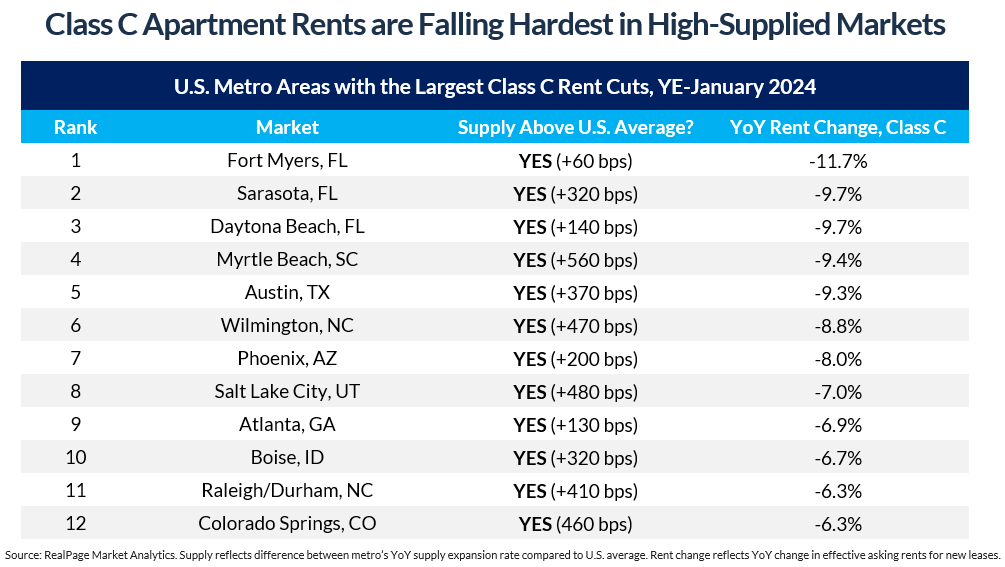
When you build "luxury" new apartments in big numbers, the influx of supply puts downward pressure on rents at all price points -- even in the lowest-priced Class C rentals. Here's evidence of that happening right now:
There are 12 U.S. markets where Class C rents are falling at least 6% YoY. What is the common denominator? You guessed it: Supply. All 12 have supply expansion rates ABOVE the U.S. average.
There's no demand issue in any of these 12 markets. They're all among the absorption leaders nationally -- places like Austin, Phoenix, Salt Lake City, Atlanta and Raleigh/Durham, Boise, etc. But they all have a lot of new supply.
Simply put: Supply is doing what it's supposed to do when we build A LOT of apartments. It's a process academics call "filtering." New pricey apartments are pulling up higher-income renters out of moderately priced Class B units, which in turn cut rents to lure Class C renters, and on down the line it goes.
Less anyone still in doubt, here's another factoid: Where are Class C rents growing most? You guessed it (I hope!) -- in markets with little new supply. Class C rent growth topped 5% in 18 of the nation's 150 largest metro areas, and nearly all of them have limited new apartment supply.
Most new construction tends to be Class A "luxury" because that's what pencils out due to high cost of everything from land to labor to materials to impact fees to insurance to taxes, etc.
So critics will say: "We don't need more luxury apartments!"
Yes, you do. Because when you build "luxury" apartments at scale, you will put downward pressure on rents at all price points.
Spread the word.
The left-NIMBY take applied to food:
“People are starving; we need more food.”
“So let’s stop banning grocery stores.”
“Unacceptable. Stop shilling for private, *for-profit* food suppliers.”
(h/t @cafreiman)
https://t.co/1vOFluxoiS .
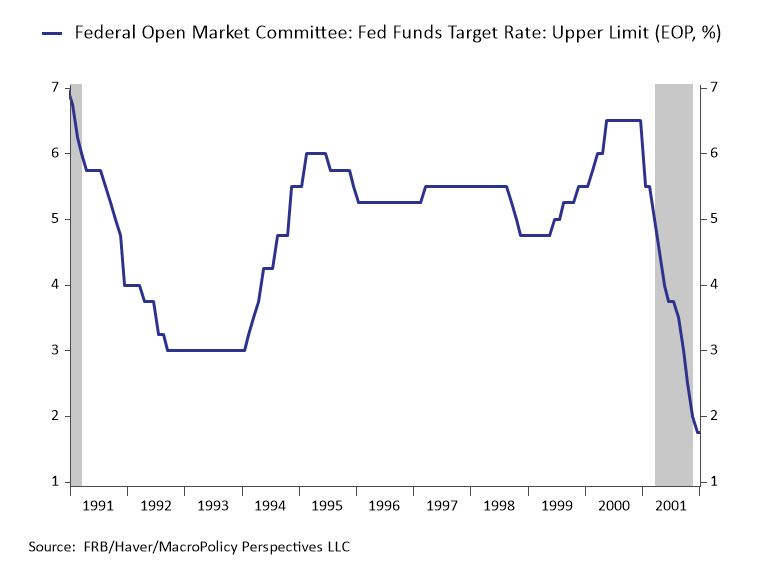
I just don't understand this perspective--policy should be flexible over the cycle especially once you are in a good range:
*BOSTIC: WORST OUTCOME WOULD BE TO CUT RATES THEN HAVE TO RAISE
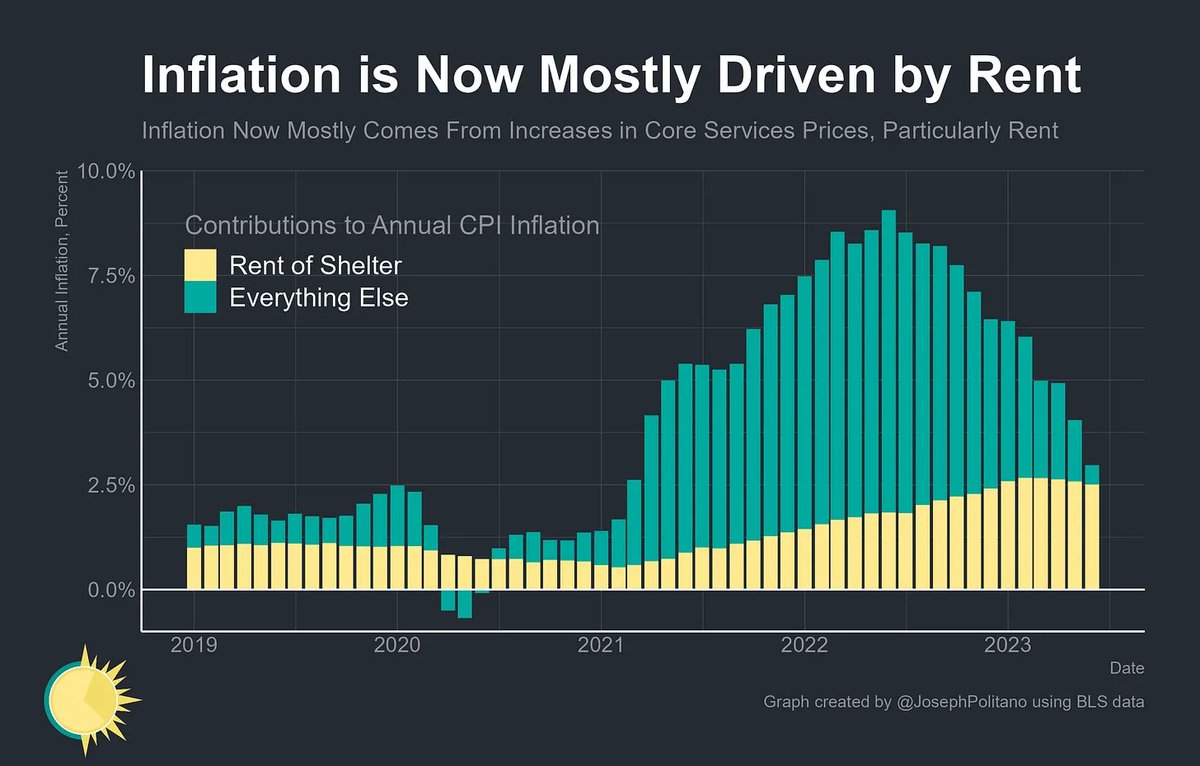
As heretical as it might be to say, there's a growing risk that Fed rate hikes risk *stoking* higher rent inflation in 2025, 2026, and 2027
How? The Fed's actions are currently reducing building permits for multifamily rental supply. Exacerbates structural housing shortage
NEW: Data illustrates how housing costs drive homelessness levels.
📈 As rents rise, so does homelessness.
Fortunately, in regions like Minneapolis and Houston that added housing and kept rent growth low, homelessness dropped: https://t.co/mzYcJgAmmp
Much ado about nothing: Despite complaints, preliminary data from @MDSHA indicates the Old Georgetown Road bike lanes have made the street safer with little to no impact on automobile travel times: https://t.co/a30mxmHliT
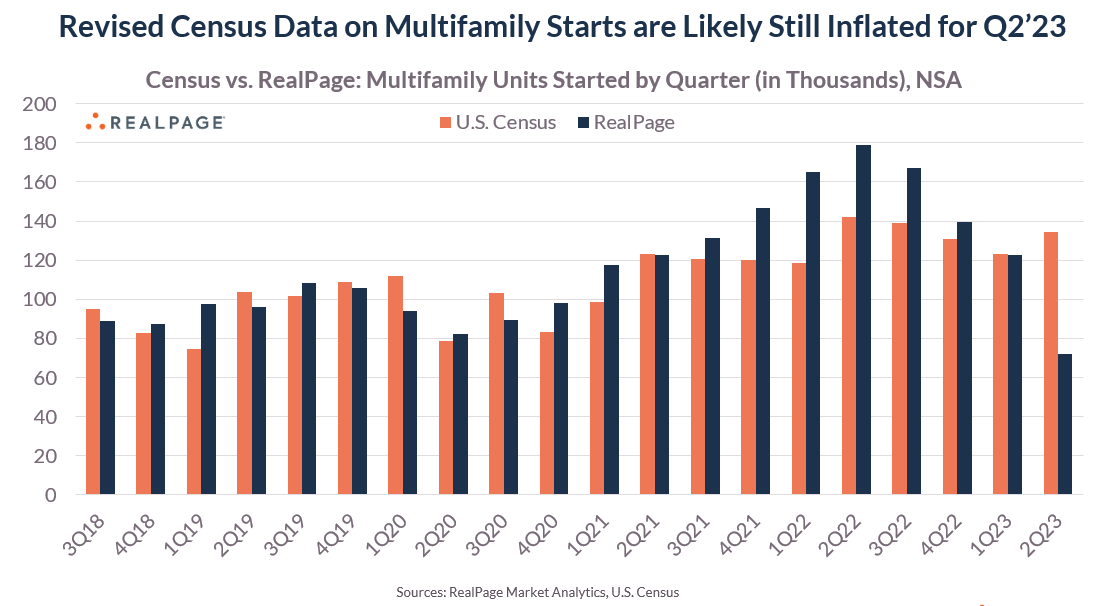
The Census multifamily starts data appears to still be inflated even after its June release today + May downward revisions.
We compared Census starts to private sector data, & what jumps out is:
1) Census understated starts from 2021-22.
2) Census overstating starts in 2023.🧵
Great thread—read the whole thing.
(And for data nerds: yes, HVS isn’t the best data source even apart from covid-related collection issues, but most of us believe it gets the trends well enough. So Jay’s points are well-taken.)
What percentage of Americans do you think are aware that the U.S. homeownership rate is:
1) ABOVE the long-term average, and
2) at the second-highest rate on record outside of the late '90s through mid-2000s period leading up to the housing bubble and Great Financial Crisis?🧵
@actfortransit Clearly the problem is the bike lanes! If they would turn those back into car lanes I’ll bet the cars could zoom along at, what, maybe 8 mph?