#onthisday in 1837, Solomon Juneau founded the Milwaukee Sentinel. It was originally a weekly publication and is now the oldest continuous newspaper in the state.
#onthisday in 1884 Albert, Otto, Alfred, Charles, and John Ringling (originally Rüngeling) organized their first circus in Baraboo, Wisconsin. The brothers' company gained fame, and the Ringling Brothers Circus soon became one of the leading circus groups in the United States.
#onthisday in 1879, the Milwaukee Exchange opened and allowed residents the first opportunity for a telephone subscription. I hope you all signed up too so we can always stay in touch!
#onthisday in 1880, a German Association was organized in Milwaukee to protect immigrants. The 1880s marked peak German migration to the United States. In 1880, people born in German made up about 27% of the Milwaukee population.
#onthisday in 1886 fell the Bay View Massacre. Striking workers and supporters had gathered throughout the week to support an 8 hour work day. When demonstrating outside the rolling mill foundry in Bay View, the WI National Guard fired into the crowd, killing seven unarmed people
#onthisday in 1893, a terrible storm killed 14 workers on Milwaukee's water intake crib in Lake Michigan. The workers were stranded on the crib, a manmade island built to connect water pipes to shore, when it was hit by strong winds and waves that destroyed their shelter.
#onthisday in 1890, a Pittsburg syndicate bought Milwaukee's Cream City Railroad Company. It was one of the four major competing street rail companies in the city that formed after the Civil War. As the city grew, there was a push to consolidate, electrify, and expand the lines.
Happy 414 Day, friends! #onthisday in 1882, @MKEPublicMuseum and the city of Milwaukee accepted the collection of the Wisconsin Natural History Society. The Museum opened to the public two years later in 1884.
#onthisday in 1915, Milwaukee placed its first fire engine on Jones Island. At the time, Jones Island still had a fishing community made up of mainly Kashubian and German immigrants, though the city was already attempting to remove people to develop a harbor and wastewater plant.
Aside from his activism, Gillespie was a leader in Milwaukee's early black community, helping to found the First African Methodist Episcopal Church (now St. Mark AME Church) which became one of the largest black congregations in the region.
#onthisday in 1866, Milwaukeean Ezekiel Gillespie became the first black American to vote in Wisconsin. Gillespie had tried to vote in 1865, expecting his rights to be denied. He sued all the way to the Wisconsin Supreme Court who ruled unanimously in his favor in March 1866.
Gillespie was a lifelong advocate for Civil Rights. He had been born into enslavement, the child of an enslaved woman and their enslaver. After purchasing his freedom from his father, Gillespie moved to Milwaukee and assisted people to freedom as part of the Underground Railroad.
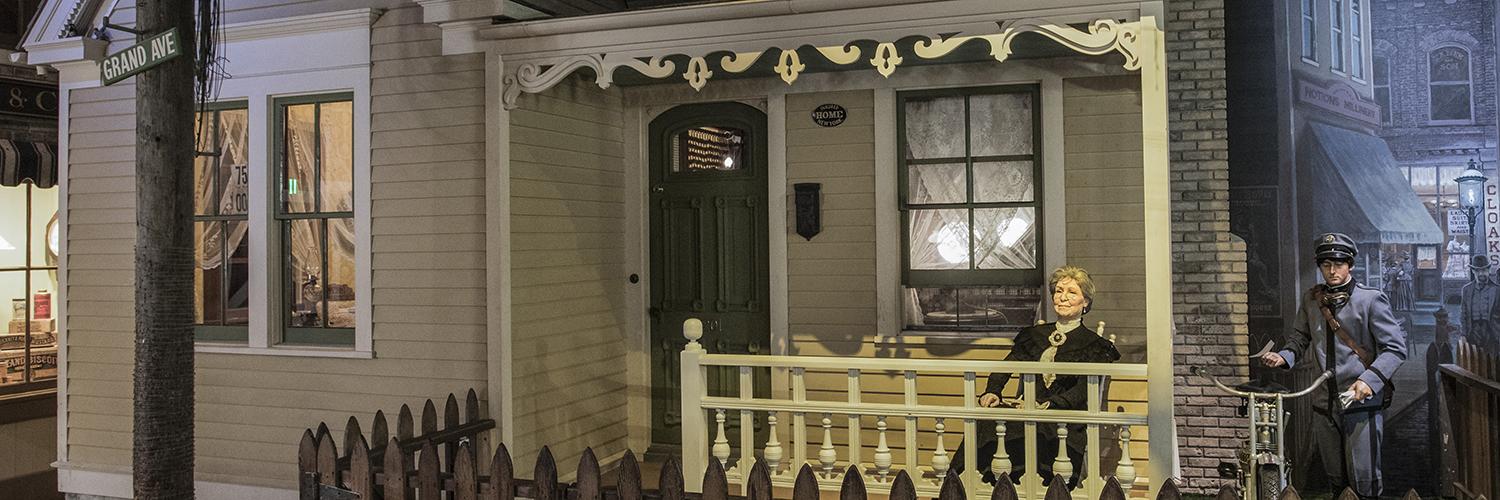
It warms my heart seeing so many people who decided to make a visit to granny's a part of their spring break. I hope I continue to get a lot of visitors over the next week too--be sure to stop and say hello!
Throughout April, the @MKEPublicMuseum will honor Sholes and his invention by displaying several Sholes typewriters in the collection. The Museum will also host special programming with UWM Professor Jason Puskar about the legacy of the QWERTY keyboard on April 15!
#onthisday in 1933, Milwaukeean C. Latham Sholes was honored as part of a national radio program for inventing the typewriter. Notables like Amelia Earhart, Anna Boettinger, and Mrs. Robert E. Speer all participated in honoring Sholes as part of the program.
I see plenty of people passing my porch and solving a Mystery tonight at the @MKEPublicMuseum. I'm surprised no one asked for any hints, but that's okay--I'm not telling!
#onthisday in 1911, tragedy struck as a fire at the Middleton Manufacturing Company on 354 Broadway in Milwaukee killed five firefighters. Half an hour into their efforts, about 15 firefighters were working to contain the flames from the roof when it collapsed beneath them.
#onthisday in 1860, a fire destroyed 22 buildings near the intersection of Water Street and Wisconsin Avenue in #MKE. Some affected lots were sold two months later to build the Iron Block building on the site, considered one of Milwaukee's most notable early commercial buildings.