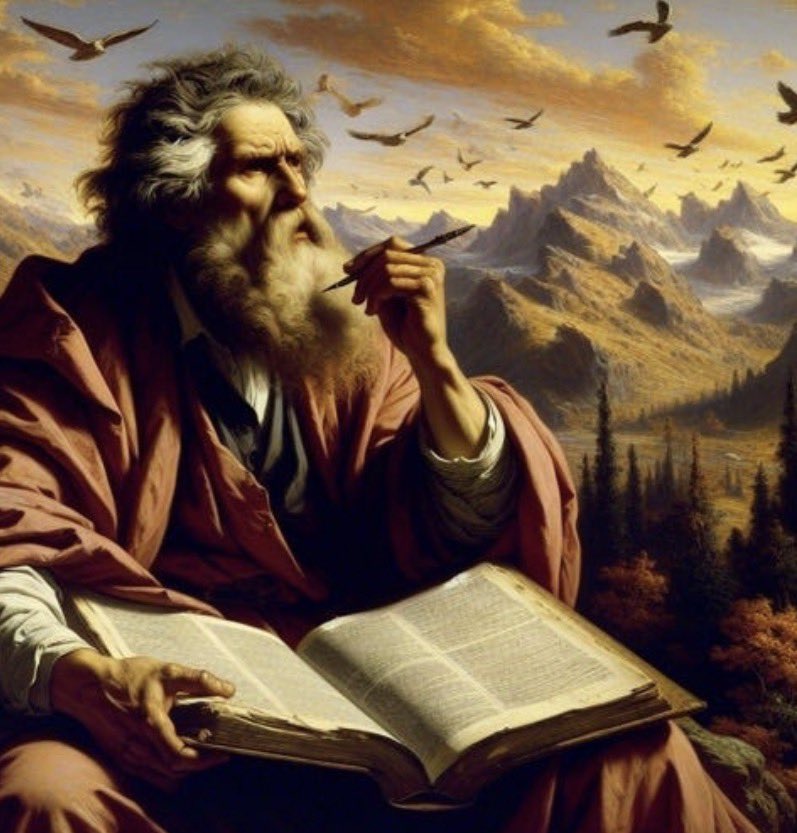
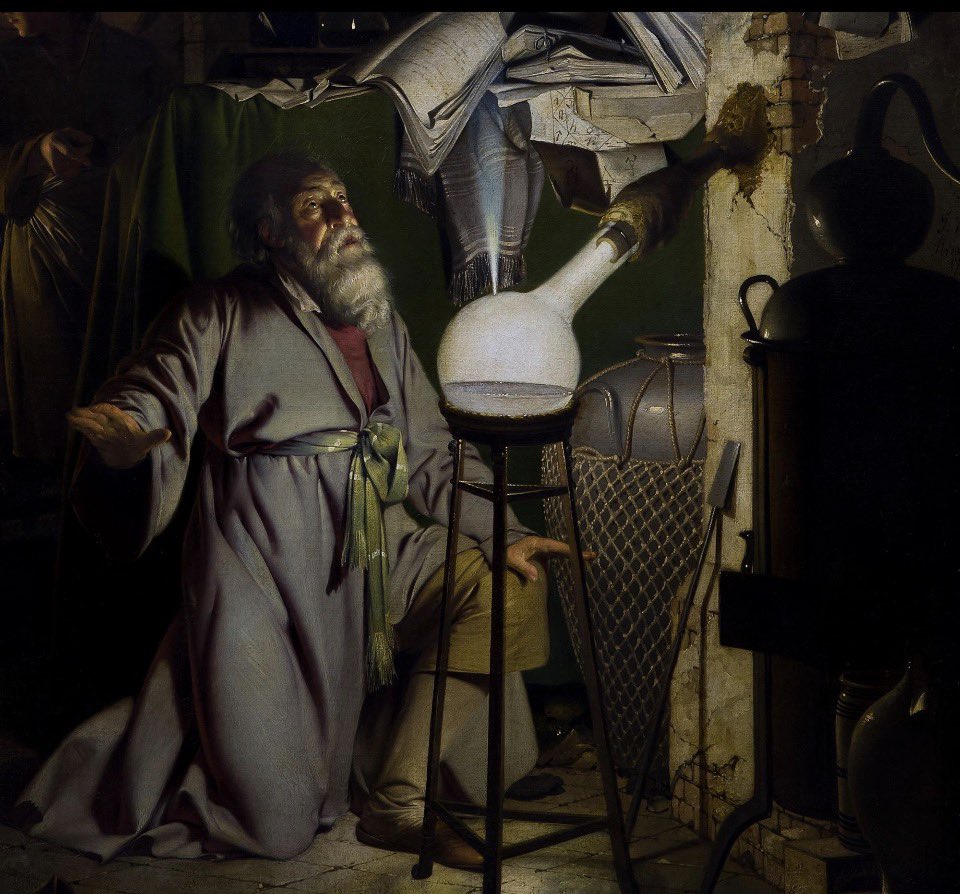
Ecclesiastes 3:10-11 highlights the “divine paradox” of consciousness. In it, we sense a deeper purpose beyond the present and a yearning to grasp the full extent of nature, despite our confinement to only partial understanding as physical beings.
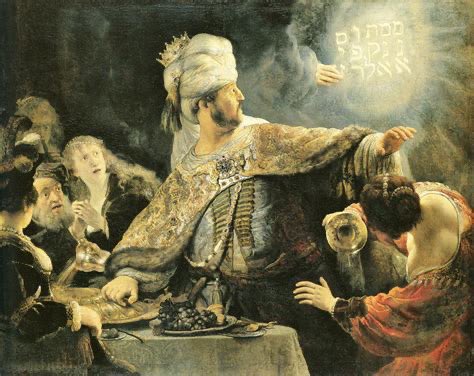
Luminous Glyphs and Passes.
Rembrandt’s ‘Belshazzar’s Feast’ (1635) depicts the scene in Daniel when Belshazzar uses sacred vessels looted from the Jerusalem Temple, and a mysterious hand appears and writes:
“Mene, Mene, Tekel, Parsin”
“Numbered, numbered, weighed, divided”
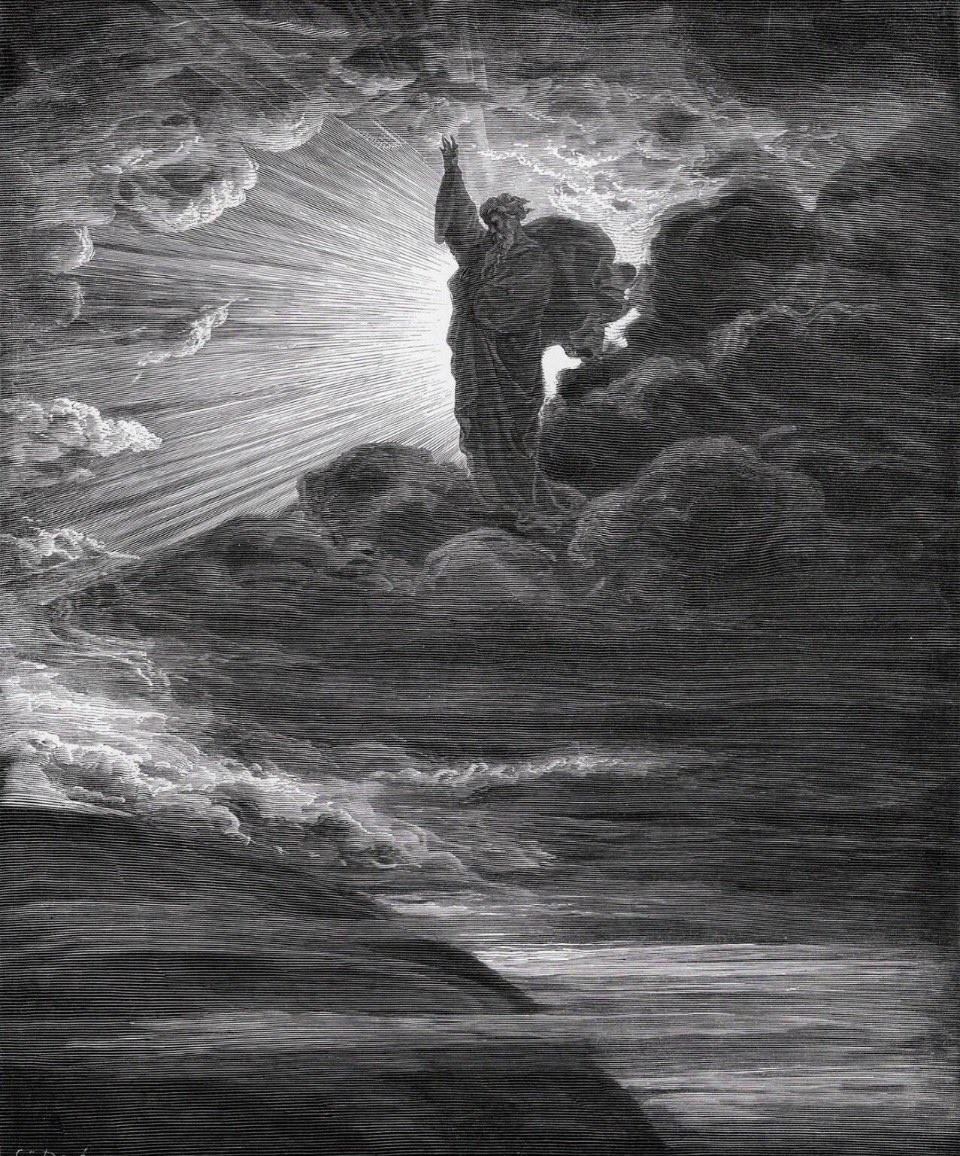
Boehme’s Seven Planes describe creation’s unfolding. From the dark world of dryness, sweetness and bitterness, through the transforming fire, to the light world of love, sound and corporeality. This marks the emergence of spirit into form.
Image: Doré, The Creation of Light
In his work ‘A Grief Observed’ C.S. Lewis described grief as a recurring cycle, where pain feels like an “amputation”. His reflections reveal an inner struggle to reconcile faith with the reality of loss, where grief can feel like fear permeating every aspect of life.
Christian Rosicrucianism is not a religion but a philosophy preparing us for death, by piercing the veil of material illusion. Death is not annihilation but an unveiling of consciousness. The true work is restoring the temple of the self, for union with God through Christ.
The Oswald Wirth Tower card is not destruction, but liberation. The lightning exposes the eternal essence hidden within the ephemeral structure. From fixation to rupture, from rupture to reintegration. From Nothing, to Something, to Everything. Omnia in omnibus.
Most pursue success, comfort and recognition. The Great Work is gratitude, contemplation and learning. Death strips away what is false, and life becomes a repeated dying and becoming.
“It is in the darkness that the light is born.” Jacob Boehme
“He hath set the world in their heart so that no man can find out the work God maketh.” Ecclesiastes 3:11)
Here lies the divine paradox of consciousness: we sense a purpose beyond the present and yearn to grasp the whole, yet as embodied beings we can know only in part.
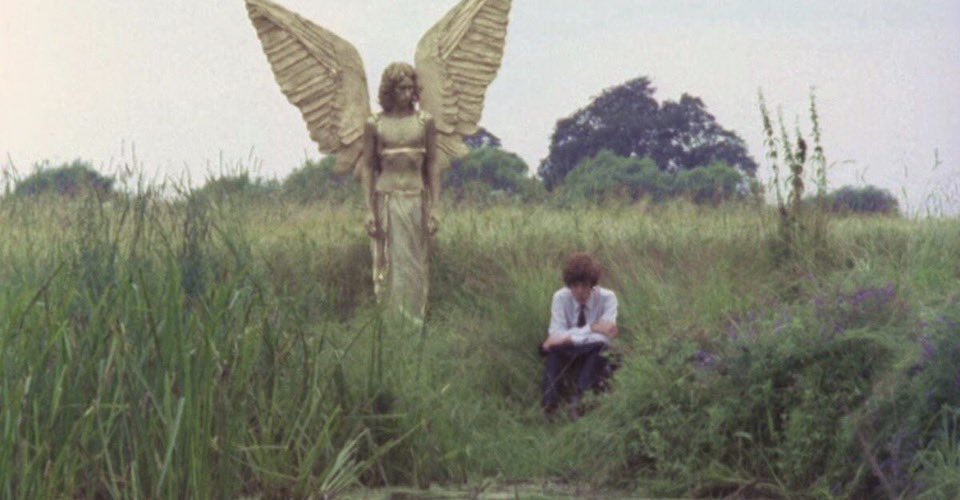
I’ve long been fascinated by the idea of the “Platonic soulmate”: two people connected across time. Dante had Beatrice; author Richard Matheson had Elise. What if love and consciousness itself are less bound by linear time than we imagine?