I spent 9 months turning AI from a chat box into an operating system that runs my business.
Memory. Context. My own voice. A security layer. Automations that watch themselves.
Wrote up the entire build. Everything you need to steal it 👇
SHORTCUTS #02 / EXPANSION
In my first quarter this year I shipped sixty-nine builds. I was proud of the number.
Then I inventoried it. Forty-four percent served my newsletter. Thirty-seven percent was infrastructure, builds that served the system itself. My agency, my core business, had zero dedicated automation. So did my art practice.
I sampled eighteen to see which were actually running. Six weren't.
That's what happens when you build whatever is in front of you.
Part 2 of three is the opposite: building in order. Every build you start should know its goal, its cost, and what it touches.
Also in this one: a workbench of four small tools. Four ways to connect an assistant to a platform you already use, and what you give up on each. One key per job. The three foundations, in the order they have to exist. Two daily emails that run my day.
Written for creatives and operators, not engineers. Every prompt in it is lifted from my working setup.
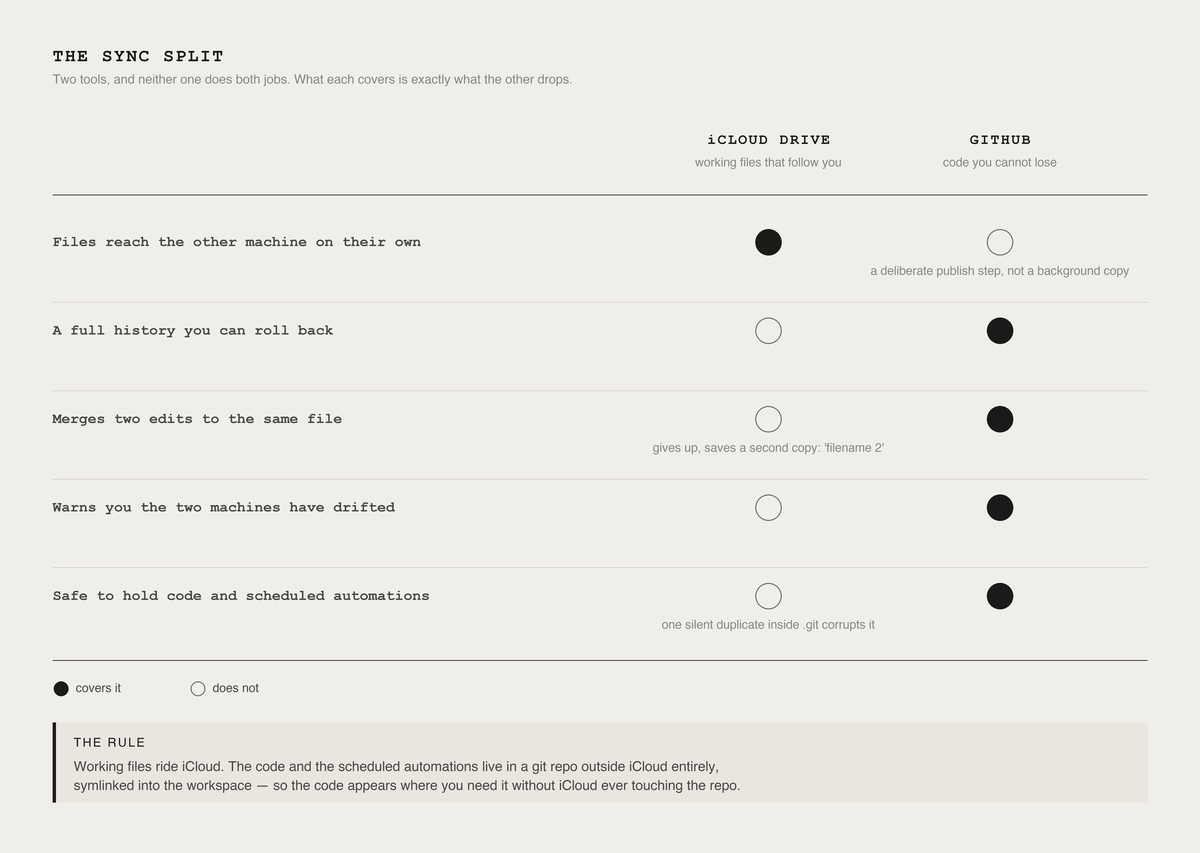
SYNC: ICLOUD FOR THE FILES, GITHUB FOR WHAT YOU CAN’T LOSE.
If you work across more than one machine, persistence is the whole game. You want to sit down at either computer and find everything where you left it.
Skip this if you work on one machine.
So the code and scheduled automations, the parts I can’t afford to lose, live in a private GitHub repo outside iCloud, symlinked into the workspace. In plain terms: a symlink makes a folder appear where you need it without actually living there, so iCloud never touches the repo.
Git adds what iCloud can’t: history you can roll back, a deliberate save step, and a warning the moment the machines drift.
SZILVESZTER MAKÓ
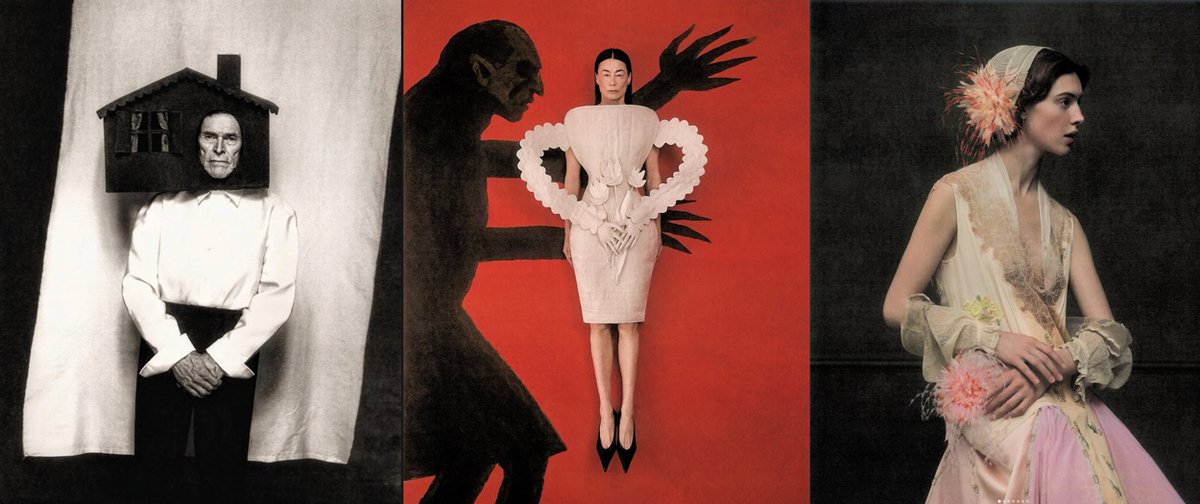
An artist owning analog in a digital age, Hungarian-born, Milan-based photographer Szilveszter Makó.
Mako is a purist, bordering on obsessive in a beautiful embrace of the tangible. His work rejects Photoshop, CGI, and AI outright; sets are built from recycled and handmade materials, lit only with daylight, and shot with a self-taught, deliberately undisclosed darkroom process.
Think also when agentic setups are baked into base tools. 99% of people aren't going to take the time to set up the things that are really providing useful leverage right now.
It's currently too complicated (too many steps). Once that stuff's just baked into apps...
AI will be popular when it clearly is making people’s lives easier. When it’s really saving time and money.
The progress we’re seeing right now on things like novel virus development and cyber-intrusions is extraordinary. But those are too abstract for most people to appreciate.
Now the seventh-highest-grossing director ever, he can land $200 million for original, non-franchise scripts.
You need to deliver the box office to finally make a film like Inception, which he incubated for 23 years.
Christopher Nolan has no smartphone and no email account. an assistant prints his emails and arranges his meetings in person. no cell phones permitted on his sets.
As The Odyssey closes in on $1 billion, $727.9 million after 12 days, most of the coverage is on cameras, the IMAX-only shoot, the extreme conditions, its ample. Nolan has again proven his commitment to the craft of cinema.
What I’m interested in is the “how” of Nolan’s career: he’s one of the few remaining directors who is bankable IP in his own right. That franchise took decades to build, and is an argument that scale earns you the right to be strange.
On career capital:
Despite Memento’s 2 Oscar nominations (one for best picture), Nolan still needed Steven Soderbergh to talk a skeptical Warner Bros into just taking the meeting for Insomnia.
It was The Dark Knight where Nolan secured real leverage. The commercial success of that franchise, built the capital that eventually financed the obscure and highly original scripts Inception and Tenet.