Professional skepticism should be trained and encouraged. It fosters shared understanding of risks and controls; it also encourages accountability in a strong Culture of Compliance
Professional skepticism should be trained and encouraged. It fosters shared understanding of risks and controls; it also encourages accountability in a strong Culture of Compliance
Skeptics will someday rule our AI humanoid overlords; you could be one of them! Until then, build those skepticism muscles and coach others! Use skepticism for good!
Skeptics will someday rule our AI humanoid overlords; you could be one of them! Until then, build those skepticism muscles and coach others! Use skepticism for good!
Providing good news and celebrating after having performed an effective examination with risk-based scrutiny and skepticism is also important. Giving and receiving praise after confidence is earned through thorough examination feels good.
Providing good news and celebrating after having performed an effective examination with risk-based scrutiny and skepticism is also important. Giving and receiving praise after confidence is earned through thorough examination feels good.
Skepticism is important to internal audit, independent review, and self examination. Pulling the right threads, asking better questions, and having the courage to deliver difficult and disappointing news is critical.
Skepticism is important to internal audit, independent review, and self examination. Pulling the right threads, asking better questions, and having the courage to deliver difficult and disappointing news is critical.
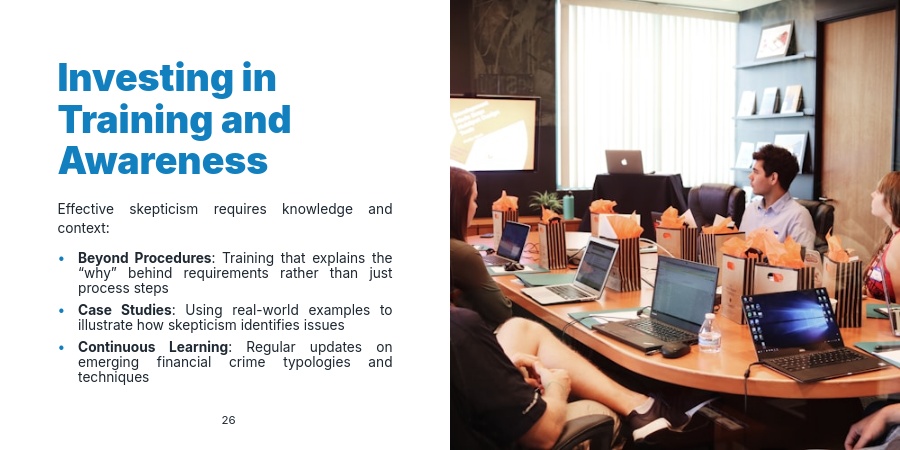
Encourage professional skepticism. Does your training help build this skill? On a risk assessed basis, which processes require greater discipline in being skeptical?
Encourage professional skepticism. Does your training help build this skill? On a risk assessed basis, which processes require greater discipline in being skeptical?
Has professional skepticism been a meaningful component to your risk-based approach to ongoing development and maintenance of Transaction Monitoring rules?
Has professional skepticism been a meaningful component to your risk-based approach to ongoing development and maintenance of Transaction Monitoring rules?
For each transaction monitoring rule, do you know the National AML Priority(ies) and criminal typologies applicable to your rule? What areas for skepticism identified by the rule raise concerns and for what?