Get out of crypto platforms now, I can't say it any plainer. Having worked as an attorney in the SEC Enforcement Division for almost 20 years (including 11 years as Chief of the SEC Office of Internet Enforcement), I believe that we now know for certain that crypto trading platforms are under a U.S. regulatory/law enforcement siege which has only just begun.
And before you chop my head off with vitriol, ad hominems and OK Boomerisms, please allow me to explain the situation with only facts and research.
And before you label me a bureaucratic, washed-up SEC shill, please bear in mind that while I may indeed be washed up (!), I am typically an outspoken and dedicated SEC critic (see, e.g., https://t.co/nQNa5JBiJN). I also have no stake of any kind in the cryptoverse. I am 100% objective, independent and neutral. Just seeking truth, always.
My take is that the SEC is spot-on with their crypto-related enforcement efforts. No matter what the carnival barkers promise, it is axiomatic that crypto trading platforms are high-risk, perilous and inherently unsafe. Please read on to understand my reasoning.
Why A Lack of SEC Registration Matters
U.S. SEC registration of financial firms: (1) mandates that investor funds and securities be handled appropriately without conflicts of interest; (2) ensures that investors understand the risks involved in purchasing the often illiquid and speculative securities that are traded on a cryptocurrency platform; (3) makes buyers aware of the last prices on securities traded over a cryptocurrency platform; and (4) provides adequate disclosures regarding their trading policies, practices and procedures.
Overall, entities providing financial services must carefully handle access to, and control of, investor funds, and provide all users with adequate protection and fortification.
With traditional SEC-registered financial firms, the SEC has unlimited and instantaneous visibility into every aspect of operations. With crypto trading platforms, the SEC lacks any sort of oversight and access — and has scant ability to detect, investigate and deter fraudulent conduct. As a result, the crypto marketplace operates without much supervision, lacking:
--The hallmarks of the traditional transparent surveillance program of a financial firm like an SEC-registered broker-dealer or investment adviser, so the SEC cannot analyze or verify market trading and clearing activity, customer identities and other critical data for risk and fraud;
--SEC and/or Financial Industry Regulatory Authority licensure of individuals involved in crypto trading, operation, promotion, etc., so the SEC cannot detect individual misconduct and enforce violations; -Traditional accountability structures and fiduciaries of financial firms, so the SEC cannot ensure that every customer's interest is protected and held sacrosanct; and
--The compliance systems, personnel and infrastructure, so the SEC cannot know where crypto came from or who holds most of it; and -The verification and investigatory routine and for cause SEC or FINRA examinations, inspections and audits, so the SEC and FINRA cannot patrol, supervise or verify critical customer protections and compliance mechanisms.
What the Crypto Regulatory Vacuum Means
For customers of digital asset platforms like most so-called crypto exchanges, there is not just a gap in customer protections, but a chasm. For example unlike SEC-registered financial firms, crypto trading platforms have:
-No record-keeping and archiving requirements with respect to operations, communications, trading or any other aspect of business;
-No requirements regarding the pricing or order flow of transactions or the use internal platforms and payment systems by employees;
-No reason to abide by U.S. statutes and rules prohibiting manipulation, insider trading, trading ahead of customers and other fraudulent behavior by customers or employees;
-No mandated cybersecurity requirements or standards to combat online attackers and protect customer privacy;
-No requirement to establish mandated training or code of conduct requirements;
-No obligation to have in place internal compliance, customer service and whistleblower teams to address and archive customer complaints;
-No requirement to reverse charges if any dispute or problem arises;
-No mandated robust and documented processes for the redress and management of customer complaints (N.B. that and even if there was a formal complaint filing structure in a digital asset trading platform, the pseudo-anonymous nature of virtual currencies, ease of cross-border and interstate transport, and the lack of a formal banking edifice creates enormous challenges for law enforcement to investigate and apprehend any individuals who use cryptocurrencies for illegal activities);
-No obligation to follow publicly disseminated national best bid and offer and other related best execution requirements;
-No minimum financial standards for operation, liquidity, and net capital; -No U.S. governmental team of objective auditors and examiners to inspect and scrutinize the fairness, execution and transparency of transactions;
-No requirement to ensure consistency of trading operations i.e. that the trading protocols used, which determine how orders interact and execute, and access to a platform's trading services, are the same for all users; and
-No obligation to design ethics and compliance codes for Wall Street entities (regardless of registration status) which would ban their employees from investing in cryptocurrency or NFT investments based on the same arguments as the ban of initial public offerings and options – i.e. that they are too risky and may tempt an employee to steal if not prohibitive.
It's all straight-forward and commonsensical. SEC registration establishes critical requirements that protect investors from individual risk and protect capital markets from global systemic risk. The requirements also make U.S. markets among the safest, most robust, most vibrant and most desirable marketplaces in the world.
Thanks for reading. With my blessing (and nothing but love for you), please feel free to launch the hate. Full Stop.
https://t.co/Vw189HSabN
This is a victory for all Americans- and an important step toward equal voting power and representation for voters of color. All of the protections enshrined in the Voting Rights Act remain necessary and must remain robust. I am proud to have supported the voters in Alabama.
Having worked as a lawyer in the SEC Enforcement Division for 18 years, below are some objective and independent thoughts on crypto’s failures. I’ve no stake in the crypto game, and am a frequent SEC critic, so please don’t shoot the messenger.
Crypto fails as an "investment” because there's no regulatory oversight, transparency, consumer protections, insurance, licensure, net capital requirements, and the crypto rug-pull bazaar is so rife with market manipulation/insider trading/fraud, investors stand no chance from the get-go. https://t.co/qTEQU3olV8
Crypto fails as a “currency” because the price is too volatile; fees too high; taxes too burdensome; and risks too infinite. How can anyone accept crypto as payment when it could be worth a lot less the next day? https://t.co/osyLFUlCQN
Crypto fails as a “store of value” because it lacks utility and intrinsic benefit, the measure of what an asset is actually worth. Crypto has no value to store and its price is solely dependent upon the greater-fool-theory. https://t.co/cv8DJeaVgz
Crypto fails as a “financial panacea for the unbanked” because it’s just another exemplar of “Predatory Inclusion” and affinity fraud, sadly peddled to dupe the disadvantaged and disaffected. https://t.co/Ra1sJxQFWI
Crypto fails as a “safe haven” because there exists no government oversight or protections to provide any semblance of safety. I get it, there have now been several notorious bank failures and those bank failures evidence serious problems within the US financial system. But don’t let crypto promoters lure you in with their disturbing and twisted logic i.e. “See, I told you that you can’t trust banks, buy crypto next time and you will never have to trust a bank again.” This is a classic grift tactic I often saw during my tenure as Chief of the SEC Office of Internet Enforcement. In the rare instance of bank failure, there are statutory guardrails to protect/help depositors, like insurance and federal ownership/takeovers. The US government steps in swiftly and responsibly. But when a crypto platform fails (like FTX, Blockfi, Voyager, Celsius, etc.), there exist no U.S. government protections, and the customer’s access to assets is suddenly locked out or frozen. Bankruptcy becomes inevitable, and the customer most likely (depending on the user agreement and other factors) becomes an “unsecured creditor,” last in line for recovery and possibly left with zero. https://t.co/Ufx80o22CU
In other words, crypto platforms might look like traditional brokerage apps to everyday users, but crypto apps lack the oversight and investor protections built into traditional financial services. For example, Coinbase has specifically acknowledged in SEC filings that the crypto it holds for users might not really belong to those depositors if push comes to shove, stating, “Because custodially held crypto assets may be considered to be the property of a bankruptcy estate, in the event of a bankruptcy, the crypto assets we hold in custody on behalf of our customers could be subject to bankruptcy proceedings, and such customers could be treated as our general unsecured creditors.” Coinbase has promised to remedy this danger and maybe they have or will. But these unpredictable issues are decided in bankruptcy. By contrast, securities held for customers by an SEC registered brokerage firm are legally segregated from the assets of the brokerage, meaning they can’t be touched in bankruptcy, and are protected by SIPC, a nonprofit set up by Congress in 1970, which also insures as much as $500K of customers’ securities and cash in brokerage accounts. https://t.co/xJYh9OjP6v
IMHO, grift, chicanery and fraud are not just common and routine in the crypto-ecosystem — they are modus operandi and inherent criminal characteristics deeply rooted in crypto-ecosystem DNA in perpetuity.
The result? Victims become victimizers, the crypto-contagion spreads, crypto-titans become fugitives, informants and defendants — and fiat vanishes.
👟 Abbey Hsu has been named All-America Honorable Mention by @WBCA1981. Let's go Abbey!
➡️ 2nd All-American in Program History
➡️ 9th in @IvyLeague History
#RoarLionRoar // #EDGE // #OnlyHere 🗽
MORE:
https://t.co/DO5bWvxZHO
This an image you haven't seen today because mainstream media has been covering Donald Trump's motorcade & plane all day long. These are Nashville students walking out today, sick and tired of the NRA and Republican inaction. The youth WILL save us, once again.
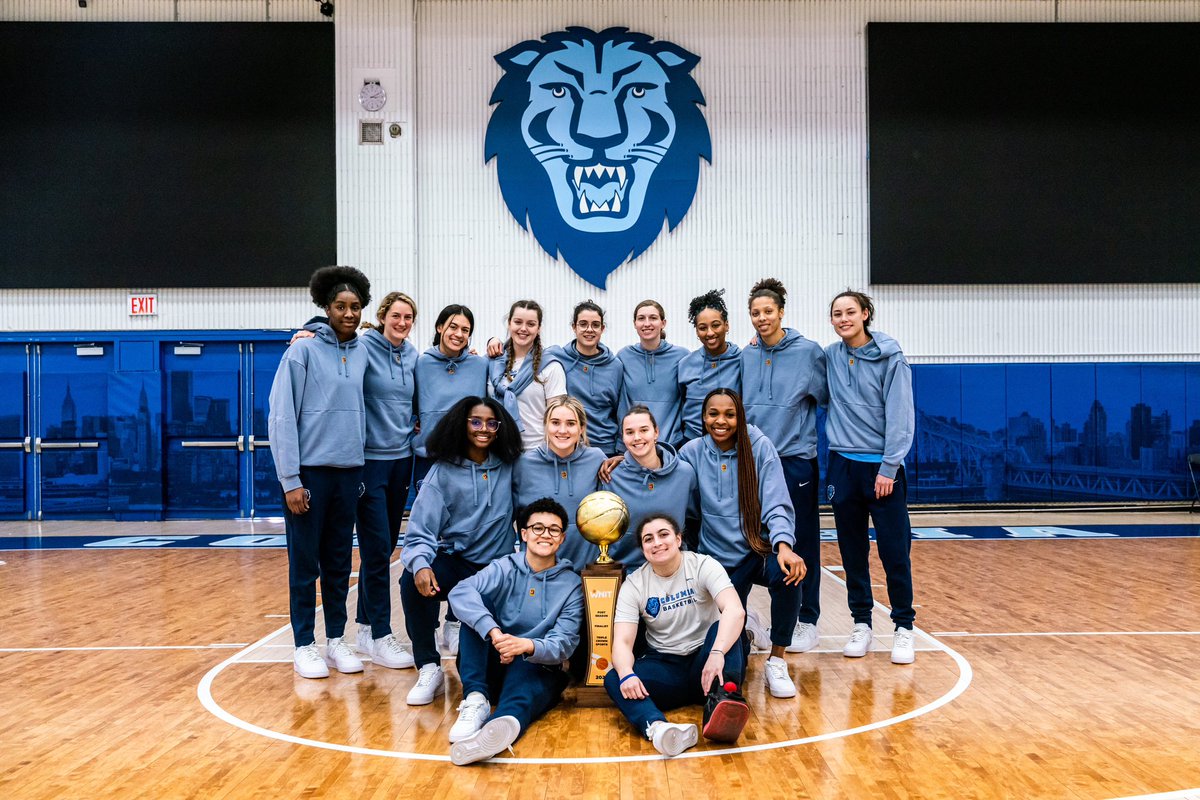
These 1️⃣5️⃣ brought it every day, all season. Thank you, players, for leaving it all out there and making your Lions community proud🦁💙 We can’t wait to bring more trophies home to NYC🏆
#RoarLionRoar // #EDGE // #OnlyHere 🗽
Beyond grateful for these women, our entire staff and the Columbia community. Played for one another and the name across our jersey every day. Woke up yesterday competing for a title in April...woke up today hungrier than ever. @CULionsWBB#EDGE
In a letter this morning, Manhattan DA Alvin Bragg's office admonishes GOP Congressmen for failing to reject Trump's dog whistles & calls to arms.
👏🏼👏🏼👏🏼
https://t.co/hOS0RCloCt
"This just shows me the best is yet to come for this program."
- @CUCoachG#RoarLionRoar // #EDGE // #OnlyHere 🗽
FULL PRESS CONFERENCE:
https://t.co/MZLlqp6kZ0
This needs to be made clear: Alvin Bragg did not indict Donald Trump, a grand jury made up of 16-23 New Yorkers, of all political backgrounds, chose to indict Donald Trump.
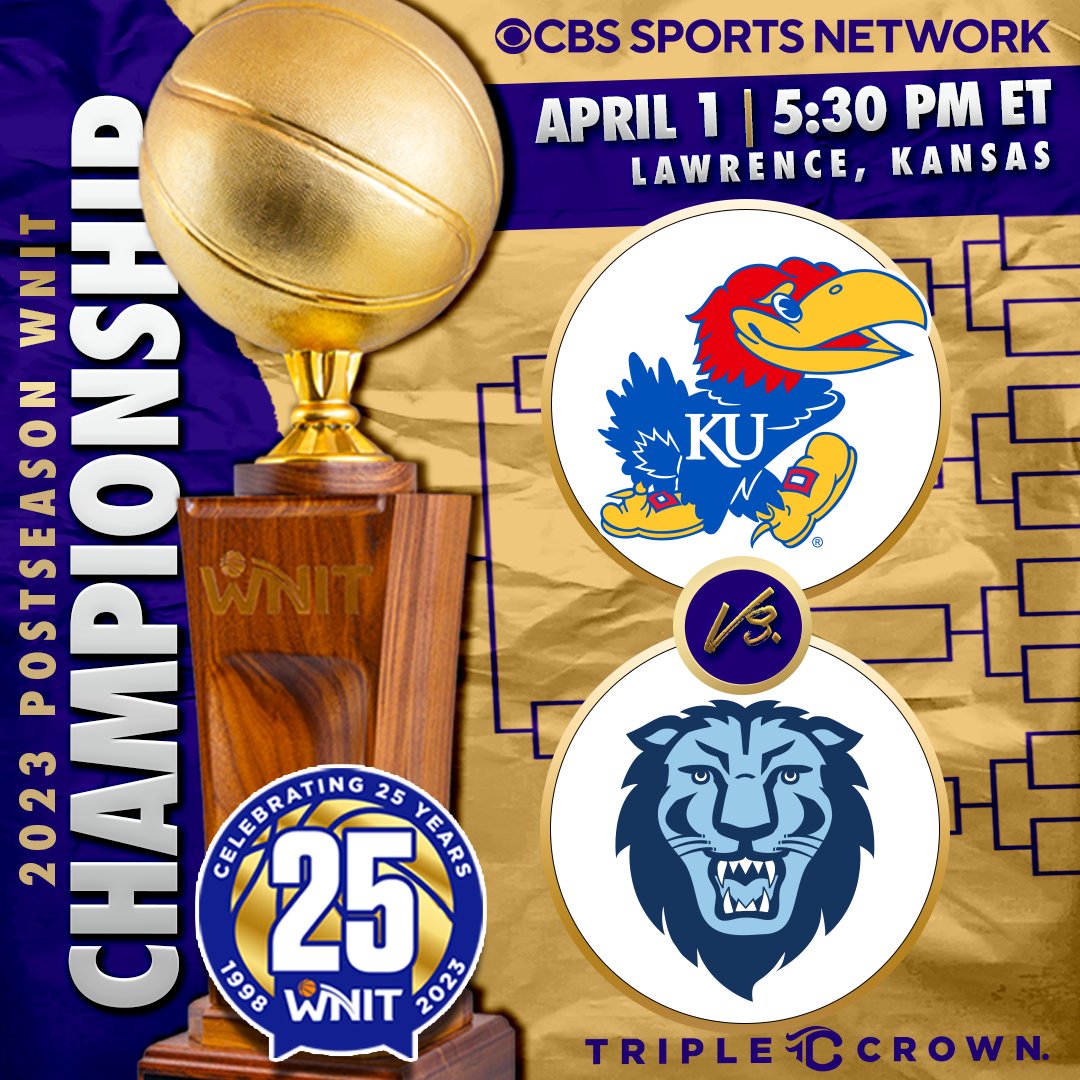
TITLE GAME BOUND.
@CULionsWBB advances to the @WomensNIT Championship game following a 77-70 win over Bowling Green. Four Lions scored in double-figures as Kaitlyn Davis scored 19 points that included THIS three-pointer.
Congratulations, Lions! 🌿🏀
I have posted this before but ..
26 years ago, a gunman entered
Dunblane Primary School in Scotland,
killing 16 kids and a teacher. The UK
govt responded by enacting tight gun
control legislation. In the 9400+ days
since, there have been a total of O
school shootings in the UK.