Research @ Médecins Sans Frontières. Global health research and innovation for humanitarian action. Home of the MSF Scientific Days and MSF Science Portal.
For children with Type 1 diabetes in remote South Sudan, accessing life-saving treatment is far from straightforward.
This #WorldDiabetesDay, we revisit an MSF story highlighting the challenges of diabetes care and the potential of insulin pens to improve children's lives.
https://t.co/1PGIH0Y1nf
Managing diabetes remains challenging in low-resource and humanitarian settings.
For #WorldDiabetesDay, we highlight an MSF study in Lebanon exploring how analogue insulins may improve blood glucose control among children with Type 1 diabetes.
https://t.co/4i84CRyd6d
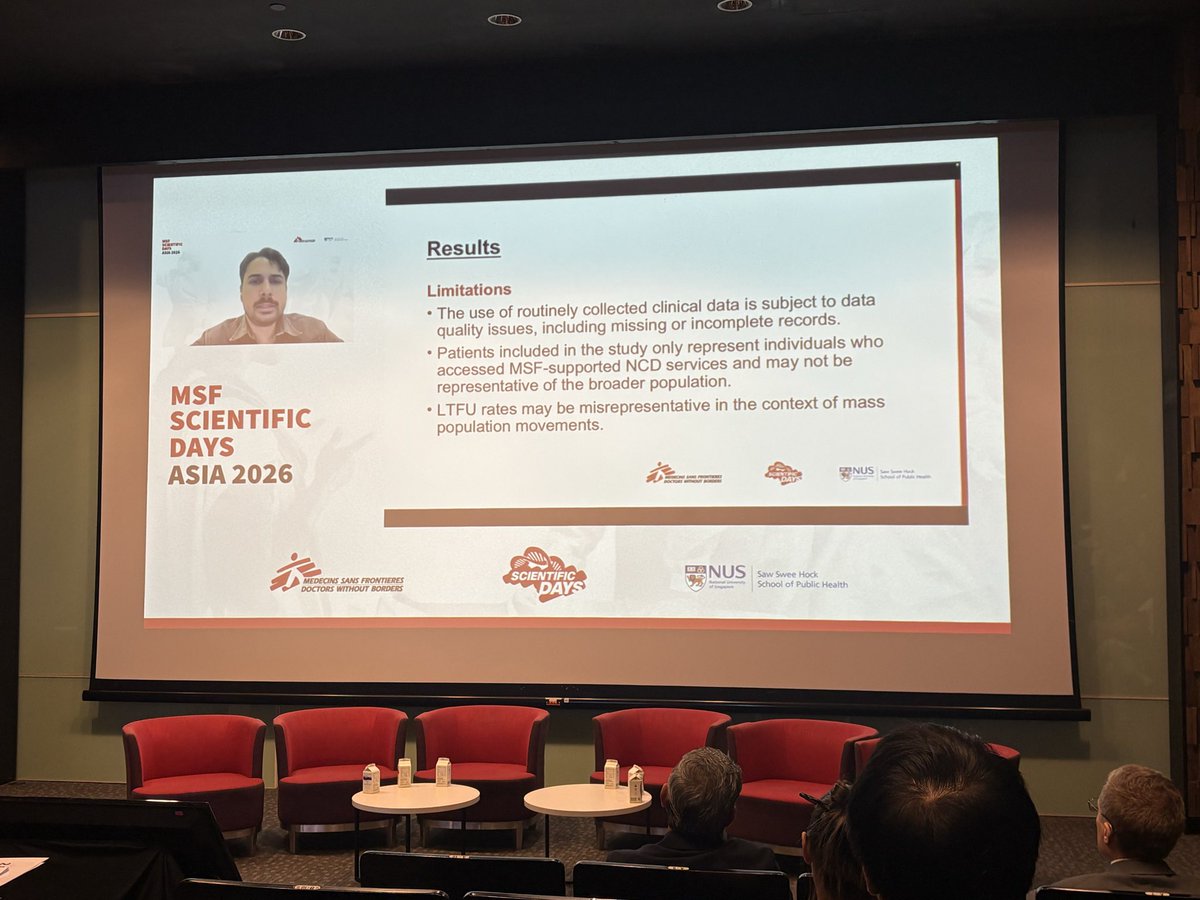
“This research highlights the feasibility of bringing non-communicable disease care closer to people displaced by conflict. However, access to medical services is only part of the challenge. Maintaining continuity of care throughout displacement and return to areas of origin is equally important to ensure that people living with non-communicable diseases are not left behind in emergency medical responses.” Scott Pharand Epidemiologist presenting at #MSFscidays #DiabetesAwareness #MSFscientificdaysasia
@MSF_SouthAsia
Today is #WorldDiabetesDay. Humanitarian response often centres on acute and infectious diseases, but chronic conditions like diabetes need continuous monitoring and reliable access to treatment. Scott Pharand shares outcomes from a cohort study in conflict-affected Syria. #Diabetes #Msfsci #MSFscientificdaysasia @MSF_SouthAsia
Presenting now: Converging crises demand more than reactive response. Strategic foresight gives MSF a method and a mindset to anticipate disruption, challenge assumptions, and stay operational where humanitarian needs are greatest. 🌍#MSFSci#MSFscientificdaysasia@MSF_SouthAsia
First session of MSF Scientific Days South Asia starts now! Register and watch online now !!
Join us as researchers, practitioners, and partners explore solutions to strengthen humanitarian and public health responses across Asia.@MSF_SouthAsia
Register now: https://t.co/S1Grt6i8ek…
#MSFScientificDays #GlobalHealth #MSF #MSFSciDay2025 #MSFSciDaysAsia
The call for abstracts for MSF Scientific Days 2027 is still open!
Have research findings or operational experiences to share? We’d love to hear from you.
Submissions close on Sunday 6 December at 23:59 GMT.
Submit your abstract here: https://t.co/XQZNTGWyjH
How can mental health care respond to trauma when violence is ongoing?
An MSF article in the @IntRevPsych explores the psychological impact of continuous violence and displacement on children and healthcare workers in #Gaza, and the limitations of conventional trauma-focused care.
https://t.co/MCarRRsjxg
Could oxfendazole offer a new treatment option for #whipworm infection?
A study with @DNDi contribution in @eClinicalMedicine found that a three-day course cured almost 76% of participants in Tanzania, showing promise for targeted treatment.
https://t.co/m3lkoPyy0d
Can mild #diphtheria be safely managed at home during outbreaks?
A new MSF and @Epicentre_MSF study in @PLOSMedicine found no increased risk of mortality, household transmission or long-term complications with home-based care in Nigeria.
https://t.co/BxMq2XlqWN
HPV self-sampling could help expand access to cervical cancer screening in resource-limited settings.
A new MSF review explores how community-based screening, digital health tools and effective follow-up systems can support wider implementation.
https://t.co/w1rCLi6Iye
What prevents mothers and infants from accessing adequate nutrition in Herat, Afghanistan?
A new Epicentre and MSF study in @Conflict_Health finds low rates of exclusive breastfeeding, widespread maternal food insecurity and multiple barriers to nutrition services.
https://t.co/5AtRbp0hTI
“When it comes to tackling antimicrobial resistance, one size doesn’t fit all.”
Dr Mohamad Khalife, co-author of a new paper in Frontiers in Public Health, highlights why global #AMR targets must be adapted to humanitarian realities to drive equitable, meaningful action.
https://t.co/AfOOtLIEhi
“Systemic ageism and a lack of data on older people's needs continue to make older adults invisible in emergencies.”
Favila Escobio, co-organiser of a new Lancet Series, highlights gaps in humanitarian care, including palliative and long-term care.
https://t.co/sbmGNd5b5J
How can global antimicrobial resistance (AMR) targets better reflect humanitarian realities?
In @FrontiersIn Public Health, MSF authors call for context-specific measures addressing antibiotic access, appropriate use, laboratory capacity and emergency preparedness.
https://t.co/AfOOtLJc6Q
“The world is ageing, yet emergency nutrition programmes have not kept pace.”
MSF Nutrition Advisor, Rachel Lozano highlights a critical gap: older people remain largely invisible in humanitarian nutrition responses.
https://t.co/Q34A8ZQ7Yv
Older people remain systematically overlooked in humanitarian responses. How can this change?
Explore the new @TheLancet Series, bringing together evidence and perspectives on age-inclusive care.
“Older persons are not only at risk, they are also caregivers, advisors, and pillars of resilience.” Shares Dr. Elburg van Boetzelaer, MSF co-author.
Read the series: https://t.co/iYh3whq41L