Whoa! As @PadrePalma commented on the Italian-language version of Leo's tweet, here we have "More heresies from Leo XIV. The English and Italian version of this post don’t mention that the souls in Purgatory (which he doesn’t mention at all either) need our prayers because they are suffering on account of the temporal punishment due to their sins. Secondly, he says that they pray too, and that is at least very misleading, since they precisely can’t pray for themselves, they need us. Thirdly he oddly distinguishes between the blessed who see the face of God and those who are in heaven. Fourthly, the post contains a true heresy as it says that those souls who are already in heaven are still on their way to attain their destination, which he calls it 'radiant' or 'luminosa'. On the contrary, the traditional Catholic teaching is that the Blessed in heaven already attained their destination. Pope Benedict XII in 1336 defined this doctrine in his edict 'Benedictus Deus' (see DZ 530). Finally Leo XIV’s post echoes Teillard de Chardin’s heretical 'theology' on the 'Cosmic Christ'."
Interesting passage from Fr. Faber mentioning an Anglican publication that exposed the negligent, sloppy manner in which many Anglican pastors performed baptism, and concluded that some Anglican bishops may not even be validly baptized.
Quite a similar situation is present in the Novus Ordo today, which has become extremely careless in baptizing and often makes a joke of it. I have some VHS tapes from the 1990s of baptism done in one Novus Ordo parish in Ohio. Of the three different ministers who did baptism in these videos, only one did it certainly validly. Of the remaining two ministers, one changed the words, saying: "We baptize you..." The other immersed only the bottom half of a baby up to the navel and never put any water on the head or even anywhere near the head. These are invalid, or very doubtfully valid at best. The Novus Ordo is a Protestant "church," not the Catholic Church.
The passage is from Fr. Faber' famous booklet on Examination of the Grounds for Remaining in the Anglican Communion, which I have been saying (since 2010) might as well be a textbook on the reasons to leave the Novus Ordo false religion.
A little HERESY from Leo XIV at yesterday's Angelus: Although it is true, of course, that Faith without charity is dead and cannot save, nevertheless Leo went further and claimed that "without love, our faith would be deprived of its essence". But this is HERESY, for the Council of Trent defined dogmatically that faith without charity is still true faith, hence its essence is not changed: "If anyone shall say that together with the loss of grace by sin faith also is always lost, or that the faith that remains is not a true faith, though it be not a living one, or that he, who has faith without charity, is not a Christian: let him be anathema" (Denz. 838) - https://t.co/4rutOvGXSq
In the United States, young sedevacantist men have started the 'Brotherhood of Christ the King' to serve the poor, the young, the old and the sick, and to suport the apostolic mission of the Church - https://t.co/vuqxg2AljB
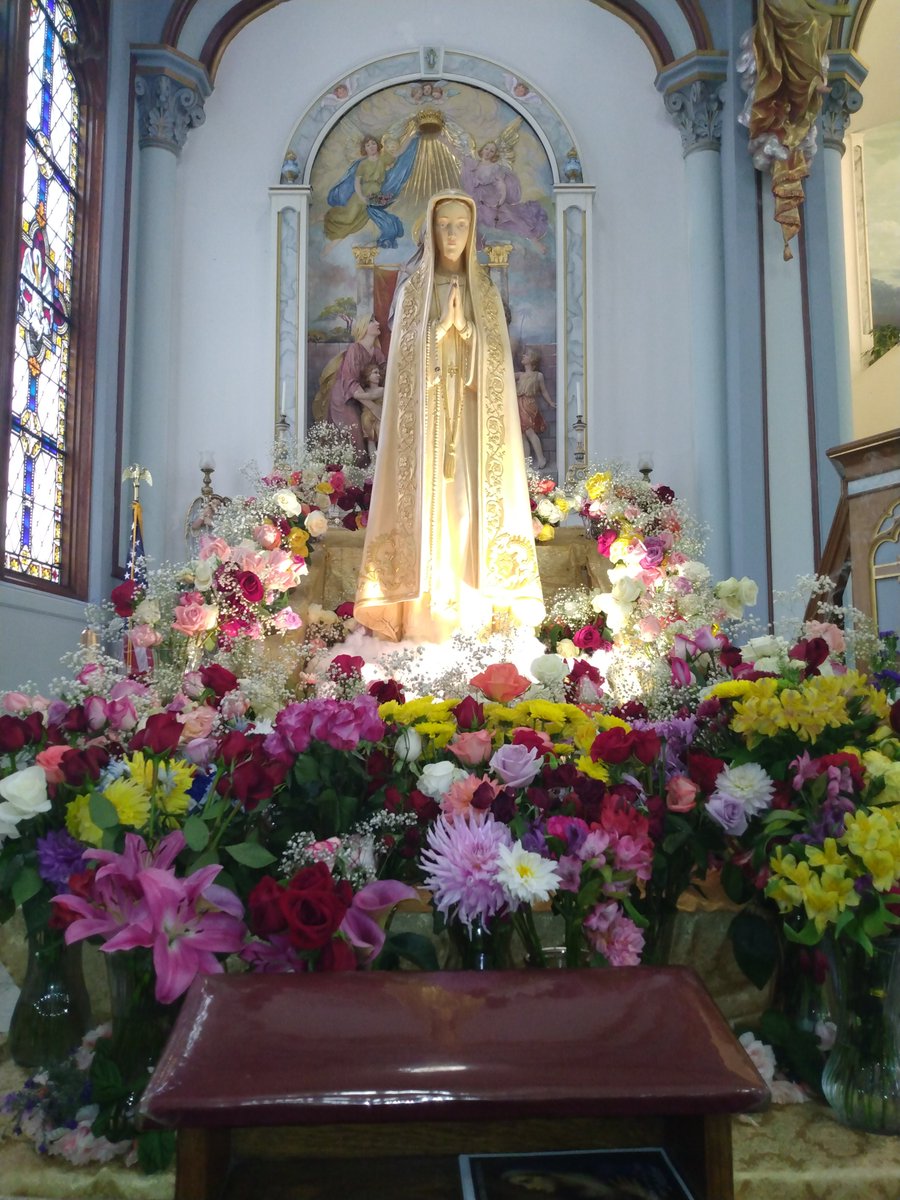
The beautiful shrine of Our Lady of Fatima erected for the Fatima Conference, now concluded. Heavenly Mother, we honor, love, and thank Thee for Thy appearances and message given at Fatima!
La pena capital en León XIV: un capítulo más de las reformas postconciliares
La Iglesia Católica es infalible no solo en cuestiones de fe, sino también en cuestiones de moral. Por lo tanto, compromete su infalibilidad y, en última instancia, también su indefectibilidad cuando enseña, explica y emite juicio sobre la moralidad de un acto. Es decir, si la Iglesia declara que algo es lícito o ilícito, permisible o no, pecaminoso o no, está poniendo en juego su origen divino. En otras palabras, no puede afirmar que algo es pecado mortal cuando en realidad no lo es, o viceversa. Eso atentaría fatalmente contra su mismísima misión y su razón de ser, a saber, ser arca segura e infalible de la salvación de las almas. Algo similar debe decirse respecto a la canonización de los santos. La Iglesia no puede proponer como modelo de santidad a alguien que en su vida no fue santo en ningún momento o, peor aún, a alguien que no fue ejemplo de fe o de piedad, sino más bien de lo contrario: de falta de fe o de impiedad.
Estas declaraciones de León XIV sobre la pena capital señalan que es «inadmisible porque atenta contra la inviolabilidad y la dignidad de la persona». Esas palabras, en clave modernista, dejan entrever un significado herético pero sin decirlo explícitamente, y comprometen a la Iglesia en su infalibilidad y, por ende, en su indefectibilidad. En efecto, “inadmisible” puede legítimamente entenderse como “intrínsecamente” o “en s�� misma”. Esa parece ser la intención, aunque las palabras se mantienen medidas, pienso yo, para instalar la novedad gradualmente.
Dicho sea de paso, uno claramente entiende, y la Iglesia primero que nadie, que esa potestad del Estado de infligir la pena capital debe ejercitarse con suma prudencia; pero León XIV va mucho más allá de eso: dice que es “inadmisible”, sugiriendo que el Estado, ontológicamente hablando, no tiene esa facultad, así a secas. Ese lenguaje parece indicar que la pena capital es algo intrínsecamente malo, pues si algo es inadmisible porque atenta contra la dignidad humana, lo es siempre, es decir, de manera intrínseca o esencial. Si privar de la vida a alguien es intrínsecamente malo e inadmisible, León XIV no solo está contradiciendo la enseñanza de los teólogos y el magisterio papal anteriores al Vaticano II —entre ellos Pío XII, quien afirmó que «Incluso cuando se trata de la ejecución de un condenado a muerte, el Estado no dispone del derecho del individuo a la vida. En este caso está reservado al poder público privar al condenado del bien de la vida, en expiación de su culpa, después de que, por su crimen, él mismo ya se ha desposeído de su derecho a la vida» (Discurso al 1.º Congreso Internacional de Histopatología, 14 sept. 1952)—, sino que también compromete fatalmente otras cuestiones morales: la doctrina de la “guerra justa” (Magnifica Humanitas, n. 192) y el derecho a la legítima defensa. Y antes de seguir, aquí cabe señalar que quienes sostienen que esa enseñanza constante anterior al Vaticano II nunca fue propuesta como doctrina de principio, tienen la carga de demostrarlo a partir de los textos anteriores al Concilio; de lo contrario, la presunción es que se enseñaba como tal. En todas estas cuestiones morales la Iglesia siempre admitió al menos la posibilidad moral y legítima de la privación de la vida del agresor, si eso sucediera.
Es sabido que el Concilio Vaticano II y sus reformas ya son heréticos por muchos otros motivos, y que también alteraron, al menos en la práctica, algunas enseñanzas morales. Por ello no utilizaré las declaraciones de León XIV como prueba de un pontificado puramente material (véase la Tesis de Cassiciacum), pues, como ya he señalado, ello se demuestra con evidencia mucho más contundente, que no es mi intención desarrollar aquí. Sigamos. (1/2)
The annual Fatima Conference is taking place at the Mount October 7-11! Watch livestreamed liturgy, talks, devotions, and other events at this channel: https://t.co/0by3uOI902
In case you missed it, the full video of Ordinations at Mt. St. Michael on 9/29/26 can be viewed here https://t.co/ipv4gUdltQ. Congratulations to Fr. Kyle St. Aubin, Fr. Richard Lauricella, and Fr. Thomas Netzel! May they be holy and fervent priests.
- Prof. Martino Mora -
Durante il viaggio in Francia, dopo avere elogiato l’Umanesimo, il Rinascimento, l’Illuminismo e i diritti umani, Leone XIV ha anche affermato: “Libertà, uguaglianza e fraternità non sono semplici parole incise sui frontoni dei vostri edifici pubblici, ma rimandano a esigenze etiche universali, che trovano anche nel messaggio evangelico una fonte inesauribile di ispirazione e di realizzazione”.
Tutta la modernità dall’Umanesimo in poi, Illuminismo compreso, è per Prevost quindi buona a prescindere, e anche la triade rivoluzionaria che ispirò il massacro dei preti fedeli alla Chiesa e lo sterminio della Vandea cattolica merita la sua benedizione. Manca solo la ghigliottina.
Prevost, papa della Rivoluzione, per quanto scellerato, è del resto in buona compagnia.
Giovanni Paolo II nel suo viaggio in Francia del 1980, infatti, affermò: ��Che cosa non hanno fatto i figli e le figlie della vostra nazione…per esprimere l’uomo mediante la formulazione dei suoi diritti inalienabili! Si conosce il posto che l’idea di libertà, di uguaglianza e di fraternità tiene nella vostra cultura, nella vostra storia. Al fondo ci sono idee cristiane” (Parigi, 1giugno 1980).
E nel viaggio in Francia del 1996, sempre Wojtyla affermò: “Che la vostra nazione rimanga accogliente… che contribuisca a far progredire incessantemente gli ideali di libertà, uguaglianza fraternità che essa ha saputo presentare al mondo!” (Parigi, 22 settembre 1996).
Insomma, i papi modernisti negli ultimi decenni hanno esaltato le idee del 1789, come atto di nascita della modernità politica da essi amata.
Eppure le idee del 1789 erano state condannate dal papa dell’epoca, Pio VI, e poi da Gregorio XVI, da Pio IX, da Leone XIII, da San Pio X e da Benedetto XV.
Evidentemente per Prevost, per Wojtyla e per gli altri papi conciliari i loro predecessori erano degli idioti.
E ancora più idioti i preti che morirono per difendere la loro fede, e pure i Vandeani e gli Insorgenti che combatterono fino alla morte per opporsi alla tirannica triade rivoluzionaria anticristiana,
Con luciferina lucidità il cardinale belga Leon Joseph Suenens definì il Concilio Vaticano II, del quale fu uno dei grandi protagonisti, come “il 1789 nella Chiesa”.
Dal Vaticano II in poi abbiamo infatti avuto solo papi sostenitori dell’89, antropocentrici, secolarizzati, rivoluzionari, modernisti, sostenitori paramassonici della triade liberté,égalité, fraternité. Cioè di quel processo individualistico-egualitario, espressione dello spirito borghese, che ha lentamente corroso, indebolito e poi distrutto la nostra civiltà.
Papi umanitari, più che cattolici, asserviti allo spirito borghese, massonico, profano, materialista e dissacratore.
Papi traditori di quei principi trascendenti e sacrali che avrebbero dovuto difendere.
Papi che hanno distrutto la Chiesa un po’ alla volta. Complici di quei poteri e di processo storico nichilista e sovversivo che stanno lentamente, colpo dopo colpo, dissolvendo la Chiesa e la nostra civiltà.
The Gospel doesn't lead to conflict? What Gospel is that? "I came not to send peace, but the sword. For I came to set a man at variance against his father, and the daughter against her mother, and the daughter in law against her mother in law" (Mt 10:34-35); "If they have persecuted me, they will also persecute you" (Jn 15:20).
Non si può affatto dire che Leone proceda piano piano: sta procedendo a marce forzate, senza minimamente preoccuparsi delle reazioni — anche perché le reazioni sono poche, e quelle poche vengono prontamente sedate. Ciò che è cambiato rispetto a Bergoglio non è la velocità: è il volto. Bergoglio urlava, e chi urla sveglia; Prevost sorride, e chi sorride addormenta. Ma è un sorriso glaciale, il ghigno di chi sa di non incontrare resistenza.
Si guardi ai fatti, non ai modi. L’agenda non è stata rallentata: è stata potenziata su tutti i fronti — sinodalità, ecologismo, immigrazionismo, ecumenismo sincretico, normalizzazione dell’ideologia LGBTQ+. E si guardino soprattutto le nomine, che di un pontificato sono la prova del nove: non ve n’è una sola che faccia eccezione; non un uomo di dottrina sicura promosso, non un nemico della Fede rimosso. Su ciascun capitolo Prevost è andato oltre il predecessore.
Robert Prevost (Leo XIV) Echoes John Paul II: Church Has 'Deepest Respect' For Pagan Traditions - https://t.co/Rmvi8ew2YK It's only the *Catholic* Tradition these people don't care about...
The way Bp. Schneider acts, you'd think he was the Patriarch of Venice. He is still only an auxiliary in Kazakhstan, and as such he doesn't even have his own flock. And no, if Leo is Pope, then you can't simply decide to disregard a Vatican decree and justify it on the grounds that you believe it will one day be canceled. Unbelievable.
Fr. Joseph Gelineau, a favorite of Archbishop Bugnini and consultant to his Consilium responsible for creating the New Mass, admitted in his essay ‘Tomorrow the Liturgy’ that the New Mass destroyed the Roman Rite:
“In truth, it [the Novus Ordo] is a different liturgy of the Mass. This must be stated without ambiguities: The Roman rite as we knew it no longer exists. It is destroyed. The walls of the original edifice have fallen, while others have changed in appearance to the point that the structure today resembles either the ruins or the partial foundation of another building. The point is neither to weep over the ruins nor to dream of a historical reconstruction.”
Full excerpt: https://t.co/IOQKadSSMm