My latest piece for @WSJ@WSJopinion :
Analyzing the recently approved Concept of Russia's Foreign Policy, signed by Putin on March 31, 2023.
https://t.co/ZiMGWddAWq
🔎 Europe’s elections are facing a new security risk: the "Romanian scenario" — when legal safeguards are reframed online as a "stolen democracy" plot
In our new analysis "The Romanian Scenario as a Security Risk: How Transnational Election Narratives Threaten Institutional Trust in Europe", we show how Romania’s 2024 first-round annulment was quickly repackaged into a simple, reusable claim: if institutions intervene, it must mean elites are cancelling “unwanted” results.
This frame then travelled across borders — surfacing in election debates in Czechia and Poland — and scaling through TikTok, X, and Telegram faster than institutions could establish a shared factual baseline.
📍Key takeaways are in the slides. Read the full report — https://t.co/dCTUO7xjjb.
🗓 TDC Event | Academic dialogue on Ukraine at the Meritorious Autonomous University of Puebla 🇺🇦🇲🇽
On 21 May 2026, TDC joined an academic session marking the 10th anniversary of the Master’s program in International Relations and Human Rights (MRIDH) at @BUAPoficial. The event was held in a hybrid format — with BUAP students participating in person and speakers joining remotely.
TDC was represented by @AlinaRohach and Bohdana Batsko from our Spain and Latin America Cooperation Program.
🎓 The session, "International conflicts and their resolution: reflections on Ukraine," focused on what shapes credible pathways toward conflict resolution amid Russia’s ongoing war — including:
🔹 the current situation on the ground and factors shaping resilience and decision-making
🔹 why the war must be understood as a hybrid war (military, economic, and informational tools combined)
🔹 how dominant international narratives are formed — and how Russian messaging distorts key facts
🔹 the humanitarian dimension, including civilian harm and long-term societal impact, with special attention to children
🔹 the abduction and deportation of Ukrainian children as a central legal and political issue
🔹 the risks of "freezing" or normalising occupation without protection mechanisms and accountability
🔹 what a durable settlement requires: security guarantees, accountability, the return of deported persons and children, and protection of civilians under occupation
🤝 We sincerely thank Professor Jorge Contreras Peralta, @MarisolPrezDaz1 (MRIDH Coordinator), and the BUAP MRIDH community for the invitation and for an engaged discussion.
🗓 TDC Event | Américo Martins in Ukraine: Strategic Insights on the War and Frontline Adaptation
On 14–19 May, TDC supported Américo Martins (Senior International Correspondent and International Affairs Analyst at @CNNBrasil) during a set of meetings focused on how the war is evolving in 2026 — and the strategic logic shaping frontline adaptation.
Key points discussed:
🛡️ With Maksym Skrypchenko (President of TDC) — how Ukraine’s approach has evolved since 2022, including a gradual shift from primarily defensive operations to scaling long-range strike capabilities to slow Russia’s advance
❓How this stage of the war works: Ukraine uses large-scale drone launches to overwhelm Russian air defenses and open windows for precise strikes on high-value targets — including military production, logistics routes, and oil infrastructure that helps fund the war.
🤝 With Vladyslav Urubkov (Division Lead, Military Department, @BackAndAlive) — how the organization scaled from a volunteer initiative into a trusted operator supporting frontline units through transparent procurement and strict reporting.
The discussion covered current priorities: communications equipment, vehicles and logistics, authorized infantry weapons, large-scale drone procurement, growing work on unmanned ground robotic systems — as the battlefield becomes increasingly drone-dominated
The meetings were coordinated by TDC’s Spain and Latin America Cooperation Program team: @O_Slyvchuk, @AlinaRohach (Project Manager), Bohdana Batsko (Project Assistant), and Maksym Volik (Project Assistant).
This project was supported by the @IRF_Ukraine.
🗓 TDC Event | Americo Martins in Lviv and Kyiv: Human Rights, Culture, and Resilience in Wartime Ukraine
On 14–19 May, TDC supported Americo Martins (Senior International Correspondent and International Affairs Analyst at @CNNBrasil) during a human rights- and culture-focused agenda in Lviv and Kyiv.
In Kyiv, the program explored how culture sustains resilience under constant threat:
📍 Meeting with @culturalforces, including @TheKolya, on culture in wartime — as public service and a tool of resilience, including the ongoing rethinking of Russian cultural influence
📍 Visit to @KhanenkoMuseum and an interview with artist Hamlet Zinkivskyi at his Project 365 exhibition "Time Is Not Needed" (May 17)
📍Attendance at a Boombox concert and an interview with the band’s frontman Andriy Khlyvnyuk
Americo Martins’ meetings with human rights defenders and international justice experts ⚖️:
🔶 @KateRashevska (Regional Center for Human Rights) — the proposed Special Tribunal for the Crime of Aggression, the importance of formal charge confirmation, and ICC proceedings related to Ukrainian children
🔶 Maksym Butkevych (Lviv, May 14) — captivity, activism, and the urgent issue of people held in captivity or missing in Russia-occupied territories
🔶 @SashaRomantsova (May 19, @ccl_ua) — civic self-organization since 1991, the legacy of Euromaidan, and preserving evidence of abuses under occupation
The meetings were coordinated by TDC’s Spain and Latin America Cooperation Program team: @O_Slyvchuk (Coordinator), @AlinaRohach (Project Manager), Bohdana Batsko (Project Assistant), and Maksym Volik (Project Assistant).
🤝 We sincerely thank @ResilientUA for supporting the cultural agenda, with special thanks to Inga Vyshnevska.
This project was supported by @IRF_Ukraine.
What’s inside this week’s briefing? Key developments you shouldn’t miss ⬇️
🌐 International Situation
• Ukraine secured major financial backing: the Verkhovna Rada ratified a €90B EU macro-financial loan (2026–2027), and the EU approved an additional €2.8B tranche under the Ukraine Facility.
• Sweden is beginning the integration of JAS 39 Gripen fighter jets into Ukraine’s Air Force as part of a record $2.7B aid package, with the first aircraft expected within the next 10 months.
• The UK expanded pressure on Russia: sanctions targeted 18 crypto platforms and financial institutions linked to sanctions evasion (over $90B), alongside a full ban on Russian uranium imports.
• Defense-tech support is scaling: the drone coalition reported delivering 215,000+ UAVs to Ukraine, alongside expanded partner cooperation on drone production.
📍 Situation at the Front
• Hostilities intensified further, with 233–317 combat engagements per day over the week (a peak of 317 on May 28). Russia expanded the scale of aerial attacks, launching 122–290 strike UAVs per night.
• The Pokrovsk direction remains the main epicenter of fighting, while Russia also sustained pressure on the southern flank, particularly around Huliaipole.
• Ukraine continued systematic deep strikes on Russia’s war-enabling infrastructure — especially fuel facilities, air defense/radar assets, and command-and-control nodes — indicating a sustained campaign to disrupt logistics and decision-making.
⚠️ Shelling & Strikes
• Russia sustained a near-daily tempo of mass drone-and-missile strikes. The peak came on the night of May 24, when air defenses neutralized 604 targets (55 missiles + 549 UAVs).
• Subsequent waves continued through the week, with repeated UAV hits recorded across multiple locations each night, including attacks involving ballistic and Kinzhal missiles.
• Civilian casualties and damage were reported across several frontline and rear regions, including Donetsk, Kharkiv, Sumy, and Kherson.
🕊 Humanitarian Situation
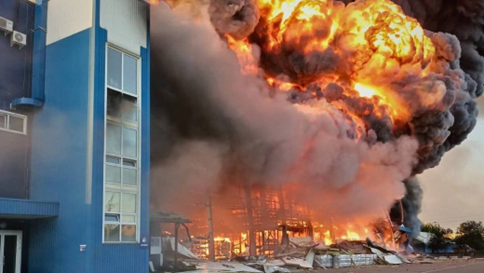
• Russia destroyed a World Food Program warehouse in Dnipro containing $1.4M+ in humanitarian aid intended for 130,000 people in frontline areas.
• Ukrainian officials report that 95%+ of Ukrainian POWs are subjected to torture and cruel treatment; 7,000 POWs and up to 20,000 civilians may remain detained by Russia.
• Ukraine returned four more children from occupied Kherson Oblast, bringing the total rescued through Bring Kids Back UA to 2,126.
🇺🇦 Read the full briefing on happenings in Ukraine for May 24 - 30, 2026
🇬🇧 English 🔗 https://t.co/Kz2pjS7rGP
🇪🇸 Spanish 🔗 https://t.co/1PZPfseMFo
🇩🇪 German 🔗 https://t.co/dg4QgjY3nM
🇨🇳 Chinese (Simplified) 🔗 https://t.co/3T2JPxOrAt
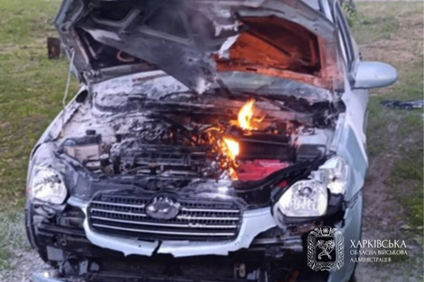
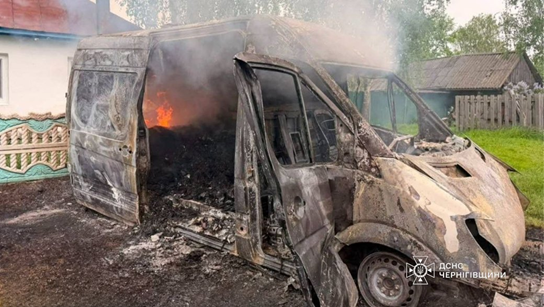
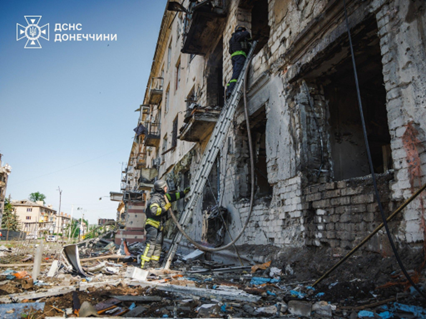
🔷 Donetsk Oblast — 2 killed and dozens injured, including a child. Russian air-dropped bombs and UAV strikes damaged residential buildings and civilian infrastructure in Kramatorsk, Druzhkivka, and nearby communities.
🔷 Odesa Oblast — 1 killed and 11 injured, including a child. Drone attacks damaged residential areas, civilian infrastructure, businesses, and educational facilities.
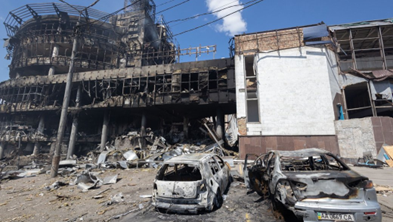
🔷 Russia continues systematic attacks on civilian areas and critical infrastructure across Ukraine, causing civilian casualties and widespread destruction far beyond the frontline.
🔗 Want to stay updated on all the key developments affecting Ukraine through concise weekly summaries in Ukrainian? Subscribe to TDC’s Telegram channel — https://t.co/ZdjFw1fgbs
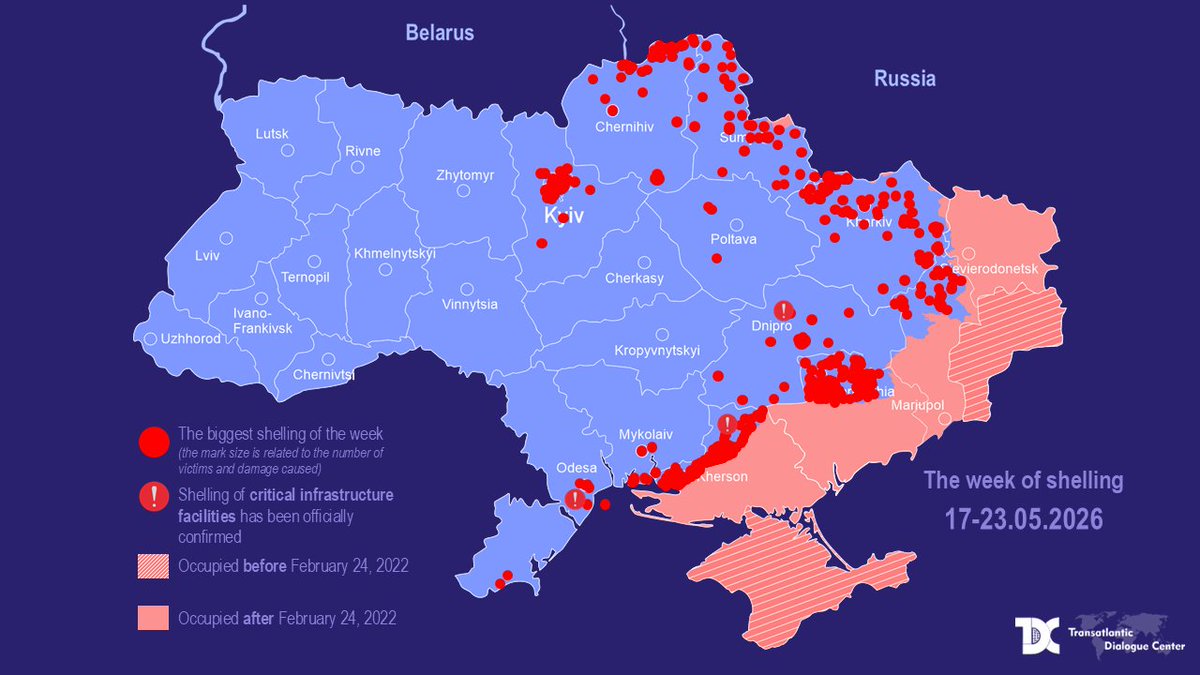
🔷 Russia carried out near-daily large-scale drone and missile attacks across Ukraine this week. The most powerful strike came on May 24, when air defense neutralized 604 aerial targets, including 55 missiles and 549 UAVs, with Kyiv as the main target.
🔷 Kherson Oblast — at least 4 killed and 99 injured, including 4 children. Drone, artillery, and air strikes damaged residential areas, critical infrastructure, and social facilities.
🔷 Kyiv and Kyiv Oblast — 3 killed and 92 injured, including 3 children. One of the largest attacks of the full-scale war caused extensive damage to residential buildings, civilian infrastructure, and public institutions.
🔷 Kharkiv Oblast — 2 killed and at least 41 injured, including a child. Russian missile and UAV attacks struck residential areas and civilian infrastructure across the region.
🔗 Want to stay updated on all the key developments affecting Ukraine through concise weekly summaries in Ukrainian? Subscribe to TDC’s Telegram channel — https://t.co/ZdjFw1fgbs
📊 New infographic | SBU & Alpha Unit Operations overview
Want to get our infographics every two weeks? Subscribe to TDC updates on our website — https://t.co/wSL5nfVwgJ.
🗓 TDC Event | LMF 2026: How journalism can rebuild trust in polarized societies
On 14–16 May 2026, TDC welcomed Americo Martins, Senior International Correspondent and International Affairs Analyst at @CNNBrasil, to Lviv for a program combining a public discussion at @LvivMediaForum 2026 with meetings focused on Ukraine’s resilience and recovery.
At LMF 2026, Americo Martins joined Ukrainian journalist @ngumenyuk (@PIJLab) for a conversation on what it takes for quality media to remain credible and "win back" audiences in polarized environments.
Key points discussed:
🔹 How journalism can stay trusted when public debate becomes increasingly polarized
🔹 Why anti-corruption reporting is essential, yet can be weaponized by populists and fuel cynicism when "everything feels corrupt"
🔹 Why Ukraine is difficult to sustain as a story in Brazil amid war fatigue and competing crises
🔹 Why human-centered reporting often travels further than geopolitics alone
In Lviv, Américo Martins also met with Olga Rudnieva and visited the Superhumans Center to learn more about Ukraine’s long-term recovery needs — and how the evolution of the war changes the nature of injuries, shaping rehabilitation and prosthetics demand.
🤝 We sincerely thank NGO Resilient Ukraine for organizing this meeting, and Victoria Tsaider for coordinating the visit.
The meetings were supported by TDC’s Spain and Latin America Cooperation Program team: @O_Slyvchuk, @AlinaRohach, and Bohdana Batsko.
This project was supported by the @IRF_Ukraine.
📘 Bi-Weekly Analysis | When courts act fast, disinformation moves faster
Europe’s elections are facing a new kind of security risk: legal safeguards can be flipped into "proof" that democracy was stolen — and the narrative travels across borders in weeks.
🔎 TDC’s new analysis "The Romanian Scenario as a Security Risk: How Transnational Election Narratives Threaten Institutional Trust in Europe" explains how Romania’s 2024 first-round annulment was repackaged online into a simple conspiracy frame — and then reused in election debates in Czechia and Poland, amplified through TikTok, X, and Telegram.
🔑 Key takeaway: the real dilemma is double-edged. Democracies must counter interference — but without triggering the legitimacy crisis disinformation networks are trying to manufacture.
🖇 Read the full analysis — https://t.co/vk6PWiaVkA
✍️ TDC is looking for interns for the Research Department. If you are a student (BA 3–4 year or MA) and want mentorship in analytical writing with an opportunity to publish — send your CV and a short motivation letter to [email protected].
🔎 Ukraine’s post-war recovery may depend on one basic factor: housing
In our new analysis "Secondary Real Estate Markets and Alternatives in a Post-War Recovery Context", we explain why the challenge is not only rebuilding — but scaling affordable, well-governed housing fast enough to make voluntary return realistic.
With the EU’s Temporary Protection expected to end in 2027 and support in host countries shrinking, stable housing and income will shape whether millions can stay in Europe legally — or face pressure to return.
📍Key takeaways are in the slides. Read the full article via the link in the comments.
What’s inside this week’s briefing? Key developments you shouldn’t miss ⬇️
🌐 International Situation
• Ukraine and the EU initialed a memorandum on €8.35B in macro-financial assistance as part of a €90B loan facility.
• The EU, Canada, and partners expanded sanctions over Russia’s deportation and militarization of Ukrainian children, while the next EU package is expected to target the shadow fleet, stolen grain exports, and Russian banks.
• Ukraine rejected Germany’s proposal for a transitional EU associate status without voting rights, insisting on full-fledged membership negotiations.
• The U.S. approved a potential $100M+ sale of components for Hawk air defense systems, while Washington is also exploring joint testing of Ukrainian battle-tested defense technologies.
📍 Situation at the Front
• Combat intensity remained extremely high, with 216–253 engagements per day, confirming the continuation of Russia’s large-scale offensive pressure.
• The main axis of fighting runs along the Pokrovsk–Kostiantynivka–Huliaipole line.
• Ukraine continued systematic strikes on Russian fuel, logistics, command-and-control, and military-industrial infrastructure, including oil refineries, pumping stations, command posts, ammunition depots, and UAV control centers.
⚠️ Shelling & Strikes
• Russia sustained mass aerial attacks throughout the week, regularly launching over 100 UAVs overnight.
• The largest attack since the start of the full-scale invasion targeted Kyiv on the night of May 23–24, combining hundreds of UAVs and missiles in a massive strike on the capital and the region.
• Dnipropetrovsk, Kherson, Donetsk, Odesa, Sumy, Zaporizhzhia, Kharkiv, and Chernihiv oblasts also suffered heavy strikes and civilian casualties.
🕊 Humanitarian Situation
• The UN reported that at least 15,850 civilians, including 791 children, have been killed in Ukraine since the start of the full-scale war, while more than 44,800 have been injured.
• Russia’s militarization of Ukrainian children continues in occupied territories, including transfers to military-patriotic camps and the expansion of propaganda-driven youth structures.
• Save Ukraine and Bring Kids Back UA helped rescue another 10 children and teenagers from occupied territories.
• Italy announced a new €10M contribution to support the restoration and stabilization of Ukraine’s energy sector.
🇺🇦 Read the full briefing on happenings in Ukraine for May 17 - 23, 2026
🇬🇧 English 🔗 https://t.co/XGWKqWnNrG
🇪🇸 Spanish 🔗 https://t.co/Uzp6IoVBQJ
🇩🇪 German 🔗 https://t.co/P0GLLmlx6M
🇨🇳 Chinese (Simplified) 🔗 https://t.co/10rqV8I3Jn
🇹🇼 Chinese (Traditional) 🔗 https://t.co/ip4RZjY7np
🗞️ TDC in the media | NATO faces a transatlantic stress test amid growing Alliance tensions
In a comment for @latercera (a daily newspaper published in Chile), Maksym Chebotarov, Coordinator of the U.S.–Ukraine Partnership Program TDC, assessed rising strains inside NATO as disagreements grow between the United States and its allies over the conflict with Iran.
Key points from Chebotarov’s analysis:
🔹 A near-term U.S. withdrawal from NATO is not a realistic or probable scenario — the U.S. benefits from its presence in allied countries through airfields, command-and-control structures, joint maritime patrols, joint manufacturing cycles, standardized equipment, and a shared perception of threats.
🔹 At the same time, NATO has "lost some margin of error and credibility" from the perspective of U.S. leadership — but allies still have a window of opportunity for a "second chance".
🔹 The burden-sharing debate is increasingly becoming a practical dilemma shaped by differing threat perceptions and diverging assessments of strategic priorities.
🔹 Adversaries do not need NATO to collapse — they only need to believe the Alliance will hesitate and become politically paralyzed instead of responding to immediate defense and deterrence needs.
🔗 Read the full piece — https://t.co/23kf353fUg.
If you would like to receive expert commentary from our team, please contact us at [email protected].
🔷 Donetsk Oblast — at least 5 killed and multiple civilians injured. FAB bomb, UAV, and MLRS strikes damaged residential buildings, educational facilities, and infrastructure in Kramatorsk and Druzhkivka.
🔷 Sumy Oblast — at least 5 civilians killed and more than 10 injured. Russia attacked border communities with UAVs, artillery, and guided bombs, including a drone strike on a funeral procession near Sumy.
🔷 Chernihiv Oblast — 2 killed, 30 injured. Ballistic missile and drone strikes damaged homes, businesses, infrastructure, and police transport in Novhorod-Siverskyi.
🔷 Russia continues systematic strikes on civilian areas and critical infrastructure across Ukraine, causing mounting civilian casualties and widespread destruction far beyond the frontline.
🔗 Want to stay updated on all the key developments affecting Ukraine through concise weekly summaries in Ukrainian? Subscribe to TDC’s Telegram channel — https://t.co/ZdjFw1fO10
🔷 Russia carried out near-daily mass drone and missile attacks across Ukraine this week. On May 24, Russia launched the largest aerial attack on Kyiv since the start of the full-scale invasion, while on May 18 air defenses neutralized 4 missiles and 503 UAVs.
🔷 Dnipropetrovsk Oblast — at least 5 killed, 121 injured, including children. Massive strikes damaged residential buildings, enterprises, critical infrastructure, and a mosque in Dnipro.
🔷 Kherson Oblast — at least 4 killed, 77 injured. Drone, artillery, and air strikes damaged apartment buildings, homes, civilian infrastructure, and a church.
🔷 Kyiv and Kyiv Oblast — 2 killed, 62 injured, including a child and an infant. Russia’s May 24 attack damaged residential areas, schools, shopping, and logistics infrastructure across the capital and the region.
🔗 Want to stay updated on all the key developments affecting Ukraine through concise weekly summaries in Ukrainian? Subscribe to TDC’s Telegram channel — https://t.co/ZdjFw1fgbs
🗓 TDC Event | What does Ukraine’s long-term security actually depend on — beyond the frontline?
On May 13, 2026, TDC hosted a closed-door roundtable discussion in Kyiv titled "The Future of Ukraine’s Security: Epicenter of War and Peace" (vol. 3). The event brought together experts from @HudsonInstitute and representatives of American business and medical/humanitarian associations, alongside leading voices from Ukrainian think tanks, civil society, and the political and private sectors.
📍 Key takeaway: Ukraine’s security trajectory is shaped not only by battlefield developments, but by the durability of transatlantic coordination and long-term capacity-building across defense, institutions, and society.
🤝 We are grateful to all participants for a substantive and trusted exchange. Special thanks to the Fund "Safe Ukraine 2030", @sayenkokharenko, and personally Olena Sukmanova for the venue and for supporting this vital discussion.
What’s inside this week’s briefing? Key developments you shouldn’t miss ⬇️
We highlight the most critical military, political, and humanitarian trends shaping Ukraine this week — from intensified frontline pressure to large-scale aerial attacks and new international decisions.
🌐 International Situation
• Marco Rubio said talks have lost momentum, while Washington still signaled readiness to continue mediation.
• Ukraine and the United States prepared a draft memorandum on a new defense agreement.
• Ukraine’s EU accession process may accelerate: all negotiation clusters could open as early as summer 2026.
• Ukraine and Germany agreed to jointly produce long-range drones, including Deep Strike systems with a range of up to 1,500 km.
📍 Situation at the Front
• Combat intensity rose sharply over the week, from 147 to 263 engagements per day, indicating a major escalation of Russia’s offensive pressure.
• The main axis of fighting remains the Pokrovsk–Kostiantynivka–Huliaipole line: Russia is pushing around Pokrovsk while attacks surged in the Huliaipole area and remain intense near Kostiantynivka.
• Ukraine continues systematic strikes on Russian rear infrastructure and logistics, including oil refineries and key terminals.
⚠️ Shelling & Strikes
• Russia sustained mass drone-and-missile attack waves through the week. The most intense strike targeted Kyiv on the night of May 14, when air defenses neutralized 41 missiles and 652 UAVs, yet impacts were recorded across multiple locations.
• Civilian losses were severe: the May 14 strike on Kyiv killed at least 24 people (including children) and injured at least 48.
• Other regions also reported heavy casualties, including Kherson oblast (at least 7 killed, 90 injured) and Dnipropetrovsk oblast (at least 9 killed, 27 injured).
🕊 Humanitarian Situation
• Nuclear risks are rising: the IAEA recorded 160+ drones near the South Ukraine, Chornobyl, and Rivne NPPs on May 13–14.
• The first stage of the "1,000-for-1,000" POW exchange took place, with 205 Ukrainian defenders returned home.
• The UN reported 566 civilians killed and 2,731 injured in Ukraine in Q1 2026 — a 20% year-on-year increase.
• More than 40 OSCE states launched the "Moscow Mechanism" to investigate Russia’s indoctrination and militarization of Ukrainian children, while occupation authorities in Mariupol plan to transfer nearly 900 apartments into a so-called "compensation" housing fund.
🇺🇦 Read the full briefing on happenings in Ukraine for May 10 - 16, 2026
🇬🇧 English 🔗 https://t.co/damt6sX2jS
🇪🇸 Spanish 🔗 https://t.co/S03H99nDnz
🇩🇪 German 🔗 https://t.co/S0kb5DjByG
🇨🇳 Chinese (Simplified) 🔗 https://t.co/b7KjeyEMs8
🇹🇼 Chinese (Traditional) 🔗 https://t.co/fUfXtypulF
🗓️ TDC Event | Closed-door discussion in Madrid on Ukraine’s red lines and peace prospects 🇪🇸🇺🇦
On May 21, TDC took part in a closed-door meeting at @Atrevia's offices in Madrid to discuss Ukraine’s red lines and the prospects for peace with Russia — at a critical moment for European security.
🎙️ @O_Slyvchuk, Coordinator of the Spain and Latin America Cooperation Program at TDC, joined a high-level strategic conversation held under the Chatham House Rule, bringing together representatives from the private sector (including the defence industry), military professionals, members of Spain’s Congress of Deputies and Senate, and academia.
Speakers included:
🔹 @franciscojgirao, Director of Defence, Security and Aerospace at ATREVIA
🔹 Nicolás Castellano Flores, Journalist at CADENA SER
🔹 @nicolasdepedro, Senior Fellow at the Institute for Statecraft (London)
🔹 Juan Rodríguez Garat, Admiral (Ret.) of the Spanish Navy
🤝 We are grateful to @Atrevia for hosting and supporting the organisation of this meeting, and we thank all participants for a substantive exchange and for sharing insights relevant to both public and private stakeholders in Spain and Europe.
🎙️ New interview | Unmanned Ground Vehicles and the new reality of the "strike environment" in Ukraine
On April 29, 2026, Maksym Chebotarov, U.S.–Ukraine Partnership Program Coordinator at TDC, spoke with Vladyslav Urubkov, Division Lead at the Military Department of @BackAndAlive, about how UGVs are being used under real battlefield conditions.
In a war where drones have expanded the "kill zone" far beyond the frontline, UGVs are increasingly becoming a practical survivability tool — not a futuristic concept.
Key takeaways:
🔹 UGVs are used first and foremost to preserve personnel, reducing repeated exposure on the most dangerous routes
🔹 Logistics and evacuation are the dominant missions today (resupply, casualty evacuation, recovery)
🔹 The "kill zone" is mutual and is reshaping infantry practice — smaller forward presence, greater importance of support functions (maintenance, communications, route reconnaissance)
🔹 Connectivity is the main operational bottleneck: a UGV is only as effective as its control link, making resilient communications a strategic priority
🔹 The biggest scaling challenge is selecting and scaling what works, not producing more prototypes — and support is most effective when delivered as capability packages (platforms, power systems, spare parts, training, and maintenance)
If you are following how modern forces adapt to high-intensity warfare — this conversation is a strong practical lens.
📺 Watch the full interview and read the details — https://t.co/DsLTOQmlZ3.