🎙️ Day Three at MSToronto2026 – and it’s time to bring an extraordinary week of MS science together.
For the final episode in our special MSToronto2026 podcast series, Jaume Sastre-Garriga, @ECTRIMS Executive Committee member, joins host Brett Drummond direct from Toronto.
First, they unpack some of the key insights and conversations from Day Three.
Then they step back and look at the bigger picture.
🔬 What stood out across the Joint Meeting, including at the Late Breaking Abstract session?
💡 Which ideas and developments could have lasting significance?
🌎 And as the MS community prepares to leave Toronto, 𝐰𝐡𝐚𝐭 𝐝𝐨 𝐰𝐞 𝐭𝐚𝐤𝐞 𝐰𝐢𝐭𝐡 𝐮𝐬 – 𝐚𝐧𝐝 𝐰𝐡𝐞𝐫𝐞 𝐝𝐨 𝐰𝐞 𝐠𝐨 𝐧𝐞𝐱𝐭?
After a week of new research, debate, collaboration and conversation, this final episode is a chance to reflect on 𝐰𝐡𝐚𝐭 𝐌𝐒𝐓𝐨𝐫𝐨𝐧𝐭𝐨2026 𝐡𝐚𝐬 𝐭𝐨𝐥𝐝 𝐮𝐬 𝐚𝐛𝐨𝐮𝐭 𝐰𝐡𝐞𝐫𝐞 𝐭𝐡𝐞 𝐌𝐒 𝐟𝐢𝐞𝐥𝐝 𝐢𝐬 𝐭𝐨𝐝𝐚𝐲 – 𝐚𝐧𝐝 𝐰𝐡𝐞𝐫𝐞 𝐢𝐭 𝐦𝐚𝐲 𝐛𝐞 𝐡𝐞𝐚𝐝𝐢𝐧𝐠 𝐧𝐞𝐱𝐭.
🎧 𝐋𝐢𝐬𝐭𝐞𝐧 𝐭𝐨 𝐌𝐒𝐓𝐨𝐫𝐨𝐧𝐭𝐨2026 𝐃𝐚𝐲 𝐓𝐡𝐫𝐞𝐞 𝐧𝐨𝐰 – 𝐚𝐧𝐝 𝐜𝐚𝐭𝐜𝐡 𝐮𝐩 𝐨𝐧 𝐭𝐡𝐞 𝐜𝐨𝐦𝐩𝐥𝐞𝐭𝐞
🟢 𝐒𝐩𝐨𝐭𝐢𝐟𝐲: https://t.co/ae7Edh0u5C
🍎 𝐀𝐩𝐩𝐥𝐞: https://t.co/s0LnkcExCe
🖥️ 𝐖𝐞𝐛𝐬𝐢𝐭𝐞: https://t.co/8nu3lv4MQN
Featuring Jaume Sastre-Garriga, ECTRIMS Executive Committee and CEMCAT (Centre d'Esclerosi Múltiple de Catalunya), Vall d'Hebron Barcelona Hospital Campus
@cemcat_em, @vallhebron, @ECTRIMS, @ACTRIMS, @MTCC_Events, @SeeTorontoNow #ECTRIMS #MSToronto2026 #ECTRIMSPodcast #MultipleSclerosis #MSResearch #Neurology
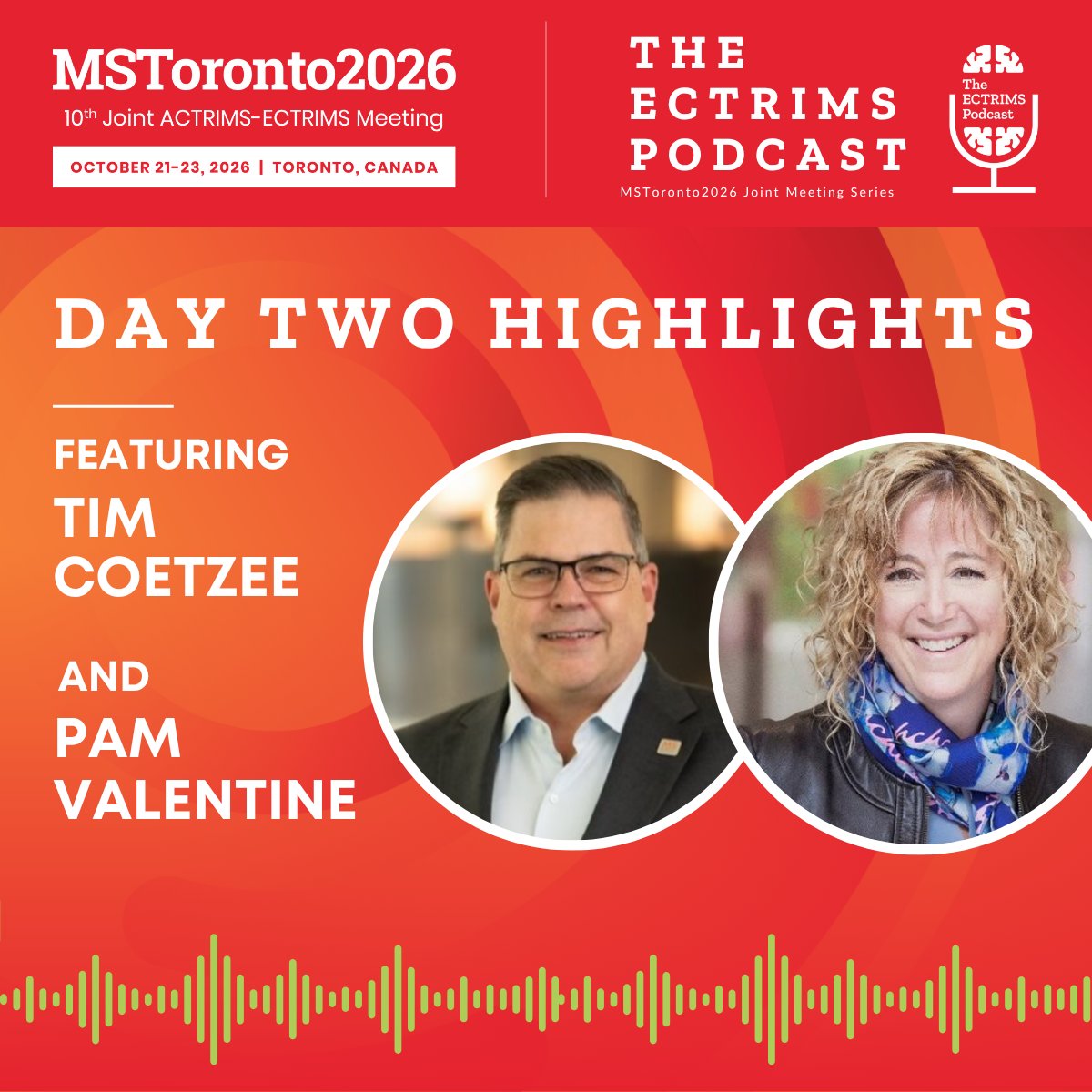
🎙️ From Day Two at #MSToronto2026, Tim Coetzee of @mssociety and Pam Valentine of @MSCanOfficial join us to talk research, collaboration – and turning scientific progress into real-world impact.
🎧 𝐋𝐢𝐬𝐭𝐞𝐧 𝐧𝐨𝐰:
🟢 𝐒𝐩𝐨𝐭𝐢𝐟𝐲: https://t.co/4bNvT9v4m8
🍎 𝐀𝐩𝐩𝐥𝐞: https://t.co/olK2NE4AmL
🖥️ 𝐖𝐞𝐛𝐬𝐢𝐭𝐞: https://t.co/wC8uxJEsjg
#ECTRIMSPodcast #MSResearch
𝐃𝐚𝐲 𝐎𝐧𝐞 𝐚𝐭 #𝐌𝐒𝐓𝐨𝐫𝐨𝐧𝐭𝐨2026 – 𝐚𝐧𝐝 𝐰��’𝐫𝐞 𝐭𝐚𝐤𝐢𝐧𝐠 𝐲𝐨𝐮 𝐢𝐧𝐬𝐢𝐝𝐞 𝐨𝐧𝐞 𝐨𝐟 𝐭𝐡𝐞 𝐦𝐞𝐞𝐭𝐢𝐧𝐠’𝐬 𝐡𝐞𝐚𝐝𝐥𝐢𝐧𝐞 𝐥𝐞𝐜𝐭𝐮𝐫𝐞𝐬.
Our special MSToronto2026 podcast series continues with Daniel Reich – the MSToronto2026 Lecturer – as he joins host Brett Drummond to reflect on some of the key takeaways from the first full day in Toronto.
Then, we go deeper. What if imaging could help us connect the dots in MS - from disease mechanisms to networks to the person living with MS?
Fresh from his lecture, Unifying Multiple Sclerosis: Imaging from Teams to Tissue to Biology, Daniel takes the conversation beyond the stage:
• What can imaging reveal about the biology driving MS? • How is it changing the way we understand what is happening in the brain?
• And where could the next generation of imaging take MS research?
Recorded direct from Toronto, hear Daniel and Brett unpack Day One – and go beyond the lecture - with one of the leading figures in MS imaging research.
🎧 𝐋𝐢𝐬𝐭𝐞𝐧 𝐭𝐨 𝐨𝐮𝐫 𝐃𝐚𝐲 𝐎𝐧𝐞 𝐇𝐢𝐠𝐡𝐥𝐢𝐠𝐡𝐭𝐬 𝐞𝐩𝐢𝐬𝐨𝐝𝐞 𝐧𝐨𝐰 – 𝐚𝐧𝐝 𝐟𝐨𝐥𝐥𝐨𝐰 𝐭𝐡𝐞 𝐄𝐂𝐓𝐑𝐈𝐌𝐒 𝐏𝐨𝐝𝐜𝐚𝐬𝐭 𝐚𝐬 𝐰𝐞 𝐛𝐫𝐢𝐧𝐠 𝐲𝐨𝐮 𝐧𝐞𝐰 𝐞𝐩𝐢𝐬𝐨𝐝𝐞𝐬 𝐭𝐡𝐫𝐨𝐮𝐠𝐡𝐨𝐮𝐭 𝐌𝐒𝐓𝐨𝐫𝐨𝐧𝐭𝐨2026.
🟢 𝐒𝐩𝐨𝐭𝐢𝐟𝐲: https://t.co/hmHfaLCpWJ
🍎 𝐀𝐩𝐩𝐥𝐞: https://t.co/V7RsGxFVAB
🖥️ 𝐖𝐞𝐛𝐬𝐢𝐭𝐞: https://t.co/xM5OOmQ7cV
Featuring Daniel Reich, National Institute of Neurological Disorders and Stroke (NINDS), The National Institutes of Health. @ECTRIMS@ACTRIMS #ECTRIMS #ACTRIMS #MSToronto2026 #ECTRIMSPodcast #MultipleSclerosis #MSResearch #Neuroimaging #Neurology
𝐃𝐢𝐫𝐞𝐜𝐭 𝐟𝐫𝐨𝐦 𝐓𝐨𝐫𝐨𝐧𝐭𝐨 – 𝐭𝐡𝐞 𝐜𝐨𝐧𝐯𝐞𝐫𝐬𝐚𝐭𝐢𝐨𝐧𝐬 𝐡𝐚𝐯𝐞 𝐚𝐥𝐫𝐞𝐚𝐝𝐲 𝐛𝐞𝐠𝐮𝐧, 𝐚𝐧𝐝 𝐰𝐞’𝐯𝐞 𝐠𝐨𝐭 𝐭𝐡𝐞𝐦 𝐨𝐧 𝐫𝐞𝐜𝐨𝐫𝐝! 🎙️
The @ECTRIMS Podcast is coming to you from #MSToronto2026, with a special series of episodes recorded throughout the Joint Meeting – bringing you highlights, reactions and conversations with some of the leading voices in MS and neuroimmunology.
And we’re starting with 𝐏𝐫𝐞-𝐃𝐚𝐲.
Ann Yeh joins #ECTRIMSPodcast host @MStranslate Brett Drummond to unpack the discussions and highlights from a day dedicated to specialised topics across MS and related neuroinflammatory diseases.
What stood out? What should we be paying attention to? And which conversations are already setting the stage for the days ahead?
🎧 𝐒𝐭𝐚𝐫𝐭 𝐲𝐨𝐮𝐫 𝐌𝐒𝐓𝐨𝐫𝐨𝐧𝐭𝐨2026 𝐰𝐞𝐞𝐤 𝐰𝐢𝐭𝐡 𝐮𝐬 – 𝐥𝐢𝐬𝐭𝐞𝐧 𝐭𝐨 𝐭𝐡𝐞 𝐟𝐢𝐫𝐬𝐭 𝐞𝐩𝐢𝐬𝐨𝐝𝐞 𝐢𝐧 𝐨𝐮𝐫 𝐬𝐩𝐞𝐜𝐢𝐚𝐥 𝐉𝐨𝐢𝐧𝐭 𝐌𝐞𝐞𝐭𝐢𝐧𝐠 𝐩𝐨𝐝𝐜𝐚𝐬𝐭 𝐬𝐞𝐫𝐢𝐞𝐬 𝐧𝐨𝐰.
🟢 𝐒𝐩𝐨𝐭𝐢𝐟𝐲: https://t.co/XdiWwuClxL
🍎 𝐀𝐩𝐩𝐥𝐞: https://t.co/Rn4X1PTONW
🖥️ 𝐖𝐞𝐛𝐬𝐢𝐭𝐞: https://t.co/et6SRntqsp
Featuring Ann Yeh, The Hospital for Sick Children(SickKids) / University of Toronto.
@ECTRIMS #ECTRIMSPodcast #MSResearch
Day 1 of #MSTORONTO2026 is underway & we’re starting with a topic that is critical to people living with #MultipleSclerosis - brain health! Dr Lara Pilutti from @ottawa_of is currently presenting on the key role that exercise plays in optimising outcomes. @ECTRIMS@ACTRIMS#MS
As with all new scientific developments, the findings should be considered in the broader context of existing evidence and interpreted with caution until further research provides greater clarity. [2/2]
Given the growing interest in the impact of #menopause on #MultipleSclerosis, a recent study from Israel, along with the responses and interpretations of scientists worldwide, is particularly important. [1/2] https://t.co/LYauhMNOmp
These findings could help researchers better understand what drives relapses, predict when they may occur, and in the future, identify new ways to prevent or treat them. [3/3]
While there has been growing evidence about the role Epstein-Barr virus (EBV) might play in the initiation of #MultipleSclerosis, a new study suggests it may also contribute to relapses in people living with #MS. [1/3] https://t.co/0ukGTjb43m
Researchers at @MassGenBrigham found increased EBV activity and changes in certain immune cells in people living with MS up to three months before a relapse, suggesting the virus may interact with genetic risk factors to trigger inflammation. [2/3]
This adds to growing evidence that people receiving antiretroviral therapy for HIV may be less likely to develop #MS. Similarly, small case studies of people living with both HIV & MS suggest that antiretroviral treatment may reduce the frequency of relapses. [2/2]
A new @UVA study has tested a modified version of a HIV medication in an animal model of #MultipleSclerosis & observed very promising early results. Read more: https://t.co/7QGRnsyUJS [1/2]
More work is needed, but having reliable biomarkers that can track and predict disease activity in people living with #MS would be a big step forward. [3/3]
While many may have heard of neurofilament light chain (NfL) as a potential biomarker for disease activity in #MultipleSclerosis, fewer have heard of GFAP (glial fibrillary acidic protein). [1/3]
A study has shown GFAP may be particularly useful at highlighting disease progression risk without relapses, aka PIRA. The study, involving 2300+ people living with MS, also found falling GFAP levels during certain treatments were associated with a lower risk of later PIRA. [2/3]
At the same time, it was announced that the results for metformin did not suggest any benefits in this regard. Therefore, it will not continue to be investigated as part of this study. [2/2]
Exciting news from @mssocietyuk. Early analysis of the Octopus trial has seen alpha-lipoic acid moved to the next stage, indicating it has shown promise as a potential treatment for people living with progressive #MultipleSclerosis. #MS [1/2] https://t.co/RPdrlH6cRZ
🎧 New Podcast Episode: The Blood–Brain Barrier in Multiple Sclerosis — From Dysfunction to Treatment
The blood–brain barrier is often described as the gatekeeper of the brain.
But in multiple sclerosis, its role may extend much further.
In this episode of the @ECTRIMS Podcast, Prof. Elga de Vries of @amsterdamumc and MS Center Amsterdam joins host Brett Drummond of @MStranslate to explore how blood–brain barrier dysfunction is shaping our understanding of MS — from immune cell infiltration and inflammation to disease progression and future treatment strategies.
𝐓𝐡𝐞𝐲 𝐝𝐢𝐬𝐜𝐮𝐬𝐬:
🔹 What happens when the barrier becomes dysfunctional
🔹 Changes occurring in both white and grey matter
🔹 Blood–brain barrier-on-a-chip models and what they could reveal
🔹 The challenge of getting treatments into the CNS
🔹 Whether the barrier itself could become a therapeutic target
Could protecting or strengthening the blood–brain barrier eventually help change the course of MS?
🎧 𝐋𝐢𝐬𝐭𝐞𝐧 𝐧𝐨𝐰:
𝐒𝐩𝐨𝐭𝐢𝐟𝐲: https://t.co/99dxlgKu1x
𝐀𝐩𝐩𝐥𝐞 𝐏𝐨𝐝𝐜𝐚𝐬𝐭𝐬: https://t.co/LR3BEO4k1Y
𝐖𝐞𝐛𝐬𝐢𝐭𝐞: https://t.co/tPdBtdaoF5
#MultipleSclerosis #BloodBrainBarrier #MSResearch #Neuroimmunology #Neurology #Neuroinflammation #MSProgression #CNS #DrugDelivery #ECTRIMS #ECTRIMSPodcast
VOTE NOW: As part of an appointment with a neurologist or #MS nurse, I have had a discussion about #diet as a way to help manage my #MultipleSclerosis…
As interest grows in understanding how menopause affects women living with #MS, future studies will be key to confirming these findings & exploring whether hormone therapy could eventually help manage cognitive changes associated with both menopause & MS. [2/2]
A small @UCLA study has found a combination of the hormones estriol & progesterone may improve cognitive outcomes in menopausal women. Previous research from the same group has also shown that estriol may have beneficial effects for women living with #MultipleSclerosis. [1/2]