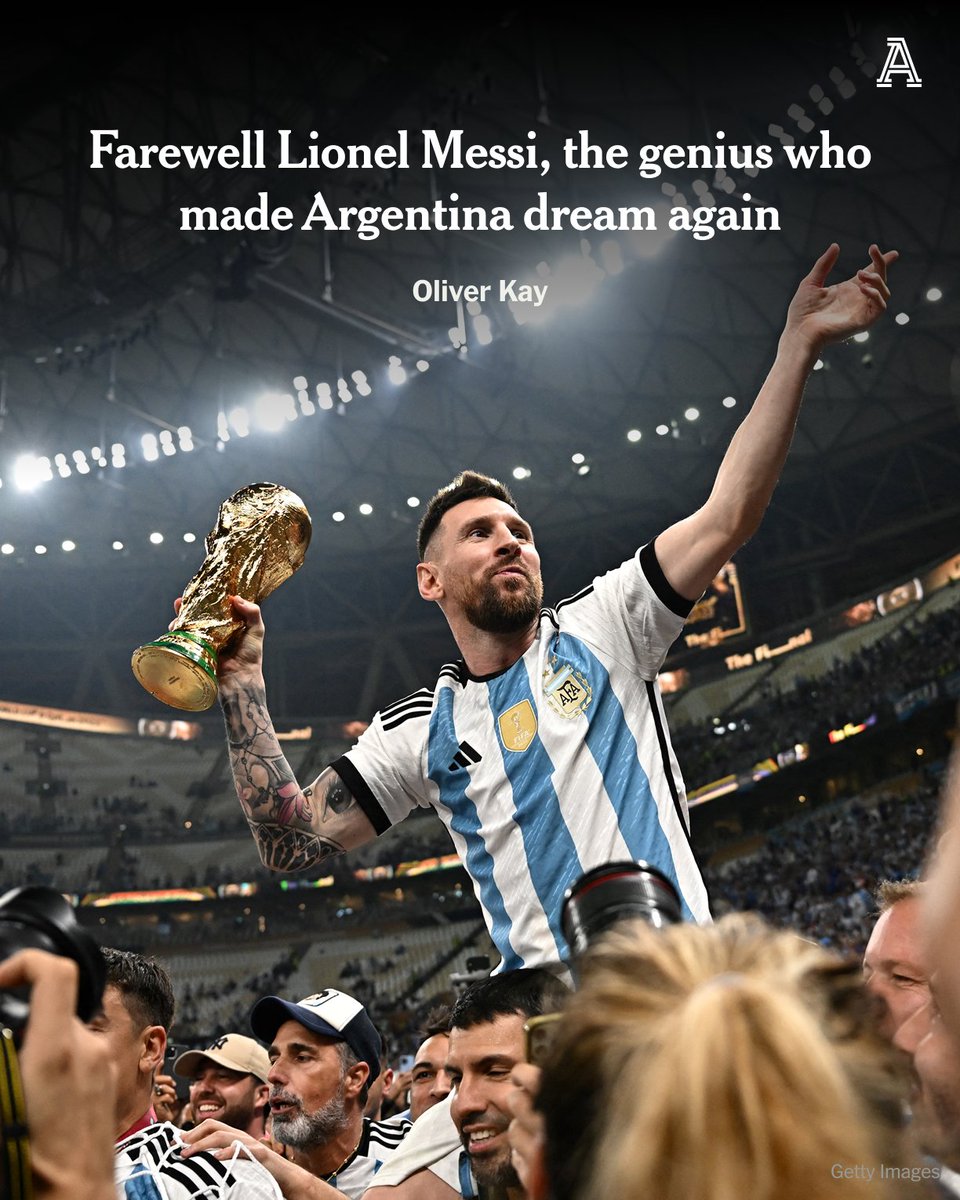
Lionel Messi's international career, dating back to a friendly against Hungary in August 2005, can be split into two halves: the first bringing so many frustrations and disappointments, defeats in three consecutive finals (two Copas America and one World Cup), struggling to replicate his irresistible Barcelona form, which led him hastily and briefly to announce his retirement from the international game in 2016; the second full of highlights as, after a change of heart, he learned to shoulder the burden of a nation’s fervent hopes and expectations, leading Argentina to victory in two Copas America, either side of his crowning glory at Qatar 2022.
Just imagine if he had stuck with his initial decision to retire from international duty.
“For me, the national team is over,” he told reporters after missing his penalty in a shootout loss to Chile at the 2016 Copa America final. “It’s been (defeat in) four finals. It (success with Argentina) was the thing I wanted most, but I couldn’t get it. The decision is taken. There will be no going back.”
To that point, playing for Argentina looked like a trial for Messi. There were endless unflattering comparisons with the great Diego Maradona, another genius, whose ebullient personality — flaws and all — resonated with the Argentine public in a way the introverted Messi did not.
An outpouring of support from fans and team-mates, as well as overtures from the country’s then president Mauricio Macri, coaxed him out of retirement. But the 2018 World Cup brought more frustration and more criticism, not least from Maradona. “We shouldn’t deify Messi any longer,” Maradona said later that year. “He’s a great player, but he’s not a leader. It’s useless trying to make a leader out of a man who goes to the toilet 20 times before a game.”
That context is what makes Messi’s achievements in the second half of his international career all the more remarkable.
Leadership might not have come naturally to him, but he grew into the talisman figure that Argentina — as a nation, as well as a team — needed him to be.
Coach Lionel Scaloni built a more solid, cohesive, structured side, and Messi learned how to embrace the unique pressure of following in Maradona’s footsteps. From the moment he won that first Copa America title in 2021, one success led to another and then another.
Lifting the World Cup the following year, at the fifth time of asking, was Messi’s crowning glory.
He was 35 then, beyond the peak of his powers, but his performances — under the threat of elimination against Mexico and Poland in the group stage and then facing severe pressure against Australia, the Netherlands and Croatia in the knockout phase — were thrilling even before the final with France, where he scored twice before Argentina prevailed in a penalty shootout.
📝 @OliverKay
🔗 https://t.co/skhaKbPeIk
Thank you for giving us the most beautiful journey of our lives. Your legacy and professionalism will remain forever etched in our hearts.
Thank you, Captain. We love you 🩵
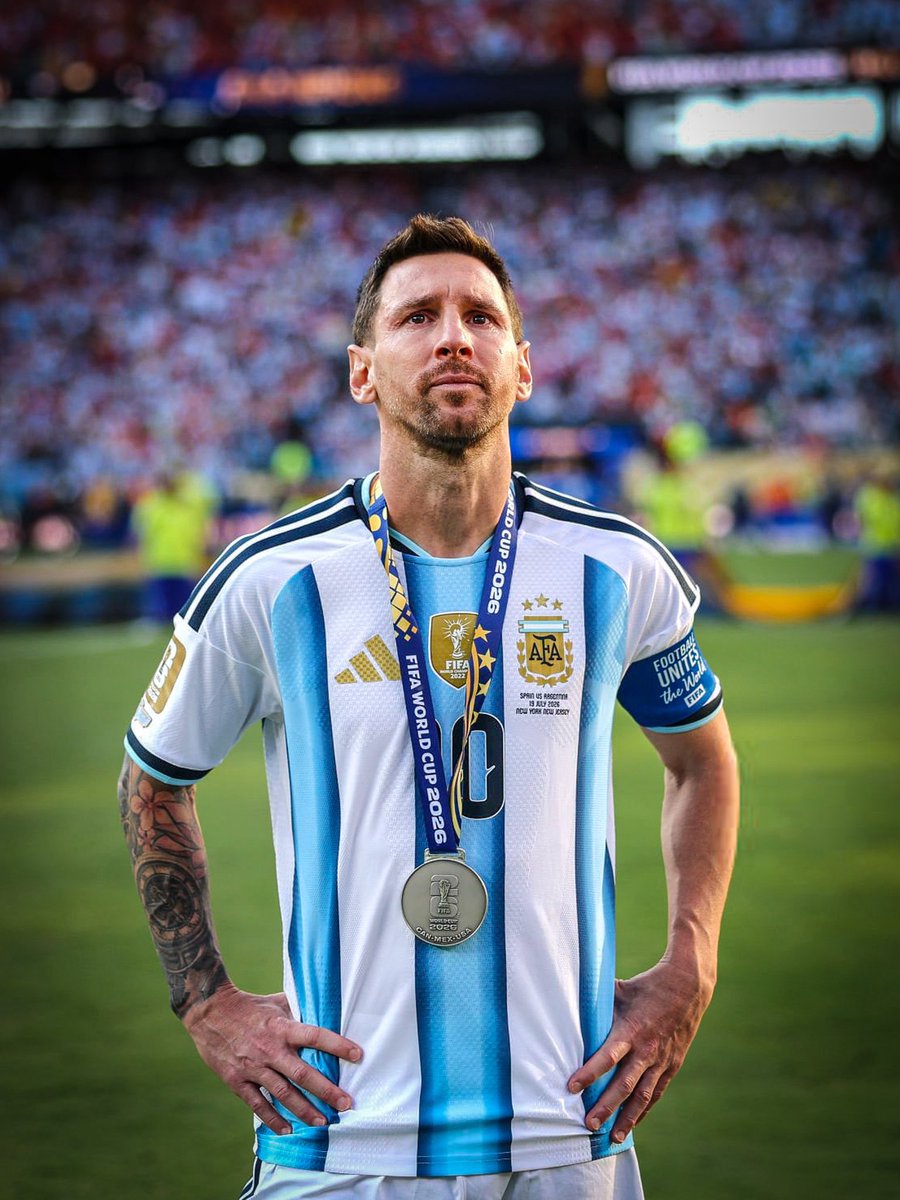
Argentina captain Lionel Messi has retired from international football following this summer’s World Cup.
Messi said the decision “hurts deep in my soul”, but added that he “realises the time has come”.
More from @Millar_Colin ⬇️
https://t.co/ftJWOFb7tI
Usually re-watch The League around this time of year and always forget about some amazing lines like “fear boner”, “vinegar strokes”, “forever unclean”, and my favorite “rosterbating”.
The constant bitching about the way Argentina played this World Cup is all coming from the “every 4 years soccer watcher” and the English. If you’ve watched a second of South American soccer, Copa America, or CONMEBOL qualifiers, that’s how every country plays. You lot are soft.
I’m sad about the ending, but I think this World Cup was one of the most entertaining tournaments of all time. So many amazing storylines and expectations were blown out of the water. Went by too quickly, but loved every second of it.