On spot.
The @TheEconomist’s characterisation of TTP once “poor and ill-disciplined” but now “better organised and financed, and only targets Pakistani soldiers and police”, represents a selective narrative that is inconsistent with both empirical evidence and Pakistan’s official counter-terrorism posture.
In KP alone, TTP has taken lives of 86 civilians and injured 260 more in 2026 thus far.
It must be noted that Pakistan’s policy remains unambiguous. TTP, officially designated a banned terrorist organisation constitutes an existential threat to the constitutional order, the writ of the state, and the safety of its citizens.
This designation is indicative of group’s deviant ideology and indiscriminate violence, rejecting any notion of “restraint” or “selective targeting.” Upgraded organisational capacity and external financing have amplified the scope and lethality of its operations across civilian and security domains alike.
Open-source and official reporting confirm a sustained pattern of TTP-attributed attacks on markets, schools, infrastructure, and civilian gatherings in KPK, alongside operations against security forces. Such data refute any implication of disciplined insurgency and align instead with the broader resurgence documented in recent threat assessments.
Under the Revised National Action Plan and the ongoing Azm-e-Istehkam campaign, Pakistan maintains a zero-tolerance, full-spectrum response. No negotiations, no legitimacy, and relentless kinetic and ideological pressure against TTP and affiliated networks.
Responsible scholarship and journalism must integrate complete casualty record rather than curate a partial portrait that inadvertently legitimises an insurgency.
Civilian suffering in KP is not collateral, it is central to TTP’s strategy of destabilisation.
Accurate threat assessment demands fidelity to facts, alignment with Pakistan’s national security imperatives, and rejection of sanitised framings. The data, and Pakistan’s resolute policy, speak clearly.
The Economist is very generous to TTP.
In 2026, so far, 86 civilians have been killed and 260 injured by terrorists of TTP in Khyber Pakhtunkhwa province of Pakistan alone.
First get your facts right before drawing inferences.
@TheEconomist
I have exclusive photos of the greatest bet a Pakistani has taken on Pakistan this century. A massive $200 Million investment initially. A total of $1 BILLION allocated to this and related value chain investments. BYD by my namesake Habibullah Khan.
This plant is 73 acres. It will produce 25,000 units initially and expand to 50,000 units seamlessly in Phase 2.
Why is this being done. Because his competition was so satisfied with their monopoly and the billions of rupees they raked in while giving Pakistanis older, unsafe cars with minimal features, they didn’t think of Pakistan.
Habibullah Khan did. He estimates that with a 30% EV penetration Pakistan will not only save almost $3 billion dollars a year on fuel, and it will also reduce GHG emissions by over 1 million tons MTCO2e helping Pakistan meet its SDG commitments to the Paris agreement.
EV value chain investments by him and others will have an immediate impact of a further $3.75 billion dollars to the GDP.
If you’re gonna dream. Dream big.
This plant is an example of how Pakistan’s future can look. Good incentives by government result in unlocking local and international capital. Investment brings in LATEST ADVANCED TECHNOLOGY with knowledge transfer (Suzuki is still selling cars with hand rolled windows 😭). Plant is geared for export as well allowing you to earn dollars as you indigenise value chains in mining, batteries, auto….
The oil guzzling local companies know they are beat. There were 100+ EV charging stations a year ago. Today there are over 2000. The EV Revolution is irreversible. So they’re trying the only route they know how. Using powerful advisors and ministers to put pressure on government to double the duty on EV CBU’s so as to kill this massive dream in the womb.
Not just Pakistan’s mystery billionaire, Habibullah Khan is Pakistan First.
I saw this & I was thinking that
Why stop at MBQ?
What about Expeditions of Caliph umer? Expeditions sent by Prophet Muhammad SAW? Prophet SAW send letters to persia & rome & sowing the seeds of their conquest?
Ponder!
That's how the Paindu jahilliya of nationalism blinds us.
I’ve seen several Indian accounts portraying the Balochistan Liberation Army’s (BLA) non-inclusion on the UN 1267 Sanctions List as some kind of diplomatic victory. That argument is neither as clearcut nor as significant as it’s being presented.
Pakistan and China formally raised the matter at the UN Security Council in 2025. Since then, the United States, United Kingdom, and Australia have all designated the BLA and its Majeed Brigade as terrorist organizations, not rights movements.
Importantly, 1267 sanctions is a process, not a one time political verdict which has been focused primarily toward AlQaeda, Islamic State, and affiliated entities.
Terrorism related evidence often includes intelligence reporting, protected sources, and ongoing investigative material. Such information cannot always be made public immediately without compromising sources, methods, or active operations. Reducing a complex sanctions process to a simplistic “victory” narrative is both premature and misleading.
No matter how many constitutional amendments or reforms the government brings, Pakistan will remain trapped in the same corrupt and oppressive system as long as feudal and Seth culture continues to dominate our society and assemblies.
The problem is not just the laws. It's the class of people who benefit from this broken system and have no incentive to change it. And Pakistan's destiny will not change until we break the grip of this privileged elite over our politics, economy, and institutions.
Our media, influencers, and the entertainment industry also need to stop glorifying this culture. Instead of selling fantasies of quick wealth, power, and elite lifestyles, they should be highlighting the real social and economic problems that millions of working-class Pakistanis face every day.
Update |
Turkish Foreign Minister Hakan Fidan has said that Türkiye’s relations with Pakistan are rooted in history and solidarity and should not be viewed negatively by India. He added that if India takes issue with countries maintaining good ties with Pakistan, “there will be many such countries,” urging New Delhi not to misread the situation.
Reports say Taliban Supreme Leader Akhundzada privately warned the TTP to halt attacks inside Pakistan. Islamabad has "welcomed" the signal. But a nation that has buried thousands of soldiers, civilians, and schoolchildren cannot be satisfied with an informal message conveyed through back channels.
1/5
After a long wait - I'm finally happy to share this output with my friends. A study on the concept of this menace and how does it operate from the ideological point of view. What's the language they use, how they abuse and manipulate the sacred and divine scriptures. Why our policy makers and our scholars from social sciences background, avoid this subject and it's details discussion?
I'll share the content online tomorrow after it's publication on @_southasiatimes.
Stay tuned.
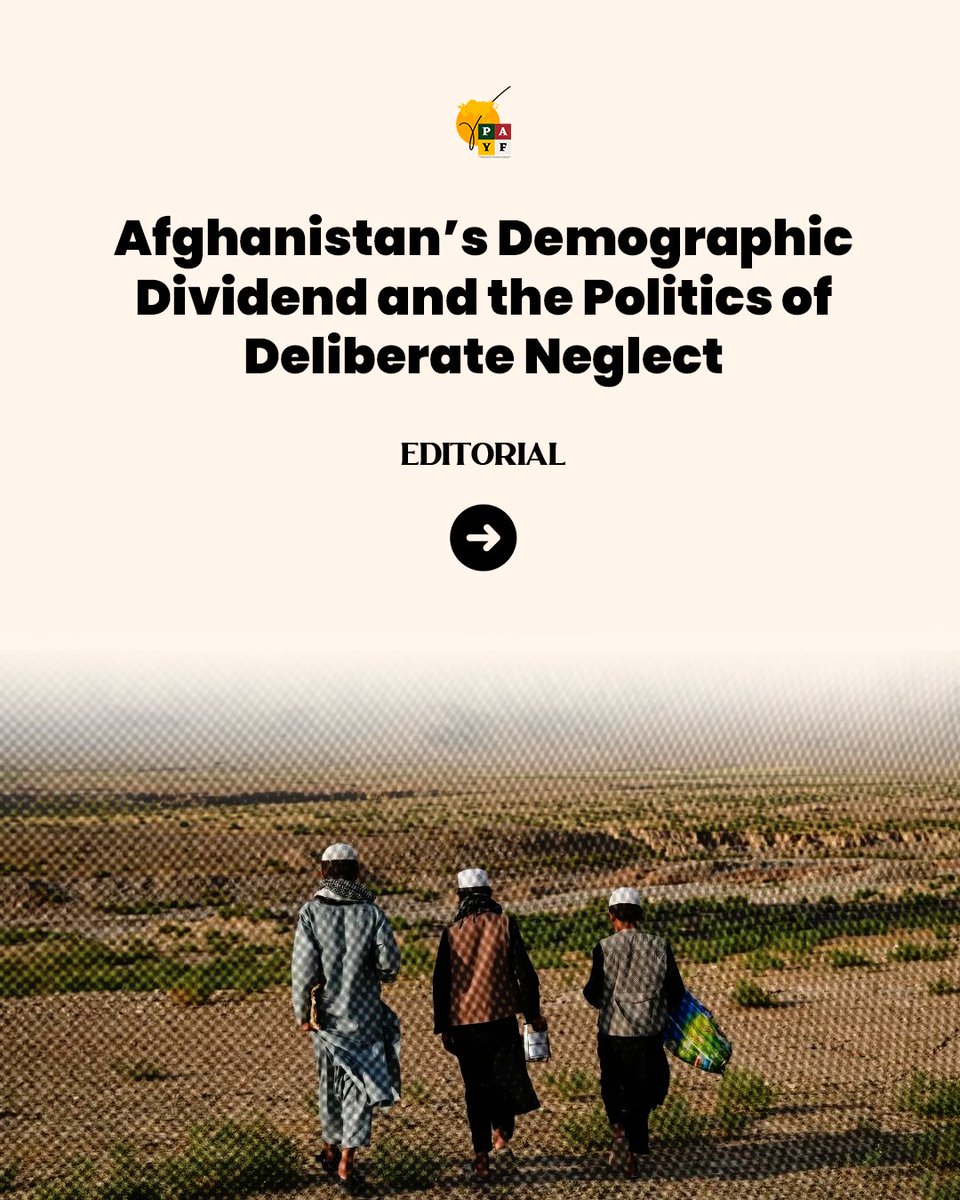
EDITORIAL!!
Everyone is focused on border strikes and military pacts. But the most dangerous crisis in our region isn't happening on a battlefield, it's happening in a classroom. Or rather, the absence of one.
1/5
UPDATE!!
The Islamabad Capital Territory administration has once again introduced restrictions on commercial operating hours, directing shops, markets, and shopping malls across the capital to close by 8pm. The decision was announced through a notification issued by the district magistrate and takes immediate effect.
Under the revised schedule, restaurants, tandoors, grocery stores, bakeries, meat shops, fruit vendors, and vegetable sellers have been granted extended operating hours until 10pm. Authorities view the measure as part of broader administrative efforts to regulate urban activity and manage public resources more efficiently.
The Al Jazeera assessment reflects 3 major shifts in South Asian geopolitics post-2025 crisis:
1. Failure of Pakistan's Isolation as an India's Grand Strategy:
India's 2016 policy sought to impose diplomatic, economic, and security costs on Pakistan by denying it international space. Classic “compellence through isolation.”
However, Pakistan diversified tie with U.S., China, Gulf, Iran as “multi-alignment hedging.” Isolation failed because:
1. Great power interests trump bilateral disputes*:
a. U.S. needs Pakistan.
b. China views it as a BRI/CPEC pillar.
c. Gulf states balance India-Pakistan for energy + diaspora.
2. India’s own contradictions: Prioritizing Indo-Pacific balancing with the U.S. while rejecting U.S. mediation undermined New Delhi’s credibility as a consistent partner.
3. In multipolar systems, isolation strategies rarely work against middle powers with geo-strategic relevance.
4. Kugelman’s “global battle of narratives” point aligns with modern conflict theory. War is now 40% kinetic, 60% perception.
5. During MAY 2025 crisis, Pakistan gained through;
a. Military restraint + diplomatic outreach* framed it as responsible nuclear actor.
b. Trump’s mediation claim internationalized the crisis, countering India’s “bilateral only” red line. India’s denial created friction with Washington, weakening its diplomatic leverage.
b. Pakistan demonstrated ability to convert military crisis into diplomatic capital. It Reinforced Full Spectrum Deterrence with Full Spectrum Diplomacy.
c. India was entangled in self created “commitment trap" as hardline domestic rhetoric reduces flexibility abroad, making crisis de-escalation harder.
6. Regional architecture did not support India’s war rhetoric;
a. India’s boycott achieved tactical isolation of Pakistan in SAARC, but led to strategic loss as after SAARC Paralysis there is no functional South Asian forum exists. Nature abhors a vacuum.
b. Pakistan improved ties with Bangladesh, deeper Gulf security ties, and activated OIC platform on Islamophobia.
c. Post-2025, China-Pakistan defence partnership gets framed as “regional security provider,” not just bilateral. This is "triangular deterrence." China’s shadow alters India-Pakistan escalation calculus.
d. While pursuing Pakistan’s isolation, India damaged broader South Asian integration goals. Alternative minilaterals like BIMSTEC lack Pakistan resultently lack political weight.
The report under discussion:
1. Accurately captures multipolarity. Now No single power can dictate Pakistan’s status anymore.
2. Links domestic politics to diplomacy: India’s domestic Muslim-policy critiques complicate its Global South leadership bid.
3. Recognizes narrative centrality: Modern crises are won/lost in capitals, not just battlefields.
4. Underplays structural drivers such as Kashmir, water, indian funded proxies etc. Diplomatic gains don’t equal dispute resolution, pertinent in case of Pakistan-India
The report reflects what IR scholars call “asymmetric entrapment avoidance”: Pakistan wisely leveraged great-power competition to escape isolation, while India faced “strategic overextension” while trying to isolate Pakistan, compete with China, lead Global South, and manage domestic politics simultaneously.
May 2025 crisis didn’t change military balance, but it recalibrated the security and strategic environment of South Asia.
Both states now operate in an environment where:
a. Isolation is infeasible for either side.
b. Third-party roles are re-legitimized despite India’s preferences.
c. Narrative management = deterrence management. That makes future crises less about who shoots first, and more about who frames first.
Deterrence in South Asia is now tri-domain (nuclear, conventional, and diplomatic).
India’s 2016 strategy focused on the third but neglected how the first two shape it. Pakistan successfully exploited that gap.
@murtazasolangi@clary_co@bttn_quetta@ciss_ajk
https://t.co/S8pDQAoMrV
The Indian Army Chief once again says Op Sindoor is still on, and that modern battlefields are so transparent that every movement is known to the other side. But who knows? Pakistan's next surprise may leave no movement to track and no time to react.
@M_EssJay@AliHamzaAwan1
Why Pakistan will likely refuse to join the Abraham Accords
Despite Trump's pressure, costs of normalising ties with Israel are higher in Pakistan than in Arab states due to its more vibrant and contested political landscape
“You will find me, if Allah wills, among the patient.”
Amid endless deserts and burning rocks, Ibrahim was leaving behind his wife and newborn child. The sun blazed over the barren land, and Hajira asked only one question:
“Is this the command of Allah?”
He replied, “Yes.”
She said, “Then Allah will never abandon us.”
Thus began a radiant chapter of submission and trust in God. In the lifeless desert of Makkah, the foundation of the everlasting Abrahamic tradition was laid.
سکھاۓ کس نے اسماعیل کو آدابِ فرزندی
By Allah’s command, Ibrahim left his wife and infant son behind. After succeeding in that trial, he was tested once more. When Ismail grew into youth and became old enough to walk and work beside his father, the command came to sacrifice him.
“Then when he reached the age where he could strive alongside him…”
A gentle and patient son, one who walked beside his father, supported him, strengthened his resolve, and comforted his heart. Imagine how beloved such a son would be.
Ibrahim said:
“My son, I have seen in a dream that I am sacrificing you. What is your opinion?”
These are the etiquettes of fatherhood: “What is your opinion?” acknowledging that the son was a free soul, bound only by love for Allah.
سکھاۓ کس نے اسماعیل کو آدابِ فرزندی
After hearing this, Ismail asked no questions. Familiar with the sweetness of truth and closeness to God, he replied:
“O my father, do as you are commanded.”
He immediately understood that this dream was not an ordinary vision, but a command from Allah.
“My father, you will find me, if Allah wills, among the patient.”
Then Satan came to each member of this family whose lives were adorned with sacrifice, and failed every time.
He approached Hajira and said:
“Your husband is going to sacrifice your beloved son by Allah’s command.”
She answered:
“If it is Allah’s command, then even a hundred Ismails may be sacrificed.”
After Ibrahim’s guidance, it was Hajira who immortalized this unmatched example of submission, patience, perseverance, and sacrifice. Mothers are the strongest fortress for the protection of faith.
Peace be upon Ibrahim. His most precious possession was Ismail, and Ismail himself was ready to sacrifice his own most precious possession, his life.
We often speak of the Abrahamic tradition during Eid al-Adha, but forget the tradition of Ismail: what kind of spiritual awareness compels a young boy to willingly offer his neck for sacrifice?
“Then when both submitted, and he laid him down upon his forehead…”
“And We called out to him: O Ibrahim!”
“You have fulfilled the dream. Indeed, this is how We reward those who do good.”
“Surely, this was the clear trial.”
Peace be upon Ibrahim.
تیری راہِ محبت میں جب بھی کبھی، ہم سرِ شام رحمت پکارے گئے
جان جب تک رہی ہم بھی جلتے رہے، جب تلک نہ پلٹ کر ستارے گئے.
Eid ul Adha Mubarak
#Eiduladha
Do you know there was a top secret letter sent by a code name to Pakistani PM which changed the course of history?
People often compare it to the letter Albert Einstein wrote to Franklin D. Roosevelt before the Manhattan Project.
1/11
#Youm_e_Takbeer
May 28th, a day etched in the heart of every Pakistani, when the echo of our resolve shook the Chaghi Hills and echoed across the world. It was not just a nuclear test; it was a bold declaration that Pakistan’s geographical and ideological boundaries are inviolable.
On this historic day, our nation stood tall, united, resilient and fearless. We proved to the world that no threat, no pressure, and no force can weaken the will of a sovereign and self-reliant Pakistan. We became a nuclear power not to wage war, but to preserve peace with dignity, honour, and unwavering deterrence.
Our journey is far from over. Challenges remain, but so does our unmatched resilience. We possess the will, the capacity, the capability, and the courage to defend our homeland and work towards its bright future.
This sacred land Pakistan 🇵🇰 is destined to rise and shine till the end of times, Insha’Allah. Let us all commit, with sincerity and devotion, to play our part in its prosperity and strength.
Long live Pakistan. Long live the spirit of Youm-e-Takbeer. 🇵🇰
#PakistanZindabad #ChaghiHills #DeterrenceDay #PrideOfPakistan #ResilientNation
Pakistan’s concern over cross-border terrorism, particularly the growing threat posed by the TTP, is real and cannot be ignored. Afghanistan’s concern over regime survival, civilian casualties, refugee expulsions, and economic strangulation is equally real. Neither side can secure peace through airstrikes, accusations, or border closures alone.
Pakistan and Afghanistan are bound by geography, trade, faith, ethnicity, and history. Continued confrontation will only strengthen militant networks, deepen mistrust, and destabilise the wider region.
At a time when Iran is under the Israel-U.S. aggression, both Afghanistan and Pakistan should have adopted a common position for peace and stability in the region. However, unfortunately, this is not the case.
The remedy lies in sustained dialogue, intelligence-sharing, border coordination, economic engagement, and a verifiable counterterrorism mechanism acceptable to both sides. China and regional stakeholders can facilitate, but ultimately, Islamabad and Kabul must choose cooperation over coercion.
A stable Afghanistan is in Pakistan’s interest, and a peaceful Pakistan is in Afghanistan’s interest.
28th May 1998 was not just a test of nuclear capability. It was a declaration that Pakistan's sovereignty, security, and survival are non-negotiable. This was the day when Pakistan changed South Asia's strategic balance forever.
YOUM-E-TAKBEER
PAKISTAN HAMESHA ZINDABAD 🇵🇰