I think 24 is the age after which one should give up on finding love. People become too mature and calculated in their behaviour to fall for an irrational thing like love.
Dear BKL,
Saw the case of dry gangrene for the first time. The patient was diabetic and he used to smoke bundles of beedi 🚬 everyday. He is going to lose his left foot completely and the decision about the right foot will be taken after Doppler USG.
I’m in Tamil Nadu right now, keeping the humidity part aside. These people really don’t know how to make Dose / Dosa.
Dose should be mild brown, mid roast, medium fluffy, minimum ghee/oil, filled with spicy aloo palya.
Only Udupi chefs can execute this masterpiece.
Today is World Homeopathy Day.
A gentle reminder to please think "country first" and elect educated leaders so that this great nation's long lost scientific temperament, logical healthcare policies and public health priorities make a healthy and rational comeback.
Otherwise we will be stuck, spending millions of taxpayer money researching coconut water for autoimmune diseases, pepper for cancer, turmeric for gun-shot wounds, honey for abdominal abscesses, chai for bipolar mania, basmati rice for fever and paneer tikka masala for Alzheimer's disease.
Think.
Was posted in pnc ward and this woman came and asked " tumhi baby intern aahe ka?" (She meant paeds intern) But I was in a hurry, so unknowingly I said, "naai, mi mummy intern aahe" (obgy intern)
Forget about patients even head nurse and my CRs started laughing😭😭😭😭😭😭😭😭
"Death in today’s world involves large financial interests. Death is a bigger business than birth."
Nothing makes more sense than this statement in critical care offered to patients with advanced chronic diseases in corporate hospitals.
Providing a dignified death is as important a part of clinical medicine as diagnosis and management of preventable and treatable illnesses.
In critically ill patients who cannot be salvaged, avoiding expensive intensive unit care should be encouraged. When death is coming, educate patients and families on how to embrace is with dignity and comfort, and not subject them to more tests, and advanced treatments that delay inevitable death.
Read more at:
30 people in Thrissur sign 'living will' for right to die with dignity.
https://t.co/sDAyUvmli8
We are very excited to let you know that in early December, we will release the first trailer for the next Grand Theft Auto. We look forward to many more years of sharing these experiences with all of you.
Thank you,
Sam Houser
Fourth edition of my first book-in less than a decade since I started my medical writing. Unbelievable as it sounds.A very special gratitude goes out to all my teachers and students for having ignited the passion of teaching and writing in me.This is from all of me to all of you.
FOUR WEEKS
[long post, but worth it]
I had the pleasure of having a bittersweet conversation with a follow-up patient of mine today. I knew it was the last time I was going to meet him and he knew it too. He travelled 340 km from his hometown because he wanted to see me and talk to me. According to him, our conversations were energizing, even though he knew he was going to die.
Four weeks ago, I met this aged man of 72 with advanced liver cancer that had spread to his bones. He was jaundiced at the time and abdomen fluid filled, making him breathless. His nephews, along with his daughter and three grandchildren landed in my OPD because they had heard of miraculous stories of “cures” in my Unit, especially with critically-ill cirrhosis patients.
The elderly gentleman wanted “a cure” so that he could spend time with his grandchildren. I saw that he was already on a drug called Lenvatinib and multiple other medications including supplements, vitamins, minerals, protein powders and what not. He had to consume 12 tablets in the morning and 7 at night and a whole lot of powders in between.
Being a big foodie, he was not allowed to touch meat or fish, he could not enjoy whole eggs, his food had become salt less and bland. He became bitter and his life was confined to the room where he slept, ate like a mouse, and bathed when someone took him to the washroom.
I look at everything and everyone. I look at his reports and at him. Every angle I looked at it, there was no way this man would survive another 3 months. I was sure of it. The science was assuring. I opened the conversation with him, by asking him his diagnosis. He was an educated man. He knew he had cancer and but his family never uttered the ‘C’ word while at home and made sure other doctors who saw him did not utter it too. But in front of me, he did say the word, much to the surprise of his family. I tell him that he should not expect any miracles from me, because the diagnosis is advanced liver cancer and he had very little time left.
He asked me how long he had left. And I tell him that I was not sure how long I would live too, and if I was going to be on this chair tomorrow, because I could go away in an accident on my way back home tonight, never even getting the chance to say goodbye to my family. And so, I was nobody to judge and predict the number of days, weeks or months left for him or any other patient for that matter. The time left is what was important, not the time itself.
I saw him sit up because the conversation until now, was not on medicines or drugs, but more like two humans having an open round. I spoke to him about his treatment options and how all of those could worsen him instead of getting him better. I put him on three drugs – one to reduce his swelling, one to reduce his chance of blood vomiting and one to reduce ammonia levels to prevent sudden onset brain dysfunction. None of these would guarantee any of those from happening, he could still end up with all three complications which he acknowledged.
19 tablets were reduced to 3 and then came the diet advice. Hardly three months left to live. I asked him what his favorite past time was. He says he loved food. He would walk to small lanes and check out new carts selling fresh evening snacks or go to a new place and try a new dish. He owned a restaurant and he loved cooking and eating with family. I remove all restrictions from his diet. Every single one. I tell him to enjoy his food, eat as much as he wanted, use salt to his taste and enjoy the fried fish, the baked stuffed breads, the spicy flavored rice with succulent chicken legs and if he was adventurous enough, to have that beef kebab. That was 4 weeks ago.
And now he was in front of me, to see me one last time, because he knew that another round of travel would not be possible. He was already on the wheel chair and he could travel only because they had removed 8L of fluid from his abdomen the day before. But the last 4 weeks was the best he had ever had because they were “purposeful.”
A week back, he became disoriented because he ate seafood and his ammonia levels shot up. They had to give him lactulose enemas at a nearby hospital and he spent a day in the ICU and got better. But he did not regret any of it. None of it. He had enjoyed his time. He said his life was now “before he met me, and after he met me.” He was happy.
He enjoyed food with his family, sometimes got into trouble, at times landed in the ICU, but he fought his way out to enjoy more quality time with family, which is what all that he remembered now, and will do so, while lay dying. And he was happy he met me because I told him that he could be still be happy in his suffering if he chose to.
I ask him what his plans were. And he says there is a new place where they serve fish and rice near his place and I he would like to taste the fish grill. But his appetite was too low now and he just wants to lie down all the time, but he will still try to have a bite, because there was something he was always looking forward to always doing with his family around and it always featured food. And they would allow him that little pleasure and that makes his fight for whatever had left in this life.
Clinical medicine is not always about medicine.
As he was about to leave, he asks me something strange, but logical. He asked that if my alcohol loving cirrhosis patient was dying within a few months’ time, would I allow that person to have some alcohol as his wish during the last few weeks. And I tell him that every single alcohol-cirrhosis patient who knew they were going to died of complications of liver disease never ever asked me if they could have that one last drink.
I tell him that the last gentleman, of 34 years, who discovered that he was going to die in a months’ time (and he did too), begged me to save him, not to hold that last glass of good whiskey, but save him to hold his little daughter because he really needed that.
My patient smiles at me. I will not forget him.
And he will remember me too.
So long, old friend of four weeks.
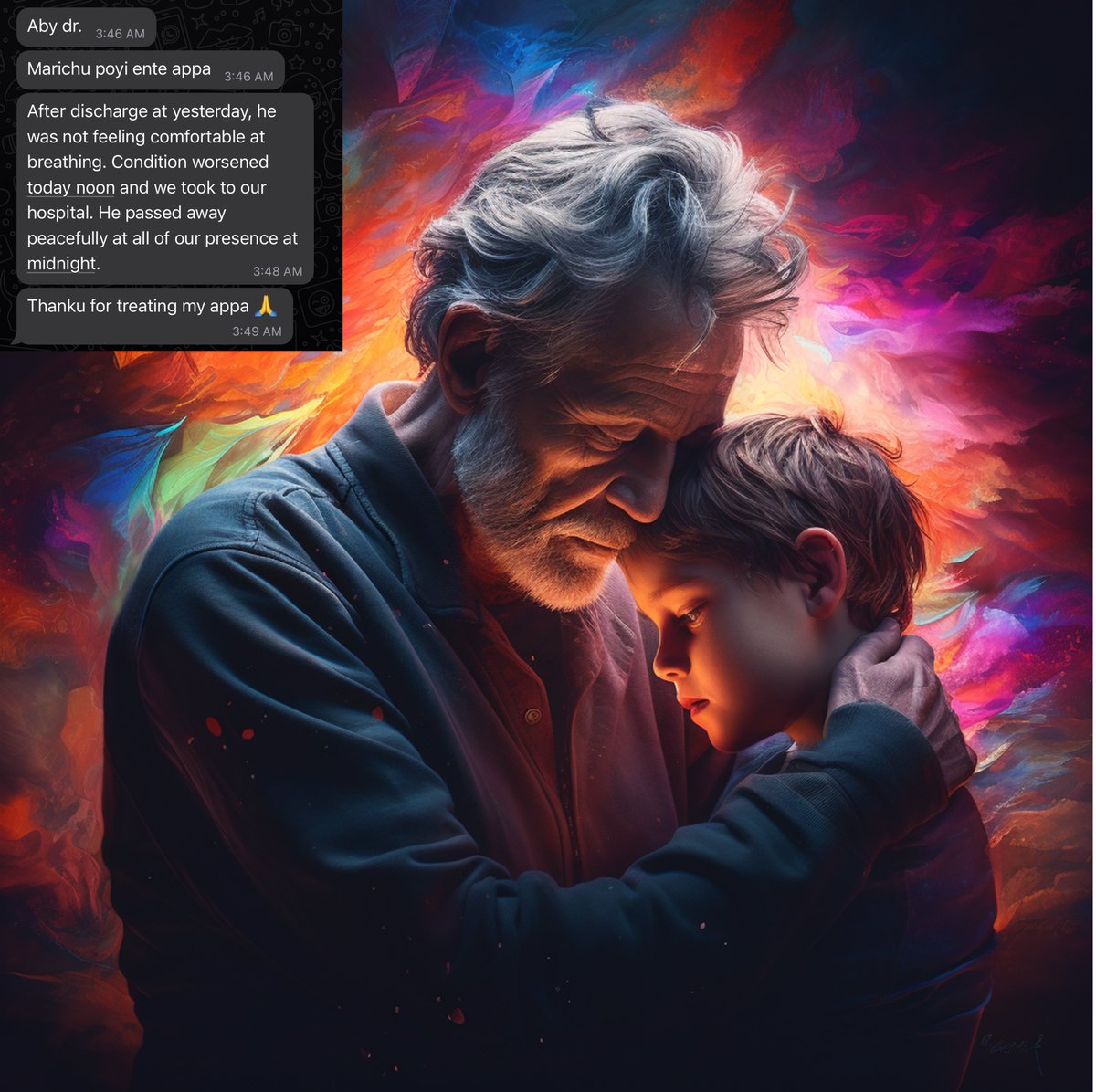
Yesterday, my patient, 48 years old, died, surrounded by his wife and two children. The eldest is a son, 17 years old. At such a young age, he was thrust into caring for his father who became critically ill with cirrhosis and advanced liver cancer.
He sent me a message thanking me for my service because I did not stigmatize his father for being “an alcoholic,” when everyone else from his paternal and maternal side did and almost every doctor did too. He said that the only time he felt safe, like inside a little sanctuary, was when he was at my outpatient office where no judgements were passed and jokes were made in the face of death.
I remember that my patient would still linger on, in my room, even after I had completed my consult with him and bid goodbye for a hopeful follow up. We never spoke of his illness or death. We spoke of small things that he was worried about and bigger things that made him happy.
I cared for him, for five months, from the diagnosis of his advanced liver cancer until his death, yesterday. His cirrhosis was diagnosed three years ago. It was at a time when he suffered from alcohol use disorder. He had jaundice and fluid in his abdomen (ascites) and we got him better and he quit drinking. For two years everything seemed fine, until the time when his daughter was diagnosed with depression. Her schooling suffered and when daughters cry, fathers lose it. The mother held them all together, but it was still a big burden on them all. He went back to drinking – for a year and I lost contact with him.
Alcohol use is never a choice. It is a circumstance. People do not look forward to being “an alcoholic,” but circumstances make them. During the whole year he was drinking, sometimes erratically, but almost always bingeing, he would do one small thing. Every week, he would do a liver function test and see that things were fine and resume drinking.
But complications of liver disease can happen even with a normal liver function test. Liver tests become abnormal when patients pass on to 4th, 5th, and 6th stages of cirrhosis.
Dreadful complications come even in the first couple of supposedly stable stages of cirrhosis where everything on paper looks fine, but sinister beginnings happen within. When I met him again, 5 months back, his main complaint was a nagging abdominal pain that was not going away. His liver tests were fine. His tumor markers were fine and an ultrasound, pretty much normal except for cirrhosis changes, except for one small, but terrifying finding. The portal vein, the main blood vessel supplying the liver was blocked and expanded with large clots.
A CT scan told a whole different story. He had a massive liver cancer that ate up almost his entire liver and then went on to spread into the blood vessels and onto the lymph nodes. With an apparently normal liver test, in an apparently normal looking man, we diagnosed stage 4 liver cancer.
I did not know how I was supposed to deal with this situation. The man would die in 6 months. I knew this. The mother was home with the daughter and taking her for sessions to the psychiatrist and this young boy of 17 years had suddenly become the decision maker and primary care taker. I have never had such a young person as the alpha in-charge of primary care of my patients. But the young boy surprised me.
I have not seen even adults focus so much on the challenge at hand. When his time came, the boy knew it, and he had to fulfil his father’s last wish. He quickly discharged him from hospital, took him home for him to spend some time in the place he built for them, their real sanctuary outside of my OPD, and when he was gasping for air, he took him to a small hospital nearby where he died in a room surrounded by his family.
His liver tests were normal even when he was dying. Sometimes the liver function tests deceive. If you have a drinking problem or if your family member has a drinking problem, and there is (known or unknown) pre-existing liver disease, please consult your doctor/specialist who will do more to find terrifying things in hiding so that challenges can be tackled much earlier to preserve life, in togetherness.
“Be a lamp, or a lifeboat, or a ladder. Help someone heal. Walk out of your house like a shepherd.”
- Rumi.
You are not alone.
Negative marks in the #NEXTEXAM don't make any sense.
For an exam that confers you a degree, it should be a simple test of knowledge.
If you answer some answers incorrectly, it does not mean your existing knowledge has reduced.
If someone knows more than 50% of the answers but answers the remaining 50% incorrectly, it does not mean that he/she has less than 50% knowledge.
For an exclusive entrance exam it's probably ok to have negative marketing but by clubbing a final degree exam with an entrance exam, the terms seem unreasonable and scary.
Unfortunately innocent students will suffer because of this
#NEXT
#NEXTEXAM
#MBBS
#NEETPG
#NEET








![theliverdoc's tweet photo. FOUR WEEKS
[long post, but worth it]
I had the pleasure of having a bittersweet conversation with a follow-up patient of mine today. I knew it was the last time I was going to meet him and he knew it too. He travelled 340 km from his hometown because he wanted to see me and talk to me. According to him, our conversations were energizing, even though he knew he was going to die.
Four weeks ago, I met this aged man of 72 with advanced liver cancer that had spread to his bones. He was jaundiced at the time and abdomen fluid filled, making him breathless. His nephews, along with his daughter and three grandchildren landed in my OPD because they had heard of miraculous stories of “cures” in my Unit, especially with critically-ill cirrhosis patients.
The elderly gentleman wanted “a cure” so that he could spend time with his grandchildren. I saw that he was already on a drug called Lenvatinib and multiple other medications including supplements, vitamins, minerals, protein powders and what not. He had to consume 12 tablets in the morning and 7 at night and a whole lot of powders in between.
Being a big foodie, he was not allowed to touch meat or fish, he could not enjoy whole eggs, his food had become salt less and bland. He became bitter and his life was confined to the room where he slept, ate like a mouse, and bathed when someone took him to the washroom.
I look at everything and everyone. I look at his reports and at him. Every angle I looked at it, there was no way this man would survive another 3 months. I was sure of it. The science was assuring. I opened the conversation with him, by asking him his diagnosis. He was an educated man. He knew he had cancer and but his family never uttered the ‘C’ word while at home and made sure other doctors who saw him did not utter it too. But in front of me, he did say the word, much to the surprise of his family. I tell him that he should not expect any miracles from me, because the diagnosis is advanced liver cancer and he had very little time left.
He asked me how long he had left. And I tell him that I was not sure how long I would live too, and if I was going to be on this chair tomorrow, because I could go away in an accident on my way back home tonight, never even getting the chance to say goodbye to my family. And so, I was nobody to judge and predict the number of days, weeks or months left for him or any other patient for that matter. The time left is what was important, not the time itself.
I saw him sit up because the conversation until now, was not on medicines or drugs, but more like two humans having an open round. I spoke to him about his treatment options and how all of those could worsen him instead of getting him better. I put him on three drugs – one to reduce his swelling, one to reduce his chance of blood vomiting and one to reduce ammonia levels to prevent sudden onset brain dysfunction. None of these would guarantee any of those from happening, he could still end up with all three complications which he acknowledged.
19 tablets were reduced to 3 and then came the diet advice. Hardly three months left to live. I asked him what his favorite past time was. He says he loved food. He would walk to small lanes and check out new carts selling fresh evening snacks or go to a new place and try a new dish. He owned a restaurant and he loved cooking and eating with family. I remove all restrictions from his diet. Every single one. I tell him to enjoy his food, eat as much as he wanted, use salt to his taste and enjoy the fried fish, the baked stuffed breads, the spicy flavored rice with succulent chicken legs and if he was adventurous enough, to have that beef kebab. That was 4 weeks ago.
And now he was in front of me, to see me one last time, because he knew that another round of travel would not be possible. He was already on the wheel chair and he could travel only because they had removed 8L of fluid from his abdomen the day before. But the last 4 weeks was the best he had ever had because they were “purposeful.”
A week back, he became disoriented because he ate seafood and his ammonia levels shot up. They had to give him lactulose enemas at a nearby hospital and he spent a day in the ICU and got better. But he did not regret any of it. None of it. He had enjoyed his time. He said his life was now “before he met me, and after he met me.” He was happy.
He enjoyed food with his family, sometimes got into trouble, at times landed in the ICU, but he fought his way out to enjoy more quality time with family, which is what all that he remembered now, and will do so, while lay dying. And he was happy he met me because I told him that he could be still be happy in his suffering if he chose to.
I ask him what his plans were. And he says there is a new place where they serve fish and rice near his place and I he would like to taste the fish grill. But his appetite was too low now and he just wants to lie down all the time, but he will still try to have a bite, because there was something he was always looking forward to always doing with his family around and it always featured food. And they would allow him that little pleasure and that makes his fight for whatever had left in this life.
Clinical medicine is not always about medicine.
As he was about to leave, he asks me something strange, but logical. He asked that if my alcohol loving cirrhosis patient was dying within a few months’ time, would I allow that person to have some alcohol as his wish during the last few weeks. And I tell him that every single alcohol-cirrhosis patient who knew they were going to died of complications of liver disease never ever asked me if they could have that one last drink.
I tell him that the last gentleman, of 34 years, who discovered that he was going to die in a months’ time (and he did too), begged me to save him, not to hold that last glass of good whiskey, but save him to hold his little daughter because he really needed that.
My patient smiles at me. I will not forget him.
And he will remember me too.
So long, old friend of four weeks.](https://pbs.twimg.com/media/F278kL9boAAjMmE.jpg)