“The MKP and ATM are one thing, President Zuma controls ATM. So it’s actually President Zuma who removed Vuyo Zungula as the president of ATM because they consult on everything.” - Floyd Shivambu explaining basic ATM-MKP dynamics 🇿🇦
The Metro FM Music Awards are exactly what they present themselves to be; an awards ceremony convened by a radio station, reflecting the tastes, loyalties and listening habits of that station’s audience.
There is nothing inherently wrong with that. It serves its market, and it does so with enthusiasm. Mqanduli FM can do the same and so can Kgabalatsane FM
But it is a category error to assume radio station awards to carry the same weight and significance as national industry awards that seek to represent the breadth of the country’s recording landscape beyond the preferences of a single broadcaster.
On that basis, I would be the wrong person to offer any meaningful critique. I am not the station’s target audience, and it would be presumptuous of me to impose my sensibilities on a platform designed for a constituency I am not a part of. The same goes to all who aren’t METRO FM’s target audience. Leave this one to the kids. Let them argue and battle it out. Yeyabo le shandisi.
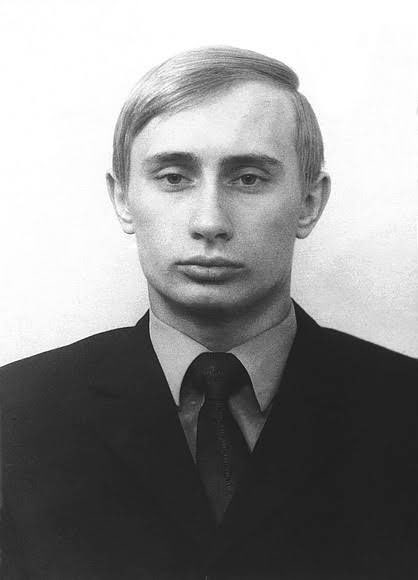
A 22-year old Vladimir Putin in 1975 after joining the KGB as a counter-intelligence operative.
He was later posted to East Germany where he worked until the fall of the Berlin Wall in 1989.
He returned to Russia and began work at Leningrad State University before he was roped into politics in 1991 by his mentor, the Mayor of St. Petersburg (formerly Leningrad) Anatoly Sobchak.
He worked as a fixer for Sobchak and resolved many problems related to organised crime syndicates.
Sobchak introduced Putin to an influential billionaire Boris Berezovsky. Berezovsky was very influential in the Kremlin. He had amassed his wealth through the looting of state assets during the collapse of the Soviet Union like many oligarchs at the time.
When Sobchak lost the mayoral race in 1996, Berezovsky recommended Putin to be the Head of the FSB (successor to the KGB). He quickly rose through the ranks and was appointed Prime Minister by Boris Yeltsin.
At the time of his appointment as Prime Minister, a group of influential billionaires were assisting Yeltsin in identifying his successor and particularly a person who will protect their interests and Yeltsin’s legacy.
A terrorist attack by Chechen rebels occurred in Moscow in 1999 and Putin was tasked with resolving the Chechen problem. Putin went on to unleash the wrath of God on Chechnya and gained him popularity in Russia.
The elite group of billionaires led by Berezovsky believed that Putin was their man, a person they can trust to secure their interests in the post Yeltsin era. They recommended Putin to Yeltsin to be his successor.
On 31 December 1999, Yeltsin announced his resignation and Putin became acting President. The billionaire elites who believed that their man was in power were grossly mistaken.
After taking the reins of power, Putin disgusted by the rampant looting that happened during the collapse of the Soviet and during Yeltsin’s tenure went after the oligarchs.
Still intoxicated by the Yeltsin era influence and power, the oligarchs attempted to mount some resistance to Putin’s new order. It became a catastrophic mistake, which they paid dearly for.
At the time, Mikhail Khodorkovsky was Russia’s richest man and ran the largest oil company, Yukos, which was built from looted state assets. Khodorkovsky and his cabal of oligarchs were not prepared to play by the new rules. They had been making rules.
Putin threw Khodorkovsky and his associate Platon Lebedev in prison, followed by the state expropriating Yukos oil company. The rest of the other billionaires like Berezovsky fled Russia. The new sheriff was in town.
Berezovsky settled in London where he later committed suicide in 2013 after many failed attempts to reset relations with Putin.
Khodorkovsky spent over 10 years in prison and following his release, he fled Russia.
There is a famous video of Putin in 2009 confronting billionaire Oleg Deripaska who had closed his factories and refused to pay workers. Putin made Deripaska sign a commitment to open the factories and pay the workers.
The moment yet again symbolised the authority of the state over oligarchs who for the longest time ran riot. Putin showed them that no one was above the state.
As they say, the rest is history.
Today 6yrs ago, I joined @webberwentzel as a junior associate and worked my way through to partnership. What a beautiful journey it has been. Grateful for the support of my colleagues and to be working in an intellectually stimulating environment and amongst best legal brains.