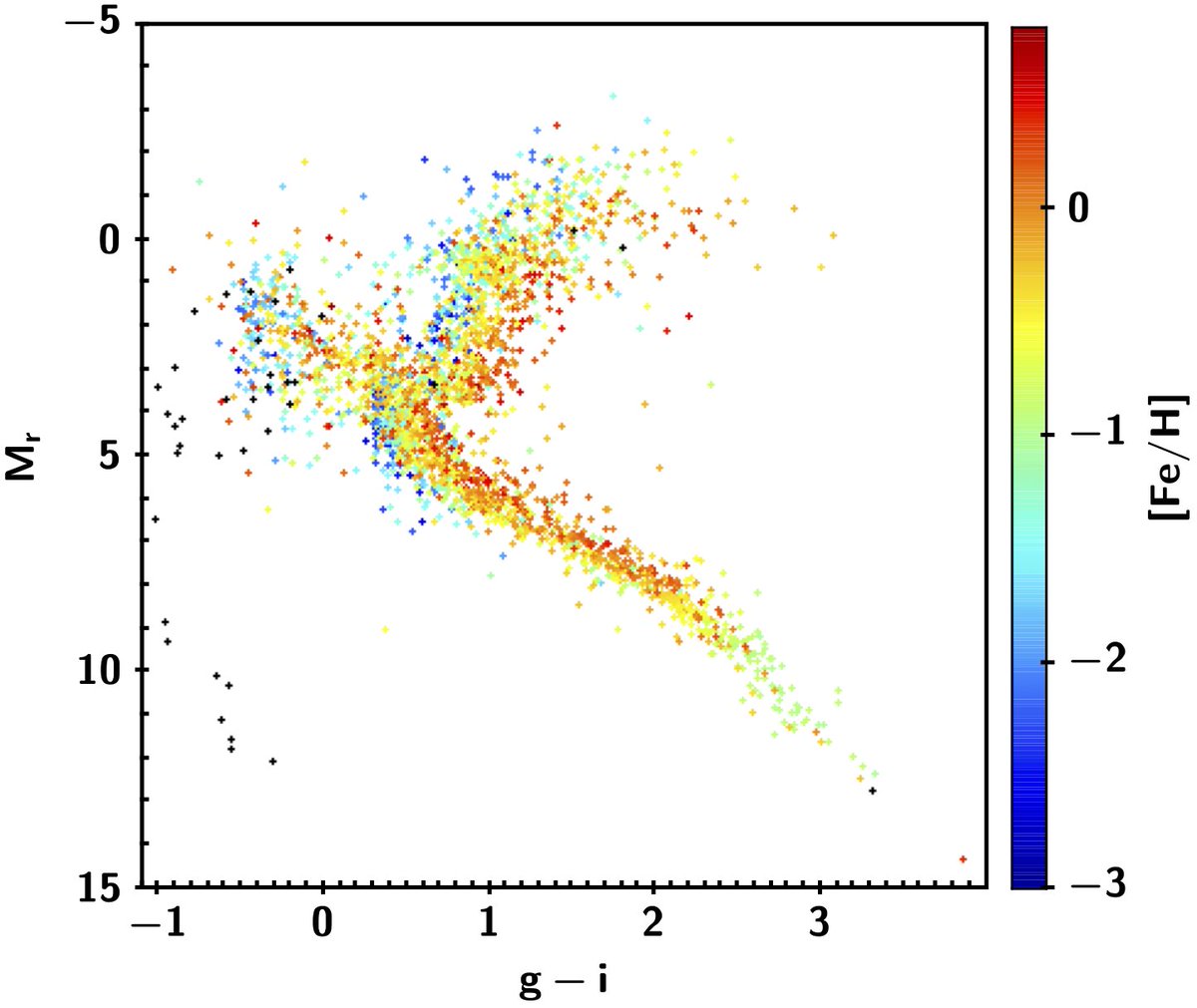
This is our very first release of the library, as part of @sdssurveys#dr15. We are releasing 8646 high quality, high S/N, per-visit spectra for 3321 unique stars. Here is an H-R diagrams for the stars, color-coded by metallicities.
And we’re live! Huge thank you to the whole SDSS team: now go check out our #DR17 data at https://t.co/9tF8KhBs2e. And read our DR17 data release paper: https://t.co/F471tszR42
@jkarpin2@sdssurveys We haven't classified the subclasses yet. The photometry data are available in the PSFMAG column in the mastarall table. Though the filters are not always ugriz. Some photometry come from PS1, APASS, and Gaia (in future release). See documentation: https://t.co/S311tk7fps
This is our very first release of the library, as part of @sdssurveys#dr15. We are releasing 8646 high quality, high S/N, per-visit spectra for 3321 unique stars. Here is an H-R diagrams for the stars, color-coded by metallicities.
@sdssurveys@StarryNate@coreyspowell@universityofky Blue horizontal branch stars are old and have subsolar metallicity.
The F subdwarfs are near the main-sequence turn-off. We try to include stars with different metallicities evenly, weighting the rarer stars more heavily to get a bit of everything. Not a volume-limited sample.
@sdssurveys@StarryNate@coreyspowell@universityofky The big blue circles overlapping the hot end of the main sequence are not main sequence stars. They are blue horizontal branch stars. They overlap the main sequence in temperature and luminosity space, but have lower mass and bigger radius, hence lower surface gravity.
Check out @sdssurveys#dr15 and the new paper about @Marvin_SDSS, https://t.co/AgnKygIIfC. For more in the world of SDSS in astronomy, https://t.co/QCvxb9Qrak and https://t.co/ycN3nsRY8F.
Screenshot from @Marvin_SDSS . Check out our data quality at 2.5 times the effective radius in this galaxy. The Halpha flux is 5x10^(-18) erg/s/cm^2 in that 0.5x0.5 square arcsec spaxel. And look at the asymmetry in the Halpha map!
Best way to explore @MaNGASurvey data? Ask @Marvin_SDSS, our brandnew visualisation and analysis webpage and tool. Let's get started with Marvin web: https://t.co/RqD49Wn9pB #dr15
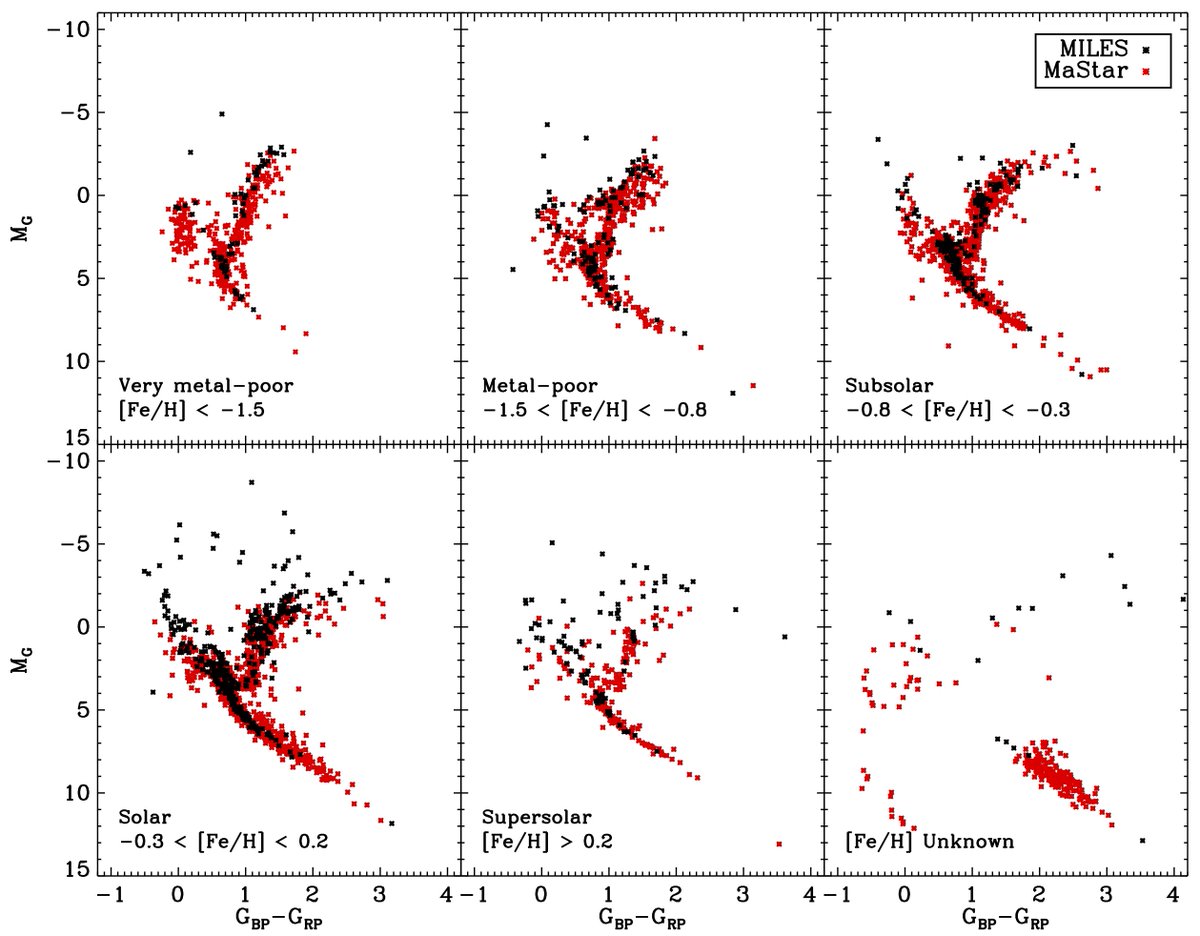
Trying to cover as wide a stellar parameter space as possible. Here is a comparison to the MILES library. We are still improving our coverage in current observations. Trying to do even better.