#NewYear2026#Bitcoin to hit $57k-$67k
Bitcoin does not collapse, but it will reprice downward as it transitions from a speculative growth asset into a regulated, monetary asset.
@Sweatcoin If this app made it alittle bit easier to accumulate SWEATCOIN it would be the best app ever, I already ordered my headsets from a 75% off voucher, from $120 to paying $30 os awesome. Thank you @Sweatcoin
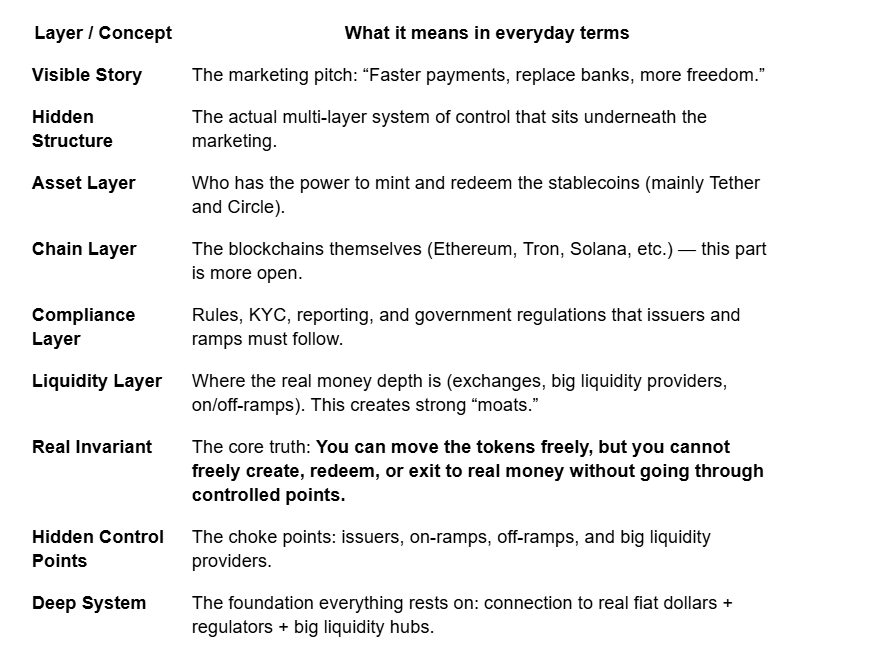
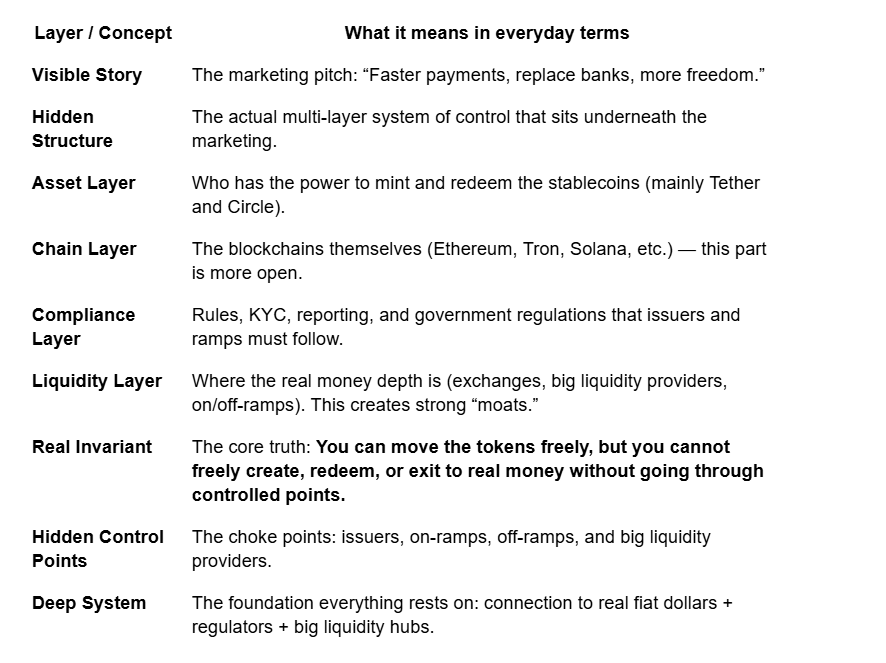
Stablecoins (like USDT and USDC) look and feel decentralized because you can send them quickly and cheaply across the world on blockchains without a traditional bank in the middle of every transfer.
But the power is not decentralized.
Stablecoins (like USDT and USDC) look and feel decentralized because you can send them quickly and cheaply across the world on blockchains without a traditional bank in the middle of every transfer.
But the power is not decentralized.
We’re already taxed to the bone… now they want to treat local trades as “offshore”, force sales, and control what you own?
@LunoGlobal just slammed the draft rules hard. This overreach kills innovation, pushes everything underground, and hurts the very growth we need.
Developing a strategy simulation exploring how narratives, institutions, and crises interact as coordination systems.
Seeking experienced UI/UX, simulation, civic tech, or research collaborators interested in systemic modeling.
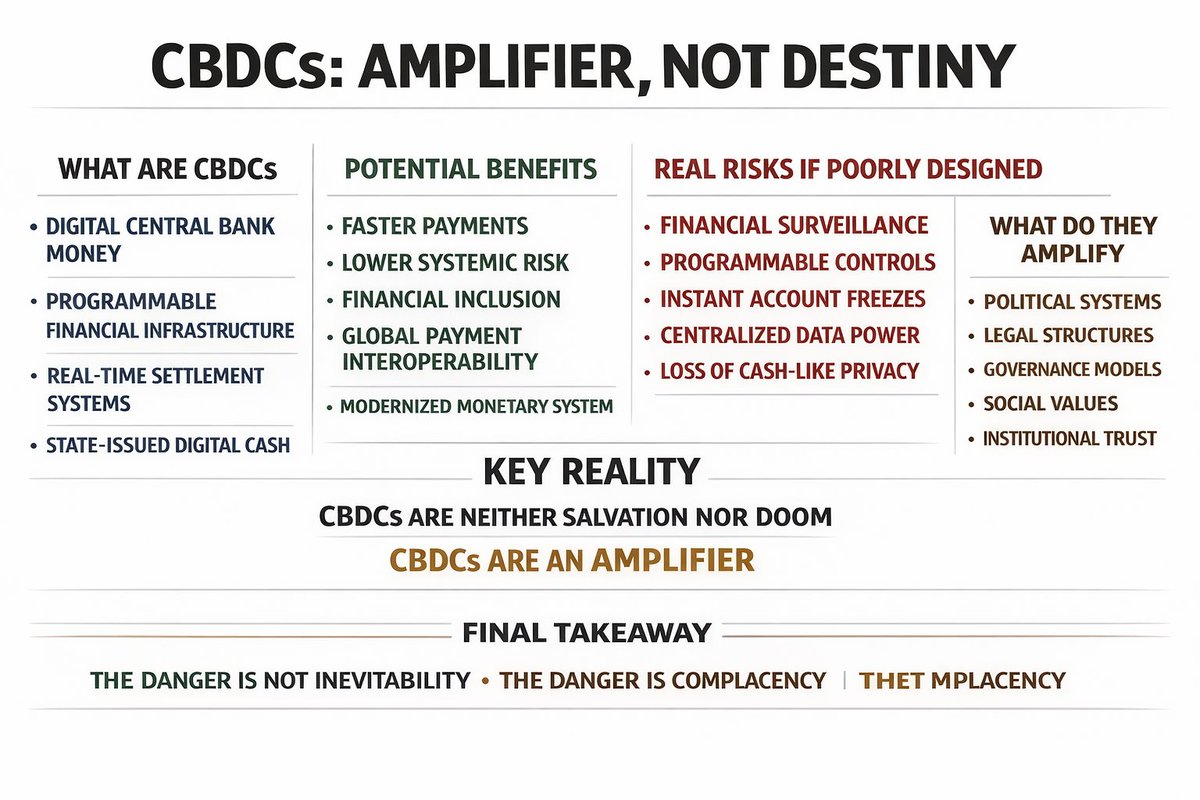
Central Bank Digital Currencies (CBDCs), if poorly designed or abused, could enable unprecedented financial surveillance & control over citizens. CBDCs are neither salvation nor doom. They are an amplifier. They amplify whatever political, legal, & moral framework already exists
Stablecoins don’t remove intermediaries; they relocate power. Movement is decentralized, but control sits at liquidity, issuers, and fiat on/off-ramps. The real leverage isn’t the token or chain; it’s who controls entry, exit, and liquidity.
Card payments aren’t just money moving; they’re real-time risk decisions. Issuers, networks, gateways, and acquirers share roles, but true power lies with whoever controls authorization logic, routing, and data, because that determines margin.
H.8 shows where credit is flowing. Total assets remain stable, but funds shift between loans, deposits, and funding.
Hidden signal:
Credit is moving toward financial intermediaries, not just households or businesses.
https://t.co/DGDUZMay7j
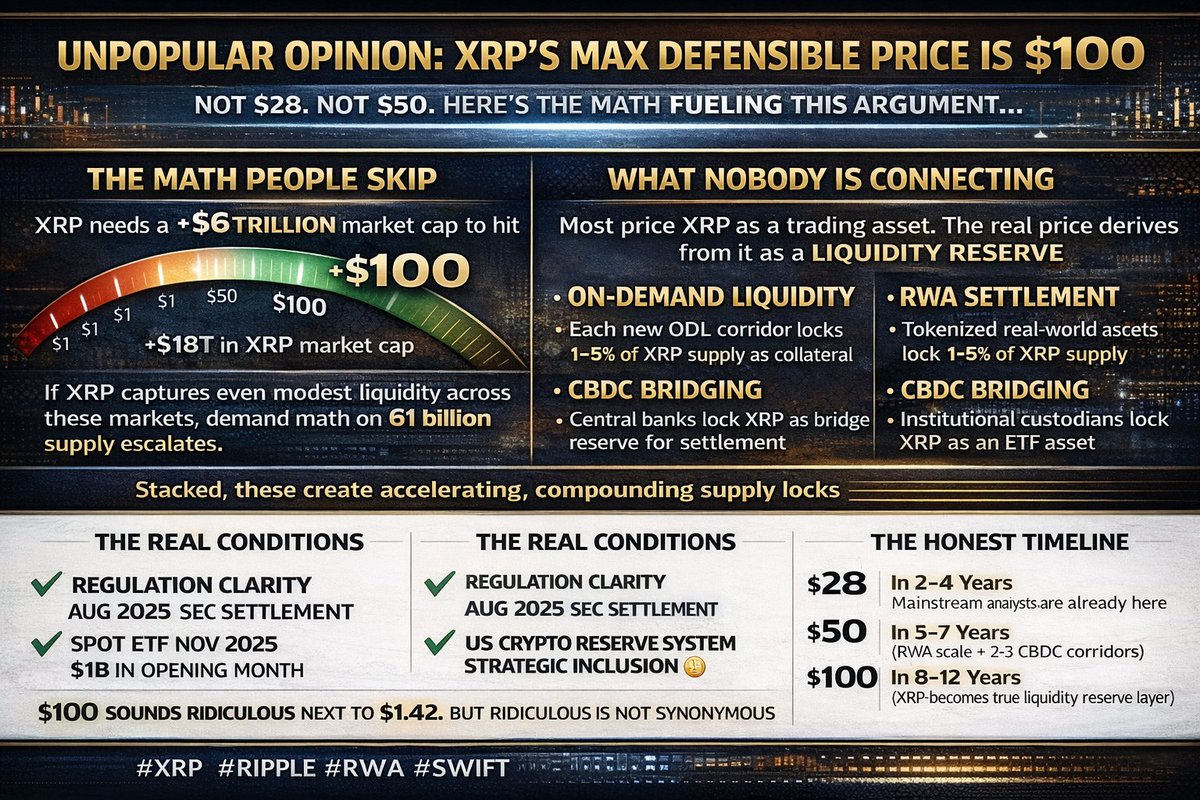
UNPOPULAR OPINION:
I'm going to say something that will get me laughed off this app.
XRP's maximum structurally defensible price, based on real markets and real math, is $100.
Not $28. Not $50. $100.
@olivyeb360 Africa’s gold story is about governance. Geological value means little without control over extraction, traceability, and policy execution. Ghana’s strategy shows the real battle is between formal systems and informal mining pressures.
Africa hosts ~$5T in mine-site gold value, incl. ~$1T undeveloped (AFC). That’s geological value. With central banks boosting reserves and gold recently near $5k/oz, policy shifts like Ghana’s domestic gold purchases signal strategy
https://t.co/hbjr44kxcP
Agrivoltaics isn’t just energy + farming. It’s land becoming programmable. Panels don’t only produce power; they reshape microclimates, soil behavior, and resilience. The real question is ecosystem engineering.
https://t.co/aqRq3tn2tF
FDI signals strategic repositioning, not just capital inflow. The UK is using foreign investment to offset weak productivity, anchor AI and energy infrastructure, and align growth with trusted geopolitical partners.
https://t.co/e8hoxYobEh
Two-thirds of announced FDI projects in the United Kingdom target clean energy and AI. ⚡🤖
Megadeals are driving the surge, but narrow investment isn't enough. Capturing more of the global momentum in advanced manufacturing could help rebalance and strengthen the UK investment landscape. https://t.co/6ZWJWYBOn9
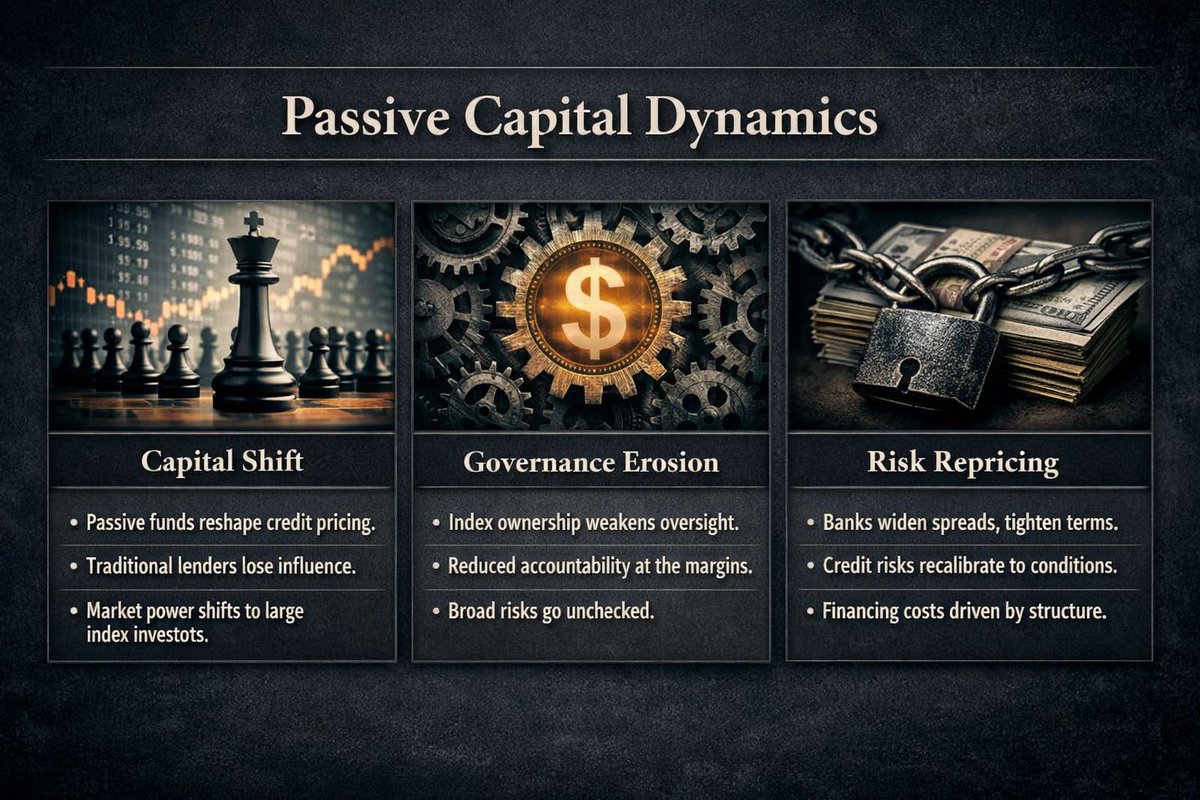
Passive capital reshapes credit pricing. As index ownership rises, governance becomes thinner at the margin, pushing banks to widen spreads, tighten monitoring, and reprice risk. Market structure, not fundamentals alone, is now a driver of financing costs.
https://t.co/AInQuB6ji9
Index funds have amassed substantial ownership stakes in publicly traded firms. BIS researchers investigate their influence on firms’ cost of debt through changes in corporate governance and bank monitoring. https://t.co/uxVZ50V95k
Everyone thinks SARB is scrapping prime and that equals big change. It’s not. Prime already tracks repo. They’re just removing a middle layer for transparency.
https://t.co/BkPtd8StFr.
@FinStbBoard Financial stability policy is shifting from rule-building to execution readiness. The system is no longer designing resolution frameworks, it is stress-testing whether banks can actually fail without breaking markets.
https://t.co/8909txAUwX
ICYMI, last month we published our 2025 Resolution Report. It reviews progress in implementing global resolution frameworks and highlights priorities for 2026.
https://t.co/NhC9pmAnvv
#Resolution#FinancialStability#TooBigToFail