In a recent interview, Archbishop Vincenzo Paglia, former grand chancellor of the John Paul II Institute on Marriage and Family Life, confirmed the worst suspicions that many of us had.
He admitted that the changes he made at the Institute during the Pope Francis years were designed to initiate a "very profound" reform of the idea of the natural law.
Instead of absolute moral norms grounded in a keen understanding of the basic goods, he and his colleagues were proposing a moral theory rooted in historical discernment of subjective and cultural experience--not an "armchair theology" but one operating "within history and within people's lives."
This, of course, is the language of trendy postmodernism, and it is dangerous indeed.
Allow me to illustrate the principle with one example. Is slavery wrong?
Intrinsically wrong? Wrong no matter what public opinion polls say about it, no matter what the current consensus on it might be? I imagine any decent person would say yes.
But that yes is predicated upon precisely what the tradition calls the natural law and the basic goods. There are some values so fundamental that acts repugnant to them are by their very nature wicked.
If you want a highly articulate presentation of this idea, go to St. John Paul II's Veritatis Splendor.
If we say that this is just "armchair theologizing" and that morality is a function of ever-shifting cultural and experiential data, then why couldn't slavery be justified?
One of the very smartest persons that ever lived, the philosopher Aristotle, thought it was; extremely bright and morally upright persons in our country, well into the 19th century, thought it was permissible.
Who is to say whether the consensus might shift back again? Who is to say that "lived experience" might come to justify it?
What any truly coherent moral program requires is the very thing that Archbishop Paglia and his colleagues were endeavoring to eliminate, namely, absolute moral norms.
Ridding ourselves of these in the name of freedom or pastoral sensitivity actually renders moral discourse dysfunctional, just as relativizing the basic principle of logic would render any rational conversation impossible.
The Archbishop's interview, frankly, reminded me of the discussions I had at the Synod on Synodality with some of my German colleagues. Under the rubric of the development of doctrine, they were eager to relativize or radically change the principles undergirding classical morality. If this was and is truly the game, we have ventured onto perilous seas.
Link to the article below.
Can't log into your email account? Don't live in the country anymore because you're in School? Spent 1.5 hours on the phone? Have a recovery email? Too bad, you don't remember what your dream job was when you were 15. Thanks @ATT
Often today man does not know what is within him, in the depths of his mind and heart. So often he is uncertain about the meaning of his life on this earth. He is assailed by doubt, a doubt which turns into despair.
Friends, it’s hard to imagine anything more offensive than some of the behavior of the “Sisters of Perpetual Indulgence,” which I think can only be described as an anti-Catholic hate group.
Our Catholic sisters devote themselves to serving others selflessly. Decent people would not mock & blaspheme them. So we now know what gods the Dodger admin worships. Open desecration & anti-Catholicism is not disqualifying. Disappointing but not surprising. Gird your loins.
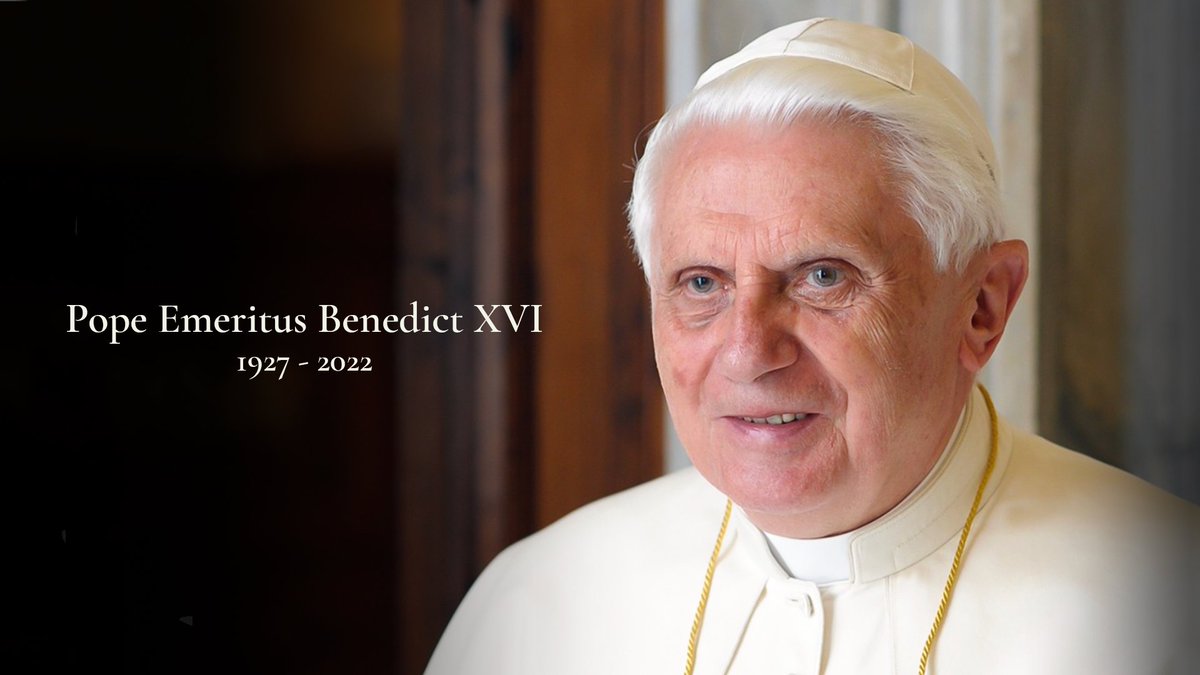
“With sorrow I inform you that the Pope Emeritus, Benedict XVI, passed away today at 9:34 in the Mater Ecclesiae Monastery in the Vatican.
Further information will be provided as soon as possible.”
"There is no evil to be faced that Christ does not face with us.
There is no enemy that Christ has not already conquered.
There is no cross to bear that Christ has not already borne for us,
and does not now bear with us."
— St. John Paul II