Luke 8:17"Nothing is hidden that won't be exposed. Nor is anything concealed that won't be made known and brought to the light"
👇
https://t.co/9owKwYjbl0
Ancient Macedonia was not a region within a unified Greek nation-state. No such state existed.
Alexander was King of Macedon. He inherited a Macedonian kingdom, a Macedonian monarchy, and a Macedonian army. The southern Greek poleis had been brought under Macedonian hegemony and contributed allied contingents under Macedonian command.
Macedonian was a historical and political identity, not merely a regional label within a Greek nation-state. No such state existed, and the shared Hellenic identity of antiquity did not constitute a unified national identity in the modern nation-state sense.
Corsica was already under French rule when Napoleon built his career within the French state. Wellington was Irish-born but served the British Crown and built his career within the British military establishment.
Neither comparison corresponds to Alexander’s position as the sovereign of a distinct Macedonian kingdom.
Participation in the wider Hellenic cultural world does not erase that political distinction.
Alexander was Macedonian.
Calling Macedon culturally connected to the Hellenic world does not turn it into a province of a Greek state that did not exist.
References
Bosworth, A.B. (1993) ‘Alexander and the army’, in Conquest and Empire: The Reign of Alexander the Great. Cambridge: Cambridge University Press, pp. 259–277. doi: 10.1017/CBO9780511518539.007.
Dmitriev, S. (2011) ‘The Macedonian Peace of Philip II and Alexander the Great’, in The Greek Slogan of Freedom and Early Roman Politics in Greece. Oxford: Oxford University Press, pp. 67–111. doi: 10.1093/acprof:oso/9780195375183.003.0002.
King, C.J. (2010) ‘Macedonian kingship and other political institutions’, in Roisman, J. and Worthington, I. (eds.) A Companion to Ancient Macedonia. Chichester: Wiley-Blackwell, pp. 371–391. doi: 10.1002/9781444327519.ch18.
Alexander was not Greek but Macedonian as historical identity according to international history.
Defining historical identity through culture, DNA, ethnicity, or biological ancestry is not serious historical methodology; it is racialized thinking.
1. Encyclopaedia Britannica, “Alexander the Great.”
2. Encyclopaedia Britannica, “Battle of the Hydaspes” — sarissa entry/context.
3. Cambridge University Press, The Cambridge Companion to Alexander the Great, Chapter 15, “Army and Warfare.”
4. Cambridge University Press, The Cambridge Companion to Alexander the Great, Part II, “Contexts.”
5. N. G. L. Hammond, “Training in the Use of a Sarissa and its Effect in Battle, 359–333 BC,” Antichthon.
6. Edward M. Anson, “Macedonian Judicial Assemblies,” Classical Philology.
7. Edward M. Anson, “The Evolution of the Macedonian Army Assembly (330–315 B.C.),” Historia.
8. Edward M. Anson, “Macedonia’s Alleged Constitutionalism,” The Classical Journal.
9. E. Aston, “The Stereotype of Dangerous Thessalian Hospitality…” Phoenix — for the context of Demosthenes’ anti-Macedonian / “barbarian” rhetoric.
10. Mary G. Dietz, “Between Polis and Empire: Aristotle’s Politics,” American Political Science Review / JSTOR — for the structural distinction between Macedonia and the polis world.
İn Greece , In 1926, Decree FEK 331 forcibly replaced Albanian, Macedonian, and Slavic place-names with Greek, followed by Law 87 in 1936, which banned all non-Greek personal names. This systemic erasure extended to erasing inscriptions on church icons and tombstones, ensuring not even the dead retained their true identities. Viewing this systematic cultural erasure with anything other than absolute cynicism requires naive optimism
Time for you to expose Greece as the artificial Western creation that it is, just like Israel. Greece annexed half of Macedonia in 1913, committed genocide (and is currently committing cultural genocide), vehemently denied Macedonia's existence, then in 1988 switched its propaganda to claiming that Macedonia is suddenly "Greek". The West created Greece in 1830 then Israel in 1948 - both designed to steal land and commit genocide. Expose them both:
https://t.co/Vj8xP8AXM9
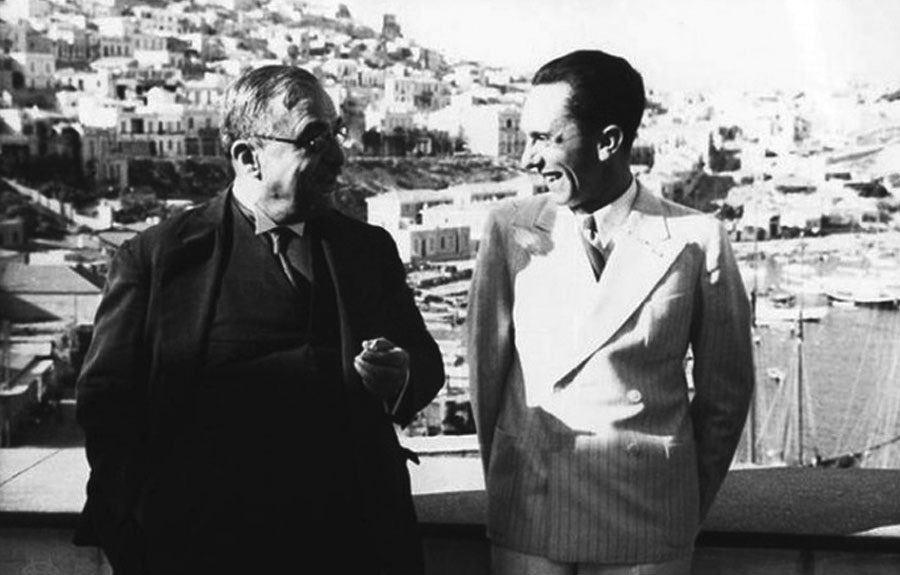
Long before the 1941 Nazi invasion, Athens didn’t just welcome the Reich it celebrated it with absolute euphoria.
When Nazi Propaganda Minister Joseph Goebbels, a passionate Philhellene, arrived in Greece in September 1936, he wasn't met with cold diplomacy. He was greeted with high level excitement, public cheers, and a dictator eager to prove his anti-Semitic loyalty.
The Metaxas dictatorship was never a peripheral imitation; it was Berlin’s most operationally and ideologically integrated node in the Balkans.
Ancient Thracians and Macedonians spoke Slavic.
El-Masudi 896–956 CE known as the Herodotus of the Arabs.
“The Slavs are a vast nation, divided into many tribes... They are the very same people who anciently fought the Greeks and the Romans under the names of the Thracians and the Macedonians. Their language is one, and they have held the lands from the Danube to the northern seas since the first ages.”
The Story of a Nation’s Culture & Language They Tried to Erase
Under the cherry tree in Sindos village stood Dedo Stefan’s old wooden bench…
Little Nikola grew up listening to Macedonian lullabies, laughing with his neighbors as Turkish, Greek, Ladino, Bulgarian, and Macedonian blended freely in the courtyard. A world where everything every stone, every river, every mountain had its true name.
Then the 20th century brought darkness to Greece.
In Aegean Macedonia, a systematic erasure operation began:
Macedonian was completely banned even whispering it at home was considered treason.
Children who spoke their mother tongue had needles thrust into their tongues until they bled.
Village names, mountains, rivers all forcibly Hellenized and wiped from maps.
Minarets were torn down, graves desecrated, mosques turned into ruins.
A nation’s culture, language, and identity were deliberately condemned to oblivion.
Through a child’s eyes, the tragedy unfolds:
Childhood friends torn apart, memories buried in fear.
Dedo Stefan’s final whisper still echoes:
“Pamti… Remember. They want you to forget don’t.”
This is the story of a people whose culture and language were consciously erased from history.
Yet the memory still sits on that old bench… refusing to disappear.
How Greece Erased the Macedonians: They Burned Villages, Renamed Everything, Banned the Macedonian Language Even at Home… and Forced Castor Oil Down Their Throats
For decades, the Greek state carried out a systematic campaign aimed at erasing Macedonian identity in Aegean Macedonia not through “natural assimilation,” but through laws, punishments, forced demographic change, and state terror.
Here’s what happened:
• Between 1913 and the 1940s, over 160 Macedonian villages were burned following the annexation of Macedonia by Greece.
• Law 4096 (1929) ordered the forced renaming of Macedonian villages, rivers, and regions. More than 804 place names were erased from maps. Solun became Thessaloniki, Voden became Edessa, Zelenich became Sklithro.
• Law 4322 (1932) forced Macedonians to Hellenize their surnames by adding Greek endings like “-os” or “-poulos.” Families effectively lost their recorded identities overnight.
• Cyrillic inscriptions on churches and gravestones were destroyed. Reports from the era describe even graves being opened and Macedonian inscriptions erased.
• In 1936, Governor-General Order 122770 criminalized speaking Macedonian not only in public but even inside private homes. Parents speaking their own language to their children could be punished.
• Police and informants monitored villages, cafés, and homes. People were arrested simply for speaking Macedonian.
Punishments included:
— Heavy fines
— Public beatings
— Internal exile to isolated Greek islands
— Forced “reeducation”
— Public humiliation rituals
One of the most infamous punishments was forced ingestion of castor oil a fascist-era humiliation tactic also used by Mussolini’s squads in Italy. Macedonian speakers, including children, were force-fed castor oil publicly as a warning to others.
• Schools became instruments of surveillance. Teachers asked children what language their parents spoke at home. Kids unintentionally informed on their own families.
• Children caught speaking Macedonian at school were punished physically, humiliated, or forced to kneel on stones.
• During and after the Greek Civil War, around 28,000 Macedonian children were displaced or separated from their families. Many never returned.
• Laws L-2 (1947) and M (1948) stripped thousands of Macedonians of citizenship and confiscated their land and property without due process.
• In 1982, Greece allowed Civil War refugees to return but only if they were declared “Greek by genus.” Ethnic Macedonians were explicitly excluded.
This wasn’t isolated discrimination. It was a coordinated state project spanning decades: renaming places, banning language, changing surnames, confiscating land, deporting families, and criminalizing identity itself.
History should be remembered honestly even when it is uncomfortable.
Under the Metaxas dictatorship in 1936, Greece banned the Macedonian language completely.
Macedonian children were forced to drink castor oil simply for speaking their mother tongue even at home with their own parents.
"How civilized is that?"
The Other Face of History, p. 323
#AegeanMacedonia #MacedonianLanguage
Purging the Barbaric Tongue
Greece’s systematic erasure of Macedonian (Slavophone) identity in Aegean Macedonia (1913–2003) was not natural assimilation it was a deliberate, multi-decade state project of legal dispossession, physical terror, demographic engineering, and psychological destruction.
• Over 800 villages, rivers & mountains forcibly renamed from Slavic/Turkish to Greek (Law 4096/1929).
• Macedonian surnames stripped and given mandatory Greek endings (-is, -os, -poulos). Cyrillic gravestones smashed, bones burned.
Metaxas dictatorship terror (1936–1941):
• Governor-General Order 122770 banned Macedonian even inside private homes. Plainclothes police eavesdropped at doors and windows.
• Caught families faced beatings, crushing fines, or public forced ingestion of castor oil a fascist ritual to “purge the barbaric tongue” from the body in front of the village.
• Exhausted adults dragged to compulsory “night schools” after 12-hour field days. Villages covered in “Speak Greek” posters.
• Teachers weaponized children: daily question “What language do you speak at home?” triggered police raids on parents.
• Thousands exiled to barren remote islands (exoria). Many never returned.
• Demographic replacement: ~540,000 Greek refugees from Turkey deliberately settled to dilute the Macedonian population.
• Greek Civil War: 28,000 Macedonian children (Detsa Begaltsi) evacuated north to safety. Greece answered with “paidopoleis” re-education camps, citizenship stripping (Laws L-2 & M), and property confiscation.
• 1982 “amnesty” explicitly excluded non-“Greeks by genus” Macedonians could return only if they denied their identity.
Parents stopped teaching their language to protect their children. This engineered “obligatory silence” created today’s Greek hostility toward Macedonian identity.
A historical crime, documented in Greek state archives.
Full academic working draft with primary sources (Tasos Kostopoulos, Karakasidou, Danforth & Van Boeschoten) here:
https://t.co/ufgIuBskzd
Историјата на македонскиот народ не е само хроника на битки и договори, таа во значаен дел е и вековно патување низ духовната вертикала некогаш наречена Охридска архиепископија (ОА), денес Македонска православна црква – Охридска архиепископија. Оваа верска институција, наследник на славната Јустинијана Прима, која низ византискиот, средновековниот и отоманскиот период служеше како чувар на нашата политичка, културна и јазична одделност и засебност, денес претставува еден од клучните аргументи за нашиот континуитет.
Додека македонските територии биле освојувани од страна на византиски, бугарски или српски владетели, Охридската архиепископија останала засебна и автокефална. Таа била островот на посебноста, јасно одвоена од Цариградската, Трновската и Пеќската црква. Токму таа одвоеност била браната која го спречила целосното претопување на македонското население во соседните етно-културни матрици, за што сите “братски” околни цркви вложувале енормни усилија, енергија и ресурси.
Трагедијата од 1767 година, кога ОА е противправно укината, е некаков црковен чин, иако е спроведен од отоманска муслиманска власт, но повеќе е и треба да се гледа како најтешкиот удар врз македонското битие. Со губењето на црквата, ние ја изгубивме институционалната рамка која требаше да не води кон рана етно-национална преобразба. Со тој чин не била укината само една црковна управа, туку била прекината институцијата преку која македонското население со векови ја чувало својата духовна, јазична и културна самостојност.
Букурешкиот договор од 1913 година не е причина за нашата несреќа, туку само кобна последица на укинувањето на Архиепископијата. Да постоеше Охридскиот трон во 19 век, македонското прашање ќе имаше свој легитимен центар кој ќе ги осуетеше туѓите асимилаторски пропаганди. Немаше да бидеме дел од грчката Цариградска патријаршија, ниту да се надеваме на духовна слобода во славјанската Бугарска егзархија.
Во 19 век, кога на Балканот се формираа модерните национални идеи, црковната организација беше еден од главните инструменти на народното будење. Грчката, бугарската и српската пропаганда не дејствуваа само преку училишта и дипломатија, туку и преку црковна власт, богослужбен јазик, верска симболика, учителски кадар и контрола врз духовниот живот. Токму затоа отсуството на обновена Охридска архиепископија значеше отсуство на македонски институционален центар во најважниот век на балканските национални преродби. Не е тешко да се погоди дека и денес на Балканот постојат центри кои живеат во овој 19 век.
History is not limited to the pages you selectively choose to read. When the ancient Romans coined the term 'Grecia Mendax' (Lying Greece), they were describing the inherent vanity and chronic unreliability they saw in the Greek character.
Even Cicero, the greatest orator of Rome, stated that trusting a Greek in a court of law was sheer folly. He famously remarked: 'I grant them their literature and arts... but that nation never understood the obligation of an oath given in evidence.' (Source: Cicero, Pro Flacco, 4.9-12).
What you ignorantly call 'civilization,' the founders of the Roman tradition viewed as a legacy of treachery and deceit. As Virgil famously wrote: 'Timeo Danaos et dona ferentes'—I fear the Greeks even when they bring gifts. To the Romans, your 'wisdom' was nothing more than dishonorable cowardice and the art of betrayal. (Source: Virgil, The Aeneid, Book II).
Furthermore, the Romans looked down on your ancestors as the 'Graeculus' (the little Greek)—a hungry, shifty opportunist. The satirist Juvenal described the Greek character as a desperate flatterer who would lie about anything just to fill his belly, famously saying: 'A starving Greekling knows everything... tell him to fly to heaven, and he'll do it.' (Source: Juvenal, Satires, 3.74-78).
Before you attempt to call anyone 'ignorant,' remember that in the eyes of the very people who actually built the Western world, 'Graeca Fides' (Greek Faith) was a universal synonym for having no integrity or honor at all.
This is the number of documents detailing Albanian history
Ottoman Empire: 1,000,000+ documents
Byzantine Empire: 10-20
Roman Empire: 0
Why are they ashamed of their history and have the need to steal Slavic and Greek history ?
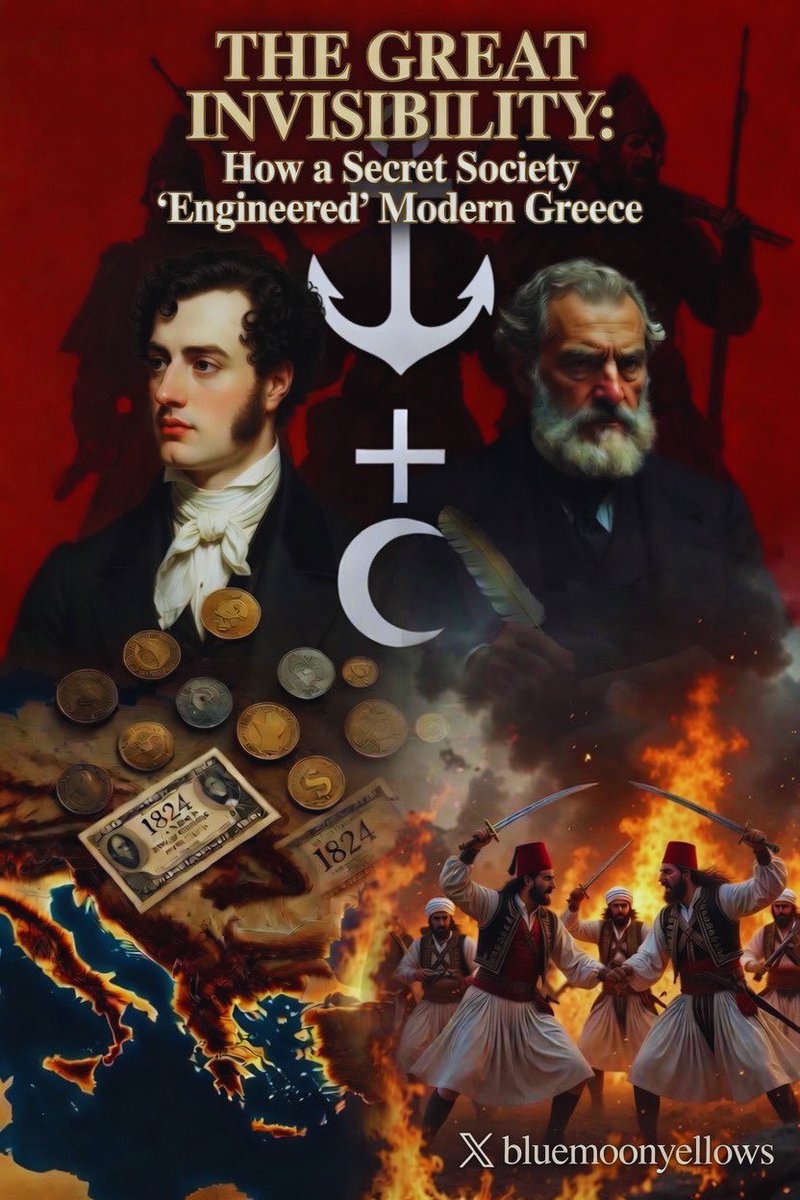
THE GREAT INVISIBILITY: How a Secret Society "Engineered" Modern Greece
Was the Greek Revolution a spontaneous uprising or the 19th century’s most successful "geopolitical execution"?
Before you answer, consider the mechanics of a project that flipped the world's perception of an Empire in less than a decade.
🧵 A thread on the Filiki Eteria and the birth of modern Hybrid Warfare.
1/ The "Invisible Authority" (Archí)
The Filiki Eteria (1814) was not a romantic club; it was a high-level intelligence cell. They operated with Masonic secrecy, swearing blood oaths to the mysterious Invisible Authority (the “Aoratos Archí”) (Invisible Authority).
The Masterstroke: They spread a massive disinformation campaign claiming the Russian Tsar was their secret leader. It wasn’t a revolution; it was a psychological operation to radicalize the Balkan teba.
2/ The "Sudden Switch": Weaponizing Romanticism
For centuries, the Ottoman was "The Magnificent" in European courts. Then, as if a secret button was pressed, the image flipped.
• The PR Department: Victor Hugo and Lord Byron weren't just poets; they were the lobbyists.
• The Propaganda: Hugo’s Les Orientales framed the Turk as "Absolute Darkness."
• The Visual War: Delacroix’s paintings triggered emotional hysteria in Paris salons. They manufactured a "Genocide" narrative for Chios while remaining stone-silent about the 30,000 Turks massacred in Tripolitsa.
Is it art, or is it the first global cancel culture operation?
3/ The Sword for Hire: Buying the Suliotes
The "Hellenic" heroes we see in textbooks? Most were professional Arvanites , Albanian (Suliote) and Slavic mercenaries.
• Markos Botsaris (Marko Boçari) spoke Albanian as his mother tongue and was trained by the French.
• The Loyalty Transfer: Filiki Eteria agents (Apostoloi) didn't just carry ideas; they carried "Freedom Gold." They bought the loyalty of local warlords with secret deeds promising Ottoman lands and British gold.
Can we call it a "National" movement if the primary swords were for hire?
4/ The London Bond Market: The IPO of a State
This is the part historians prefer to skip: The Greek Revolution was the first war in history to be "crowdfunded" on a global stock exchange.
• The 1824 Greek Loans in London turned British aristocrats into shareholders of the war.
• The Trap: If Greece didn't win, the bankers lost everything. They forced the Great Powers to intervene to protect their investments.
It wasn't a war of independence; it was a hostile takeover through debt.
5/ The Bavarian "Puppet Master"
Once the propaganda and finance were locked, the "owners" stepped in. King Ludwig I of Bavaria invested 1.5 million florins and sent officers "on leave" to train the rebels.
The ROI: His son, Otto, was installed as the first King of Greece. A dynasty was literally purchased with the ink of poets and the coins of London.
6/ The Truth Behind the "Dawn"
Modern states aren't just born; they are manufactured. The suffering was real, but the infrastructure the bankers, the Bavarian king, the Albanian fighters, and the Romantic poets was a cold, calculated engineering project.
The Filiki Eteria wrote the blueprint for every hybrid war and "color revolution" that followed.
Was Greece an artificial state? The evidence is in the ledgers, not just the poems.