Genesis 5 looks like just a genealogy. A whole list of difficult names to pronounce, that almost leaves the tongue numb. In Hebrew though, names carry meaning. When you can, try this. Line up the meanings of the names in Genesis 5, from Adam to Noah. You will discover that a message there. You, no doubt, have read the Bible many times and missed it. But, it is there.
Adam [man]
Seth [appointed]
Enosh [mortal]
Kenan [sorrow]
Mahalalel [the blessed of God]
Jared [shall come down]
Enoch [teaching]
Methuselah [his death shall bring]
Lamech [the despairing]
Noah [rest]
If you put the meaning of the names together, it says this:
Man is appointed mortal sorrow, but the blessed God shall come down, teaching that His death shall bring the despairing rest.
That, ladies and gentlemen, is the gospel. Right there, in a genealogy that most of us skipped, over and over and over again..This was written long before the cross, and long before the name Jesus showed up. Yet the message is already there, woven into the structure of the names.
The Bible is, as I said, not just a Book, it is a marvel.
From Genesis to Revelation, the ENTIRE Bible, including every BOOK is about JESUS!
1. Genesis [the promised Seed]
2. Exodus [the Passover Lamb]
3. Leviticus [the atoning sacrifice]
4. Numbers [the lifted serpent]
5. Deuteronomy [the Prophet like Moses]
6. Joshua [the Captain of our salvation]
7. Judges [our Deliverer]
8. Ruth [our Kinsman Redeemer]
9. 1 Samuel [the rightful King]
10. 2 Samuel [the rightful King]
11. 1 Kings [the rightful King]
12. 2 Kings [the rightful King]
13. 1 Chronicles [the rightful King]
14. 2 Chronicles [the rightful King]
15. Ezra [the Restorer]
16. Nehemiah [the Rebuilder]
17. Esther [the Preserver]
18. Job [our Redeemer who lives]
19. Psalms [the suffering and reigning Messiah]
20. Proverbs [the Wisdom of God]
21. Ecclesiastes [meaning and hope beyond the sun]
22. Song of Solomon [the Bridegroom’s love]
23. Isaiah [the suffering Servant]
24. Jeremiah [the righteous Branch]
25. Lamentations [the Man of sorrows]
26. Ezekiel [the Shepherd of Israel]
27. Daniel [the Son of Man]
28. Hosea [faithful Husband]
29. Joel [the outpoured Spirit promise]
30. Amos [the Judge of the nations]
31. Obadiah [the Lord who rules]
32. Jonah [risen after three days]
33. Micah [born in Bethlehem]
34. Nahum [the stronghold in trouble]
35. Habakkuk [the just shall live by faith]
36. Zephaniah [the mighty One who saves]
37. Haggai [the Desire of all nations]
38. Zechariah [pierced Savior]
39. Malachi [Sun of Righteousness]
40. Matthew [the Messiah revealed]
41. Mark [the suffering Servant King]
42. Luke [the Son of Man, Savior for all]
43. John [the Son of God]
44. Acts [the risen Lord proclaimed]
45. Romans [salvation by grace through faith]
46. 1 Corinthians [Christ our foundation]
47. 2 Corinthians [Christ our comfort and strength]
48. Galatians [Christ our freedom]
49. Ephesians [Christ our unity]
50. Philippians [Christ our joy]
51. Colossians [Christ supreme]
52. 1 Thessalonians [Christ our coming hope]
53. 2 Thessalonians [Christ our victorious King]
54. 1 Timothy [Christ our Mediator]
55. 2 Timothy [Christ our faithful Judge]
56. Titus [Christ our blessed hope]
57. Philemon [Christ our reconciler]
58. Hebrews [Christ our High Priest]
59. James [living faith]
60. 1 Peter [suffering Savior, living hope]
61. 2 Peter [truth that steadies]
62. 1 John [God is love, Christ our assurance]
63. 2 John [walk in truth]
64. 3 John [walk in love]
65. Jude [contend for the faith]
66. Revelation [the King returning]
From the first promise in Genesis 3:15 to the Lamb on the throne in Revelation 22, the Bible is one unified story of Salvation through Jesus. It is a map that tells how we became separated from Eden and how we can get back to Eden.
STOP USING YOUR iPHONE LIKE A BASIC TEXTING MACHINE.
You are only using 10 percent of what iOS can really do.
Copy these 18 hidden settings to upgrade your daily workflow:
STOP USING YOUR IPHONE LIKE A BASIC FLIP PHONE.
You’re only using 10% of what iOS can actually do.
Copy these 15 hidden features to upgrade your daily workflow
“Come to Me, all you who labor and are heavy laden, and I will give you rest. Take My yoke upon you and learn from Me, for I am gentle and lowly in heart, and you will find rest for your souls. For My yoke is easy and My burden is light.””
Matthew 11:28-30
Jesus basically said:
“Everyone tired? Stressed? Spiritually exhausted? Cool, come to Me. Not ‘go and report to headquarters,’ not ‘let Me check with God first.’ Come. To. Me. I’ll handle it.”
Then He doubled down like,
“I will give you rest.”
Not: ‘I will forward your request to God.’
Not: ‘my God will give you rest.’
Straight up: I will.
Then He said,
“Take MY yoke. Learn from ME. MY burden is light.”
Sir… whose yoke is this?
Whose burden is this?
Whose rest is this?
This does not sound like a delivery man passing messages.
This sounds like the Owner of rest itself talking.
No “Thus says the Lord.”
No “The Lord told me to tell you.”
Jesus spoke like someone who is the Lord
because He wasn’t quoting God…
He was God speaking. 🔥
🎤 👌
The first Christian was a felon.
Not Peter.
Not Paul.
Not your pastor.
A criminal. Hanging on a cross. Hours from death.
He beat everyone to paradise.
Think about that.
Before the disciples figured out the resurrection.
Before Paul got knocked off his horse.
Before the first church was planted.
Before a single creed was written.
A thief looked at Jesus and said, “Remember me.”
And Jesus said, “Today.”
The first Christian had no church.
No baptism.
No small group.
No Bible study.
No accountability partner.
No 6-week membership class.
He had nails in his wrists and six hours to live.
The first Christian never tithed.
Never served on the worship team.
Never read a single epistle.
Never debated Calvinism vs Arminianism.
Never posted a Bible verse on his timeline.
The first Christian was a convicted criminal who couldn’t lift his hands to pray.
And he’s been in paradise for 2,000 years.
Meanwhile.
You’ve been in church for 20 years.
You’ve read the Bible cover to cover.
You’ve got the theology down cold.
You’ve memorized the Roman Road.
You can articulate penal substitutionary atonement.
And you’re still wondering if that guy who prayed last week really “got it.”
The first Christian didn’t “get it.”
He got HIM.
That’s the difference.
He didn’t understand substitution.
He didn’t understand imputation.
He didn’t understand justification by faith alone.
He understood one thing:
The man next to him was a King.
And he wanted in.
“Lord, remember me when thou comest into thy kingdom.”
That’s it.
That’s the whole conversion.
No altar call.
No counseling room.
No follow-up email.
Just a criminal, a King, and a request.
And here’s the part that should wreck you:
His theology was WRONG.
“When you come into your kingdom.”
He thought Jesus was about to take an earthly throne.
He didn’t understand the resurrection.
He didn’t understand the ascension.
He didn’t understand the second coming.
He got the timeline completely wrong.
And Jesus saved him anyway.
He didn’t correct his eschatology.
Didn’t hand him a doctrinal statement.
Didn’t say, “Well actually…”
He just said, “Today.”
The first Christian had bad theology and a good King.
Some of you have great theology and no King at all.
You know every doctrine.
You can defend every position.
You’ve won every argument.
And you’ve never once said “remember me” like you meant it.
The first Christian wasn’t impressive.
He was desperate.
And desperation got him further than your diploma.
2,000 years of church history.
Councils. Creeds. Confessions.
Seminaries. Denominations. Debates.
And the first one through the door was a dying criminal who couldn’t even fold his hands.
Makes you wonder if we’ve overcomplicated this.
The first Christian didn’t have a platform.
Didn’t have a following.
Didn’t have a ministry.
Didn’t have a book deal.
Didn’t have a podcast.
He had a cross and a question.
And that was enough.
You scrolling through X right now with your Reformed credentials and your theological hot takes…
The guy who beat you to paradise couldn’t read.
He didn’t know the five solas.
He didn’t know the five points.
He didn’t know the four spiritual laws.
He knew one thing:
He was dying.
And so was Jesus.
And Jesus was still a King.
That’s faith.
Not a system. A surrender.
Not knowledge. Recognition.
Not performance. Desperation.
The first Christian.
A felon.
A failure.
A man with hours to live and nothing to offer.
And he’s been home longer than anyone.
What’s your excuse?
You’ll notice how the Lord withdrew His Spirit from Saul, leaving him exposed and vulnerable, and other spirits were able to trouble him. There’s a verse I really love in Proverbs 25:28: “Whoever has no rule over his own spirit is like a city broken down, without walls.”
It’s a powerful picture. In biblical times, a city without walls was open to every kind of attack and invasion. In the same way, when a person lacks spiritual discipline, they become defenseless against demonic influence.
That’s why it’s so important to armor up, don’t give the devil any opportunity.
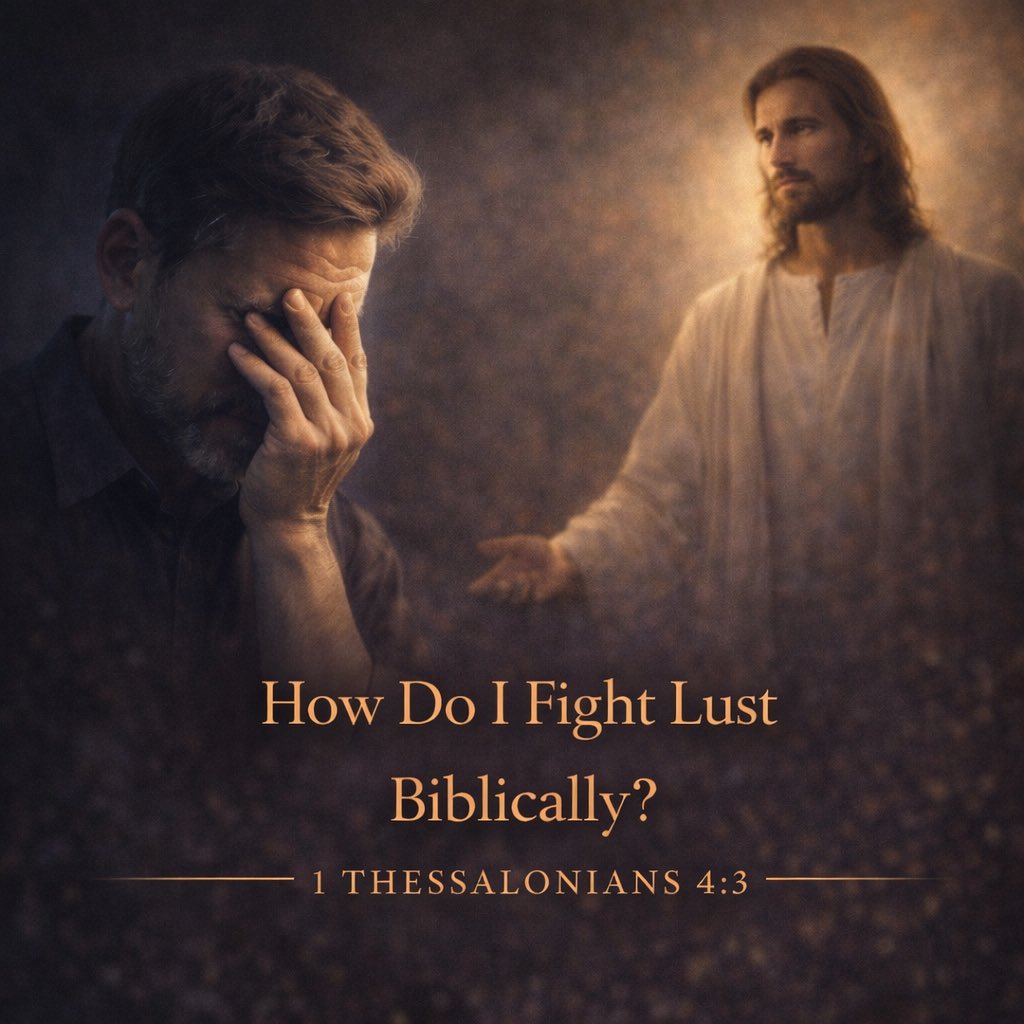
How Do I Fight Lust Biblically?
Introduction: Lust Is Not a Small Sin, and God Never Treats It Lightly
Lust is one of the most destructive and underestimated sins in the Christian life. It hides behind privacy, imagination, and secrecy, convincing believers that because it happens internally it is somehow less serious. Scripture never agrees with that assessment. God treats lust as a heart sin with outward consequences, a spiritual infection that weakens faith, hardens conscience, and eventually expresses itself in action if left unchecked.
Modern Christianity often minimizes lust by blaming culture, technology, or biology. Scripture places responsibility squarely on the individual heart. Jesus said plainly, “Whosoever looketh on a woman to lust after her hath committed adultery with her already in his heart” (Matthew 5:28). That statement removes every excuse. Lust is not neutral temptation. It is sin embraced internally.
Many believers struggle with lust not because they love sin, but because they have never been taught how to fight it biblically. They rely on willpower, avoidance alone, accountability without heart change, or emotional guilt cycles. None of those methods produce lasting victory. Scripture provides a far deeper strategy rooted in identity, discipline, truth, and submission to God.
This essay addresses lust honestly and biblically. It does not excuse it, minimize it, or sensationalize it. It treats lust as Scripture treats it: a deadly enemy that must be fought decisively, consistently, and spiritually. Victory is possible, but only God’s way.
1. Lust Begins in the Heart, Not the Eyes
Biblical warfare against lust begins with recognizing where the battle actually starts. Lust does not begin with visual exposure. It begins with desire cultivated in the heart. Jesus made this unmistakably clear when He said that lustful looking is the fruit of a lustful heart, not merely a reaction to visual stimulus (Matthew 5:28).
Many believers focus all their effort on external avoidance while neglecting internal discipline. While avoiding temptation matters, it does not solve the root problem. A guarded screen cannot restrain an unguarded heart. Scripture says, “Keep thy heart with all diligence; for out of it are the issues of life” (Proverbs 4:23). Lust flows from what the heart entertains.
The heart is shaped by what it feeds on. Thoughts, fantasies, memories, and imaginations quietly cultivate desire. James explains this progression clearly: “Every man is tempted, when he is drawn away of his own lust, and enticed” (James 1:14). Lust draws. Temptation invites. Sin follows.
Fighting lust biblically requires ruthless honesty about internal habits. What thoughts are entertained? What desires are indulged mentally? What compromises are tolerated privately? Victory begins where excuses end.
2. Lust Is Fueled by Idleness and Undisciplined Living
Scripture consistently links lust with idleness. David’s fall did not begin with adultery. It began with inactivity. “At the time when kings go forth to battle… David tarried still at Jerusalem” (2 Samuel 11:1). Idleness placed him in a vulnerable position, and lust followed quickly.
An undisciplined life invites temptation. When structure disappears, the flesh fills the void. Scripture commands believers to live intentionally. “Redeeming the time, because the days are evil” (Ephesians 5:16). Idle time becomes dangerous time when desires are unchecked.
Lust thrives where discipline is absent. Physical exhaustion, boredom, isolation, and lack of accountability create fertile ground for temptation. Paul warned believers to “make not provision for the flesh, to fulfil the lusts thereof” (Romans 13:14). Provision includes time, environment, habits, and access.
Fighting lust biblically means restructuring life around discipline. Sleep matters. Work matters. Routine matters. Not as legalism, but as protection. The flesh grows bold when boundaries disappear.