Global Macro Analysis | Economic Trends, Policy Insights & Markets | Weekly Threads on Key Economies | Join the conversation on the evolving world economy 🌍📊
#JUSTPUBLISHED
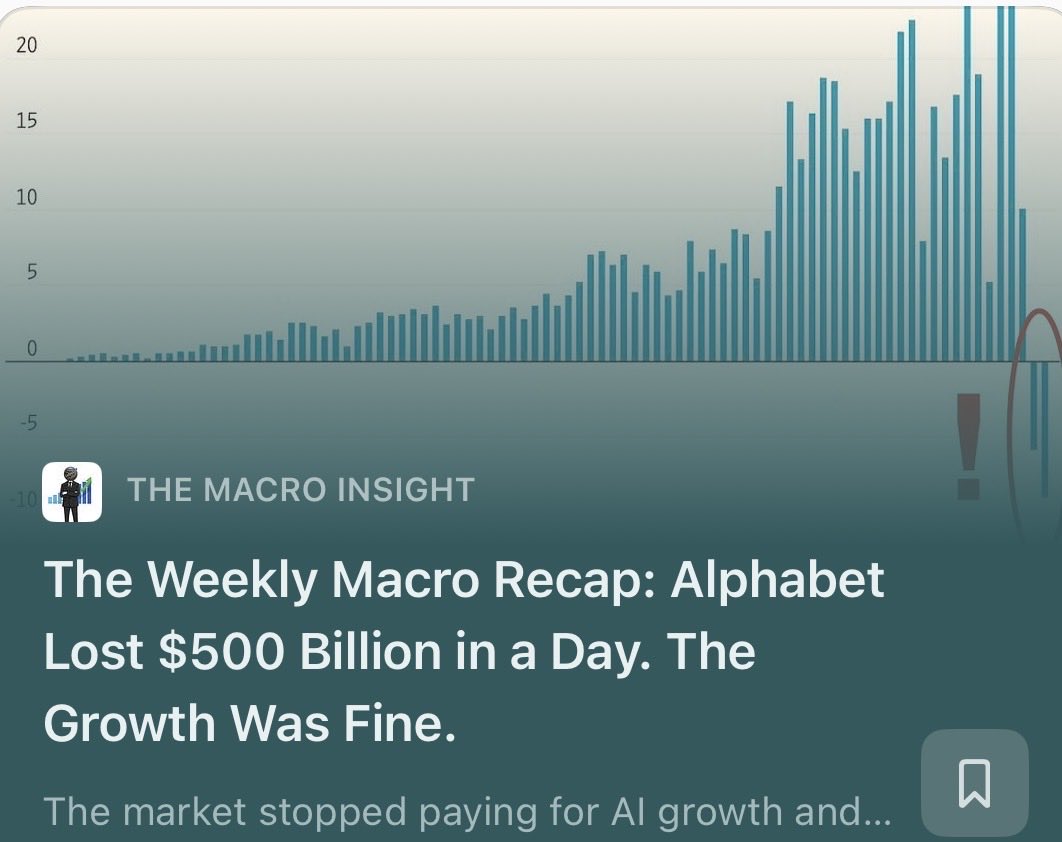
Nvidia doubled revenue. Anthropic raised $ 81.3B. The S&P still lost 8.6%.
The market wasn't trading the news. It was trading a 5% yield.
https://t.co/PVTAot7qlI
#JUSTPUBLISHED
🔹 Alphabet sold a bond that matures in 100 years.
🔹 The money funds chips that will be outdated long before then.
That mismatch is the real AI story this week.
https://t.co/qUmF0g6X5T
US consumer prices are up 30% since January 2020.
At 2% a year, they'd be up 14%.
CPI has stayed above 2% for 67 straight months.
The target: 2% a year. The result? 4%.
Chasing 20% returns while the global economy is drowning in debt is the highway to financial ruin.
I will not endorse this.
There are things more important than outperforming the market (like preserving your own capital)
The first rule of wealth creation is not getting rich. It’s not getting wiped out.
#JUSTPUBLISHED
Everyone is asking if the stock market correction is over.
The S&P 500 never had one. It's 3.8% below its record.
The Nasdaq is the one that crossed -10%.
Here's why the difference matters:
https://t.co/3T9xQ2TOjy
@PanosOnChain It's the regime tell. When yields fall and stocks fall, the market reads it as a growth scare or flight to quality, rather than easier policy. Bad news is no longer good news.
Bond yields fell 14 bps Thursday. Your tech stocks should have rallied. The Nasdaq dropped 2.6% instead.
Here's what the market is telling you.
https://t.co/rnNQ0rLdRn
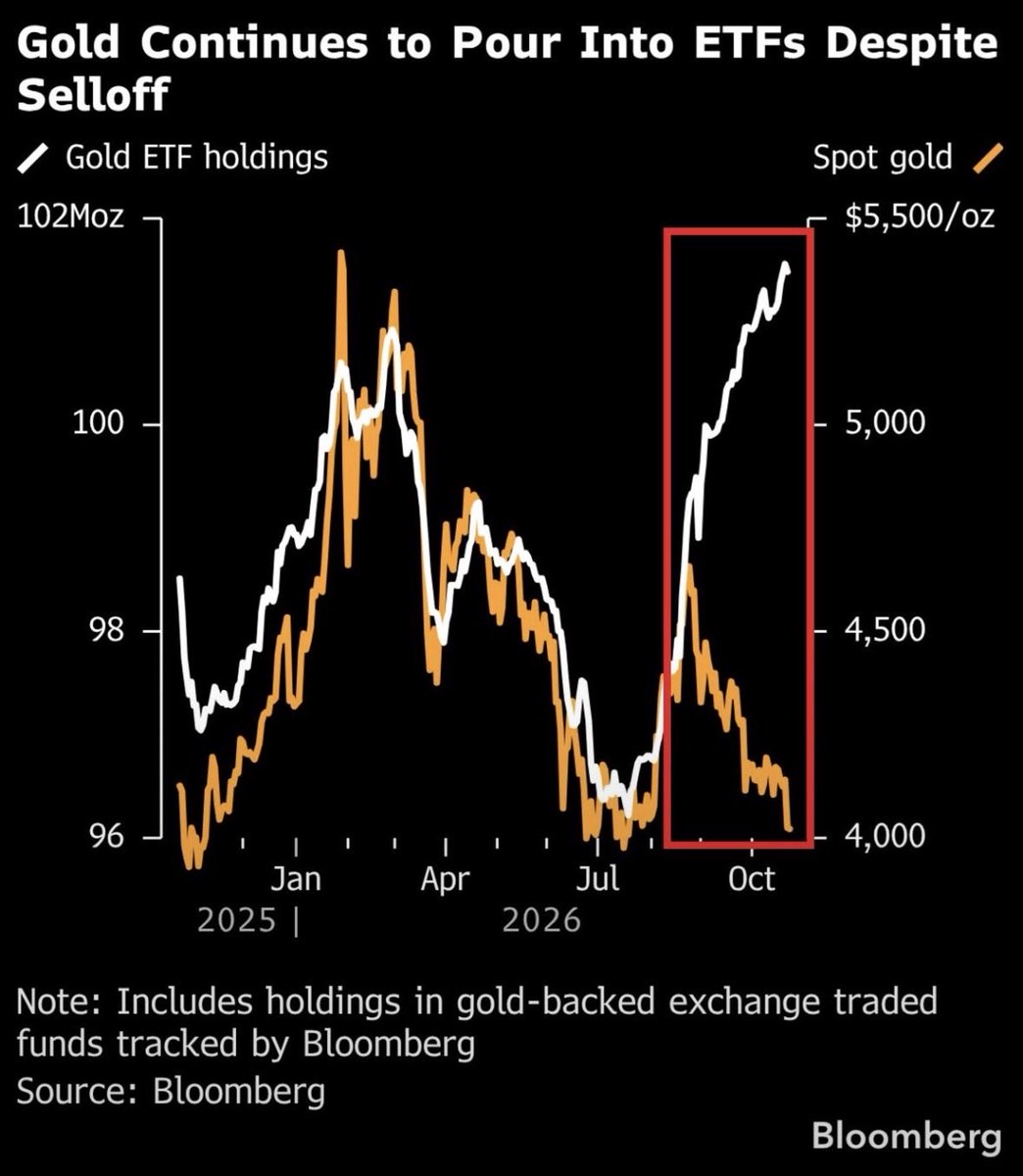
Gold ETFs just logged their 11th straight week of inflows.
Holdings have climbed to an all-time high: 4,189 tonnes, worth $615 billion.
Long-term buyers are accumulating at a record pace. Short-term price action hasn't caught up yet.
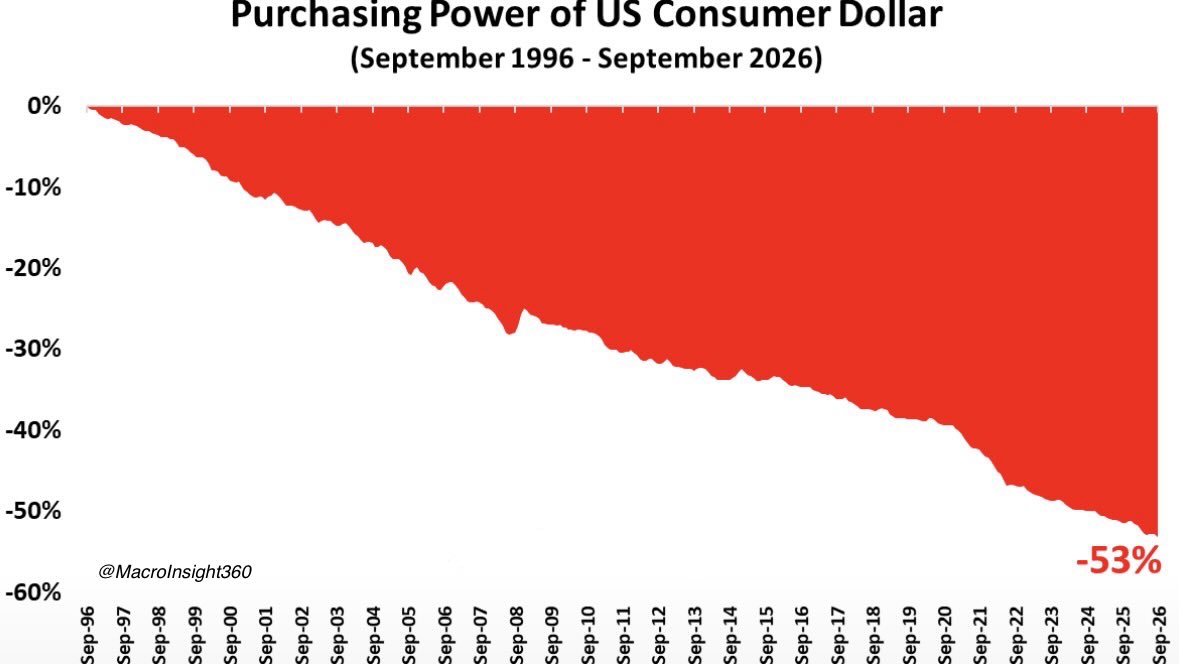
The dollar has lost 53% of its purchasing power over the past 30 years.
$100 in 1996 buys what $213 does today. That's not a glitch.
That's 2.56% average inflation, compounding, every single year.
Cash isn't neutral. It's a position. And it's been a losing one for decades.
If you’re young enough, you might not remember this is what AI generated when you asked for a salmon in a river just a few years ago.
Now it can write code, analyze markets and automate entire workflows that once required teams of people.
And some still think this won’t massively impact the labour market and the global economy…
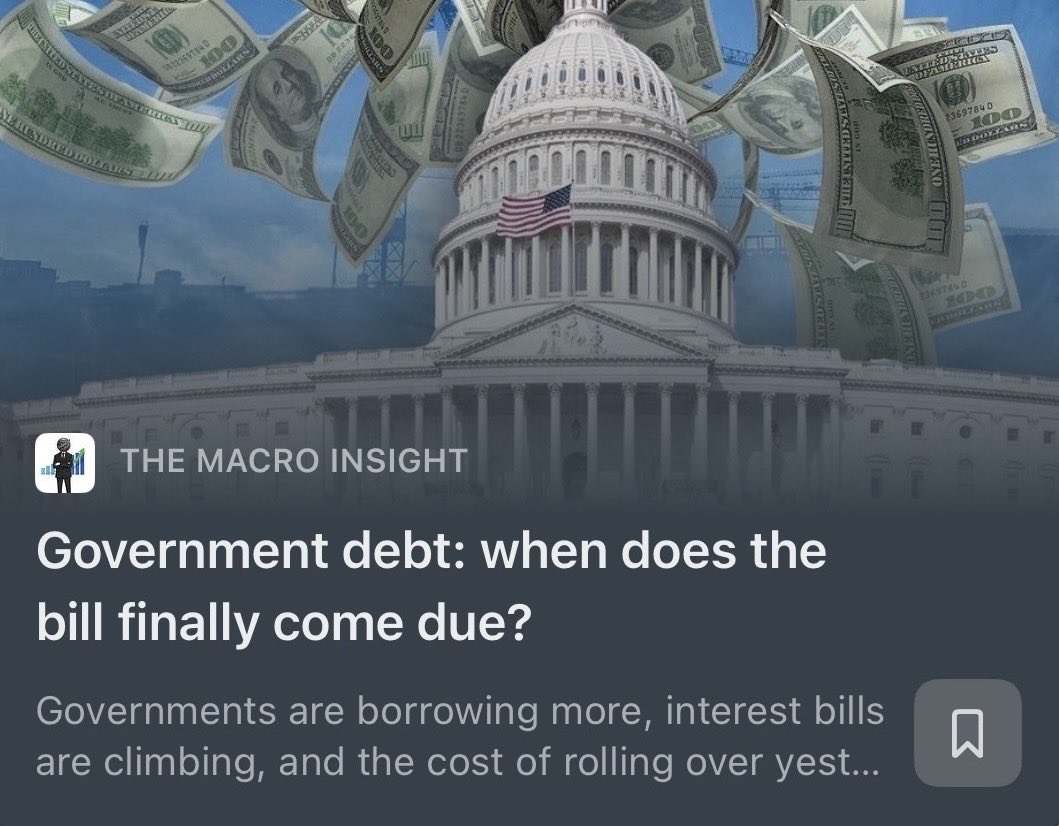
There’s a quiet shift happening in the global economy.
Governments have spent years accumulating debt, helped by an era when borrowing was cheap and refinancing felt almost effortless. But when interest rates rise, yesterday’s borrowing becomes tomorrow’s budget problem.
https://t.co/5JmnORprHI
What if the next global market shock doesn’t start in Washington, Beijing or Silicon Valley?
What if it starts in Tokyo with a currency move that forces leveraged investors worldwide to sell?
That’s the yen carry-trade risk.
#JUSTPUBLISHED
Chips lost over $1 trillion in 8 sessions, their longest losing streak since 2008.
This wasn't a demand problem. It was a 5% 10-year yield.
Full breakdown:
https://t.co/vfJtNdySdO
Wages rise. Capital compounds.
Since 1964, US hourly wages are up roughly 1,200%. The S&P 500? More than 10,000%.
That’s the difference between earning from the economy and owning a piece of it.
Everyone is watching the headlines.
But one of the biggest risks to global markets may be hiding in Japan.
I wrote about it months ago. It’s worth understanding before the market does.
https://t.co/4clUpTtQTR
A central bank cuts interest rates. Stocks rally. Everyone celebrates.
But there are two very different reasons rates might be falling:
1.Inflation is cooling while growth remains resilient.
2.Policymakers are reacting to a weakening economy.
The first can be constructive for risk assets. The second can be a warning.
The decision matters. The reason behind the decision may matter more.
That’s why I prefer economic scenarios over simplistic predictions.
The bond market has already hiked.
The 2-year Treasury yields 91 bps above fed funds. That’s the market pricing in tightening before the Fed delivers it.
The Fed isn’t setting the price anymore. It’s chasing it.
And supply shocks don’t read the dot plot.