This reminds me of Polanyi’s critique of liberalism. Whenever capitalism has failed it has always been because we haven’t done it enough, or pure enough “that the generous initiative of our ancestors was frustrated by the passions of nationalism and class war, vested interests, and monopolists, and above all, by the blindness of the working people to the ultimate beneficence of unrestricted economic freedom to all human interests, including their own.”
I truly believe my country had a great run, most probably in spite of politicians, especially those of the last decades, but we are definitely not the country that has increased its GDP per capita the most. It is embarrassing that he tells falsehoods with the same vehemence in the same speech in which he complains about them.
Midjourney is going to make $200 million in revenue this year with only 40 employees and without any external money. It is impressive. Also scary if this heralds how few employees AI is going to need compared to the number of jobs that it will obliverate.
Some are touting this as the fresh, untethered stock to reality, dethroning $TSLA. But is hard not to be impressed. In Q2 2023, $NVDA clocked an 88% revenue growth, with operating costs up just 15% in the past year. Unsurmountable moat?
In my view, China's economic deceleration has scary common points with what happened in Spain. Both depended on a massive real estate bubble. Both local governments depended on income from land sale and repurposing. And you know how Spain ended... The main difference is China can be a significant economic drag for the rest of the world.
Just a couple of data points from @reuters
Property sales by floor area declined 28.1% year-on-year, extending a 19.7% fall in May...
For June, property investment totaled to 1.2849 trillion yuan, falling 20.6% from a year earlier after a 21.5% drop in May..
Prices and volume coming down like a rock.
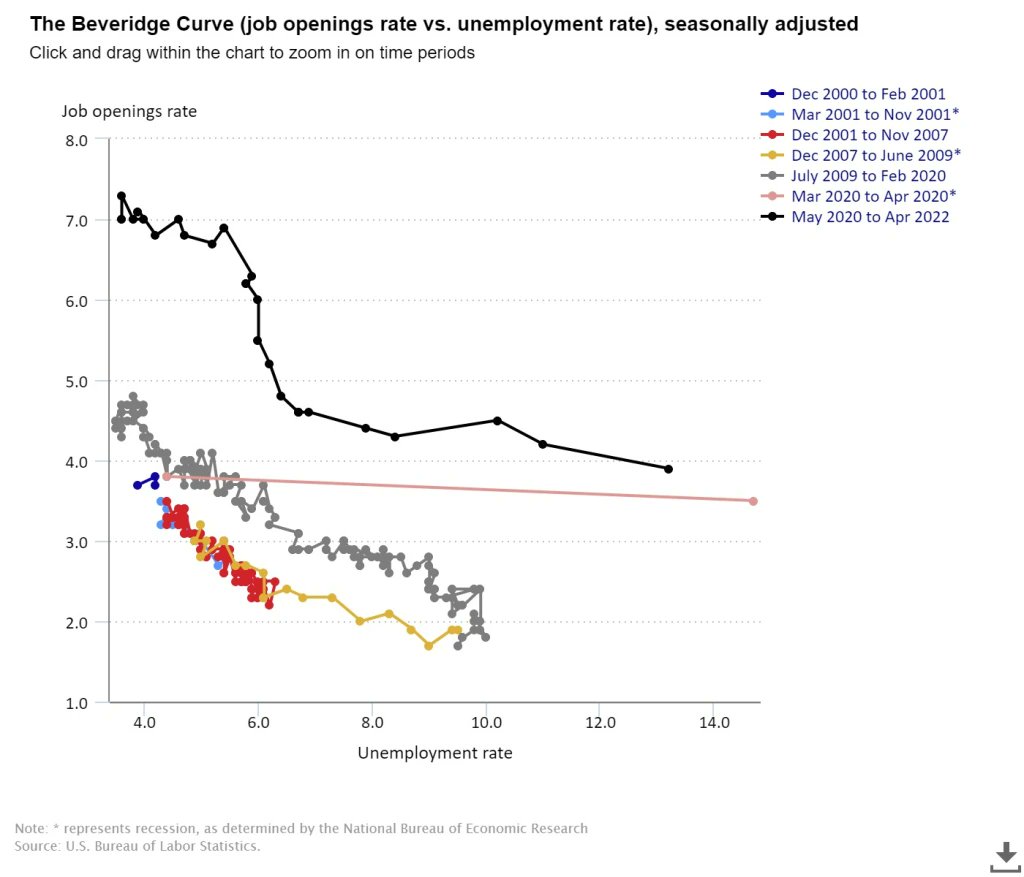
also suggests a downward shift in what economists call the Beveridge curve back to 'normal' levels. That means a labor force with less structural unemployment. And that is pretty good.
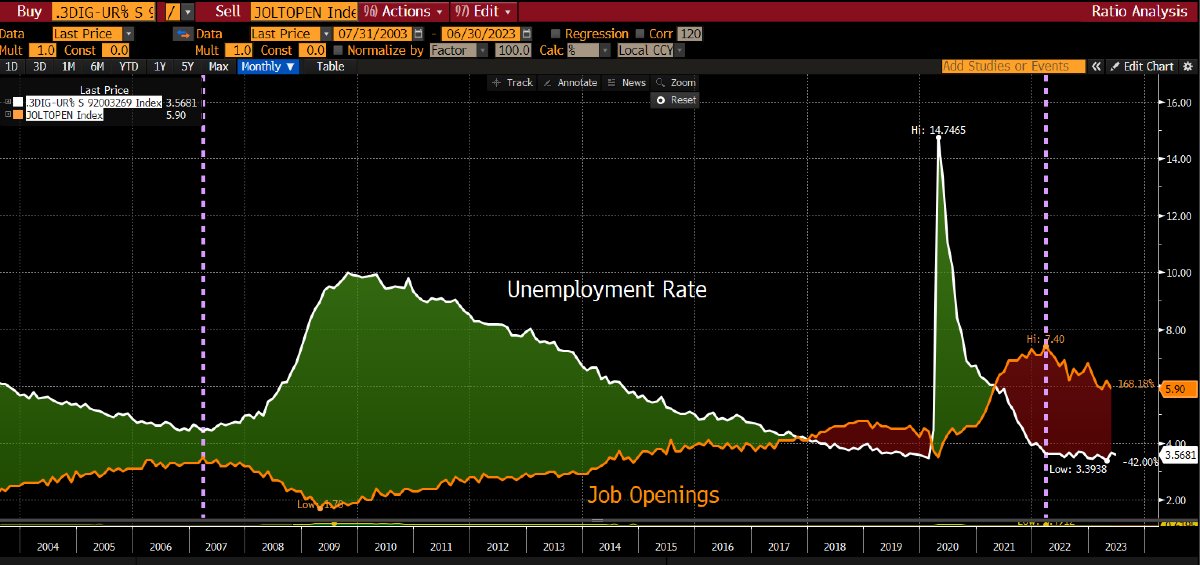
Recent data reveals a drop of 1.5MM job openings since the peak in Mar '22, just a notch below the GFC period, which was 1.8MM. But unemployment has barely changed. This not only increases the chances of a soft landing (an amazing feat) but...
3/3 I expect two things: a) talk of changing the goal: raising the target to 3% is going to reignite (would help with private BSs too), and b) the FED could switch the emphasis to reducing its holdings faster. Working the long end instead of the short seems a better path forward.
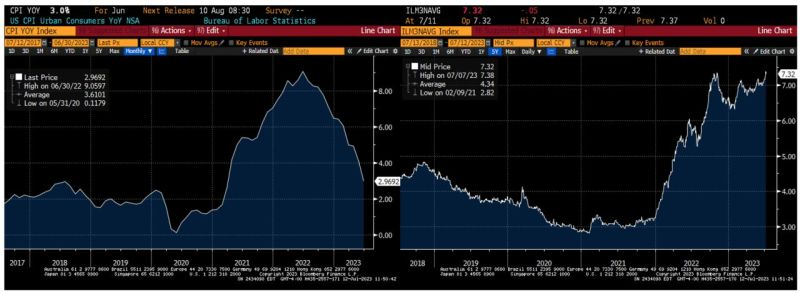
1/3 It was a good CPI print. Lower energy prices & major contributors like used car & airfare prices caused lower inflation, but core inflation, the best long-term predictor of overall inflation still stands at 4.8%. Some thoughts: (Thread 👇)
2/3 Getting to 2%, even if the gap has been greatly narrowed, will be marginally difficult. The tightening effects will be increasingly noticeable, and pressure on Powell to stop will ramp up, but I think he will remain committed to the goal.
Not only the CPI print has been dovish (3%) but has been falling for 12 straight months. Definitely gives some creedence to what is priced in the curve. Buying bonds in the long end starts to sound like a smart trade.
@C_Barraud The only valid argument I have ever heard about raising the target is that it would give more space to cut before hitting the ZLB. And don't get me wrong that would be very nice.
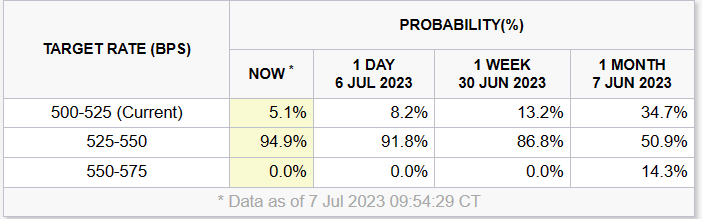
The market is now certain that the FED will raise once more later this month. Big change from one month ago. But we still expect easing to start next May... 🤷higher for longer?
50 bps points more won't matter as much as when the Fed starts easing. Remember, the curve is already baking in the Fed starts cutting as early as May next year and ending 2024 between 4 and 5%. Staying at these levels could be an implied tightening.
@Reuters Gallium and germanium are mined as byproducts of minerals like copper or zinc that are widely available worldwide. The key is refining it which is cumbersome. By restricting exports, they just accelerate the re-shoring of critical supply chains outside of China.