@ewaldeng De US/NATO is een gezwel dat moet worden verwijderd. Merz is niet meer dan een loopjongen van de 'Club Rothschild'. We wandelen in een rechte weg richting WWIII @georgevanhouts@KeesvdPijl1 .
https://t.co/C5PwJlVRYL
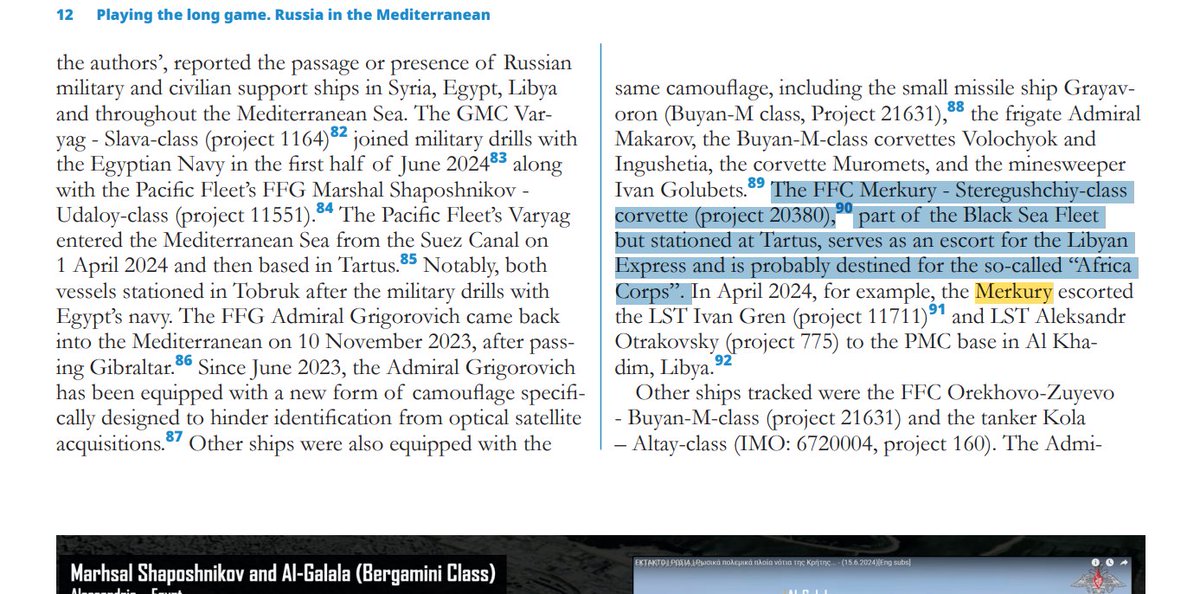
🇺🇸🇷🇺US-NATO identified "Libyan Express" and the Russian warship Merkury by name in 2025 NATO paper...
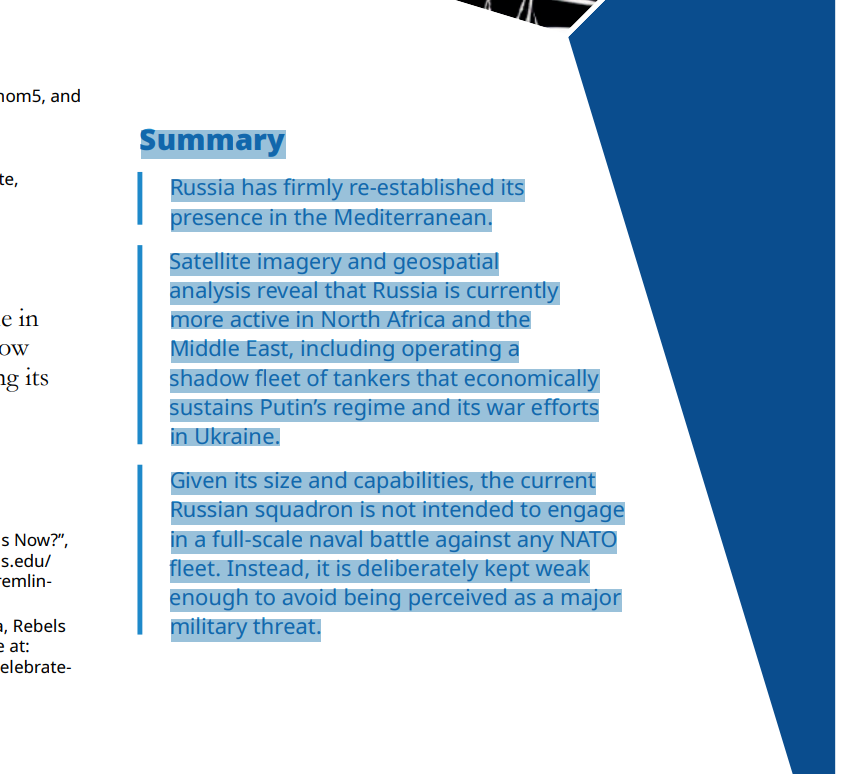
▪️A 2025 NATO Defense College paper not only identified the "Libyan Express" recently attacked by the US through "Ukraine" as part of Russian efforts to back governments across Africa vis-a-vis US-European dominance...
▪️but also named the Russian guided missile corvette Merkury by name as part of the escort protecting the movement of supplies to Africa via Libya.
Between this, the obvious way this fits into earlier papers like RAND Corporation's 2019 "Extending Russia" paper - and the fact that "Ukrainian" capabilities in North Africa are literally co-located with US troops and bases - exposes this a part of a remediated global war the US is waging against Russia - not just in Ukraine.
And of course this wider war on Russia is part of an even wider war the US is waging on multipolarism in general which includes Iran and especially China.
The full document can be found here: https://t.co/wUlSYX7JzI
33 years after it’s inception Jensen Huang is booted out of Nvidia. Exactly 33 years and 33 weeks he is reinstated. The stock price is up 33 percent. The overall market is up 3.3 trillion.
@superjan@fvdemocratie Groter denken! De AfD, met veel problematischer kader, peilt boven 30%; met juiste campagne (o.a. hoeveel Nederlanders realiseren zich dat PVV en Nee'25 één pot nat is?) én versterking politieke top moet 50 zetels haalbaar zijn.
Wat artsen in NL overkwam, is wat
nu @ShankaraChetty dreigt te overkomen in Zuid Afrika.
NL artsen kregen hoge boetes, hij dreigt zelfs zijn licentie te verliezen.
De man heeft zoveel patiënten geholpen in zijn praktijk tijdens de crisis in 20/21. En gered, want geen van zijn patiënten overleed [1], net als bij @ElensRob (!)
Ik roep u op om hem een warm hart toe te dragen door dit bericht te delen.
[1] https://t.co/D1ZPvAmsen
New study:
A 12,000-year reconstruction of seasonal temperature variability in East-Central Europe (ECE) using fossil pollen records indicates the modern era may be among the coolest intervals of the last 10,000 years.
The reconstruction reveals contrasting summer and winter temperature trajectories, with summer temperatures peaking around 7,200 years ago at 1.4°C above the Holocene mean (2.4°C warmer than modern values) before gradually declining toward the present.
Conversely, winter temperatures continued rising throughout the Mid-Holocene to reach a maximum around 2,100 years ago at 1.7°C above the Holocene mean (1.5°C warmer than today) before cooling over the last two millennia.
This region has also undergone much faster-than-modern warming and cooling periods. About 8,200 years ago summer temperatures dropped by 2°C over 190 years and winter temperatures fell by 2.4°C over 290 years. Both seasons then experienced rapid recoveries, warming by 2.1 °C in summer (1.4 °C per century) and 2.3 °C in winter (1.53 °C per century) over a 150-year span.
https://t.co/sXSOCJsUB1
Inspectie grijpt in bij ic Erasmus MC vanwege mogelijke risico's voor patiënten, Gommers stopt als afdelingshoofd https://t.co/MLG3HDOtJV via @NOS
Leuk!
Vanavond in alle talkshows? @RTLBoulevard? @Nieuwsuur? @Nieuwsvandedag? @pauwendewit? @vandaaginside@CafeKockelmann?
En wie nodigen we allemaal uit? @MarionKoopmans? Ab1?Károly Illy? Kunnen we Ernst Kuipers nog eens vragen?
Gezellig babbelen met Diederik! Net als in de #coronaperiode! Zin in!
#Expert
@ChrisMartzWX@algore The old man should start reading some studies. How much did he financially benefit from global warming scam?
https://t.co/JiGmycMyyO
New study:
A 12,000-year reconstruction of seasonal temperature variability in East-Central Europe (ECE) using fossil pollen records indicates the modern era may be among the coolest intervals of the last 10,000 years.
The reconstruction reveals contrasting summer and winter temperature trajectories, with summer temperatures peaking around 7,200 years ago at 1.4°C above the Holocene mean (2.4°C warmer than modern values) before gradually declining toward the present.
Conversely, winter temperatures continued rising throughout the Mid-Holocene to reach a maximum around 2,100 years ago at 1.7°C above the Holocene mean (1.5°C warmer than today) before cooling over the last two millennia.
This region has also undergone much faster-than-modern warming and cooling periods. About 8,200 years ago summer temperatures dropped by 2°C over 190 years and winter temperatures fell by 2.4°C over 290 years. Both seasons then experienced rapid recoveries, warming by 2.1 °C in summer (1.4 °C per century) and 2.3 °C in winter (1.53 °C per century) over a 150-year span.
https://t.co/sXSOCJsUB1
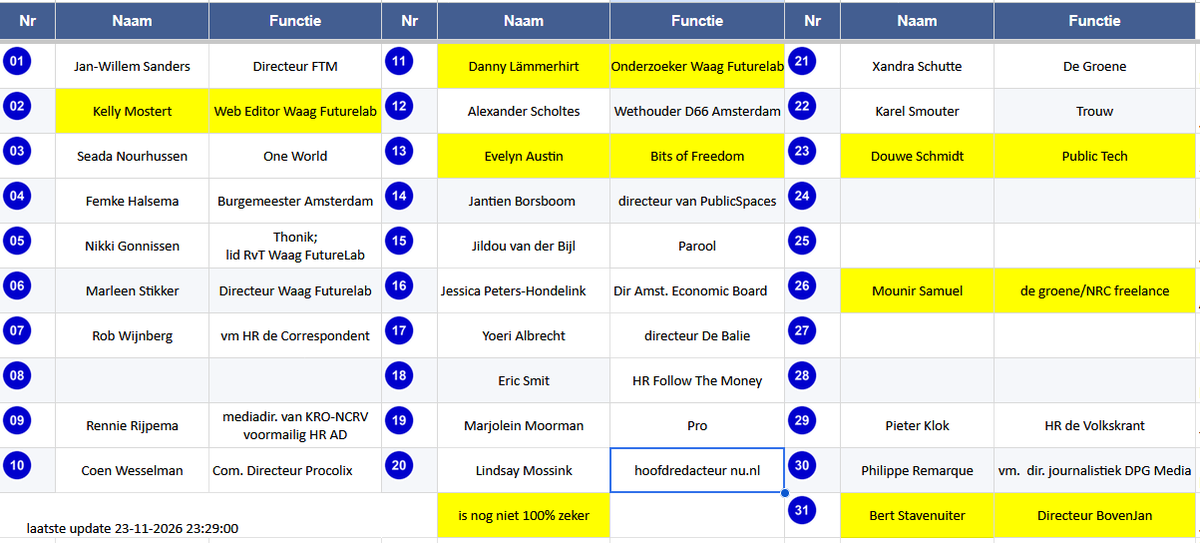
@dancalegria@Krispijnpunt Pim Fortuyn had het over de vijfde colonne; De 'Nieuwe' Wereld (incl meisje Muuse), Wierd Duck, MSM en partijen als Pro, D'66 behoren tot de, veel gevaarlijkere zesde colonne! Gevaarlijker vanwege het gevlochten netwerk van politiek, instituties, media!
https://t.co/huxwS9jYrl