People don’t talk openly about money as an issue of personal security and safety.
I sometimes think about the attitudes toward wealth in the late 1800s and early 1900s. Many wealthy immigrants came from places where displaying wealth could make you a target for robbery, violence, political persecution, or simply resentment from people who had very little. That experience helped create a culture in some families where wealth was something you protected rather than advertised.
Once they became successful in America, many carried that mindset forward. They discouraged openly flaunting wealth and often invested heavily in their communities through charities, hospitals, schools, libraries, churches, parks, and other civic projects. Some of that was genuine philanthropy, but there was also a practical social calculation: it was safer to remain in good standing with the broader community than to constantly remind people of the enormous gap between those who had wealth and those who did not.
That helps explain some of the tension between “old money” and “new money.” Established wealthy families often considered conspicuous displays of newly acquired wealth vulgar or even reckless. New fortunes were sometimes displayed much more openly.
Old-money social circles frequently tried to freeze these newcomers out, both socially and culturally, in part to pressure them into adopting the more restrained behavior expected within established wealthy circles.
It didn’t really work. As new fortunes continued to emerge, conspicuous consumption and abuse of influence became increasingly normalized.
There is an interesting personal-security lesson buried in that history: privacy about wealth wasn’t always simply modesty or etiquette. Sometimes it was self-preservation.
I spent 17 years in computer infrastructure management before being reorganized into cybersecurity, largely because the environments I managed were consistently security-compliant. I had left previous employers when they made similar moves, but this time I stayed.
Cybersecurity was never really my culture. I found it stifling to innovation and often authoritarian or combative toward the parts of the business actually responsible for generating revenue. That mindset just wasn’t my jam.
I ended up spending another 10 years moving through various cybersecurity leadership roles within the same global technology organization, eventually becoming a senior cybersecurity architect.
What finally broke me—and ultimately caused me to leave both the company and the cybersecurity field—was presenting what 3 of my peers and I believed was a cutting-edge roadmap to move toward full security automation. We received no feedback in the meeting at all on the design and adoption roadmap and the meeting ended abruptly. Afterward, an executive pulled me into a one-on-one and explained that, from a corporate liability standpoint, companies don’t necessarily need to be completely secure. They need to be able to demonstrate that they made a reasonable effort to be secure so they can reduce their liability when a breach occurs.
She explained that if I wanted to excel, I needed to better balance the financial investment in security against that goal. In the same conversation, she questioned why I didn’t have more professional certifications given that I didn’t have a college degree.
That part hit differently. I had been working with technology since middle school, starting on a Commodore 64, and had already built decades of hands-on experience across infrastructure, leadership, and cybersecurity.
That conversation fundamentally changed how I viewed the profession. I had spent years approaching cybersecurity as a mission to genuinely protect systems, people, and the business. Realizing that leadership could view it primarily as an exercise in managing legal and financial exposure made me realize I no longer wanted to be part of it.
Now I work in data integration, where, somewhat ironically, I spend my time helping feed data into the AI beast. Different world, different problems—and a much better fit for me.
@CrazyVibes_1 At this rate, they may eventually be open to policies that start looking uncomfortably similar to the movie “Logan’s Run”—where society decides people have an expiration date once they’re no longer considered economically useful.
It can become a scam if citizens don’t remain engaged with local policy decisions and demand financial accountability. Taxes fund essential services such as roads, public safety, and education. When that money is managed responsibly, a well-maintained, secure community with a strong educational system can also increase property values.
Hasn’t the US used perpetual GDP growth as a goal for 50+ years? Similarly to board members of streaming services demand perpetual subscription growth. Seems shallow to define such simplistic success measures. Downside is costs increase without focus on product quality and value to consumers.
@AnnUdoh5 The phrase “Fences make good neighbors” exists for a reason. When you can’t influence who you live near, boundaries are extremely important for longevity of peace on the home front.
@ymmmayer Privatizing medical care; managing law enforcement through a financial lens for efficiency gains & cost reduction; not restricting ownership of the press from corporations/multifaceted businesses.
@foxnewspolitics@AsraNomani@FoxNews@M_Dorgan Politicians in history have always exploited carnie folks to amplify their influence via cheap means and sadly entertainers become useful idiots.
Observations: VENOMA had a list of 206 and McCarthy’s initial count was 205 (on the list he never provided). Is it possible McCarthy crossed paths with someone aware or working within VENOMA or within the FBI? I wonder if McCarthy thought VENOMA/FBI would support him as a means to go public without jeopardizing secrecy about capabilities but quickly found secrecy was better for VENOMA to continue. McCarthy went public too quickly and then deteriorated into what it became trying to save face while possibly believing his own crusade due his VENOMA/FBI info leaked to him.
An FBI VENONA summary prepared on October 26, 1950 said investigators had identified 206 persons involved in Soviet espionage activities with U.S. ramifications. McCarthy, meanwhile, had made his 205 claim eight months earlier, on February 9, 1950. So did McCarthy encounter someone prior to the release of the report? Hoover in the FBI is also a likely suspect from what we know of his tactics.
Missing details from this video:
McCarthy’s personal papers are held at Marquette University’s Raynor Library in Milwaukee. The collection dates from 1930–1957. The access history is important. McCarthy’s widow, Jean Kerr Minetti, deposited the papers at Marquette in 1961 and initially required that they remain closed. Additional material, including approximately 9 cubic feet of McCarthy’s investigative files, was turned over in 1988. Be aware the original size of the personal papers was 100 cubic feet but much was returned to the government as it was deemed material from his role as senator bringing the amount to 9 cubic feet now available for research. The university then reduced it further to 4 cubic feet of material by identifying 5 cubic feet of additional congressional material returned to the government.
The “private files” were restricted for the lifetime of the McCarthys’ daughter, Tierney Minetti Grinavic. She died in November 2020, after which Marquette began processing the formerly restricted files for research access.
I am curious about McCarthy writing, reading, hearing and whom was he speaking with between late 1949 and February 9, 1950 where is could have crossed paths with a contact within VENOMA.
One complication is that Marquette’s online finding aid says several of the newly opened series—including the telephone/visitor logs, Senate Subject Files and personal files—are still listed as “In Process.” That means the catalog tells us they exist, but much of the underlying material isn’t necessarily digitized and searchable online yet.
Be aware spies identified by VENOMA included FBI discoveries too so collaboration is captured between Army intelligence/NSA/FBI.
Army/NSA side = broke the Soviet messages.
FBI = investigated the people revealed or suggested by those messages.
The chronology is crucial: it says the program expanded in the 1950s. It does not by itself prove that Hoover supplied McCarthy classified information before February 9, 1950.
The later speeches after McCarthy’s February 9, 1950 speech in Wheeling show that McCarthy was openly discussing established espionage cases. For example, in September 1950 he spoke about Alger Hiss and Whittaker Chambers and explicitly described Hiss as part of an espionage ring. Another digitized transcript discusses Hiss, Owen Lattimore, Frederick Field and Philip Jessup as an interconnected group. But these recordings in McCarthy’s personal papers are after February 9, 1950. They therefore can’t tell what confidential information he possessed before Wheeling.
There are simply too many contemporaneous archival leads that haven’t been digitally opened:
Hoover correspondence, 1949–1950
State Department research/notes, 1949–1950
Silvermaster correspondence, 1950
Loyalty Review Board records, 1948–1950
Wheeling speech drafts and correspondence,
If McCarthy was fed info from Hoover he may have genuinely thought he was on a noble crusade although it doesn’t justify his tactics.
Perspective check: Somali immigration to the U.S. did not begin under Obama, and Minnesota was never the only state receiving Somali refugees.
Somali refugees were arriving in the U.S. by the late 1980s, with early concentrations in places like San Diego. Minnesota became more important around 1992 because of jobs. Somali men living elsewhere heard about work in places like Marshall, Minnesota, moved there, got hired, and word spread.
Minnesota also already had strong refugee-support networks through organizations like Lutheran Social Service and Catholic Charities. Those groups had experience helping refugees find housing, employment, and practical support.
That combination mattered: jobs + housing + established support networks helped draw additional Somalis to Minnesota from other parts of the U.S.
By the late 1990s and early 2000s, Minnesota had become one of the country’s major Somali population centers.
In 2007, Minnesota directly resettled 1,145 Somali refugees out of 6,969 admitted nationwide—about 16%.
In 2016, Minnesota directly received 1,425 out of about 9,030 nationwide—again, roughly one in six.
From 2010–2016, 47,407 Somali refugees were admitted nationally, and 5,659 were initially resettled in Minnesota—about 11.9% of the U.S. total.
So the better way to understand Minnesota’s Somali population is not “one president brought them there.” It was a decades-long process driven by refugee admissions, employment opportunities, successful housing placement, community networks, and secondary migration from other states.
Car manufacturers are rewarded for fuel economy, emissions compliance, and safety performance, but there is far less incentive to design vehicles around long-term affordability, repairability, and ease of maintenance. Some vehicles—particularly complex luxury models—can become increasingly expensive to maintain as they age. Because most people do not service their own vehicles, rising repair costs can push owners toward replacement rather than continued ownership. Whether intentional or not, the business model can favor repeated vehicle acquisition over keeping a car economically viable for decades.
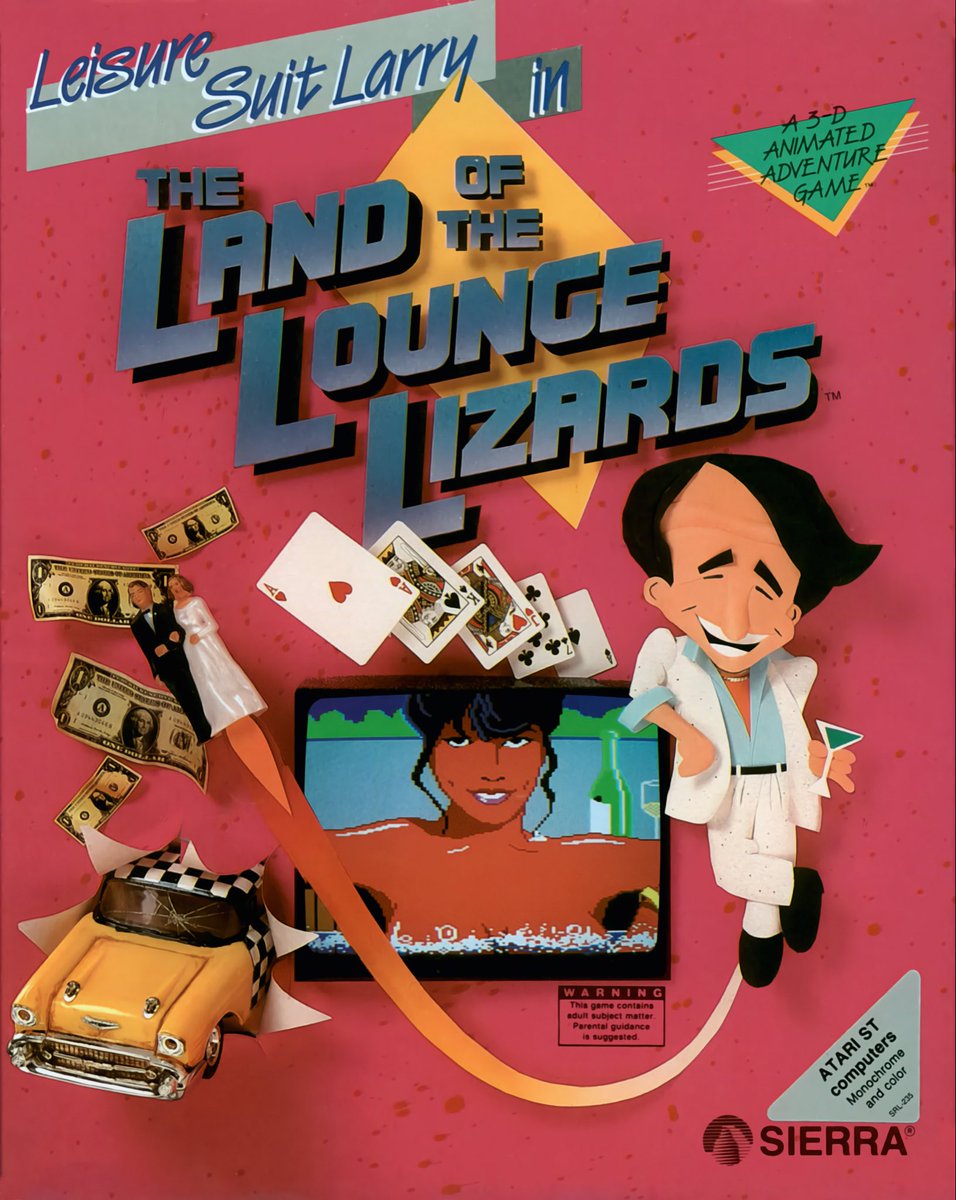
@MizzyMogs Funny times following the middle-aged male virgin named Larry Laffer as he desperately tries to "get lucky" in the fictional American city of Lost Wages.
Humans are predatory animals. What could possibly go wrong with predators watching and sharing your every move? This is the dumbest social sheep moment if you can’t answer the belo questions and are not actively fighting flock cameras in your community:
1) Who has access to the camera data, and exactly what can each person see or search?
2) Can someone track a person’s vehicle or reconstruct their movements without a warrant, case number, or documented reason?
3) Is a legitimate purpose required and verified before every search?
4) Is every search permanently logged with the user’s identity, time, search performed, reason, and information accessed?
5) Can anyone—including administrators—alter or delete those audit logs?
6) Who independently reviews the audit logs for inappropriate access?
7) Does the system automatically flag suspicious behavior, such as repeatedly searching for one person’s vehicle?
8) Can users create alerts that effectively provide real-time or continuing tracking of a particular vehicle?
9) Who can create those alerts, and what approval is required?
10) Which outside police departments, government agencies, contractors, or other organizations can access the data?
12) Can another agency access the data without the local department knowing or approving the individual search?
13) Can data be downloaded, exported, photographed, emailed, or otherwise removed from the system, and are those actions logged?
14)How long is location data retained, and are all copies actually deleted when the retention period expires?
15) What safeguards prevent an employee from using the system to stalk an ex-partner, family member, neighbor, journalist, employee, or other individual?
16) How quickly is access terminated when an employee leaves, is suspended, changes jobs, or no longer needs access?
17) What happens when someone’s credentials are stolen or their account is compromised?
18) What specific disciplinary or criminal consequences exist for intentionally misusing the system?
19) If misuse results in a crime (ie, stalking, assault, kidnapping, or another person’s injury or death), who is accountable?
20) Is the affected person notified when unauthorized access to their location information is discovered?
21) If someone suspects they’re being tracked, is there an independent process for determining who searched for them and why?
22) Who investigates allegations when the suspected abuser is an employee of the agency controlling the records?
23) Are audit records preserved long enough to investigate misconduct discovered months or years later?
24) Can an independent auditor, court, or oversight body obtain the complete audit history?
25) Does the vendor itself have access to location information, and are vendor employees subject to the same logging and accountability requirements?
26) Most importantly: Can every use of the system ultimately be traced to an identifiable individual who can be held accountable for misuse?
Funny watching old YouTube of 1990 trade deal debates. The topic was expanding free trade with Asia following up to NAFTA. It set the table for Permanent Normal Trade Relations (PNTR) in 2000, followed by China joining the WTO in December 2001. This substantially expanded and stabilized U.S.–China trade. It kicked outsourcing of American jobs into turbo mode.
Bill Clinton administration were extremely pro-China and even released military IP which accelerated Chinas ballistic missile and space programs. One prediction was that we’d pump massive money and capability into foreign nations forcing an inevitable war. We would create and build up our own enemy that inevitably would need to be taken down for our own way of life to survive. Sad listening to the old debates because it was common sense, base economics vs the glorious potential.
Fast forward and here we are. Potentially battling with an enemy built by Congress’ short sighted policies which were aimed to bring the US perpetual GDP grown.
The US and Europe inherited very different relationships with power.
America’s founding ideal placed individual liberty, individual responsibility and government by consent at its center: authority ultimately flows upward from the people.
Europe spent centuries under monarchies, aristocracies and empires. That history can leave different generational lessons: centralized authority maintains order, collective action protects ordinary people from concentrated power, and—after two world wars—supranational authority can protect Europe from destructive nationalism.
That context matters when examining the EU. Spinelli came from communism, rejected Stalinism, and became a European federalist. His 1941 Ventotene Manifesto explicitly sought to move substantial sovereignty from nation-states to a European federation.
Americans therefore may instinctively view the EU sovereignty debate differently. Our founding story begins with rejecting distant authority and asserting that government derives its legitimate power from the individual citizen.
Europe’s experience can produce the opposite fear: not too much centralized authority, but what might happen without enough of it.
Neither history determines what people believe today—but it helps explain why Americans and Europeans can look at the same transfer of sovereignty and see very different things.
I agree—a nasty strain may be going around. I’d had COVID a few times before, and it was always mild. I was vaccinated but didn’t get the boosters. Then this May, it hit me hard—nearly every classic symptom dialed up to 10, except for only a mild, brief fever. Oddly, none of the three other people I live with got sick, so for whatever reason, it didn’t spread easily in our household.
After two weeks of struggling to breathe, I was treated for walking pneumonia and learned I’d gone into AFib while sick. Just six months earlier, I’d had a heart catheterization and a high-tech, color, 3D echocardiogram and received an extremely good report on my heart health.
Since COVID in May, my heart won’t stay in a normal rhythm even after Cardioversion, and no one can explain why. I’m now on medication to control my heart rate, using CPAP to help manage the AFib, and dealing with awful medication side effects. Prior to COVID I took no medications.
So yeah, whatever strain of COVID hit me took a serious bite out of my health.
@ronsterd89 Yes, I pay my doggie therapists in soup bones. Great listeners and always know when I need support. When I’m down and withdrawn, they insert themselves between me and folks that engage me with an expression like, “Is that really important, right now?”.
Maureen was lucky she wasn’t the leading lady in The Conqueror (1956), with John Wayne as Genghis Khan. She wasn’t in the film, though she was diagnosed with uterine cancer in 1978, around the time Wayne developed stomach cancer. Hers was successfully treated, and she lived another 37 years, dying of natural causes at 95.
The Conqueror was filmed near St. George, Utah—about 137 miles downwind from the Nevada nuclear test site, where 11 above-ground tests had been conducted in 1953. Fallout reached the area where the movie was filmed. In 1964, Wayne was diagnosed with lung cancer. He had surgery that removed his entire left lung and several ribs.
Of roughly 220 cast and crew, 91 later developed cancer and 46 died from it, including John Wayne, Susan Hayward, Agnes Moorehead, Pedro Armendáriz, and director Dick Powell. A direct causal link to the fallout was never proven.
Even more unsettling, producer Howard Hughes reportedly shipped about 60 tons of dirt from the Utah location back to Hollywood for reshoots. Makes you wonder where all that dirt ended up afterward in Hollywood.