Come celebrate John Grant Jr. this Thursday at the PMC! First 1,000 fans in the building will get a special limited edition John Grant Jr. player card.
John will also be holding an autograph session in the Hall Of Fame before the Lakers matchup against Brooklin Thursday.
Come celebrate John Grant Jr. this Thursday at the PMC! First 1,000 fans in the building will get a special limited edition John Grant Jr. player card.
John will also be holding an autograph session in the Hall Of Fame before the Lakers matchup against Brooklin Thursday.
This is Tim Horton during the second intermission, October 26, 1968 proudly talking about his fledgling donut shops. He thanks patrons in Hamilton, Burlington, Kitchener, Brantford & Galt (Cambridge) for making it a success. He must be mighty pissed at what his business has become.
Horton was a feared body checker. All those that have turned his 🇨🇦 icon into a travesty - he's waiting for you on the ice in heaven. 🏒
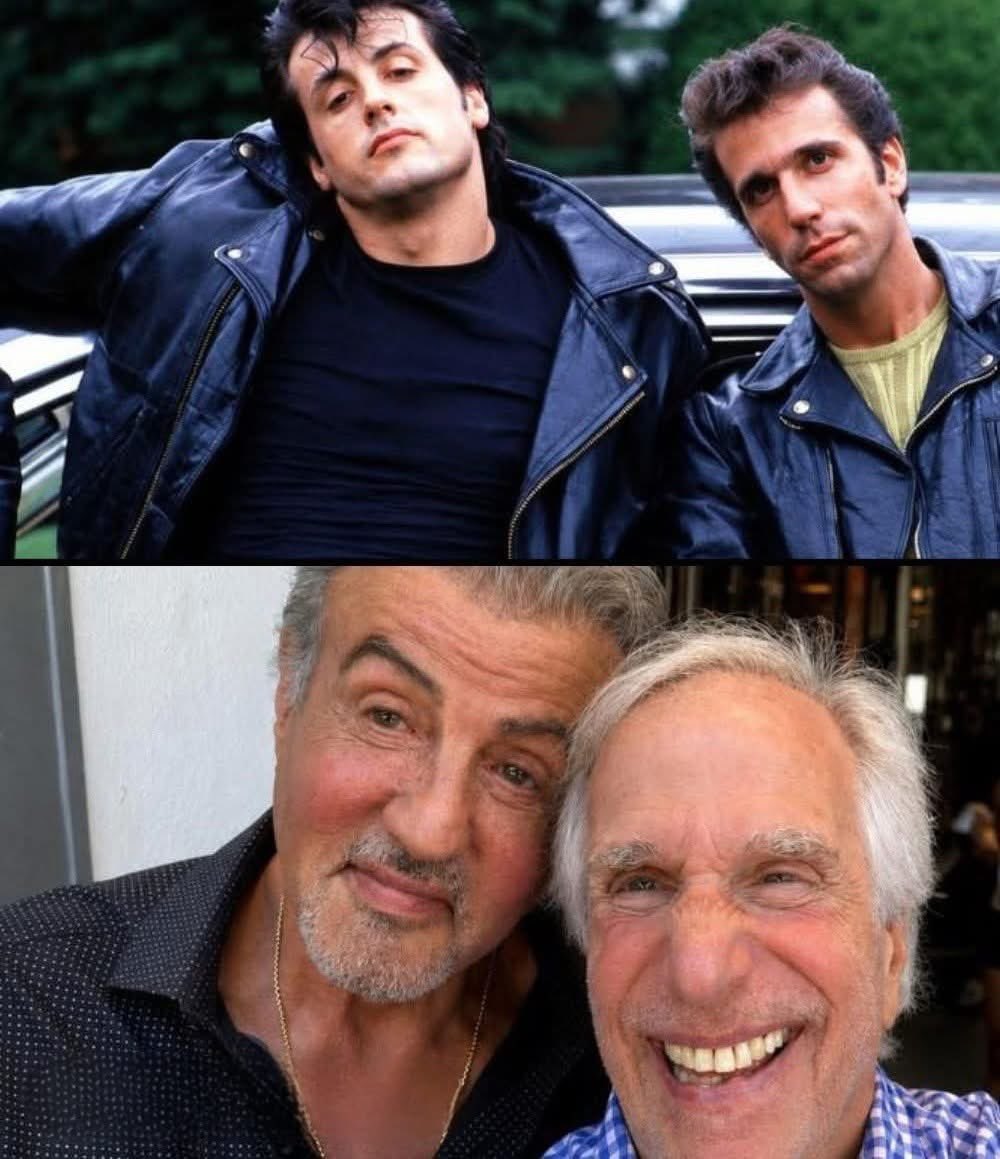
In 1974, Sylvester Stallone was walking around Hollywood with a worn script under his arm and almost no one willing to listen. It was Henry Winkler, then a rising star from Happy Days, who stopped and believed in him when everyone else had already dismissed him.
At the time, Stallone was in a difficult situation. He was going from audition to audition without success, had very little money, and was desperately trying to sell a handwritten screenplay he considered his only real chance.
That script was called Rocky.
He had written it in just a few days after watching the fight between Muhammad Ali and Chuck Wepner. Inside that story was much of his own life: struggle, rejection, and the feeling of constantly being underestimated.
Film studios read the script and recognized its power, but they all had one condition: the lead role had to go to an established actor.
Stallone refused every time.
He would rather stay broke than see another actor play Rocky Balboa.
One day, after yet another failed audition, he found himself in a casting office with the tired expression of someone who had been fighting too long without success. Henry Winkler noticed him almost by chance.
At the time, Winkler was becoming famous for his role as Fonzie in Happy Days. He could have ignored Stallone like so many others did.
Instead, he stopped to talk to him.
Years later, Winkler said Stallone looked like one of those actors Hollywood had already decided to discard. But when Stallone began talking about the plot of Rocky, something completely changed. He spoke with a conviction that felt impossible to fake.
Winkler asked to read the script.
He took it home and finished it overnight.
The next day, he called his agent, Jackie Lewis, telling her that this young man had something authentic and that she absolutely needed to meet him.
It was a decisive phone call.
Jackie Lewis agreed to represent him, and the script finally began circulating among influential people in the industry. It eventually reached producers Irwin Winkler and Robert Chartoff, who immediately understood the story’s potential.
Even then, however, studios wanted a big star in the lead role. Major names such as Ryan O’Neal and James Caan were considered.
But Stallone kept saying no.
He would only sell the film if he could play Rocky himself.
In the end, the producers convinced United Artists to take the risk. They reduced the budget and agreed to give the lead role to an almost unknown actor.
The rest is cinema history.
Rocky won three Academy Awards and turned Stallone into a global star.
In later years, Stallone often recalled how important Henry Winkler’s support had been at that moment in his life. He said that that trust came precisely when he was beginning to lose hope.
And Winkler never publicly took credit for it.
He simply saw something in a man that everyone else had stopped seeing.
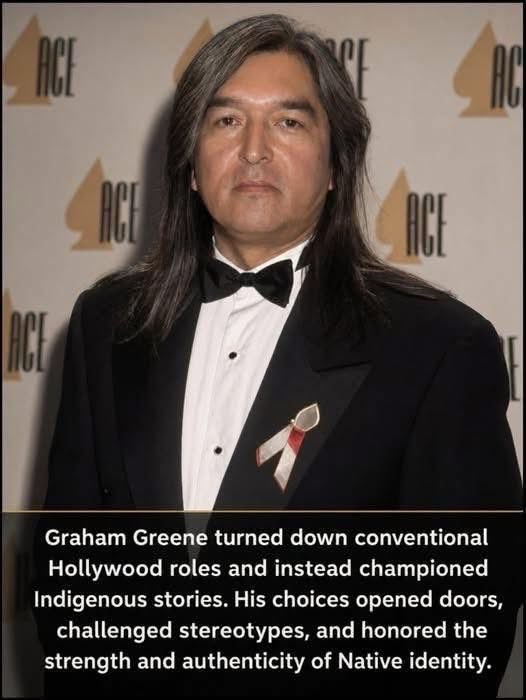
In the early 1990s, actor Graham Greene walked into a casting session and was told to “sound more Native.” His response was simple: “Which tribe?” The room went quiet and the role disappeared.
That moment reflects much of Greene’s career. Not loud protest, but steady resistance to an industry that often chose stereotypes over real representation.
Coming off an Academy Award nomination for Dances with Wolves, he had opportunities. But many roles offered to him followed the same pattern: the wise elder, the spiritual guide, the background figure who supports someone else’s story. Greene pushed back. He questioned scripts, accents, and how Native characters were portrayed. When it didn’t feel right, he walked away.
Instead, he chose roles that challenged expectations. In films like Clearcut and Thunderheart, he took on characters that were complex, direct, and rooted in real issues rather than comfortable narratives.
That path didn’t lead to mainstream Hollywood stardom, but it gave him something else. A career built on integrity, consistency, and control over his identity on screen.
Over decades, he’s remained committed to one thing: portraying Native people with accuracy, depth, and dignity, even when it came at a cost.
Gary Gait played in the NLL from 1991-2011. Cody Jamieson debuted in 2011 and is still active. Their careers overlapped by two games - they were teammates on the Rochester Knighthawks on Jan 8 and Jan 29, 2011. Gait's last NLL assist was on the third goal of Jamieson's career.