@KLSDM23 @Tas_geochem Crocodiles are easier to locate at night by eyeshine. It is sometimes possible to catch them while they are basking during the day but you need to be quick! Most are caught in the water at night #geochemchat
Groundwater has better hydrogeochemical quality than surface water and was more favorable for human society utilization.
#geochemchat
https://t.co/25k4TuxUlM
"This gives a better understanding of why some dubduction zones fail while others set up as long term, steady-state systems" said Joshua Garber, assistant research professor of geoscience at Penn State.
#geochemchat
For those who love Barium or Silicon (bio)geochemistry, please don't miss our recent publication in which we combined stable Ba and Si isotopes to understand the differing behaviors of barium and silicon at the continental margin.
https://t.co/tvtJHZmTWk
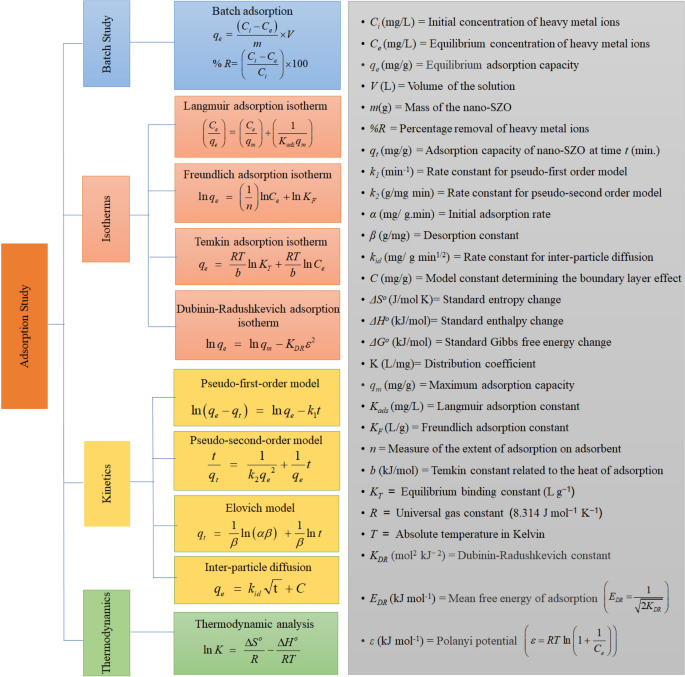
This study presents the valorization of waste walnut shells as an effective and environment friendly bioabsorbent for sequestrating Cr(VI) from aqueous media #geochemchat
This study makes use of Oxygen Isotope Characterization of Seafloor Drilled Cherts in determining ancient ocean temperatures #geochemchat https://t.co/b7SWHNfgQ6
Mediterranean cave clues show that islanders ingested mind-bending plants around 3,000 years ago. Analysis of hair strand found in this cave have provided Europe’s oldest direct evidence of psychoactive drug use #geochemchat
Analyses of human hair found in a Mediterranean cave turned up psychoactive plant substances, revealing use of hallucinogens around 3,000 years ago.
https://t.co/GCeVtamqOo
More insight on how photoremediaion can be used to solve environmental problems such as pollution, reforestation, biofuels, and landfilling. #geochemchat
Nb is a very complex element. It's study of its speciation in solids is quite a challenge when it comes to geological analysis. Here is a techniques that has been developed to measure Nb minerals and synthetic oxides with geological relevance:https://t.co/jXiwKgqZhy
#Geochemchat
Interesting!! Project aims to understand the life history of the Speartooth Shark by quantifying the strontium and strontium isotope signatures of the Adelaide river #geochemchat
Researcher @Thesaltygeochem & supervisor Dr Brandon Mahan aim to better understand the life history of the Speartooth Shark, a rare river shark that occupies the Adelaide River.
@jcu
https://t.co/VwNxe0j5uj
University of Lausanne team has demonstrated that the phenomenon of iron oxidation occurred on Earth much earlier that previously thought. Techniques used behind this discovery: MC-ICP-MS and SIMS #geochemchat
Scientists at @unil have surprisingly observed traces of iron #oxidation in rocks dating from 3.8 to 1.8 billion years ago, well before what is known as the“Great Oxygenation Event ” What caused this oxidation? Bacteria? Oxygen? more info🌎👇@ElsevierNews https://t.co/FC1R2N5Aul
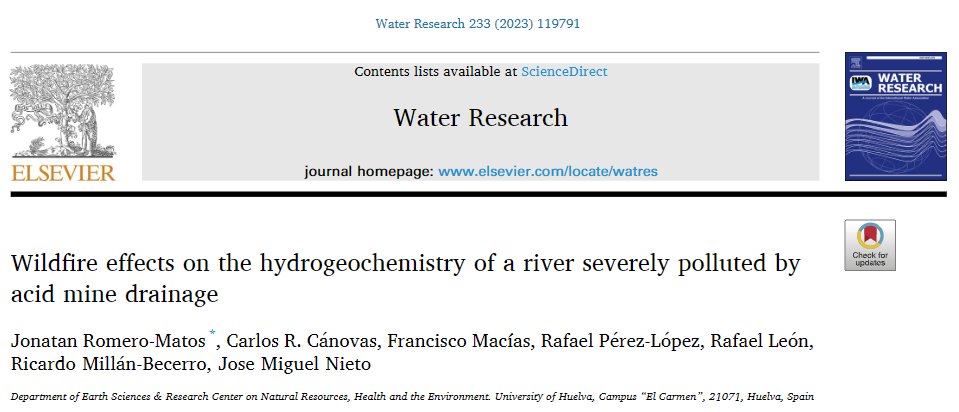
Happy to share my first full paper on “Wildfire effects on the hydrogeochemistry of a river severely polluted by acid mine drainage” just published in #WaterResearch journal with OpenAccess. Research developed in @GeoEnviUHU https://t.co/SQ8zaXV6Ke