Xola, we can process this piecemeal, but let us not pretend we don't see the trap you're trying to lay.
We all agree unequivocally that Senzo’s directive was legally incompetent, ultra vires, and unconstitutional. But you do not get to stop the logic train there just because it suits your faction, let’s do the next steps of your piecemeal process.
Piecemeal Step 1: The Originator - If we agree the directive was legally incompetent, then the Cabinet Minister who consciously drafted and issued it committed gross executive sabotage against an active murder task team. Under Section 91(2) of the Constitution, that demands immediate executive removal by the President.
Why does your piecemeal logic outsource the instigator to an "investigative void" on fully-paid special leave?
Piecemeal Step 2: The Reality of Coercion - We know exactly where you are going with this: "Because it was legally incompetent, Masemola should have defied it under Section 199(6)."
But the #MadlangaCommission evidence already blew up that argument. Masemola didn't blindly execute it. He stalled the dissolution, rejected the immediate shutdown plan to protect witnesses, and escalated the crisis to the Presidency. You're trying to punish a civil servant for tactically managing a legally incompetent crisis created by your own Minister!
Piecemeal Step 3: The Presidential Silence - Let’s keep going piecemeal. Masemola informed @PresidencyZA about this "legally incompetent" directive on 1 February 2025. @CyrilRamaphosa confirmed he spoke to Mchunu but withheld the outcome and provided zero operational protection to the SAPS.
Does your "piecemeal accountability" apply to the Head of State who enabled the rogue directive, or does it conveniently stop at the police station?
Your "piecemeal" approach is just slicing up the facts to serve a predetermined political scapegoat. You want us to agree the order was bad so you can politically execute the cop who was forced to navigate it, all while ignoring the politicians who engineered and enabled it.
We see the playbook, Xola. Proceed to your next step!
Ivale, Comrade...
@SABCNews@amaBhungane@eNCA
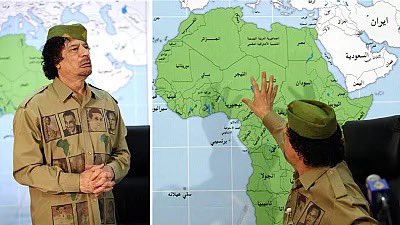
One of colonialism’s greatest successes was convincing Africans to think within the political geography colonialism created.
Our history, trade, cultures and struggles existed long before those borders.
African memory is larger than the colonial map.
Why an African army mattered
The idea of a United African Army was not some romantic military project.
The question was very practical: why should Africa require AFRICOM, French forces, NATO or any other foreign military structure to solve African security problems?
Gaddafi believed Africans should develop the capacity to defend Africa themselves.
That meant training, coordination, financing and eventually a continental security structure capable of responding to conflicts without providing foreign powers with a permanent justification to establish themselves militarily on our continent.
The principle was sovereignty.
If you cannot defend yourself, somebody else will offer to defend you. And once somebody else controls your security, they acquire enormous influence over your politics and your future.
African security must ultimately be African.
Libya should have taught Africa what happens when foreign powers claim the authority to decide which African governments are legitimate, which security arrangements are acceptable, and what political future Africans are permitted to pursue.
The AES is confronting questions that reach far beyond the Sahel: Who controls African security? Who controls its resources? Who defines its political legitimacy? And who controls the narrative when an African state refuses the established order?
Libya paid an enormous price. Africa should not ignore the warning.