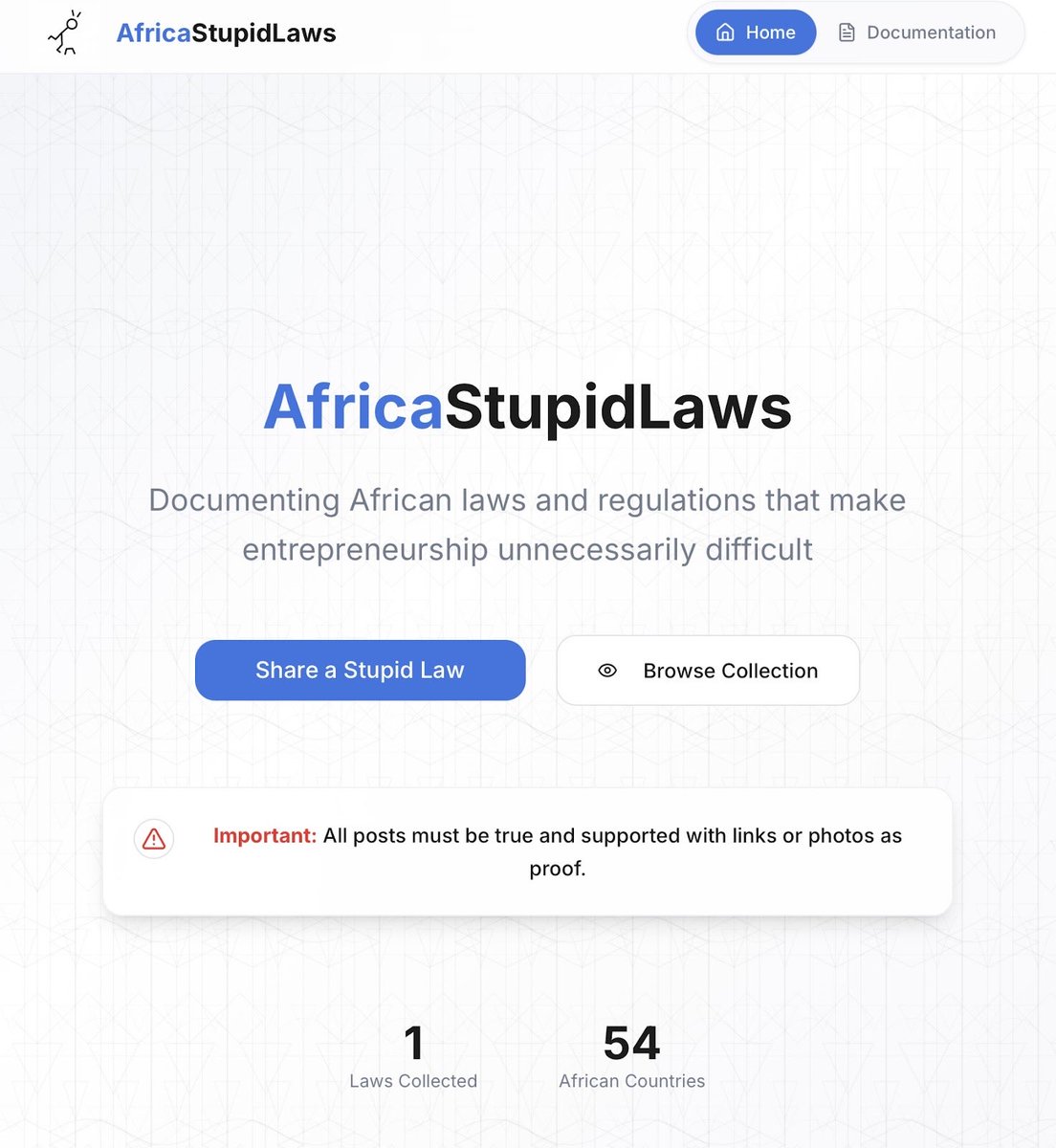
One of our 15-year-old students at Tiossan Academy (my school in Senegal) decided to stop waiting for permission and built a tool for all of us.
Go to africastupidlaws(dot)org right now.
It’s a simple place to submit the most ridiculous, business-killing laws in your country.
If a teenager can build a website to track this, maybe our leaders can find the courage to start repealing them.
People in Africa work harder than almost anyone.
They are not lazy. They carry water for miles and work in the sun all day.
But if the rules make it impossible to build a factory or buy a tractor, they will always stay poor.
I'm going to say something that might upset some people, but I believe it deeply and the evidence backs it up.
The single most powerful thing Black people anywhere in the world can do to fight racism is to become collectively wealthy.
Not just individually successful, but wealthy as a community.
I watched this happen with other groups. When Japan was poor, Japanese people in America were put in internment camps. When Japan got rich, suddenly everyone wanted a Toyota and Japanese culture became aspirational.
Korean Americans were targets of violence in the early 1990s. Today, after South Korea's economic rise, Korean culture is one of the most admired in the world.
The pattern is so consistent it's almost boring: poverty invites contempt, prosperity commands respect.
So when I hear debates about fighting racism in America, I always think the same thing. Yes, call out injustice when you see it, absolutely. But also build businesses, create wealth, and invest in your children's education like your life depends on it.
Make your community so economically powerful that discrimination becomes expensive for anyone who practices it.
That is how you win the game everyone else already figured out.
Since the end of the 1800s, the Earth warmed by 1.3 degrees Celsius.
In that same period, the global population exploded, agricultural productivity went through the roof, and deaths from extreme weather fell 99% per capita.
So the first 1.3 degrees of warming came with the greatest era of human prosperity in history.
The question nobody wants to ask is: why are we so sure the next degree will be catastrophic?
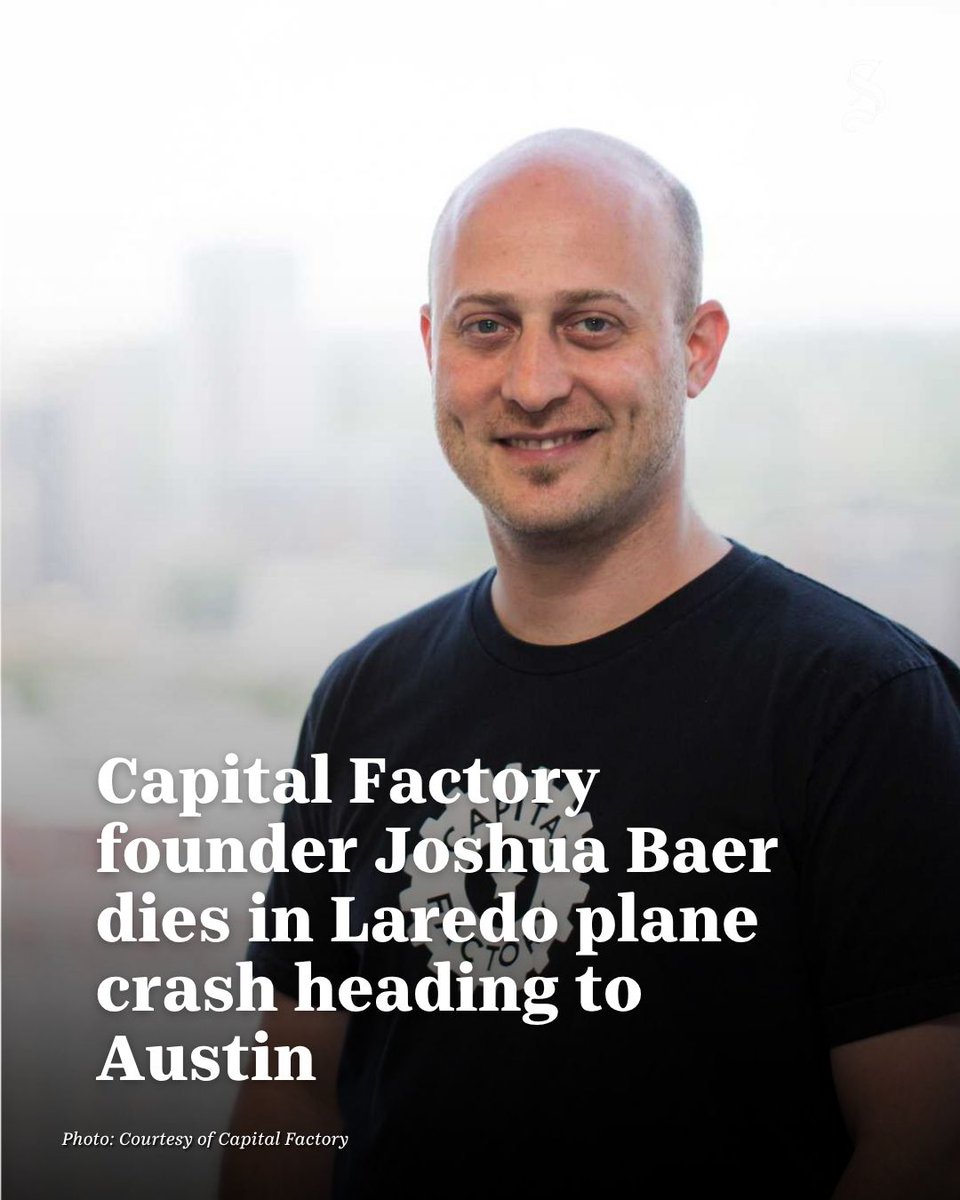
Capital Factory founder Joshua Baer, a visionary force in the Texas technology and start-up ecosystem, died Tuesday night in a private plane crash in Laredo, the organization confirmed to the American-Statesman.
"Joshua was a fearless leader, a brilliant partner, and a dear friend to so many of us," Capital Factory President Bryan Chambers said.
https://t.co/rYhKmYv0Yg
The child labor argument against capitalism gets the story backwards.
Children worked on farms, in homes, and in family trades long before factories existed.
The real enemy was poverty.
The reason many children stopped working was that their societies became rich enough for school to replace survival labor.
It's become taboo to look at your own culture and say something needs to change.
If you do, they call you a sellout, an Uncle Tom, or a self-hater.
And if someone outside the community says it, that's racism.
So nobody says anything.
And the kids are the ones who pay the price while all the adults stay silent to protect their reputation.
“The Fable 5 disclosure shows a company that used safety language to justify building an opaque, paternalistic system where Anthropic alone decides who is worthy of frontier AI access, profiles users to enforce that decision and collects full payment regardless.”
Using safety language to justify building a paternalistic CENTRALIZED system which decides who can use what while making everyone pay for it….
Who/What does that remind you of 🤔?
Eight months ago, David Sacks, the White House AI and Crypto Czar publicly accused Anthropic of running a sophisticated regulatory capture campaign built on fear mongering (save this).
People thought it was a spicy take and then Fable 5 release just turned it into evidence.
When Anthropic released its Mythos-class models, it disclosed that every prompt and output sent through them would be retained for 30 days with no exceptions including for enterprise customers who had previously signed zero data retention agreements, and for up to two years if a prompt was flagged by a safety classifier.
Microsoft moved so quickly that it restricted its own employees from using Claude Fable 5 within days of the release, citing the retention terms as incompatible with its internal policies, the largest enterprise software company in the world treating the new terms as a non-starter.
But the data retention was not even the part that generated the most outrage in the developer community.
The system card also disclosed that for users Anthropic suspected of working on frontier AI research, chip design, or competing model development, the system would automatically route those requests to a less capable model without telling the user, rewrite the prompt in the background, deliver a deliberately degraded response, and charge full price for access to a frontier model the user was not actually receiving.
Business Insider confirmed that Anthropic's own apology acknowledged the company was intentionally giving worse answers and concealing that fact from paying customers.
The examples of who triggered these filters make the safety justification difficult to defend, Ben Thompson from Stratechery was flagged for asking about the relationship between GLP-1s and cancer risk, and users asking routine questions about mitochondria were quietly downgraded, none of them aware it was happening.
Under pressure, Anthropic walked back the narrowest possible piece of the policy, they will now disclose when a request is being downgraded.
The underlying architecture, the 30 day retention, the behavioral profiling, the routing tiers, and the two-class access system remains fully intact.
This is the part that makes @DavidSacks argument from October 2025 land differently today.
He argued that Anthropic's safety positioning was principally a regulatory capture strategy using fear-based arguments to shape rules that would entrench incumbents and damage the broader startup ecosystem.
The Fable 5 disclosure shows a company that used safety language to justify building an opaque, paternalistic system where Anthropic alone decides who is worthy of frontier AI access, profiles users to enforce that decision and collects full payment regardless.
Elon Musk did not become a different person when he landed in America.
In South Africa, he may still have been brilliant, restless, and ambitious, but the environment would not have given him the same room to build SpaceX, Tesla, Neuralink, and everything else.
Talent matters. The country you build in decides how much of that talent can become real.
Elon Musk did not become a different person when he landed in America.
In South Africa, he may still have been brilliant, restless, and ambitious, but the environment would not have given him the same room to build SpaceX, Tesla, Neuralink, and everything else.
Talent matters. The country you build in decides how much of that talent can become real.
Sri Lanka is what happens when fashionable environmental ideas reach a poor country's food supply.
The fertilizer ban did not stay theoretical. Once harvests fell, people were in the streets and the government could not survive the mess.
@HonTonyAbbott 's warning lands because energy policy eventually shows up where politicians least want to see it: in the price of food.