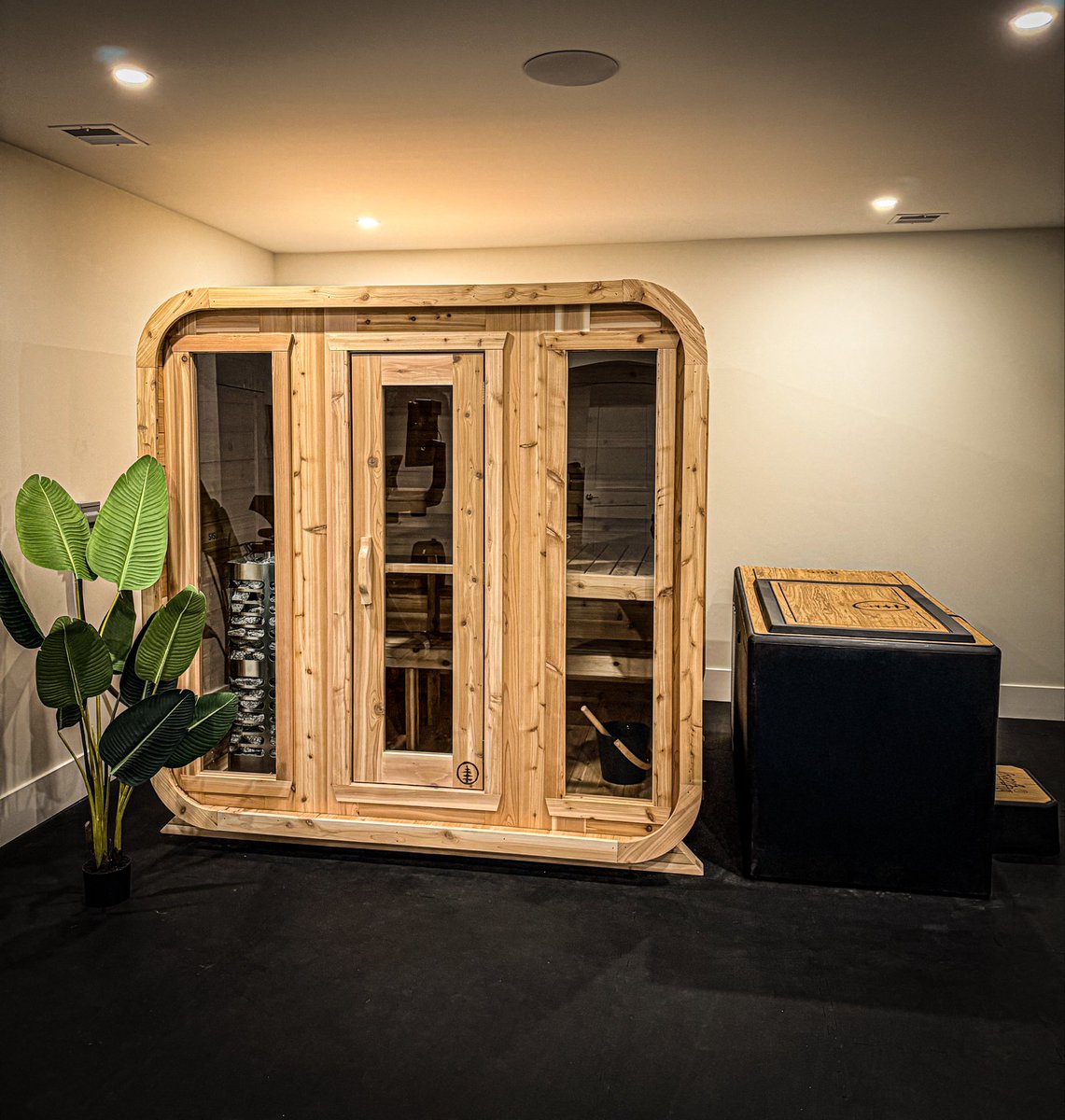
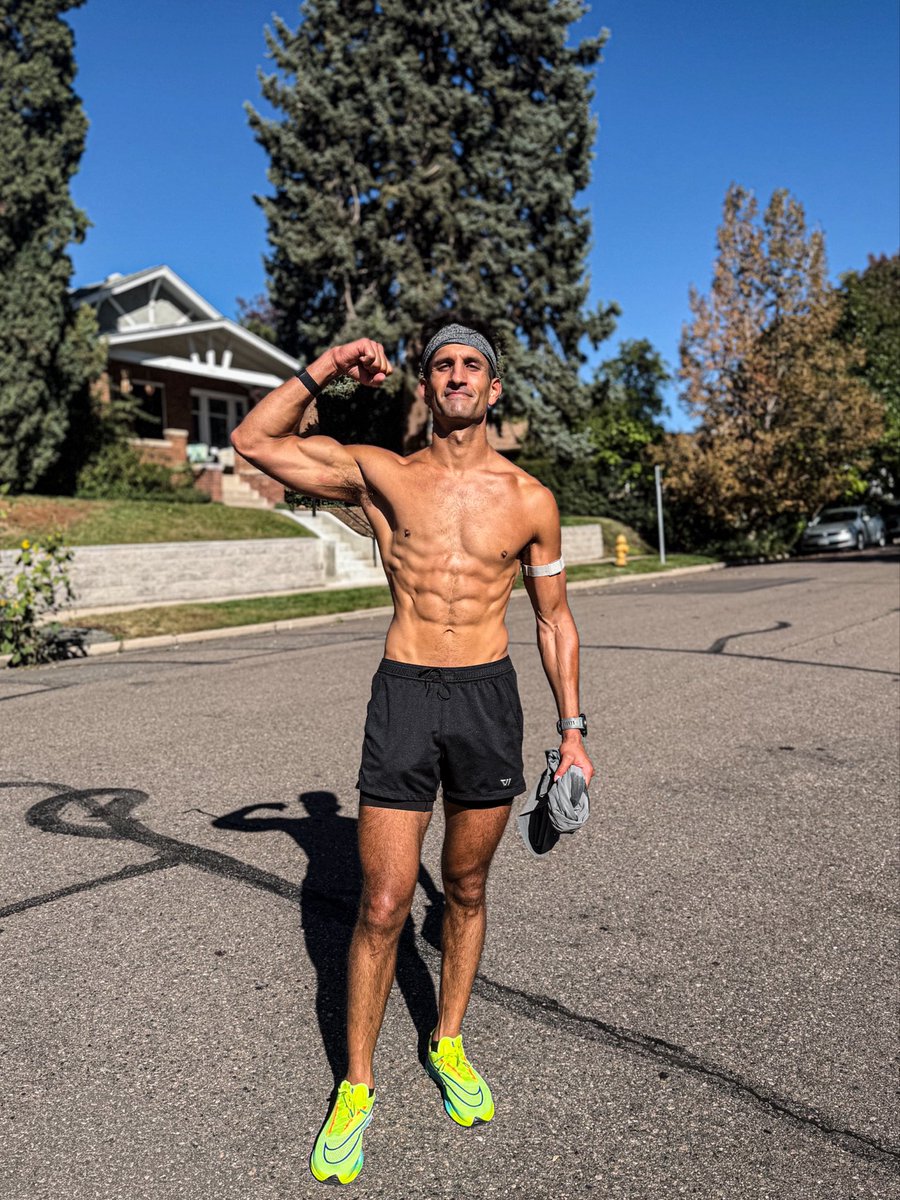
Sauna is an underrated cheat code for your skin:
- Deep cleansing of dirt/bacteria
- Improves blood flow to skin
- Enhanced collagen production
- Detoxification
- Reduced inflammation/puffiness
My evening protocol:
- 20 minute sauna at 200 degrees
- 3 minute cold plunge at 39 degrees
- Shower + face wash
- Anti-aging serum + moisturizer
- Sleep
For skincare I use my Wild Roman 100% natural face routine. Only ingredients you can find in nature. Thousands of customers. 4.8 star average review.
You can get it here: https://t.co/dnTEAHm0YG
P.S. DM me for a $25 off code to try it.
After I posted this, I got asked a lot of questions about improving marathon performance.
I think there are two things that matter for running a faster marathon:
1. Preparation
2. Execution
Here's how I think about each one:
(stream of consciousness, so pardon any errors)
1. Preparation
This is just how well you prepared for the race.
What did your training look like? Were you prepared for the distance? Did you have enough confidence built up from your training block to go into the race feeling good about your ability to execute?
There are plenty of smart coaches on here that can give you better advice than me, but my staples here would be:
- 1 weekly long run
- 1 weekly track workout
- 3-4 easy runs
Long run has progression work or intervals to prepare your body (and mind) for the faster paces you'll have to run on race day on tired legs.
Track workouts generally focus on middle distance intervals (800m, 1200m, 1600m) on medium rest intervals (90-120s). For me, I view this work as acclimating my body and nervous system to paces significantly faster than what I'll have to run on race day.
Nutrition matters during preparation, too. Consuming enough calories, particularly in the form of carbs, to fuel yourself to perform. Under-eating during training is a great way to get hurt (or experience massive muscle loss). The nutrition part extends into executing your pre-race carb load during the 2-3 days leading up to the race as well.
2. Execution
I break this into 4 components:
1. Pacing
2. Nutrition
3. Hydration
4. Mindset
Pacing is just about how well you execute your pacing plan for the race. If it's mostly flat, ideally an easy negative split, where you start out below marathon pace target and slowly get faster. If it's a hilly course, planning and executing around those climbs.
Having completely screwed this up in my first three marathons (and then nailed it in my recent one), I know how impactful it is on how you feel later in the race.
Avoiding the adrenaline-driven surge early is the whole game for a novice. You pay for it later. Trust me.
Nutrition is about the carbs you consume during the race. The biggest mistake I've made in the past was under-consuming carbs during my long runs and races.
You have to train the way you're going to play on race day. Practice your nutrition. Test the gels and find what your body tolerates and responds to best.
Then, don't do anything new on race day.
My strategy for this was one gel every 30 minutes, each with 50g carbs (I used Carbs Fuel because I liked it and it didn't destroy my stomach).
Practicing on your training runs also avoids making dumb rookie mistakes (like I made) around dropping gels or realizing your cold fingers can't tear them.
Hydration is about the fluids you consume during the race. This is what I screwed up during my DNF in September.
You need to tailor your fluid consumption to the race day conditions. Higher temperature / dew point means more fluid needs. There are precise ways to figure this out, but the best way is to just experiment during your long runs and make sure you match your race day approach to what has worked.
Personally, I've found that fluids are extremely overrated on cold days but have an exponentially increasing importance as temperatures tick up.
I consumed just two 14oz bottles with electrolytes during my marathon last weekend. But if it had been 20 degrees warmer, I would have cramped and blown up only consuming that amount.
Mindset is about how you approach the race and distance itself. How you break it up in your mind. How you navigate the inevitable random dark thoughts during a race. How you respond to the little pains and cramps that strike.
To be honest, I think this one is deeply intertwined with the first three execution components.
It's very easy to have a good mindset when you're feeling great because you're executing on pacing, nutrition, and hydration. You start passing people. That feels good. You feel stronger than you ever have at Mile 20. The race gets shorter. You feel better.
Momentum is a hell of a drug.
Anyway, that's my stream of consciousness on running a faster marathon. I'll probably do a more detailed post on my actual training that I followed to run the sub-2:50 marathon while maintaining muscle (I'm 6'2" 180).
If you're interested in that, just let me know and I'll pull it together.
By the way, all of this insight is derived from reading/watching a lot of stuff from people much smarter (and faster) than me. But it's all been put through my critical filter of what actually worked in my own battle-testing.
Take it with a grain of salt, but I think you could do much worse than following the above.
To anyone who said my solo marathon didn’t count. This one was for you. Thank you for that.
Indianapolis Marathon:
- Final Time: 2:48:23
- Average Pace: 6:23
- Negative Split: 1:25/1:23
This one feels particularly good because I had zero expectations coming in.
I landed in Indy at 10pm last night after being on the road Monday to Friday. Ran at 8am. Catching a flight home at 1pm.
Just like we drew it up.
But sometimes, when you remove the weight of those expectations, you show up with a lightness that just can’t be contained.
That’s what I got to do today. And man, I’m grateful I got to experience it.
And to anyone who bet against me, I recommend you reconsider your strategy next time.
🫡
@jonhershman I do think it’s case dependent what load you can handle. I find that above 70 mpw I start to feel like I’m breaking down. May be my body weight but I definitely felt that was my limit.
Underrated life advice: Be someone people want to share their good news with. Get excited. Hype them up. Make a big deal out of small wins. And never compare it to something you or others have done. We always remember who made the happy moments feel even happier. Be that person.
@danielcberk While I appreciate the sentiment, I think it would defeat the purpose we're going after here...
If you aren't in the military, you can DM me for a code for $25 off any of the routine sets though.
@patrick_oshag@ZReitano Listening today. Having had the great joy of many deep chats with Zach over the years, I'm excited for the world to get to go deeper with him!
I regret to inform you that nobody is thinking about you.
I often wonder how many extraordinary people waste their entire lives fearing the judgement of people who were never even thinking about them in the first place.
Fearing a spotlight that was never even on. Performing for an audience that was never even there.
Because the truth is that you aren't afraid of failure. At least not really. You're afraid of what other people will think of you if you fail.
But nobody is thinking about you. They're too busy thinking about themselves. Nobody cares. Whether you win. Whether you lose. Nobody cares.
So, that thing you've always wanted to do? Go do it.