Talat Mahmood famously considered this his personal favorite song from his entire singing career.
Patita 1953
Shankar Jaikishan
Shailendra
A very Dapper Dev with Usha Kiran.
The opening lines penned by Shailendra is directly inspired by a famous line from Percy Bysshe Shelley's 1820 poem To a Skylark: "Our sweetest songs are those that tell of saddest thought."
Directed by Amiya chakrabarty.
Song courtsey @Upjeet7
Netanyahu Bloc, Opposition Bloc & Arab Bloc fought Israel elections
Results came as hung assembly
With Netanyahu Bloc in majority
Opposition Bloc decided to support Netanyahu Bloc for the sake of their country rather than giving chance to Arab Bloc
That’s the real difference between Israeli & Indian Opposition
Nation first for every Israeli
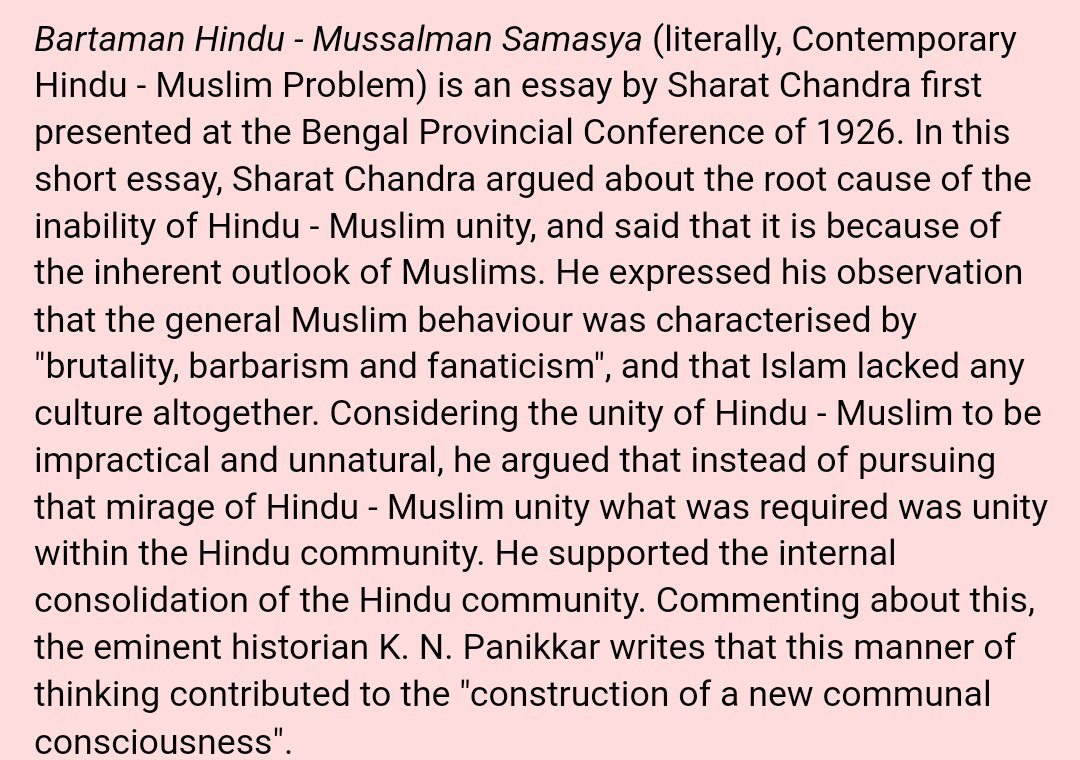
Bengali renowned novelist Sarat Chandra chattopadhyay in his essay (1926) wrote -
General muslim behaviour can be described by brutality, barbarism,fanaticism.
He added Islam doesn't have any culture.
He wrote hindu-muslim unity is impractical.
NATO drones are still hitting Moscow and there are diesel shortages in the US heading into the winter… is Napoleon really the comparison you want to be making?
A ten-armed Goddess accompanied by her two attendants, Jaya and Vijaya. Is that really so difficult to understand?
In Assamese, Gosani means Goddess. In Assam and Bengal, many people traditionally address Maa Durga or Maa Kali as Gosani, particularly in Vaishnavite traditions.
Mountbatten must have had the shock of his life at the outburst of Sardar Patel to his face which no other Congress leader could have dared to do. Mountbatten had himself recorded what Patel said:
“Since you have come out here, the situation in the country has become worse. There is a civil war on and you are doing nothing to stop it. You won’t govern yourself and you won’t let the Central Government govern. You cannot escape responsibility for
this bloodshed”… “If you will not act yourself, then turn over full authority to the Central Government and let us stop the Muslim League war in the Punjab and the
North-West Frontier Province; let us stop the Muslim League Army being mobilized in Bengal to attack Assam; let us govern!”
Could Nehru ever dare to say this to husband of his friend Edwina?
No !
I honestly do not understand what people find appealing about this lady.
She loved violence, but never bothered about the consequences that followed through
> Bangladesh war -> Did not bother population exchange or taking land or clearing Islamists from the nation
> Mizoram bombing -> The insurgency lasted till 1980s and ended up with near entire autonomy
> Punjab violence -> Resulted in mass exodus of Hindus from the state
People talk about blunders of Nehru, but what about blunders of Iron lady?
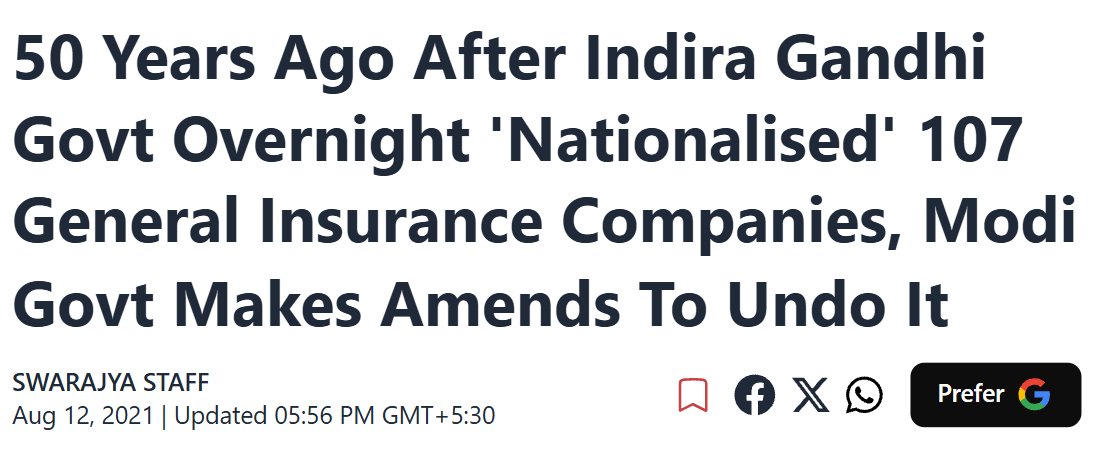
This woman single handedly destroyed the private sector in India, forcing India decades back.
The same would not be reversed until Modi came to power
Many Odias are not aware that Mahaprabhu has been worshipped at Kanpur in this temple for over a 1000 years(and there are also ancient Mahaprabhu's temples in Amritsar and Ahmedabad)
@SJTA_Puri needs to bring out a book with details of all such temples @arvindpadhee
RAJSHAHI RAILWAY STATION, 25 APRIL 1962: THOUSANDS OF BENGALI HINDUS REPORTED KILLED (EXACT DEATH TOLL UNVERIFIED)
On 25 April 1962, a Calcutta bound passenger train was reportedly stopped outside Rajshahi Railway Station in East Pakistan.
An armed mob attacked the train, reportedly killing a large number of passengers.
The incident occurred during widespread communal violence against Bengali Hindus in Rajshahi district under General Ayub Khan's military regime.
The violence followed inflammatory reports in the Pakistani press concerning communal disturbances in Malda, West Bengal.
On 12 May 1962, Indian Prime Minister Jawaharlal Nehru addressed the Lok Sabha and specifically referred to the train attack.
Source: Lok Sabha Debates, Third Series, Vol. 3, columns 4104–4114.
https://t.co/SA1joGoO5p
He stated:
“A Calcutta-bound train is said to have been halted on the 25th April somewhere outside Rajshahi station and attacked.” (See the Pic)
Nehru reported that a large number of people had been killed but declined to give an exact casualty figure because the available reports were incomplete.
He also described another incident at Marsha village in Rajshahi district.
There, Hindu refugees had reportedly been gathered under armed protection on 29 April.
After the guards were withdrawn, the refugees were attacked, and many were reportedly killed.
The Bengali Hindu Genocide Research Centre lists thousands of Bengali Hindus killed at Rajshahi Railway Station and estimates more than 3,000 deaths during the wider Rajshahi violence.
However, the number killed specifically in the railway attack remains unverified. The district-wide estimate must not be presented as the station's confirmed death toll.
Nehru also reported that Pakistani authorities had imposed severe restrictions on information and movement, making independent verification difficult.
This was April 1962.
Nine years before Operation Searchlight.
Nine years before the Bangladesh Liberation War.
Bengali Hindus were already being killed, displaced and driven from their homes in East Pakistan.
Every Balinese Hindu home has its own mandir in the garden.
This is my friend’s mandir in Bali. She calls Rangda her family goddess. During the ceremony, they chanted mantras and made beautiful flower offerings. My friend had a new mask and full costume made for her.
My family has Randal Maa in our ancestral home in India. We serve her, do aarti, and offer home-cooked food twice a day before anyone else, asking her permission. After all these generations she refused to move to England, but we arranged for her to always be looked after in India in her own mandir.
My friend said, “Oh, we are very similar. Two households, two continents, one shared practice of devotion.” I think Rangda is similar to Maa Kali.
बिना GPS, बिना ड्रोन, बिना नक्शे सिर्फ एक माला, अपने कदम और ज़बरदस्त हौसले से तिब्बत का नक्शा बनाने वाले पंडित नैन सिंह रावत। 🇮🇳🧭
उत्तराखंड के एक छोटे से गांव से निकले नैन सिंह ने तिब्बत की गुप्त यात्रा की। उनकी माला में 108 नहीं, बल्कि 100 मनके थे हर 100 कदम पर एक मनका खिसकाते थे। 100 मनके यानी 10,000 कदम, लगभग 5 मील।
हर कदम बराबर रखने के लिए वे पैरों में रस्सी बांधकर चलते थे एक कदम ठीक 31.5 इंच। पहाड़, बर्फ, दर्रे, रेगिस्तान… लाखों कदम, एक-एक गिनते हुए।
उन्होंने ल्हासा की ऊंचाई और स्थिति नापी, सांगपो नदी के रूप में ब्रह्मपुत्र का रहस्य खोला और सतलज-सिंधु के उद्गम तक खोजे। आज की मशीनों जैसा सटीक काम बिना किसी आधुनिक उपकरण के।
16 साल घर नहीं लौटे तो लोगों ने उन्हें मृत मान लिया।
लेकिन पत्नी हर साल उनके लिए ऊन का कोट-पैजामा बुनती रहीं। जब वे लौटे, तो उन्हें 16 साल के 16 कोट-पैजामे मिले। ❤️
1877 में Royal Geographical Society ने उन्हें Patron’s Gold Medal दिया यह सम्मान पाने वाले वे पहले भारतीय बने।
एक अनपढ़ कुली नहीं… भारत का सबसे बड़ा गुप्त सर्वेकार। 🙏
Μέσα σε 4 λεπτά διαλύει στην κυριολεξία έναν αιώνα τούρκικων προσπαθειών να πλαστογραφήσουν την ιστορία τους. Με τρόπο να το καταλάβει και ένα παιδί.
Δυστυχώς οι τούρκοι δεν είχαν ποτέ έναν Παπαρρηγόπουλο παρά μόνο κρατικούς υπαλλήλους.
Ώρα να αποκτήσουν.
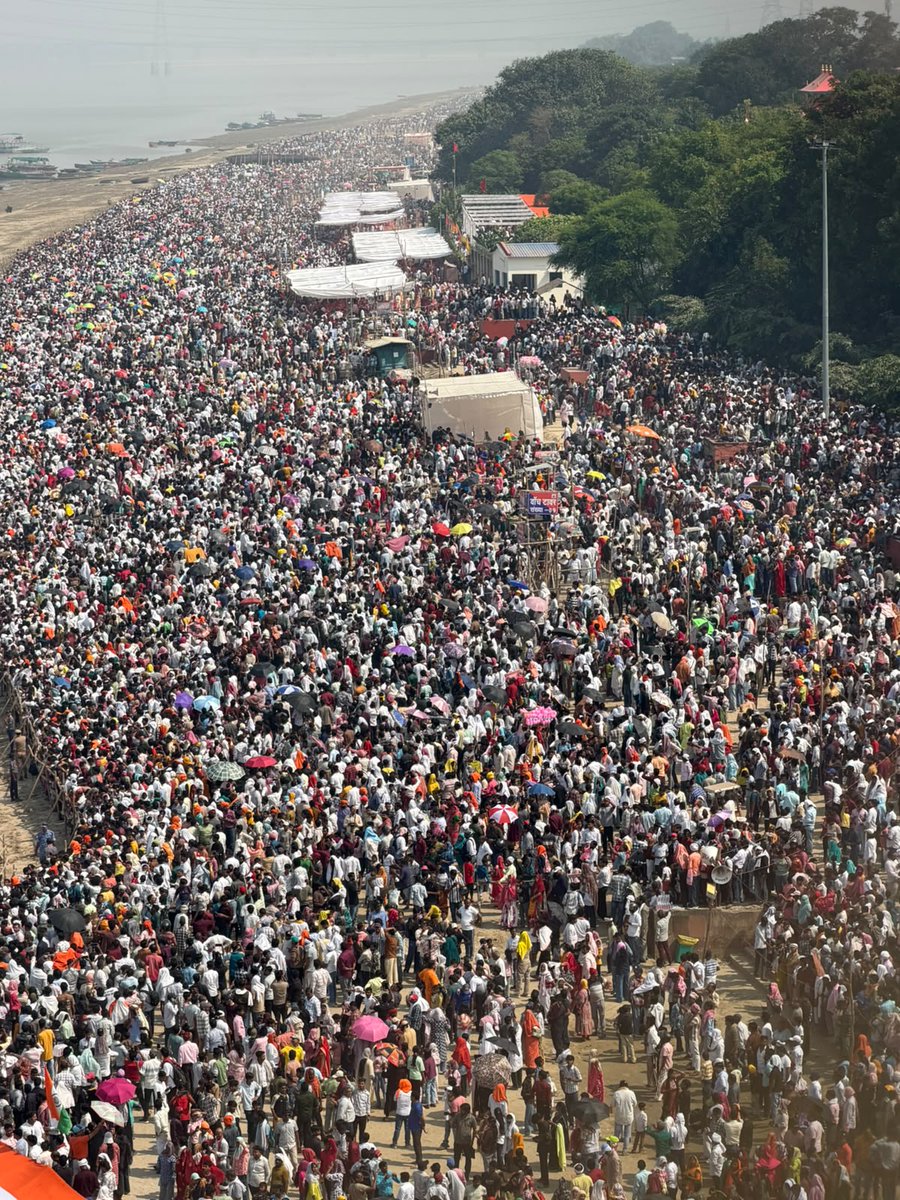
The real "Vote Chori" is happening right here, guys!
More than 10 lakh people line up in Kashi for the Air Show ahead of PM Modi’s @narendramodi arrival! 🔥
NOAKHALI MASSACRE, 1946: THE KOJAGORI LOKHKHI PUJA THAT TURNED INTO A NIGHTMARE FOR BENGALI HINDUS
Today is Kojagori Lokhkhi Puja, one of the most sacred and emotionally significant days for us Bengali Hindus.
Eighty years ago, on this very festival, our ancestors in Noakhali, East Bengal (now Bangladesh), were massacred.
The Noakhali Massacre began on 10 October 1946, the day of Kojagori Lakshmi Puja.
I do not commemorate Noakhali on 10 October every year. For me, its anniversary is Kojagori Lokhkhi Puja itself.
It was on this sacred day that Muslim mobs unleashed violence against Hindu villages.
Hindus were murdered, women raped and abducted, houses looted and burned, temples desecrated, and people forcibly converted to Islam.
The violence spread across Noakhali and neighbouring Tippera (now Comilla).
Golam Sarwar, a former Muslim League legislator, emerged as one of the principal instigators.
Entire villages were devastated. Thousands fled their ancestral homes. Contemporary reports described mass conversions, sexual violence, killings and widespread destruction.
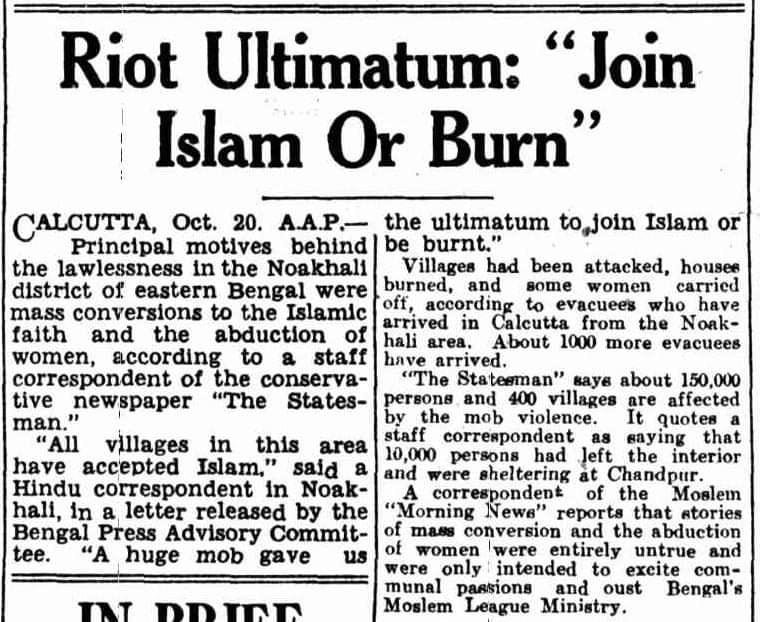
1. “RIOT ULTIMATUM: JOIN ISLAM OR BURN”
OUR ANCESTORS, TOO, HAD THEIR RALIV, GALIV YA CHALIV MOMENT IN HISTORY.
An Associated Press report dated 20 Oct 1946, citing The Statesman, described mass conversions to Islam and the abduction of Hindu women.
The report stated that approximately 150,000 people across 400 villages had been affected by the violence.
It quoted a Hindu correspondent from Noakhali describing an ultimatum from a mob to convert to Islam or be burned.
2. THE TELEGRAM FROM NOAKHALI
A telegram dated 17 Oct 1946, sent from Chaumuhani to the Bengal Provincial Congress Committee, reported that murder, looting, arson and forced conversions were continuing.
It warned:
“Unconverted people are being slaughtered on mass scale.”
The telegram also reported starvation and the failure of local authorities to provide protection, demanding immediate military intervention.
3. GANDHI AND THE WOMEN OF NOAKHALI
On 18 Oct 1946, after being informed of the atrocities, Gandhi spoke about the plight of women in Noakhali.
Gandhi suggesting that self immolation by taking poison was preferable to surrendering to dishonour.
4. WOMEN CHOSE DEATH OVER SEXUAL VIOLENCE & DISHONOUR
In 1946: The Great Calcutta Killings and Noakhali Genocide, Dr. Dinesh Chandra Sinha and Ashok Dasgupta reproduce these statements on page 266.
The book also quotes the Hindusthan Standard, which reported that women in Noakhali, desperate to escape sexual violence, had jumped into fires, taken poison or hanged themselves.
Gandhi visited Noakhali in Nov 1946 and undertook his peace mission. But the killings, forced conversions, displacement and trauma had already devastated Hindu communities.
5. “QUIT NOAKHALI OR DIE, GANDHI WARNS HINDUS”
Even six months later, on 8 April 1947, The New York Times published a report under this headline.
It described continuing threats against Hindus, including attempts to burn them alive.
The terror had not simply disappeared.
6. THE HUMAN REMAINS OF NOAKHALI
One of the photographs attached to this post shows human skeletal remains in Noakhali following the communal violence.
It is preserved in the Bridgeman Images archive, sourced from Dinodia, with the description:
“A human skeleton at Noakhali East Bengal after the riots between Hindus and Muslims, November 1946.”
Archive reference: DND2561152.
This is not an illustration. It is an archival photograph documenting the aftermath of the violence.
For Bengali Hindus, Noakhali was not simply another communal riot. It was an assault on their lives, their faith, their women, their homes and their right to exist in their ancestral land.
And the timing makes it particularly painful.
Kojagori Lokhkhi Puja is the night when Bengali Hindu families worship Maa Lakshmi, light their homes and pray for peace, prosperity and the well being of their loved ones.
NOAKHALI, 1946. NEVER FORGET.
2014 में अगर मोदी सरकार नही बनती तो हम कभी जान ही नहीं पाते कि नसीरुद्दीन शाह, हामिद अंसारी जैसों के मन में इस देश और इस देश के हिंदुओं के प्रति कितनी नफरत है।