@TalbertSwan Why do you and others keep talking about @amazon?? That’s the wrong angle. The director, writer, and producer of the film is Black @hebrews2negroes. Push him to the forefront to answer the questions. And then have those who oppose to prove antisemitism. That’s how it works.
Funny Marco had his daughter count how many seconds he could stay underwater, but she quickly started getting NERVOUS when he stayed under for more than 6 seconds 😭💀
“How long do you need, Marco?” 🤣😂
He almost started manifesting here. 😹😹
But honestly, these debates show why Christians need to be deeply grounded in the Word of God. Otherwise, it becomes easy to be confused or misled during arguments like this. Muslims are not honest people. ❌
Notice how he quickly mentioned “Adonia,” even though that is not a term Jesus personally used in His own teaching. In the Gospels, whenever Jesus refers to “God,” He is often quoting from the Old Testament prophets and Scriptures (Matthew 4:4, 4:7, 4:10).
However, Jesus consistent personal way of speaking about God is as Father. Throughout His ministry, He refers to God as “Father” repeatedly (John 5:17, Matthew 6:9). He also teaches His disciples to pray using the same relationship-based term in the Lord’s Prayer: “Our Father in heaven…” (Matthew 6:9).
So if someone is not well grounded in Scripture, it becomes easy to be deceived especially by these Muslims.
Deputy thinks an Acorn hitting the roof of his car is gunfire so he unloaded his firearm at his own car that had an unarmed suspect inside. This is next level incompetence.
The incident took place in Fort Walton Beach, Florida. Deputies from the Okaloosa County Sheriff’s Office responded to a call regarding a man named Marquis Jackson.
Jackson’s girlfriend had called the police, accusing him of stealing her car and sending her threatening text messages.
Deputies located Jackson, detained him, handcuffed him behind his back, and placed him in the backseat of a standard patrol vehicle for questioning.
Deputy Jesse Hernandez, a trainee at the time, was walking back toward the patrol vehicle where Jackson was being held. As he approached the passenger side of the car, a small acorn fell from an overhead tree and struck the roof of the vehicle.
Because of the metallic thud it made on the roof, Deputy Hernandez misidentified the sound as a muffled gunshot from inside the vehicle. What followed was a massive cascade of panic:
Hernandez immediately fell to the ground, rolled, and began screaming, "Shots fired! Shots fired! I'm hit! I'm hit!"
Believing he had been shot in the torso and that Jackson was actively firing at him through the car windows, Hernandez drew his weapon and fired multiple rounds into the patrol car.
Hearing her partner’s screams and weapon fire, Sergeant Beth Roberts—who was also on the scene—assumed they were under fire. She drew her weapon and also opened fire on the vehicle.
In total, the two officers fired more than 20 rounds into the patrol car.
Despite the patrol car being riddled with bullets and shattered glass, Marquis Jackson was completely uninjured. Because he was handcuffed, he could only lean away and press himself as low as possible into the floorboard/seat crack of the vehicle to avoid the gunfire.
Deputy Hernandez was also not injured. After the dust settled, medical staff confirmed he had not been shot; his belief that he was hit was likely a psychological reaction to intense panic (often referred to as a phantom injury).
The Okaloosa County Sheriff’s Office conducted an extensive internal investigation into the shooting.
The investigation concluded that Deputy Hernandez’s use of force was not objectively reasonable. While Hernandez genuinely believed he was under threat, the investigation found no evidence of any weapon on Jackson, nor any reasonable justification for mistaking an acorn for a gunshot.
Sergeant Roberts' use of force was found to be legally justified under the "fellow officer rule," as she was reacting to what she reasonably believed was her partner being shot.
Deputy Hernandez resigned from the sheriff's office during the investigation, effectively ending his career in law enforcement.
Sheriff Eric Aden publicly released the bodycam footage and issued a formal apology to Marquis Jackson and the community, stating that the department failed in its duty to protect a suspect in their custody.
Ultimately, Jackson was cleared of any wrongdoing regarding the shooting, and the event remains a textbook example used in law enforcement training regarding hyper-vigilance and the dangers of misinterpreting sensory input during high-stress situations.
TRENDING: Seattle #Seahawks Pro Bowl defensive lineman Leonard Williams trying RAW SCALLOPS for the first time while on the boat.
“This is a premium Pacific Northwest rock scallop right here.”
A cool first experience for Big Cat.
Brunson is that dude!!!! Reminds me of myself when he’s going to work… Heavy film on him for my sons!!! HOOP GAME!!! Every movement he makes MATTERS every time down 🏁🏁🏁
@TheRealXavierP They always do. They lie, deceive, manipulate, and push narratives that change as the wind blows. You can’t trust them. The air is the devils playground.
Title: The Parable of the Wedding Feast Explained Through Jewish Culture
Matthew 22:1–14
When we read the Parable of the Wedding Feast some of us feel confused, especially about the man who was thrown out for not wearing wedding garments. At first glance, it sound harsh or unfair. But when we read this parable through Jewish culture, everything becomes clear, logical, and deeply powerful.
Jesus was speaking to Jewish listeners, using Jewish wedding customs they understood very well. This parable is not about cruelty, it is about God’s grace, invitation, and righteousness.
Weddings in Jewish culture, especially the wedding of a king’s son, were among the most important and joyful events in society. Such a wedding was not a private ceremony. It was a public celebration that could last many days. The honor of attending was immense, and rejecting the invitation was seen as a serious insult.
In Jewish custom, invitations to a wedding were sent in two stages. The first invitation announced that the wedding was coming, and those invited agreed to attend. The second invitation was sent when everything was ready, telling the guests that it was time to come. When Jesus begins the parable by saying that a king prepared a wedding banquet for his son and sent servants to call those who had been invited, His Jewish listeners immediately understood that these guests had already accepted the first invitation. Their refusal to come was not ignorance, it was rebellion and dishonor.
This is why the response of the invited guests is so serious. Some ignore the invitation and go back to their farms and businesses. Others go even further and seize the servants, mistreat them, and kill them. To the Jewish mind, this clearly reflected Israel’s history. God had called Israel into covenant, and again and again He sent prophets to call them back to Him. Instead of listening, many ignored the message, and some even killed the prophets. Jesus was not telling a new story, He was retelling Israel’s story in parable form, and the religious leaders knew it.
When the king responds by judging those who rejected the invitation and destroying their city, this would not have sounded strange or cruel to a Jewish audience. In Jewish covenant theology, privilege brings responsibility. To reject a king’s invitation, especially after agreeing to attend, was an act of open rebellion. Many scholars understand this part of the parable as a prophetic warning about the coming destruction of Jerusalem, which happened in AD 70. Jesus was showing that persistent rejection of God’s grace eventually leads to judgment.
After this, the parable takes a shocking turn. The king tells his servants to go into the streets and invite everyone they can find, both good and bad. In Jewish society, especially at a royal wedding, this was unthinkable. A king’s banquet was for honored guests, not for strangers, outcasts, or morally questionable people. Yet Jesus deliberately includes this detail to show the radical nature of God’s grace. When those who were first invited rejected the call, the invitation did not disappear. It was extended to everyone. This is where the Gentiles enter the picture, along with sinners, the poor, and the socially rejected.
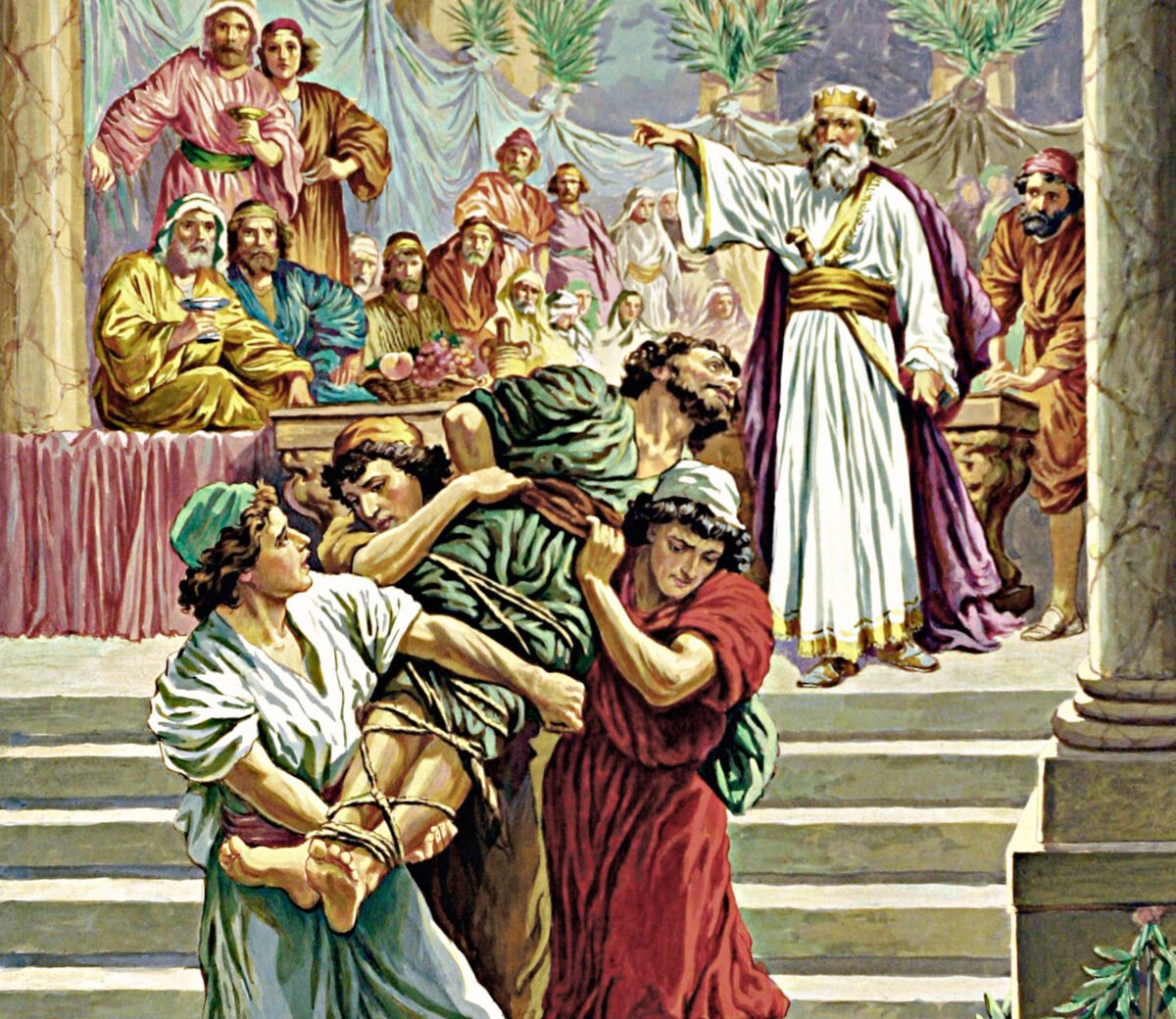
The wedding hall becomes full, and the story seems to end happily. But then Jesus introduces the most misunderstood moment in the parable. The king notices a man who is not wearing wedding clothes and asks him how he entered without them. The man is speechless. This detail is crucial. His silence shows that he has no excuse.
In Jewish royal weddings, it was common for the host to provide wedding garments. This was especially true when guests were invited unexpectedly from the streets. The garment was not a test of wealth or social status. It was a gift. To refuse to wear it was to dishonor the king and reject his authority. This man was not thrown out because he was poor or ignorant. He was thrown out because he deliberately rejected what the king had provided.
In Jewish thought, clothing often symbolized spiritual condition. Throughout the Old Testament, righteousness is described as a garment. Isaiah speaks of being clothed with garments of salvation and a robe of righteousness. Zechariah describes the removal of filthy garments from the high priest and the giving of clean ones. Jesus listeners would have immediately understood that the wedding garment represented a kind of righteousness that comes from God, not from human effort.
The man without the garment represents someone who accepts the invitation but refuses God’s terms. He wants to be present at the feast, but he does not want to submit to the king’s provision. In modern terms, he wants the benefits of the kingdom without honoring the King. This is why his punishment is severe. In Jewish culture, rejecting a king’s gift at his son’s wedding was a direct act of contempt.
This parable teaches that grace is free, but it must be received properly. The invitation costs nothing. The garment costs nothing. Everything is provided by the king. But it must be accepted. A person cannot stand before God on their own righteousness and expect to remain in His kingdom. The wedding garment points forward to the righteousness of Christ, which is given, not earned.
When Jesus concludes by saying that many are called but few are chosen, He is not saying that God invites many but only desires a few. In Jewish understanding, being “called” means being invited, while being “chosen” means responding rightly to the invitation. God’s call goes out to all, but only those who humble themselves and receive what He provides remain at the feast.
This parable fits perfectly with the wider biblical story. It connects with the Jewish wedding imagery found in John 14, where Jesus speaks as a bridegroom preparing a place for His bride. It connects with Revelation, where the marriage supper of the Lamb is described, and the bride is clothed in fine linen given to her. From beginning to end, Scripture presents salvation as an invitation to a wedding, where joy, covenant, and union are central.
In the end, the Parable of the Wedding Feast is not a message of fear but of honor and mercy. The door is open. The table is prepared. The garment is ready. No one is excluded because of background, past sin, or status. The only ones who are excluded are those who refuse the King’s gift and insist on standing before Him on their own terms.
The question Jesus leaves with His listeners, and with us today, is simple. Are we going to accept the invitation and humbly wear the garment the King has provided, or are we going to stand before Him clothed in our own righteousness and be found speechless?
🔥 Shedeur's $17.7 Million. Coach Prime Opens Up on Details 👀
"A tremendous deal with the NFLPA. That had nothing to do with his jersey sales. That's a whole other category"
Latina woman from New Mexico says all the Mexicans and Hispanics there are SUPER Whitewashed and get humbled whenever they’re around actual White People😳🤔
Any thoughts on this?
Makes sense. Especially since AB said they wanted to get younger. If they’re rebuilding for younger players, you play the younger QB. He’s proven he can play with less talent around him. As a rookie, he had more wins than the vets before him, Watson included w/ less talent.
“In no universe where playing Deshaun Watson at this point makes sense. You play Shedeur Sanders. Both sides should be happy.” 👀🏈 - @Gbush91
G Bush says with the trade of Myles Garrett, the #Browns need to pivot 😳
His answer? Shedeur Sanders should be the starting QB 🔥
https://t.co/7cPzmMXlnc
@ultCLEsports@Gbush91 Makes sense. Especially since AB said they wanted to get younger. If they’re rebuilding for younger players, you play the younger QB. He’s proven he can play with less talent around him. As a rookie, he had more wins than the vets before him, Watson included w/ less talent.
@NacksonD@Latesha_Byrd They forced Spirit to close. Those cheap fares forced other airlines to lower prices. Without spirit flying these same routes, fare prices have also gone up because there’s no competition for cheaper fares.
And the people who profit from it are the politicians, and stakeholders
Title: The Parable of the Wedding Feast Explained Through Jewish Culture
Matthew 22:1–14
When we read the Parable of the Wedding Feast some of us feel confused, especially about the man who was thrown out for not wearing wedding garments. At first glance, it sound harsh or unfair. But when we read this parable through Jewish culture, everything becomes clear, logical, and deeply powerful.
Jesus was speaking to Jewish listeners, using Jewish wedding customs they understood very well. This parable is not about cruelty, it is about God’s grace, invitation, and righteousness.
Weddings in Jewish culture, especially the wedding of a king’s son, were among the most important and joyful events in society. Such a wedding was not a private ceremony. It was a public celebration that could last many days. The honor of attending was immense, and rejecting the invitation was seen as a serious insult.
In Jewish custom, invitations to a wedding were sent in two stages. The first invitation announced that the wedding was coming, and those invited agreed to attend. The second invitation was sent when everything was ready, telling the guests that it was time to come. When Jesus begins the parable by saying that a king prepared a wedding banquet for his son and sent servants to call those who had been invited, His Jewish listeners immediately understood that these guests had already accepted the first invitation. Their refusal to come was not ignorance, it was rebellion and dishonor.
This is why the response of the invited guests is so serious. Some ignore the invitation and go back to their farms and businesses. Others go even further and seize the servants, mistreat them, and kill them. To the Jewish mind, this clearly reflected Israel’s history. God had called Israel into covenant, and again and again He sent prophets to call them back to Him. Instead of listening, many ignored the message, and some even killed the prophets. Jesus was not telling a new story, He was retelling Israel’s story in parable form, and the religious leaders knew it.
When the king responds by judging those who rejected the invitation and destroying their city, this would not have sounded strange or cruel to a Jewish audience. In Jewish covenant theology, privilege brings responsibility. To reject a king’s invitation, especially after agreeing to attend, was an act of open rebellion. Many scholars understand this part of the parable as a prophetic warning about the coming destruction of Jerusalem, which happened in AD 70. Jesus was showing that persistent rejection of God’s grace eventually leads to judgment.
After this, the parable takes a shocking turn. The king tells his servants to go into the streets and invite everyone they can find, both good and bad. In Jewish society, especially at a royal wedding, this was unthinkable. A king’s banquet was for honored guests, not for strangers, outcasts, or morally questionable people. Yet Jesus deliberately includes this detail to show the radical nature of God’s grace. When those who were first invited rejected the call, the invitation did not disappear. It was extended to everyone. This is where the Gentiles enter the picture, along with sinners, the poor, and the socially rejected.
The wedding hall becomes full, and the story seems to end happily. But then Jesus introduces the most misunderstood moment in the parable. The king notices a man who is not wearing wedding clothes and asks him how he entered without them. The man is speechless. This detail is crucial. His silence shows that he has no excuse.
In Jewish royal weddings, it was common for the host to provide wedding garments. This was especially true when guests were invited unexpectedly from the streets. The garment was not a test of wealth or social status. It was a gift. To refuse to wear it was to dishonor the king and reject his authority. This man was not thrown out because he was poor or ignorant. He was thrown out because he deliberately rejected what the king had provided.
In Jewish thought, clothing often symbolized spiritual condition. Throughout the Old Testament, righteousness is described as a garment. Isaiah speaks of being clothed with garments of salvation and a robe of righteousness. Zechariah describes the removal of filthy garments from the high priest and the giving of clean ones. Jesus listeners would have immediately understood that the wedding garment represented a kind of righteousness that comes from God, not from human effort.
The man without the garment represents someone who accepts the invitation but refuses God’s terms. He wants to be present at the feast, but he does not want to submit to the king’s provision. In modern terms, he wants the benefits of the kingdom without honoring the King. This is why his punishment is severe. In Jewish culture, rejecting a king’s gift at his son’s wedding was a direct act of contempt.
This parable teaches that grace is free, but it must be received properly. The invitation costs nothing. The garment costs nothing. Everything is provided by the king. But it must be accepted. A person cannot stand before God on their own righteousness and expect to remain in His kingdom. The wedding garment points forward to the righteousness of Christ, which is given, not earned.
When Jesus concludes by saying that many are called but few are chosen, He is not saying that God invites many but only desires a few. In Jewish understanding, being “called” means being invited, while being “chosen” means responding rightly to the invitation. God’s call goes out to all, but only those who humble themselves and receive what He provides remain at the feast.
This parable fits perfectly with the wider biblical story. It connects with the Jewish wedding imagery found in John 14, where Jesus speaks as a bridegroom preparing a place for His bride. It connects with Revelation, where the marriage supper of the Lamb is described, and the bride is clothed in fine linen given to her. From beginning to end, Scripture presents salvation as an invitation to a wedding, where joy, covenant, and union are central.
In the end, the Parable of the Wedding Feast is not a message of fear but of honor and mercy. The door is open. The table is prepared. The garment is ready. No one is excluded because of background, past sin, or status. The only ones who are excluded are those who refuse the King’s gift and insist on standing before Him on their own terms.
The question Jesus leaves with His listeners, and with us today, is simple. Are we going to accept the invitation and humbly wear the garment the King has provided, or are we going to stand before Him clothed in our own righteousness and be found speechless?