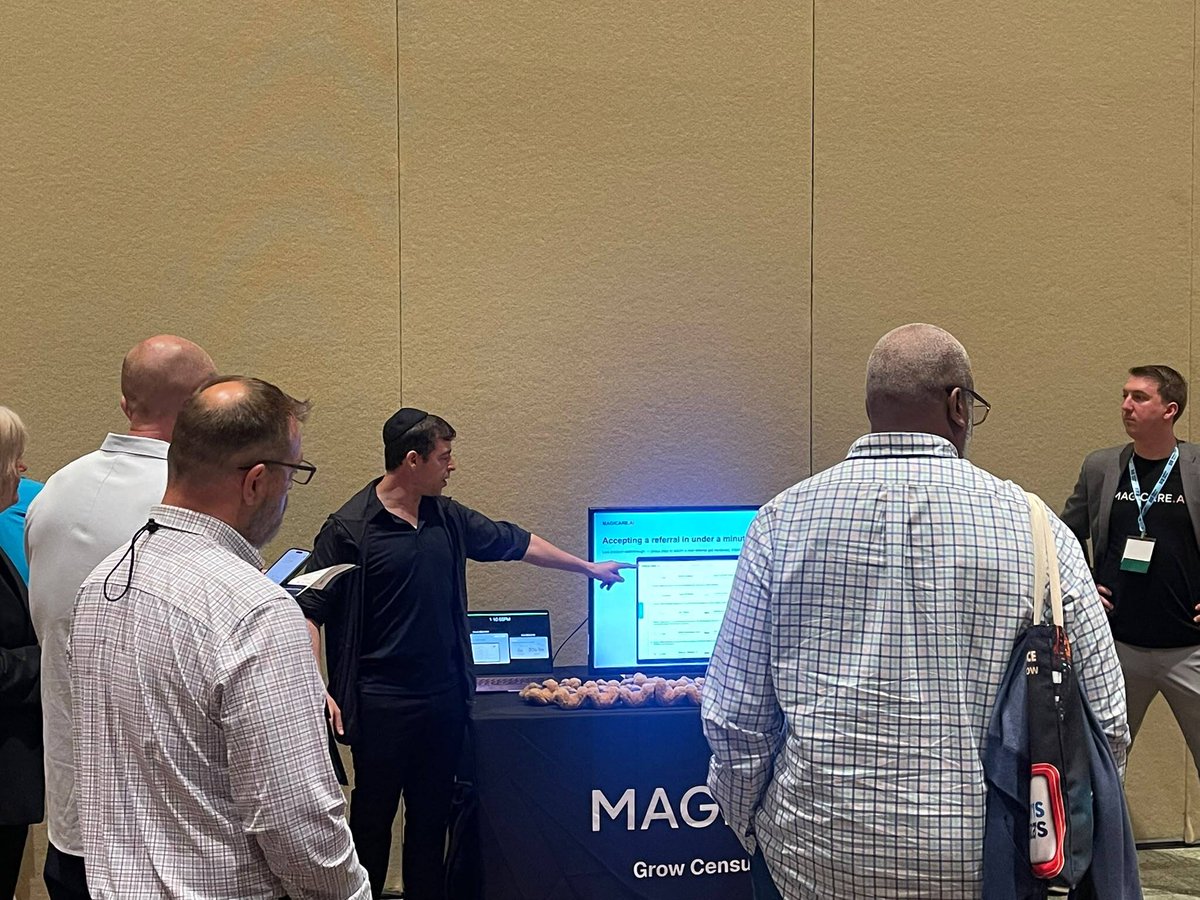
Magicare AI is building the operating system that gets patients into skilled nursing care faster, enabling facilities to accept patients in under a minute.
We’re proud to power the inference behind it, helping @magicareai cut costs by over 30% while handling the traffic spikes that come with real-time admissions.
Full story here: https://t.co/hZ7EMjPgcr
Tech alone isn't a fix, especially in post-acute care where every facility has its own unique rules and workflows.
The real win happens when AI acts as an assistant, taking the burden off of clinical staff so they can focus on faster, accurate patient care.
Real solutions partner with clinicians instead of giving them another portal to manage.
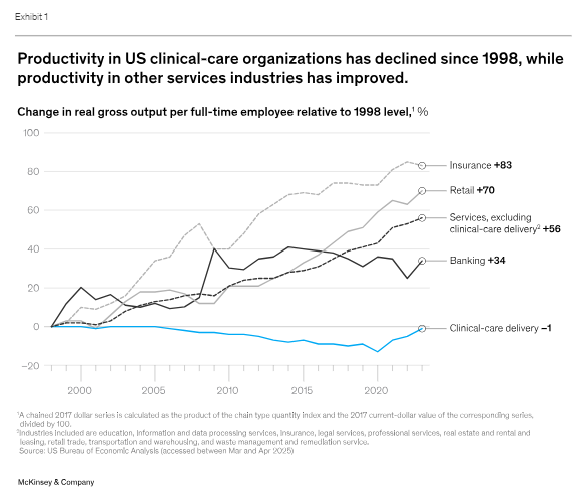
Healthcare is in a productivity hole that more hiring and more tech alone won't solve.
The next era of care depends on making automation work through human–AI workflows to offer care that is cheaper and better for everyone.
AI is our best hope.
M&A in post-acute care usually hits a wall at integration. Forcing every acquired building into a rigid corporate template ruins local intake relationships and slows down admissions.
Our goal is to let operators onboard new facilities in days with custom, building-level workflows while maintaining central control.
According to @skilled_nursing Nearly 40% of SNF leaders are planning acquisitions this year.
The real challenge isn't closing the deal. It's integrating local referral rules and workflows without breaking what already worked. Scale requires software that adapts to the building, not the other way around.
Proud to have several members of the Magicare team at the @FHCA conference this week.
If you’re attending, stop by and meet our CEO, @DSchoenbrun . Whether you’re exploring AI for your organization or simply want to talk about the future of post-acute care, we’d love to connect.
The psychological toll of chronic understaffing cannot be overstated.
When nurses are forced to prioritize the sickest patients, they often leave knowing others did not receive the care they deserved. That sense of unfinished care creates guilt, moral distress, and burnout, even when the failure belongs to the system, not the nurse.
AI will not solve the workforce shortage on its own. But thoughtfully designed AI can reduce administrative burden, improve prioritization, and give clinicians more time and clarity for patient care.
Another key consideration: when it comes to post-acute care, every facility has different clinical capabilities, staffing, payer requirements, and risk thresholds. That facility-level customization and understanding is essential to determining the right fit and treatment plan for each patient.
Not surprised - specialized healthcare AI outperforming general-purpose models makes sense.
In post-acute settings, high-stakes clinical decisions require more than the "right" answer. They require deep understanding of the care facility, patient needs, clinical risk, and operational realities.
That is what we are building at Magicare : AI that teams can trust to identify the right patient-facility fit at admission and support better decisions throughout the care journey.
The future of healthcare AI is specialized, clinically grounded, and built for the decisions providers actually face.
#HealthcareAI #PostAcuteCare #SkilledNursing
A new ARISE lab-led study evaluated 45 AI models and clinical tools across 1,100 specialist consult cases.
The two main takeaways:
> AI alone outperformed physicians using conventional resources or AI (ie. if a PCP just followed AI’s recommendations, the patient would likely benefit, though more validation is still needed)
> specialized platforms (AMBOSS, Doximity, OpenEvidence, Glass Health) outperformed generalist LLMs
@ahcancal Exactly. Better care is not only about adding more staff. It is also about giving great caregivers the tools, support, and time they need to do their best work.
Congratulations to all the facilities recognized on the U.S. News & World Report Best Nursing Homes 2026 list.
Exceptional care starts with exceptional teams and strong operations. Efficient admissions and better operational visibility help support the quality outcomes that matter most.
We’re proud to support providers raising the bar in post-acute care.
#BestNursingHomes #SNF #PostAcuteCare
Nursing homes across the country serve as a place for aging loved ones to be cared for with dignity. Deciding which nursing home is the best option can be difficult, which is why Newsweek is pleased to evaluate America's Best Nursing Homes for 2026. https://t.co/rveDNvPodC
Jonah Weiss (Tacoma Nursing and Rehab) centralized his referral pipeline onto https://t.co/n0z0MF7zsF's dashboard.
Results:
- Response times dropped to minutes.
- Census jumped from 92 to 110.
Watch Jonah share the difference using Magicare has made in this clip with our CEO @DSchoenbrun
From a 92 census to 110. For a single facility, that growth was worth $1,000,000 in additional revenue.
Check out our CEO @DSchoenbrun with Jonah Weiss discussing their ROI in the clip below.
When you automate referral intake, the numbers speak for themselves.
@ACNAPPresident Strong findings! The predictors they surfaced (COPD, valve issues, iron deficiency) underscore how upstream clinical clarity during transitions matters enormously. Better signal at intake and handoff helps teams focus resources where they prevent the bounce-backs that hurt patients and margins.
Integrated pathways like this are exactly where post-acute AI can add the most leverage when it surfaces the right priorities.
The REACT-HF study shows that a nurse-assisted, telemonitoring-supported post-acute care pathway is feasible in very elderly patients and associated with lower-than-expected rehospitalisation rates over 12 months.
Key predictors of readmission included COPD, mitral regurgitation, and iron deficiency—highlighting potential targets for more tailored, multidisciplinary care.
💡 These findings support the role of integrated cardiogeriatric and digital approaches to strengthen continuity of care in heart failure.
#ACNAP26
Big congrats to the Prosper AI team, healthcare ops automation is long overdue. The full picture also includes the upstream clinical intake layer. Turning messy, multi-portal referrals into structured, clinically reliable decisions in seconds is another massive lever for reducing burnout and speeding up care. Excited to see more agentic systems tackling these fragmented workflows end-to-end.@Minh_Q_Tran
At Magicare we see the same principle on the admissions side: surface the clearest clinical signal from messy referrals so teams can direct attention where it matters most, without adding extra work or cognitive load. RESPECT you building a SNOS from real floor experience, Adina. The post-acute space needs more of this. Excited to follow the journey. 🩺"
Couldn’t have said it better ourselves ❤️
Patient data still lives behind dozens of pre-API portals. So we built agents that don’t just fetch data, they reason.
Hundreds of browser agents run per case on @browserbase, turning 60-minute manual reviews into 60-second clinical decisions:
📈 200,000+ referrals
📄 2M+ documents
💬 500,000+ messages
All so admissions teams can focus on patients, not paperwork.
Thank you for helping us make this possible! @browserbase
Magicare turned a 60-minute admissions decision into 60 seconds with Browserbase.
Patient data lives behind dozens of portals built before APIs existed. The only way in is the way a human gets in: through a browser.
So @Magicareai runs hundreds of browser agents per case on Browserbase:
> 200,000+ referrals
> 2M+ documents
> 500,000+ messages
Patients, not paperwork.
Read the full story 👇