We’re excited to announce that now through August 31, 2020, university & college students ages 18 & over can have free access to ArcGIS for their continued #education during #coronavirus closures.
Final day to join is June 30, 2020. Sign up: https://t.co/2EDT74B4C3 @LearnArcGIS
Charley Says Social Distancing
Here's a video I made about #SocialDistancing
"Treat everyone else as if they’re about to catch fire... and you’re a lit match."
Looking for cool resources for home learning? Use these interactive models to investigate the water and carbon cycle and how to model climate. Developed by Prof Dave Waltham @RHULEarthSci for A-Level students https://t.co/aEdE8TWh0m
Are you a university student? We’ve made all 700 textbooks currently available in HTML format on our Cambridge Core platform free to access until the end of May, regardless of whether they were previously purchased: https://t.co/0sVpDxPmPX
Please RT. Short course based at BAS Cambridge and Ny-Ålesund, Svalbard https://t.co/ovuToGAMpp For #PhD students and ECRs looking to gain practical skills for working safely and effectively in the polar regions. Applications close 13 March 2020. #AcademicTwitter#PolarScience
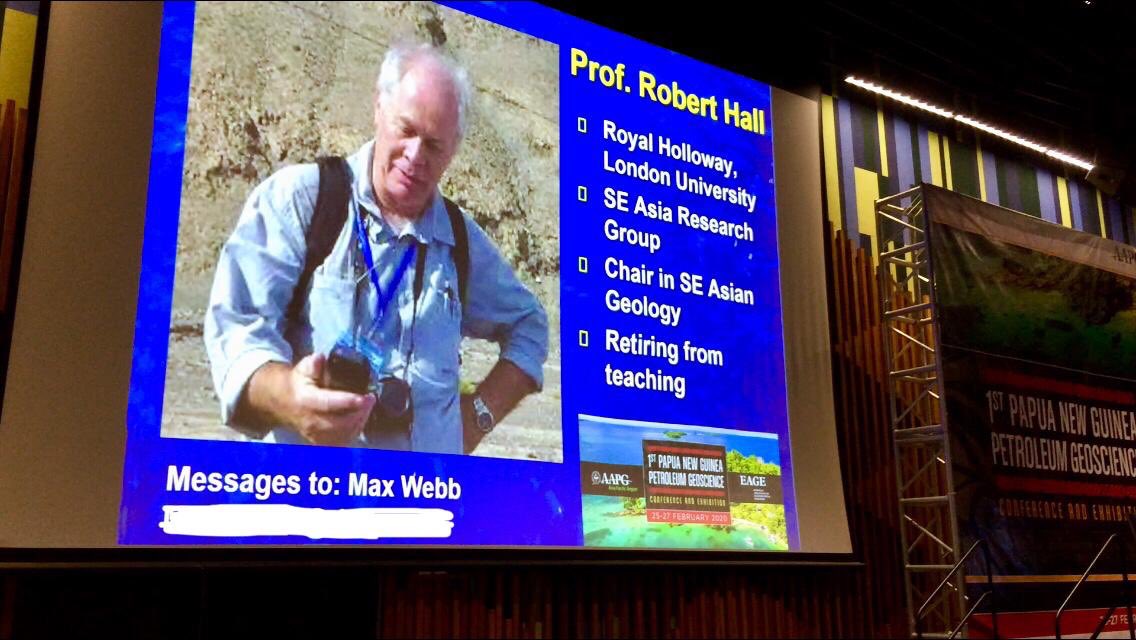
Moyra Wilson gave a fantastic tribute to @SEARGrhul@RHULEarthSci ‘s Robert Hall for his retirement at the 1st AAPG/EAGE Papua New Guinea 🇵🇬 Geoscience Conference and Exhibition. Happy retirement Robert, it was a pleasure being mentored by you
Uranium isotope fractionation is variable, and it depends on how rapidly bacteria “breathe” toxic dissolved U(VI). Read more in new publication by RHUL geochemist Dr Anirban Basu https://t.co/e1KTAO1UE8
RHUL Science Festival will take place on Saturday 7 March (10am-4pm). Want to play with 3D printed models of the Earth? Find out how much methane you have in your own breath? Or make your own earthquake? Come look for us at the Queens Building https://t.co/sLYJ3eUEjj
Interested in Neoproterozoic seawater Sr isotopes? Read this cool new paper using Sr isotopes from our TIMS lab @RHULEarthSci which shows a significant influence from volcanic weathering long before the postulated breakup of Rodinia. https://t.co/6tP5MfmYIA
Tephra layers analysed @RHULEarthSci help pinpoint timing of mass melting of West Antarctic ice sheet during last interglacial. Melting led to multi-metre rise in global mean sea levels – and it took less than 2˚C of ocean warming for it to occur.
New article just out! Data from a West Antarctic Blue Ice Area shows early Last Interglacial ice sheet collapse, driven by less than 2°C ocean warming https://t.co/GonnITgUoa
Attention, female PhD students @RHULBioSci@RHULPsychology@RHULEarthSci@RHULGeography! Applications for the SPRINT programme for personal and professional development for women are now open! Apply at https://t.co/EqYhsijjhO
Applications for the ZEISS-GSL scholarship will open on Jan 20th. If your PhD project is using innovative microscopy techniques make sure you apply. Deadline is Mar 16. More details on our website: https://t.co/eTOfnzrQoV
Our first blog is up now!
"We need to talk about Geoscience" by
@DrNatashaDowey
https://t.co/mJGy7lYVcZ
Geoscience is making the world a better place - we need to make sure the world knows it.
#CallToArms