Takeaways From Today's Senate Plenary
Two of my bills were considered during today's plenary of the Senate in our bid to strengthen our laws for the transformation of our beloved country, the Federal Republic of Nigeria.
The first was on the amendment of the Nigerian Investment Promotion Council which scaled the first reading alongside three other bills.
The second one; a bill for an Act to Establish the Microbiology Council of Nigeria to provide for the control of its membership and to promote and foster the practice of Microbiology in Nigeria, scaled through second reading.
While presenting the lead debate, I noted that the bill seeks to regulate and control the profession of microbiology to enhance the professional conduct of microbiologists, thereby filling a yawning gap in the profession. This is of strategic importance to the public health, food safety and environmental sustainability of the nation, among others.
The proposed body will be self-financing and therefore not dependent on government funding. The absence of a regulatory body has long hindered the optimal growth of the profession.
My distinguished colleagues overwhelmingly supported the bill and it successfully passed the second reading stage.
Also, a bill for an Act to Amend the Border Communities Development Agency Act to make provisions for additional border communities in Nigeria was also passed for second reading. The two bills were referred to relevant committees for further legislative scrutiny.
The Senate also considered and adopted two motions on the bandits' abduction of students, teachers and a toddler in Oriire LGA of Oyo State as well as the continued captivity of women and children abducted in Woro, Kaiama LGA of Kwara State.
The motions were sponsored by Senator Abdulfatai Buhari (Oyo North) and Senator Sadiq Suleiman Umar (Kwara North), respectively. Senators were unanimous in their condemnation of the violent atrocities of bandits.
In my contribution to the debate on the motions, I commended President Bola Ahmed Tinubu, GCFR, for approving the recruitment of 1000 forest guards to go after the bandits and directing the military high command to fish out the culprits and bring them to justice.
We urge him not to relent or waver until the criminals are defeated.
I noted that the issue of security is all-encompassing, involving everyone. Our Armed Forces are doing commendably well in trying to bring bandits to their knees and we equally urge them to up their campaign against bandits and other criminals.
On our part, we are going to sharpen our oversight to make sure that accountability applies to all efforts geared toward combating banditry and other crimes.
Meanwhile, plenary also considered and adopted the reports of relevant committees and passed the following bills for third reading: The Customs, Excise Tariff, etc (Consolidation) Act (Amendment) Bill 2026 and the Malaria Elimination Agency Bill, 2026.
Presenting the lead debate of my bill for an Act to Establish the Microbiology Council of Nigeria to provide for the control of its membership and to promote and foster the practice of Microbiology in Nigeria during today's plenary of the Senate. The bill scaled second reading.
Does anyone have any news on the Nigerian Senate signing the Microbiology Council of Nigeria bill? If this finally happens, I’m moving to Nigeria straight.
Breaking News 🚨🚨🚨
Senate Approves Bill to Establish Microbiology Council of Nigeria
The Nigerian Senate has passed for second reading a bill seeking to establish the Microbiology Council of Nigeria, a regulatory body that will oversee the practice of microbiology and ensure compliance with professional standards across the country.
The bill, titled the “Microbiology Council of Nigeria Establishment Bill,” was sponsored by the Deputy Senate President, Barau Jibrin.
If eventually passed into law, the council will be responsible for registering microbiologists, regulating professional practice, setting standards, and promoting competence and excellence within the profession nationwide.
The proposed legislation is expected to strengthen the field of microbiology and enhance professional standards in science, public health, and healthcare in Nigeria.
@olumuyiwaayo I’m here in 2026, because my uncle sent me this on WhatsApp, thank you so much sir , I have been following you on Facebook for a while now.
𝗪𝗲 𝗱𝗶𝗱 𝗶𝘁! 𝗪𝗲 𝗵𝗶𝘁 𝟭𝟬𝟬𝗸 𝗳𝗼𝗹𝗹𝗼𝘄𝗲𝗿𝘀 𝗼𝗻 𝕏! 🚨
Which means it’s time for that BIG announcement we’ve all been waiting for 👀
Wen $BOINK?…
Try not to shit yourself…
But the answer is…
𝗢𝗰𝘁𝗼𝗯𝗲𝗿 𝟮𝟬𝟮𝟰 👀💥
In just a few weeks, you can expect to get a bag of shit dropped to you… $BOINK 💩🪂
For those that haven’t gotten their shit together, and haven’t farmed enough on the moon…
Now’s your last chance 🤪
Take advantage of the next few weeks to collect as much shit as you can 🚽
And let’s all shit everywhere on the moon together 🚀
Remember… the more shitcoins you collect, the more $BOINK you’ll get 🎁
Stay tuned for more details! 🌟
Make sure to follow our news channel to stay up to date on everything 📰
➡️➡️➡️ https://t.co/V9EsPljPgK
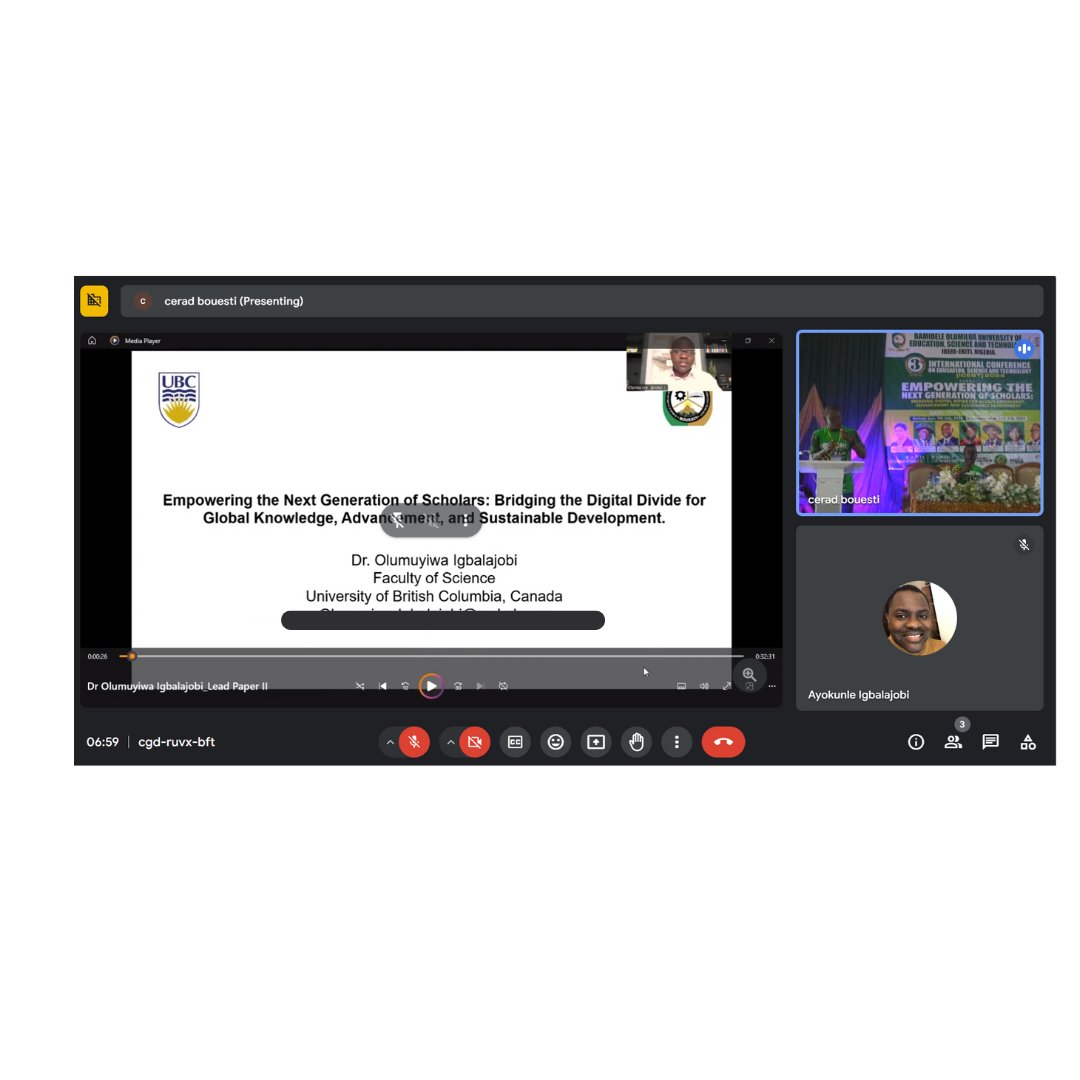
Earlier today, I had the privilege of presenting the lead paper II at the ICEST Conference, held at Bamidele Olumilua University of Education, Science and Technology, Ikere-Ekiti, Nigeria. The theme of the conference centered on empowering the next generation of scholars and bridging the digital divide for global knowledge, advancement, and sustainable development. It was an enriching experience to address such a crucial topic, particularly in the context of Nigeria's current educational landscape.
In my presentation, I highlighted several critical issues facing Nigeria's education system today. One of the most pressing problems is the high number of out-of-school children. Shockingly, one in three children in Nigeria is out of school, totaling 10.2 million at the primary level and 8.1 million at the junior secondary school level. This alarming statistic underscores the urgent need for systemic changes to ensure that every child has access to quality education.
Additionally, I discussed the significant digital literacy gap that exists within the country. Despite the rapid advancements in technology globally, many Nigerian students lack the necessary digital skills to thrive in today's digital economy. This digital divide not only hampers their educational opportunities but also limits their future employment prospects and overall contribution to the country's economic growth.
Drawing on my experiences having lived and studied in Nigeria, South Korea, Germany, and Canada, I shared insights on how these countries are addressing similar challenges. In South Korea, for instance, there is a strong emphasis on integrating technology into the classroom, ensuring that students are well-versed in digital tools from a young age. Germany's approach focuses on sustainability and digital literacy, with comprehensive programs that equip students with the skills needed for the future. In Canada and the United States, there are numerous initiatives aimed at promoting digital inclusion and STEM education, which Nigeria can learn from.
To address these challenges in Nigeria, I proposed several strategies. Firstly, there is a need for increased investment in the education sector, particularly in rural areas where the digital divide is most pronounced. Providing schools with the necessary infrastructure, such as internet access and digital devices, is crucial. Additionally, teacher training programs should be enhanced to ensure that educators are equipped to teach digital literacy skills effectively.
Furthermore, I emphasized the importance of leveraging scholarships to train both staff and students. Programs such as the TWAS-CAS Fellowships, Mastercard Foundation Scholarships, Chevening Scholarships, and Banting Fellowships offer valuable opportunities for advanced training and research. These scholarships can help Nigerian educators and students gain international exposure, acquire new skills, and bring back innovative practices to improve the local education system.
Community involvement is also essential. Parents, local leaders, and organizations must collaborate to create an environment that values education and supports students in their learning journeys. Initiatives like community learning centers can provide additional resources and support for children who may not have access to digital tools at home.
Moreover, partnerships with international organizations and the private sector can help bridge the gap. By leveraging global expertise and resources, Nigeria can develop and implement innovative solutions tailored to its unique context. For instance, public-private partnerships can facilitate the distribution of digital devices to underserved communities, while international collaborations can bring in best practices and successful models from other countries.
In conclusion, empowering the next generation of scholars in Nigeria and bridging the digital divide is not just a matter of policy but a collective responsibility. By addressing these challenges head-on and learning from global best practices, Nigeria can pave the way for a brighter future where every child has the opportunity to succeed. The ICEST Conference provided a valuable platform to discuss these critical issues, and I am optimistic about the potential for positive change.
Thank you to the organizers for the opportunity to contribute to this important conversation. Together, we can make a difference in the lives of millions of Nigerian children and ensure sustainable development for the country.