AI side hustles make me $999 every week.
I have created a guide to help you start one and make $100 everyday.
Usually, I'd charge $199 for this, but today I'm giving it away for FREE
Like, comment "Guide" and repost for absolutely FREE.
(Must follow, 42 hours only)
Running local AI workflows often means wiring orchestration, models, vector storage, and persistence together before you can test an idea.
Self-hosted AI Starter Kit is a Docker Compose template for builders who want a local AI and low-code development environment.
It helps you prototype self-hosted AI workflows by preconfiguring n8n, Ollama, Qdrant, and PostgreSQL with network and storage settings.
Key features:
• Low-code orchestration – self-hosted n8n provides 400+ integrations and AI nodes.
• Local model runtime – Ollama runs local LLMs for workflow inference.
• Vector storage – Qdrant provides the included vector store.
• Persistent data layer – PostgreSQL is included in the Compose stack.
• Hardware profiles – instructions cover Nvidia GPUs, AMD GPUs on Linux, Mac/Apple Silicon, and CPU-only use.
It’s open-source (Apache License 2.0). The README positions it for proof-of-concept projects and says it is not fully optimized for production environments.
Link in the reply 👇
Warp’s open-source client is now a full agentic dev environment built out of the terminal. It ships with a built-in coding agent and works with Claude Code, Codex, Gemini CLI, and others.
Explore it here:
https://t.co/5lwWS4p3sM
OmniParser turns any LLM into a GUI agent by parsing screenshots into structured, actionable elements.
- Achieves 39.5% on the Screen Spot Pro grounding benchmark with V2
- Supports OpenAI, DeepSeek, Qwen, and Anthropic models out of the box
- Includes OmniTool for controlling a Windows 11 VM
- Provides local trajectory logging for building training data pipelines
Explore it here:
https://t.co/kHPFe5sfK3
Langflow provides a visual builder for creating AI workflows that can be deployed as APIs or MCP servers.
- Visual interface with interactive playground for testing and refinement
- Built-in API and MCP server deployment for every workflow
- Multi-agent orchestration with conversation management and retrieval
- Enterprise-ready security and observability integrations
Explore it here:
https://t.co/QHzp8HyyZb
Manim turns Python code into precise, programmatic math animations—the same engine behind 3Blue1Brown's videos. Install via `pip install manimgl` and start scripting vector graphics with LaTeX support and OpenGL rendering.
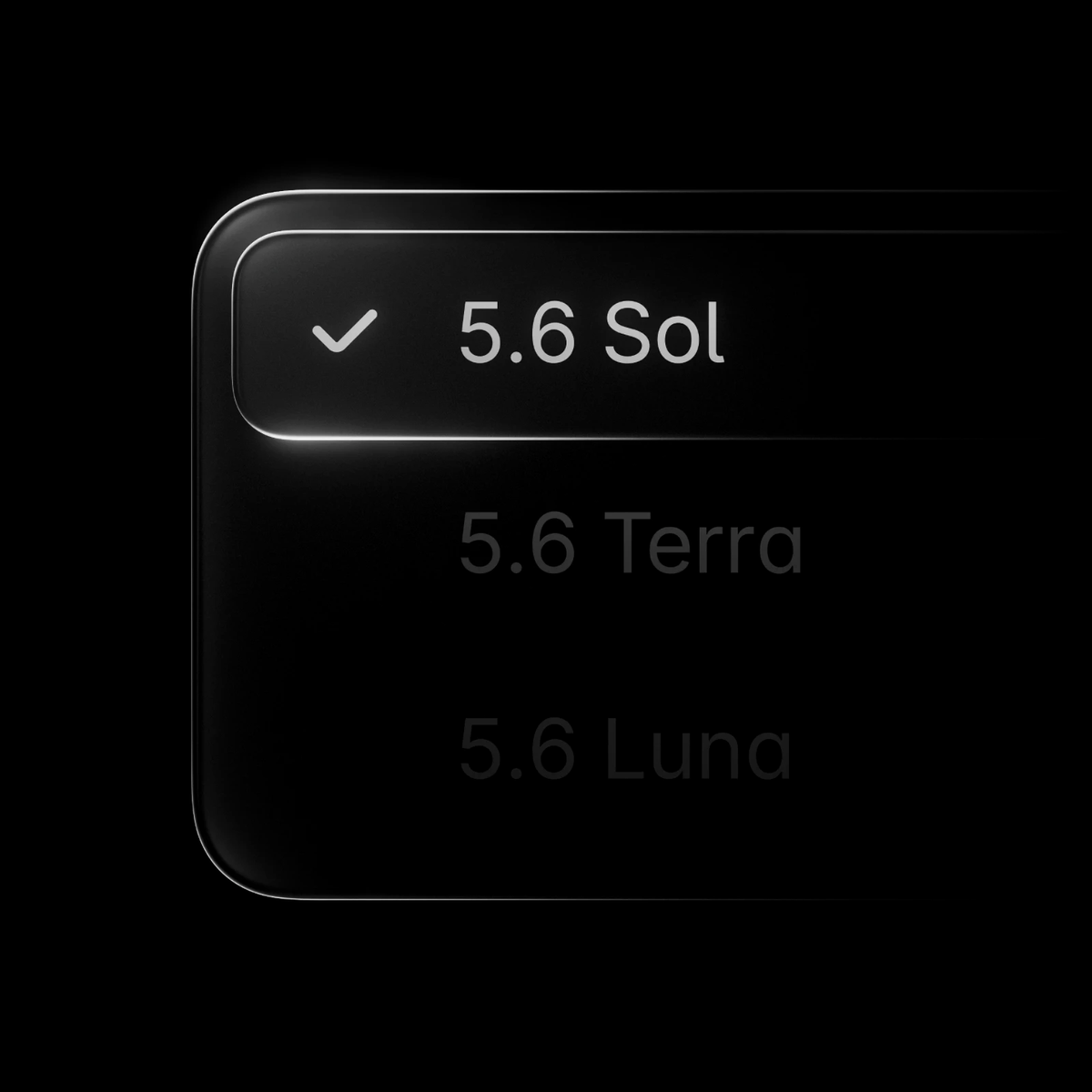
GPT 5.6 Sol, Terra, and Luna are now available in Framer.
The new lineup gives you more control over quality, cost, and speed. Sol is our strongest creative model yet, and the first to score 100% on our hardest internal benchmark, at the same credit cost as GPT 5.5. Terra delivers GPT 5.5-level results at 0.6× the credits, while Luna runs 2× faster than any previous option at 0.4× the credits.
Web data for AI agents shouldn’t require three separate scraping stacks.
AnyCrawl is a Node.js/TypeScript crawling and scraping toolkit for builders who need web pages, full-site crawls, SERP results, or structured page data for AI workflows.
It helps you turn sites into LLM-ready inputs by combining scrape, crawl, and search APIs with selectable browser/static engines and JSON schema extraction.
Key features:
• Scrape endpoint – extract a single page with Cheerio, Playwright, or Puppeteer depending on the target site
• Site crawling – traverse pages with max depth, page limits, and same-domain / same-hostname / same-origin strategies
• Search API – query search results through `/v1/search` with controls for query, pages, and language
• LLM extraction – pass a JSON schema in `json_options` to pull structured fields from pages
• Self-host auth path – generate bearer API keys with pnpm or Docker when authentication is enabled
It’s open-source (MIT license).
Link in the reply 👇
Three new models landed in Notion:
☀️ GPT-5.6 Sol — for days-long tasks and self-improving agents
🌍 GPT-5.6 Terra — GPT-5.5 workloads at ~half the cost
🌙 GPT-5.6 Luna — speed for the small stuff (available for Custom Agents)
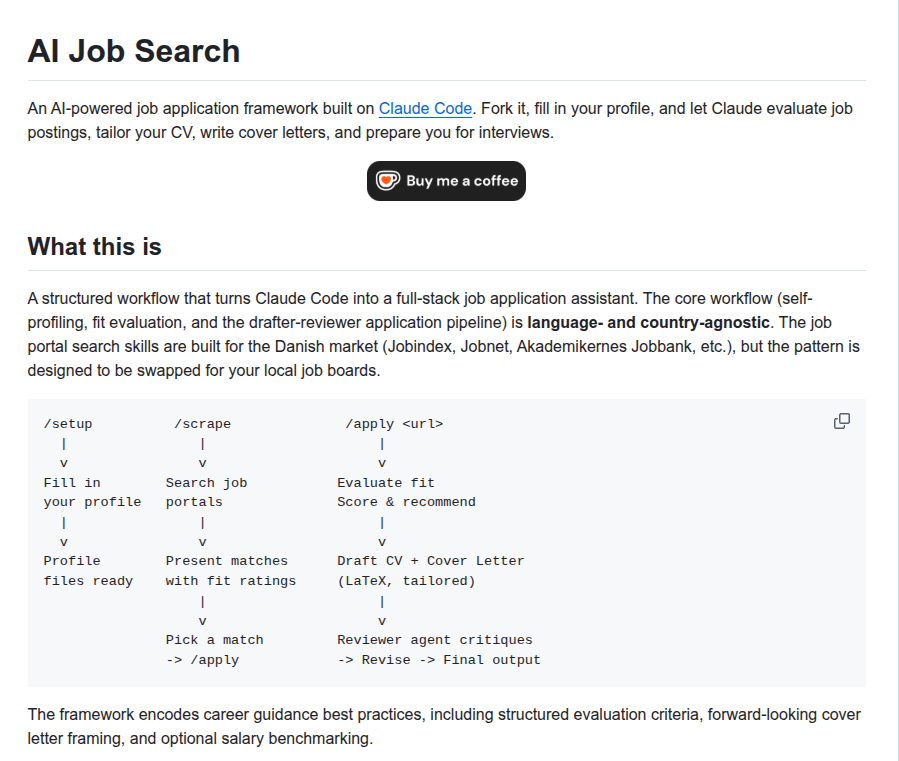
Somebody built a Claude Code workflow that connects your profile, job posts, and application drafts. 5.7K+ Github stars.
a repeatable job-application machine with saved instructions, profile files, scraper tools, LaTeX templates, and review steps.
You first run /setup, which builds a detailed profile from your CV, documents, or interview answers.
Then /scrape searches job boards, removes duplicates, and ranks jobs by fit against your profile.
Then /apply <url> reads a job post, compares it with your real experience, and creates a tailored CV and cover letter.
It loops after drafting: one Claude agent writes, another reviews the draft, then the first revises it.
It also compiles the CV and cover letter as PDFs, checks layout problems, and fixes them until the output is clean.
Today's challenge is not just creating AI capabilities, it's finding them. We're introducing the Agentic Resource Discovery (ARD) specification, an open spec that establishes a secure common layer for publishing, indexing and discovering AI capabilities. Created by Microsoft, Google, Hugging Face and many more industry collaborators, it's available today to everyone.
Introducing ml-intern, the agent that just automated the post-training team @huggingface
It's an open-source implementation of the real research loop that our ML researchers do every day. You give it a prompt, it researches papers, goes through citations, implements ideas in GPU sandboxes, iterates and builds deeply research-backed models for any use case. All built on the Hugging Face ecosystem.
It can pull off crazy things:
We made it train the best model for scientific reasoning. It went through citations from the official benchmark paper. Found OpenScience and NemoTron-CrossThink, added 7 difficulty-filtered dataset variants from ARC/SciQ/MMLU, and ran 12 SFT runs on Qwen3-1.7B. This pushed the score 10% → 32% on GPQA in under 10h. Claude Code's best: 22.99%.
In healthcare settings it inspected available datasets, concluded they were too low quality, and wrote a script to generate 1100 synthetic data points from scratch for emergencies, hedging, multilingual etc. Then upsampled 50x for training. Beat Codex on HealthBench by 60%.
For competitive mathematics, it wrote a full GRPO script, launched training with A100 GPUs on https://t.co/udm7xGpNzR, watched rewards claim and then collapse, and ran ablations until it succeeded. All fully backed by papers, autonomously.
How it works?
ml-intern makes full use of the HF ecosystem:
- finds papers on arxiv and https://t.co/brvCC7fLPa, reads them fully, walks citation graphs, pulls datasets referenced in methodology sections and on https://t.co/hrJuRkRyzi
- browses the Hub, reads recent docs, inspects datasets and reformats them before training so it doesn't waste GPU hours on bad data
- launches training jobs on HF Jobs if no local GPUs are available, monitors runs, reads its own eval outputs, diagnoses failures, retrains
ml-intern deeply embodies how researchers work and think. It knows how data should look like and what good models feel like.
Releasing it today as a CLI and a web app you can use from your phone/desktop.
CLI: https://t.co/l3K1PslZ1n
Web + mobile: https://t.co/orko5srL4H
And the best part? We also provisioned 1k$ GPU resources and Anthropic credits for the quickest among you to use.
ollama launch pi --model kimi-k2.5:cloud
Ollama can now launch Pi, the coding agent that powers OpenClaw.
Designed to be a minimal coding harness that can be adapted to your workflows to create your own coding agent.
Comes bundled with powerful primitives to build on, and can be extended with extensions, skills, prompt templates, and themes.
All Pi packages work with Pi & Ollama, making it infinitely customizable for different tasks and use cases.