The following projects have very little to do with sustainable development in Nigeria:
1. Roads construction
2. Bridges construction
3. Flyovers construction
4. Painting classrooms
5. Buying buses
6. Passenger trains
7. Building empty classrooms
8. Building empty hospitals
9. Giving 20k to the poorest of the poor
10. Sponsoring marriages
These are all money drains with almost zero impact on the economy for the long term.
The foundations are left unattended. These include:
1. Agricultural innovation beyond subsistence.
2. Training world class teaching competency at primary and secondary levels.
3. Training and retaining competent doctors to meet growing population.
4. Equipping hospitals with world class tools.
5. Provision of clean and accessible drinking water for all.
6. Subsidizing industrialisation for mass employment opportunities.
7. Modernising mining activities to provide mass employment opportunities.
8. Proper sanitation and effective urban waste management.
9. Proper urban planning and strict building codes.
10. Automated governance accounting, auditing, and procurement systems.
11. Voluntary population growth adjustment through mass contraception uptake campaigns.
12. Strengthening government institutions and making them transparent.
13. Credible salaries and pension systems.
14. Strict anti corruption laws.
15. Transparent election system that is rigging proof.
There are many more. But these must be prioritised by any serious government. Nigeria's 230M population that is growing geometrically while government is wasting money is not sustainable. It is a ticking time bomb that is set to explode anytime soon.
Each and every one of them, including their sponsors, their informants and even the government officials responsible for securing our lives who have failed to do so, from the president downward! Allah Ya Isa!
Banditry is not surviving in Northern Nigeria merely because of government failure. It is surviving because the North, over time, has built an ecosystem that allows it to thrive.
Behind the man with the gun, there is often a village that fears him or protects him. There is a relative who knows where he sleeps. There is an informant who watches the road. There is a supplier who sells him fuel, food, motorcycles, or ammunition. There is a negotiator who profits from ransom. There is a praise singer who turns him into a legend. There is a politician who makes statements after every tragedy and returns to silence. And there is an educated northern public that can trend gossip or sex scandals for days but treat mass abduction like bad weather.
That is the part we do not like to say.
The forest did not create banditry. It simply gave it room to grow.
Banditry in Northern Nigeria did not begin today. Long before today’s headlines, northern trade routes and rural frontiers had a history of armed raids, cattle theft, attacks on traders, and criminal gangs operating in places where authority was weak.
That is one of the ironies of our history. Many people today, especially in Southern Nigeria, look at banditry and conclude that Nigeria should break apart. Yet insecurity along northern routes was one of the problems colonial rule claimed it was trying to solve when Nigeria was amalgamated in 1914.
Colonial authorities quickly discovered that the frontier was far less obedient than the maps they drew. Trade routes were disrupted by raids and ambushes. Traders and herders faced harassment. Rural authority was weak. Roads were unsafe. Violence had already become part of the region’s political economy. Even Lugard himself had some skimishes with armed bandits.
So the problem is old.
What changed was the scale, the weapons, the money involved, the collapse of local restraints, and the weakness of the modern state.
The modern form of banditry did not begin with mass kidnappings or attacks on schools Either. It started in ways that seemed smaller and easier to ignore.
In many rural parts of Zamfara, Katsina, Sokoto, Kebbi, and neighbouring areas, the first signs were cattle theft, highway robbery, and revenge attacks between communities. One man’s cattle would be stolen. Another group would retaliate. Villages accused one another of helping criminals. Violence gradually escalated.
This was the environment that produced men like Kundu and Buharin Daji.
Today, they are remembered as notorious bandit leaders. But before they became feared names, they emerged from communities already struggling with insecurity, poverty, and weak government presence.
In those communities, cattle were not just livestock. They were savings, school fees, food, and family wealth.
Losing fifty cows could mean losing everything.
At the same time, many people felt abandoned by the state. Some villages rarely saw police officers. Others believed security agencies only arrived after attacks had already happened. Many felt the courts were too slow or too corrupt to provide justice.
Then communities formed vigilante groups to defend themselves.
In many places, people welcomed them because they were desperate for protection. Nobody should mock people for trying to survive when the state has failed them. But over time, some vigilantes were accused of targeting entire Fulani communities instead of focusing on criminals. Others were accused of killing suspects without trial or punishing innocent people for crimes they did not commit.
Whether every accusation was true or not, the stories spread.
Young men heard that relatives had been beaten, arrested, or killed. They heard that Yan Sakai groups treated every Fulani man as a suspect. They heard that nobody would protect them. They believed nobody would listen to them.
Every abuse became evidence.
Every dead relative became a story.
Every injustice became a recruitment tool.
That does not excuse banditry. But It explains how it grows.
Some men entered the bush claiming self-defence. But to survive in the forest, they needed guns. Guns cost money. So they stole cattle. The stolen cattle were sold to buy more weapons. The more weapons they bought, the stronger they became. The stronger they became, the more young men joined them.
What may have started as a claim of self-defence slowly turned into organised crime.
But that was one doorway into banditry.
Another doorway was greed.
Not everyone entered the bush with a grievance. Some people simply saw that violence had become profitable. A man with a gun could steal cattle, collect levies, block roads, command fear, settle scores, and become more powerful than the honest farmer or herder trying to survive.
Once crime begins to pay more than work, society has already started advertising criminal life to desperate young men.
Then the cycle began feeding itself.
A man buys weapons for “self-defence.” Then he needs boys to carry those weapons. The boys need food. The food needs money. The money comes from cattle rustling. The rustling brings retaliation. The retaliation brings more weapons. More weapons bring more recruits. More recruits bring more mouths. More mouths bring more raids.
At some point, the original excuse dies, but the business continues.
That is how a grievance becomes an economy.
From there, the violence became more organised. Cattle rustlers became armed commanders. Armed commanders became negotiators. Negotiators became local power brokers. Eventually, some became men that governments found themselves bargaining with.
This is where figures like Dogo Gide and Awwalun Daudawa enter the story. They represent the stage where banditry moved beyond cattle rustling and rural raids and became a full ransom economy.
Roads became dangerous. Villages became sources of taxation. Farmers paid levies before harvesting crops. Travellers became targets. Schools became opportunities.
Daudawa’s role in the Kankara school abduction changed the trajectory of modern banditry. It showed that abducting schoolchildren could generate far more attention, pressure, and profit than traditional kidnappings.
Kankara opened the floodgates.
Bandit leaders across the region watched the panic, the headlines, the negotiations, and the pressure on government. What once seemed extraordinary quickly became a template. Schools became targets. Children became bargaining tools in a criminal economy.
But there is a question that should bother anyone who thinks seriously about this problem.
How do hundreds of schoolchildren get moved across difficult terrain by men on motorcycles and disappear into forests for days or weeks? How do armed men move, feed themselves, communicate, negotiate, and avoid capture across vast territories?
The answer is simple.
Bandits do not operate alone.
They rely on informants. They rely on people who know the terrain. They rely on suppliers. They rely on people who help them sell stolen cattle and buy weapons. They rely on negotiators who contact families and governments during ransom discussions. They rely on relatives, sympathisers, and terrified communities where silence has become a survival strategy.
As the Minister of Defence put it, the people around them are the oxygen of the business.
That is the ecosystem.
The men carrying the guns are only one part of it.
In many cases, people around them know who they are, where they operate, who supplies them, and who benefits from their activities. Some stay silent because they are afraid. Others stay silent because they are related to them. Some profit from the system. Others simply do not want trouble.
That is one reason banditry is so difficult to defeat.
But this ecosystem is not only about food, fuel, weapons, and informants. It also has a cultural side.
For generations, northern societies have had traditions of celebrating powerful and feared men. Figures like Kasu Zurmi and Gambo belonged to an older culture in which outlaws could become larger than life through stories, songs, and folklore.
Modern banditry inherited that tradition and adapted it.
Today, singers such as Late Suraju, Adamu Ayuba, Hamadu Makaho, Malam Jaka, Megari, and others help circulate the names of contemporary bandit leaders. The medium has changed, but the function remains the same. The criminal is transformed into a figure of prestige.
That matters because prestige attracts followers.
A young man is more likely to join a movement when its leaders are treated as powerful men rather than ordinary criminals. The praise song becomes part of recruitment. It becomes part of intimidation. It becomes part of the mythology that keeps the ecosystem alive.
Social media has only expanded the reach of that mythology.
The videos of bandits displaying weapons, cash, motorcycles, and armed escorts are not random acts of vanity. They advertise power. They project invincibility. They reinforce the status of particular commanders within the hierarchy of banditry.
But this is where the argument must leave the forest and enter the city.
Yes, communities around bandits have questions to answer. Some people are terrified. Some are trapped. Some are benefiting. Some know who supplies information. Some know who suddenly became wealthy. Some know which houses receive suspicious visitors. Some know which young men disappeared into the bush and later returned with money, motorcycles, women, and guns.
But the problem is not limited to rural communities.
The educated North also bears responsibility because too many of us have become accustomed to northern suffering.
A leaked chat can dominate discussion for days. A celebrity scandal can dominate discussion for days. Social media drama can dominate discussion for days. Yet villages are attacked, students are kidnapped, farmers are taxed by criminals, highways become unsafe, and entire communities are displaced, only for public outrage to disappear almost immediately.
We have attention.
We simply waste it.
That is why I struggle when people say the North lacks media power. The problem is often not the absence of a voice. The problem is how that voice is used.
We can spend endless hours discussing gossip, politicians, celebrities, tribal disputes, religious arguments, and social media controversies. But when farmers are paying taxes to criminals before harvesting their crops, many people suddenly lose interest.
That silence matters because banditry benefits when society quickly moves on. It benefits when attacks become routine news. It benefits when politicians know public anger will fade within days.
Compare this with Southern Nigeria. The South is far from perfect. It has its own problems, hypocrisies, and distractions. But when insecurity affects some southern communities, the public reaction is often different. People organise. Unions speak out. Community leaders are pressured to respond. The media keeps the issue alive.
In the North, we have become used to horror.
That is not resilience.
It is decay.
There is nothing admirable about becoming comfortable with the abnormal. The more we normalise it, the easier it becomes for leaders to ignore it. The easier leaders ignore it, the stronger the criminals become.
The farmer who cannot farm affects food prices in the city. The trader who cannot travel affects markets. The child who cannot attend school affects the future. A village paying levies to bandits is not buying peace. It is financing future violence.
Banditry does not stay in the forest.
The first thing we must do is strip away the romance.
The bandit is not a hero. He is not a defender. He is not a freedom fighter. He is not protecting any community by taxing poor villagers, kidnapping travellers, destroying farms, and turning schoolchildren into bargaining chips. Whatever grievance may have existed at the beginning has long been overwhelmed by criminality.
The second thing is to confront the ecosystem around him.
Praise singers are not harmless entertainers. Informants are not minor actors. Negotiation rackets must be exposed. Communities that knowingly protect criminals must face consequences, while innocent communities must be protected from vigilante abuse.
Security operations must be firm without becoming ethnic revenge. Traditional leaders must be held accountable. Rural economies must be rebuilt so that young men do not see the bush as their only path to power.
And the educated North must stop acting like spectators.
If we can make gossip trend, we can make the names of attacked villages trend. If we can spend days arguing about celebrities, we can spend days demanding action from governors. If we can organise political rallies, weddings, naming ceremonies, and religious gatherings, we can organise sustained pressure around insecurity.
This is not about blaming victims. Many northern communities are trapped between bandits, vigilantes, poverty, and a failing state.
But a society that wants to survive must tell itself the truth.
These men do not come from nowhere.
They come from communities. They rely on relationships. They depend on information, supplies, money, prestige, fear, and silence.
Until the North confronts the entire ecosystem, we will keep chasing the man with the gun while ignoring everything that allows him to keep fighting.
Let me tell you something, my friend.
The North’s problem is real. Nobody serious should deny it. The poverty is real. The out-of-school children are real. The insecurity is real. The failure of leadership is real.
But if you want to understand the North, you cannot start the story from “they have had presidents.”
That is too shallow for a region with this much history, geography, trauma, religion, power politics, colonial distortion, elite failure, and security pressure.
The North did not wake up one morning and decide to hate education. There is a history behind that suspicion.
When the British entered Northern Nigeria, they met an already established Islamic political order. There were emirates, courts, scholars, taxation systems, trade routes, Islamic schools, judges, administrators, and a ruling class that already had its own idea of civilization.
Then colonial rule came with Western education, missionary activity, new courts, new administrative structures, and new incentives.
In many parts of the South, Western education entered through mission schools and became a ladder into the colonial economy. In much of the Muslim North, it carried a different meaning. It was not just “school.” It was seen by many as a vehicle for Christian influence, colonial loyalty, cultural erosion, and the weakening of existing Islamic authority.
That stigma did not come from the sky. It came from conquest, mistrust, and the way Western education arrived.
This is why the North’s education problem cannot be reduced to stupidity or laziness. It began partly as a defensive reaction to a real historical threat.
But here is the hard truth: the suspicion has outlived the threat.
A reaction that may have made sense under colonial pressure became destructive when the modern state began rewarding literacy, science, bureaucracy, technology, engineering, and formal administration.
At some point, protecting identity became indistinguishable from trapping children outside the future.
That is where Northern leadership failed badly.
The old Northern elite understood the danger earlier than people admit. Sir Ahmadu Bello did not sit down and say, “Let the North remain backward.” His Northernization agenda was a deliberate attempt to produce Northern teachers, administrators, civil servants, professionals, and political leadership quickly enough to prevent the region from being swallowed inside a new Nigerian state dominated by the already Western-educated South.
That agenda had flaws, but it worked in one important sense: it created a Northern administrative class.
The problem is that later leaders inherited the power but not the developmental seriousness.
They inherited the slogans, the emirates, the titles, the political machinery, and the federal access, but not the discipline of mass education, industrial policy, rural development, teacher training, agricultural modernization, and serious security planning.
So yes, the North has produced presidents.
But producing presidents is not the same as producing development.
Power without developmental discipline becomes distribution. It becomes appointments, contracts, pilgrim boards, federal slots, elite bargaining, and recycled patronage.
And geography also matters.
The North is not sitting beside the Atlantic like Lagos or Port Harcourt. It is tied to the Sahel. It shares long and porous borders with Niger, Chad, Cameroon, and Benin. When Libya collapsed, when weapons spread across the Sahel, when jihadist networks expanded, when climate stress hit pastoral routes, when Lake Chad communities were weakened, when Niger and Mali became unstable, the North inherited those shocks directly.
A farmer in Zamfara, a trader in Maiduguri, a herder around Sokoto, or a community in Katsina is not dealing only with “Nigerian leadership failure.” They are living inside a regional security crisis.
That does not excuse bad leadership. It explains why lazy comparisons are weak.
The North also suffered from the Nigerian resource curse in a particular way. Once oil money became the centre of the Nigerian state, productive regional economies were weakened. Groundnut pyramids, cotton, hides and skins, textiles, agriculture, local industry, and regional planning lost importance. Politics became a struggle for federal allocation instead of a competition to build productive capacity.
The North had land. It had people. It had agriculture. It had trade routes. But the oil state taught every region to look toward Abuja.
That destroyed initiative everywhere, but it damaged the North deeply because its strongest assets required long-term planning: irrigation, agro-processing, education, rural roads, livestock systems, border trade, and security coordination.
Now, after saying all that, responsibility must be accepted.
Northern leaders failed their own people.
They allowed almajiri children to become political decoration instead of a national emergency. They allowed banditry to grow from local criminality into a parallel economy. They allowed schools to decay. They allowed girls’ education to become negotiable. They allowed clerics and politicians to play games with reform. They used poverty as an election structure. They built loyalty through dependence.
That part is true.
But the answer is not to mock the North. The answer is to study what worked before and update it.
Ahmadu Bello’s Northernization agenda can be reimagined for the 21st century.
Not as ethnic exclusion or nostalgia. But as a serious regional human-capital project.
Mass teacher training. Boarding schools in secure zones. Integrated Qur’anic and formal education. Technical colleges tied to agriculture, energy, construction, mining, and logistics. Girls’ education backed by stipends and community negotiation. Agro-industrial clusters around Kano, Kaduna, Katsina, Sokoto, Bauchi, Gombe, Niger, and Borno. Livestock modernization instead of pretending open grazing can survive modern population pressure. Border security tied to trade, not just soldiers and checkpoints.
Other societies have faced versions of this problem.
Bangladesh attacked female education with stipends, community-level incentives, and a clear national push. Indonesia did not abolish its Islamic schools; it integrated many of them into a modern education pathway. Malaysia used state policy to expand opportunities for historically disadvantaged Malay communities, though with its own flaws. China took poor inland regions seriously through infrastructure, rural industry, technical training, and state coordination.
The lesson is simple: you do not fix historic backwardness by insults. You fix it with policy, discipline, and elite seriousness.
So yes, my friend, criticize Northern leadership. I do it too.
But do not flatten a whole region into “they had presidents and still failed.”
That is lazy analysis.
The North’s crisis is a product of bad leadership, colonial disruption, educational mistrust, Sahelian geography, oil-state laziness, elite capture, and security collapse.
And the way forward is also clear.
The North must stop hiding behind history.
The South must stop pretending history does not matter.
And Nigeria must understand that if the North remains broken, the country will not be stable, no matter how much one region mocks another online.
We have removed Kled from the Nigerian app store and IP banned the entire region.
The first thing I would like to say is I have nothing against Nigeria. I have a ton of friends from this region and these were some of our earliest app adopters. Genuinely, thank you all for the support.
Kled has been up and running and out of beta for 4 months now. We have paid out hundreds of thousands of people for their data, and our users have uploaded over 1 billion assets onto our platform.
After several months of uploads we found that Nigeria had a ≈95% fraud rate. Instead of real, usable data, users were uploading pictures of black screens, duplicate photos, internet generated images, AI generated images, etc. at an unimaginable scale.
In comparison, Malaysia, Indonesia, and the Philippines have a less than 10% fraud rate across 10x the userbase size.
Our fraud system is fast to catch these issues but the level of complexity of these schemes is getting out of hand.
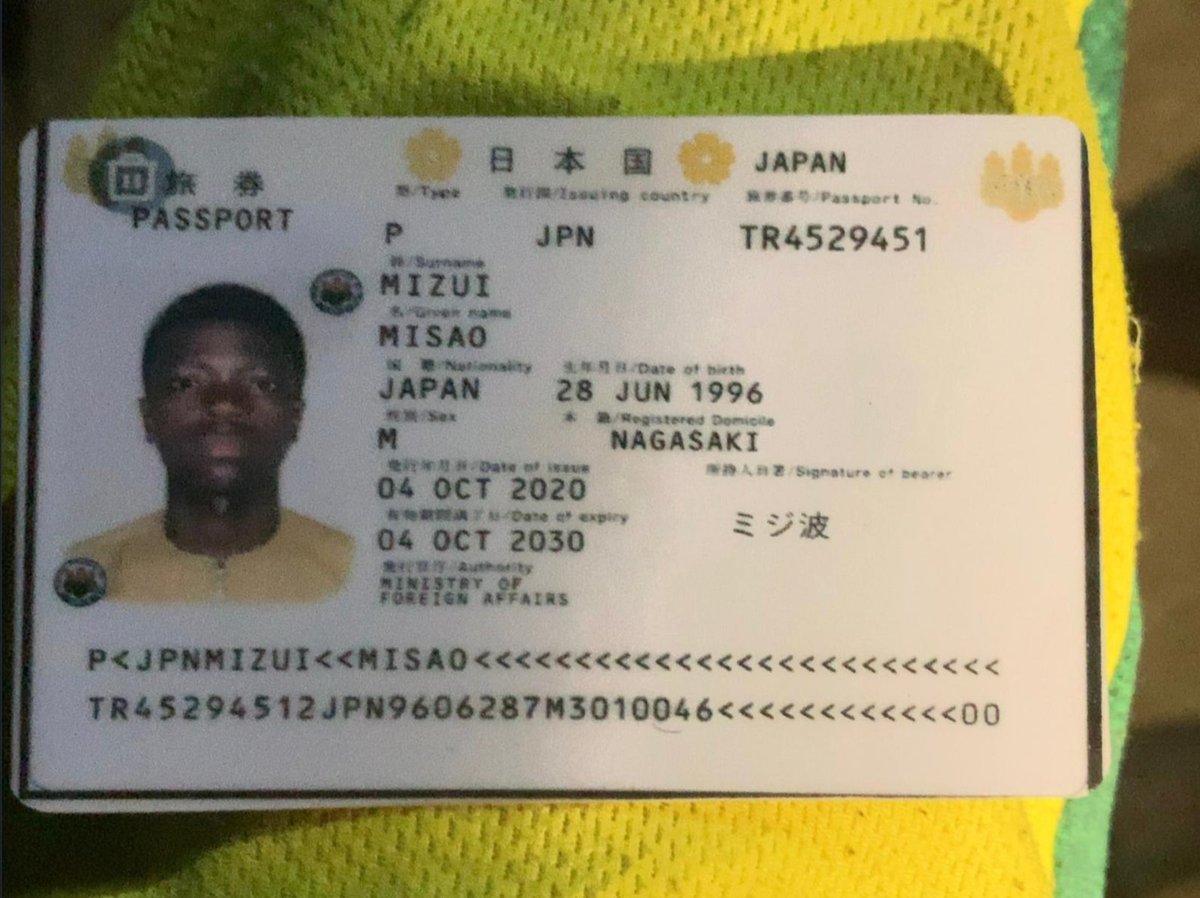
This weekend we were flooded with thousands of fake Japanese passports and identity cards with Nigerians photoshopped onto them in our KYC system. That was the final straw.
As a startup we can't afford to eat the costs of that data overhead, so we temporarily removed the app from the region while we improved our fraud detection and banning system to quickly filter out bad actors when the time is right.
On top of all of this, every time we make a post there is someone asking us to bring the region back within seconds. We hear you, but it's gotten out of hand.
We've made this decision with great care. We love everyone who has genuinely supported Kled from Nigeria, and we hope to return when the time is right.
-Kled Team
Nigeria is the home of absurdities in the world.
The salary of the president on paper is 1,500,000 ($997)
Nomination form: 100,000,000 ($71,000)
Salary of Governor on paper: 900,000 ($640)
Nomination form: 50,000,000 ($35,000)
You then wonder why corruption is rife!!!
🇹🇷Turkey OVERTAKES Indonesia to Become the WORLD’S LARGEST Muslim Economy.
🇹🇷Now Turkey is the Most Powerful Muslim Nation Both Economically AND Militarily.
largest Muslim majority countries by GDP
🇹🇷 Turkey- $1.64 trillion
🇮🇩 Indonesia- $1.54 trillion
🇸🇦 Saudi Arabia- $1.39 trillion
🇦🇪 UAE -$622 billion
🇲🇾 Malaysia- $516 billion
🇧🇩 Bangladesh- $511 billion
🇪🇬 Egypt- ~$430 billion
🇵🇰 Pakistan -~$408 billion
🇩🇿 Algeria- $317 billion
🇮🇷 Iran- $300 billion
Elon Musk avait dit un truc qui m'avait marqué sur l'allocation de ressources. En substance : passé un certain niveau de richesse, l'argent n'est plus de la consommation, c'est de l'allocation de capital.
Cette phrase change tout.
L'économie, dans le fond, c'est juste un problème d'allocation. Tu as des ressources finies et des usages infinis. Qui décide où va quoi ?
Imagine une cour de récré. 100 enfants, des paquets de cartes Pokémon distribués au hasard. Tu laisses faire. Très vite, un ordre émerge. Les bons joueurs accumulent les cartes rares, les collectionneurs trient, les négociateurs trouvent des deals. Personne n'a planifié. Et pourtant chaque carte finit dans les mains de celui qui en tire le plus de valeur. Le système maximise le bonheur total de la cour. C'est ça, la main invisible.
Maintenant fais entrer la maîtresse. Elle trouve ça injuste. Léo a 50 cartes, Tom en a 3. Elle confisque, redistribue, impose l'égalité. Trois effets immédiats. Les bons joueurs arrêtent de jouer, à quoi bon. Les mauvais n'ont plus de raison de progresser, ils auront leur part. Les échanges s'effondrent. La cour est égale, et morte. Elle a maximisé l'égalité, elle a détruit le bonheur.
Le problème de la maîtresse, c'est qu'elle ne peut pas avoir l'information que la cour avait collectivement. C'est le problème du calcul économique de Mises, formulé en 1920. L'URSS a essayé de le résoudre pendant 70 ans avec le Gosplan. Résultat : pénuries, queues, effondrement. Pas parce que les Soviétiques étaient bêtes, parce que le problème est mathématiquement insoluble en mode centralisé.
Quand Musk a 200 milliards, il ne les consomme pas, il les alloue. SpaceX, Starlink, Neuralink, xAI. Chaque dollar est un pari sur le futur. Et lui a un track record. PayPal, Tesla, SpaceX. Il a démontré qu'il sait identifier des problèmes immenses et y allouer des ressources avec un rendement spectaculaire.
L'État aussi a un track record. Hôpitaux qui s'effondrent, éducation qui décline, dette qui explose, services publics qui se dégradent malgré des budgets en hausse constante. Le marché identifie les bons allocateurs, la politique identifie les bons communicants.
Le profit n'est pas une finalité, c'est un signal. Il dit : tu as alloué des ressources rares vers un usage que les gens valorisent suffisamment pour payer. Plus le profit est gros, plus la création de valeur est grande. Quand Starlink est rentable, ça veut dire que des millions de gens dans des zones rurales ont enfin internet. Quand un ministère est en déficit, ça veut dire qu'il consomme plus qu'il ne produit. L'un crée, l'autre détruit, et on appelle ça redistribution.
Dans nos sociétés il y a deux catégories d'acteurs. Les entrepreneurs et les bureaucrates. L'entrepreneur prend un risque personnel pour identifier un problème, mobiliser des ressources, créer une solution. S'il se trompe il perd. S'il a raison, ses clients gagnent, ses employés gagnent, ses fournisseurs gagnent, l'État collecte des impôts. Il est la cellule de base du progrès humain.
Le bureaucrate ne prend aucun risque personnel. Son salaire est garanti. Au mieux il maintient une rente existante. Au pire il la détruit par excès de réglementation, mauvaise allocation forcée, incitations perverses qui découragent ceux qui produisent. Mais dans aucun cas il ne crée.
Regarde les 50 dernières années. iPhone, internet civil, SpaceX, Tesla, Google, Amazon, Stripe, mRNA, ChatGPT. Toutes des inventions privées, portées par des entrepreneurs, financées par du capital risque. Pas un seul ministère n'a inventé quoi que ce soit qui ait changé ta vie au quotidien.
La France est devenue le laboratoire mondial de la dérive bureaucratique. 57% du PIB en dépenses publiques, record absolu. Une administration tentaculaire, une fiscalité qui pénalise la création de richesse. Résultat : décrochage face aux États-Unis, à l'Allemagne, à la Suisse. Fuite des cerveaux. Désindustrialisation. Dette qui explose.
Et le pire c'est que la mauvaise allocation s'auto-renforce. Plus l'État prélève, moins les entrepreneurs créent. Moins ils créent, moins il y a de base fiscale. Plus l'État s'endette et taxe. Boucle de rétroaction négative parfaite. La maîtresse pense qu'elle aide, et chaque année la cour produit moins.
Dans nos sociétés, ce sont les entrepreneurs, toujours, qui font avancer la civilisation. Les bureaucrates au mieux maintiennent une rente, au pire la détruisent. Aucune société n'a jamais progressé en taxant ses créateurs pour subventionner ses gestionnaires.
La question n'est jamais qui a combien. C'est qui alloue le mieux la prochaine unité de ressource pour maximiser le futur de l'humanité. La réponse depuis 200 ans n'a jamais changé. Ce ne sont pas les fonctionnaires.
We have all been hearing news about young people (under 40s) who just died of an unknown cause
They were not sick, not involved in an accident. Died suddenly
It's time to have a conversation around what are possible causes
Here are my submissions- A Doctor's perspective