OpenAI just built its own chip, and it's beating Nvidia's best on performance per watt.
That's a compute-efficiency race. It still has nothing to do with where the training data comes from.
Perceptron sits in the part of the stack that race doesn't touch.
An AI model can sound certain and still be wrong.
Confidence isn't the same as correctness, and most pipelines have no way to tell the difference.
Perceptron's contributors exist to catch exactly that gap, checking machine output against what's actually happening right now.
NVIDIA put $2B into Nebius. Michael Burry is now shorting the same stock.
If you're watching that trade, both bets are about compute. Neither is about where your data comes from.
Perceptron operates one layer down, collecting the kinds of data both sides are ignoring.
Exciting news for this major project: a collaboration is now underway featuring a total prize pool of $100,000 in DAC Tokens. Don't miss this opportunity—join in NOW...Lets Go
https://t.co/Ydbmxr2Wqh
$DACT, #dac, @dac_chain@ChainGPT_Pad
Most networks separate the people who build them from the people who profit from them.
Perceptron's nodes collect data, the network provides it to AI companies and DeAI ecosystems, and rewards flow back to contributors.
The incentive model is built into the infrastructure, not an afterthought.
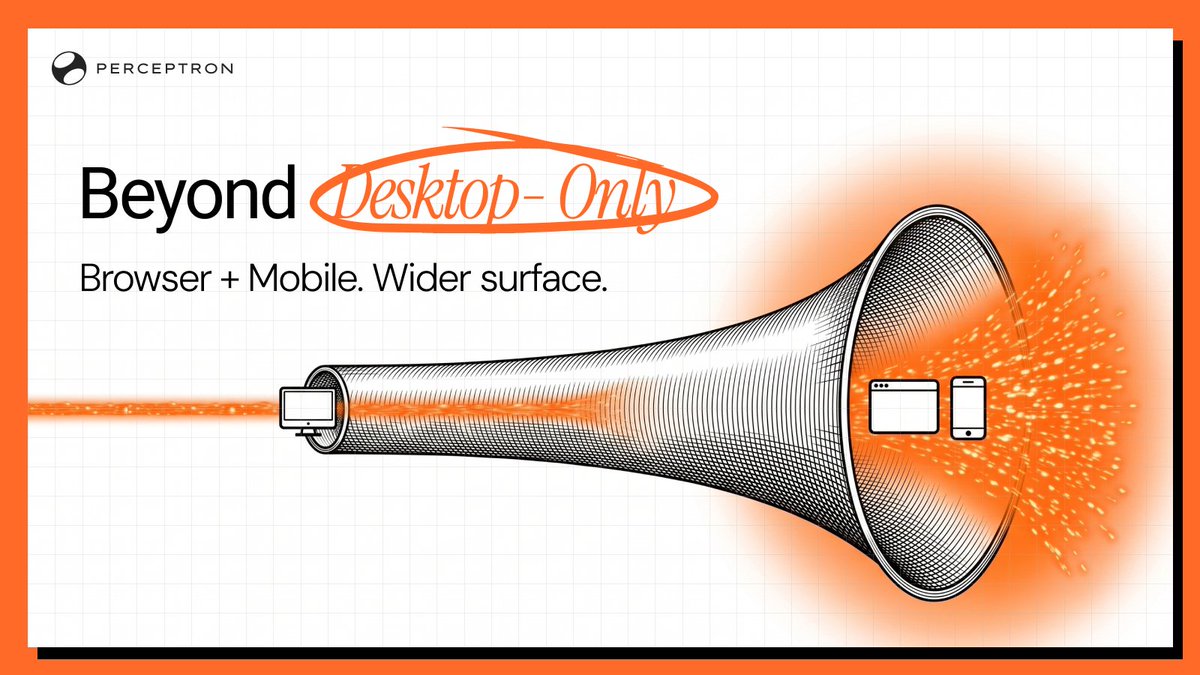
Most node networks stop at the desktop.
Perceptron runs on either your browser or mobile phone.
Activating these "everyday devices" is critical.
Wider device coverage means a wider data surface, and a harder network to replicate.
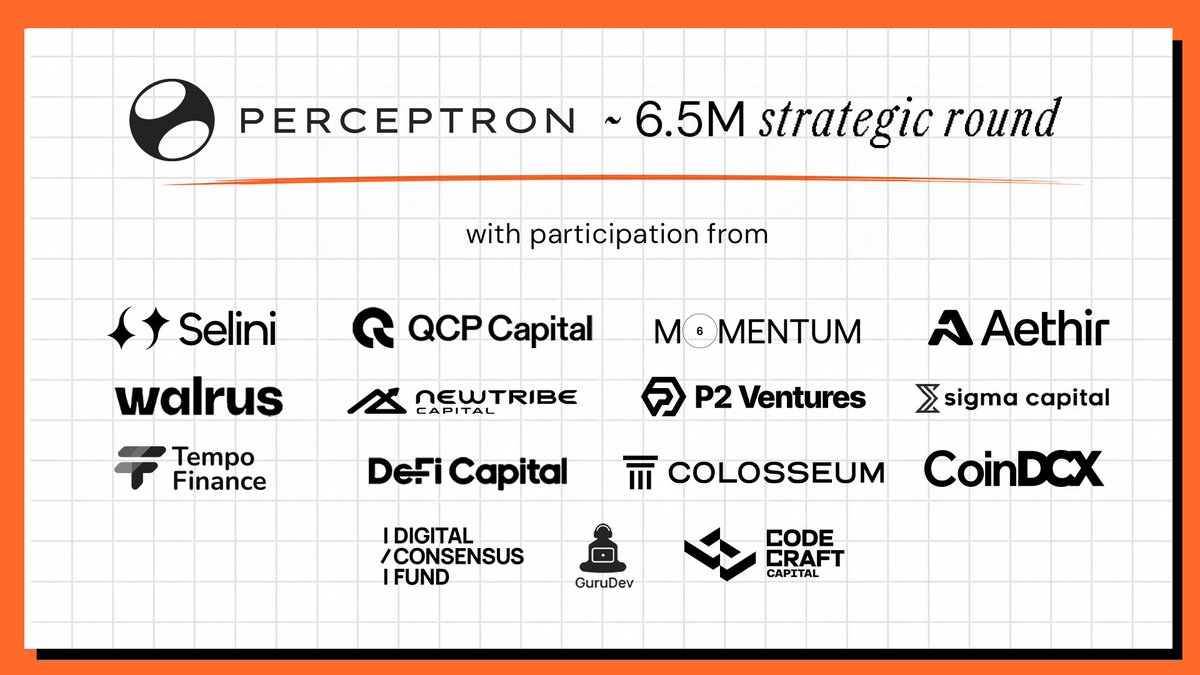
We're thrilled to announce that Perceptron has closed a $6.5M strategic round.
Centralized scraping is hitting diminishing returns on cost and quality. Closed data partnerships are out of reach for most AI teams. The real bottleneck for AI right now sits at the data layer.
Perceptron compresses global data collection into one mesh: idle bandwidth, unique datasets, and domain expertise from a network already live across 800K+ nodes in 150+ countries, with 300K+ daily active contributors.
This round funds our data-questing platform, letting AI companies commission specific, high-value datasets directly from that network and cutting the timeline from request to delivered dataset down to days.
The network continues to expand.
Join us.
→ https://t.co/nXcXB5JrxY
Most DeAI projects launch with a roadmap.
Perceptron has a live network.
800K+ nodes. 150+ countries. Built in months, one contributor at a time.
That kind of distribution can't be bought overnight.
Data freshness gets the headlines.
Data verification is the harder problem.
Anyone can collect a dataset.
Proving where it came from, who collected it, and whether it holds up takes a network, not a script.
That's the part most AI data pipelines skip.