Not every scholar is a mufti.
A mufti is a specialist in Islamic law - trained to understand the legal tradition and apply it responsibly to real questions and real situations.
Serious questions require serious scholarship.
Watch the full video on YouTube, and follow us for more.
A fatwa is not a casual religious opinion.
It is a non-binding legal opinion issued by a qualified mufti in response to a real question.
It connects Islamic legal theory with lived reality — carefully, contextually and responsibly.
Watch the full video: https://t.co/gUD7tLUo7z
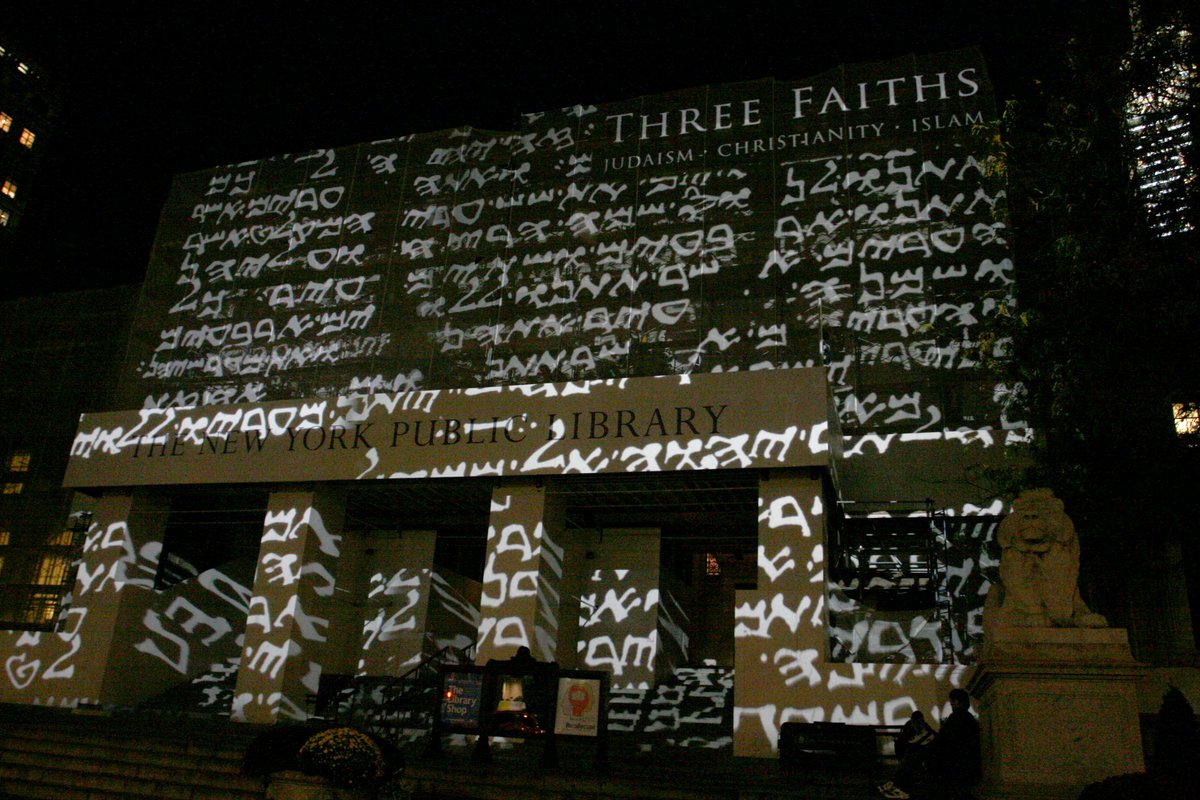
Sacred texts and rarely seen materials from the Library’s holdings comprise Three Faiths: Judaism, Christianity, Islam and are now the lived experience of half of the world’s population. Three Faiths: Judaism, Christianity, Islam, The New York Public Library’s leading fall 2010
The Gallup Coexist Index 2009: A Global Study of Interfaith Relations is the first annual report on the state of faith relations in countries around the world.
In 2007 the Coexist Foundation in partnership with the @britishlibrary hosted a first of its kind exhibit “Sacred” showcasing gems from the three Abrahamic faiths taken from their own archives. Many never seen prior.
In 2007 and in cooperation with Bono of @u2 we installed two drinking fountains in Jardin de la Paix and Saint-Jean-Cap-Ferrat in the South of France. They still stand today and offer much needed relief to hikers and visitors of all walks of life.
We were thrilled when the students of Walt Whitman Highschool reached out for us with help in printing the Coexist banner using one of our logos. Keep up the good work!!
https://t.co/LfuO1sqpWn
As we look back at 20 years of Coexist, we will be reviving our social media accounts with some snaps from the past. Please stay tuned and make sure you are following us!
#coexist#bettertogether
“A fatwa goes through four major stages in the mufti’s mind before it is put in the form that the questioner hears or sees. These stages are: conceptualization (al-taṣwīr), designation (al-takyīf), the elucidation of the ruling (bayan al-ḥukm), and the issuing of the fatwa.”