At times, The present changes so quickly & completely
That We are suddenly left with what next to do
We could stand there trembling,
Assuming the worst that could happen
Or we could step into the unknown knowing He will be with us every step of it,to the very End
Kene💜 #17thDec
My interview with Peter Obi a few days ago on Arise Prime Time focused largely on the Obi-Soludo debt row.
At the heart of it was a World Bank facility. It was not a commercial bank loan. It was a world bank multilateral development credit, offered to selected states, with a federal government sovereign guarantee.
The terms are long-term, near-zero interest, tied to specific reforms, such as budget transparency, fiscal sustainability, education, etc.
The crucial distinction is between approved vs draw down. Peter Obi's position is that he agreed to it but did not draw down. He did not access it.
Technically, that can be true. The loan facility is approved and signed at the federal executive council/world bank level, and the state signs a subsidiary agreement. But money only enters the state's account when it meets disbursement conditions and requests drawdown.
Obi says he left the money untouched in the pipeline and that he left savings, not debt on the books.
The Soludo camp's position is that he signed off on it. Also true. And this is where the fight is. Soludo's team argues approval is commitment - once signed, Anambra was on the hook, and that's why it shows up in the Debt Management Office records as inherited liability.
Obi's supporters say his successor chose to draw it. Obi showed discipline by not touching it. Obi approved it and signed Anambra onto it, but says he never drew down a kobo - his successor did.
So where does it go from here? Will both sides publish the DMO statements and drawdown dates, and let the documents settle who signed what, when it was drawn, and what it was spent on?
And with 2027 politics already in the air, will this row give the Nigerian people a clear audit of what was met, what was left, and what they still owe? Or just more politics and a sabre-rattling war of words?
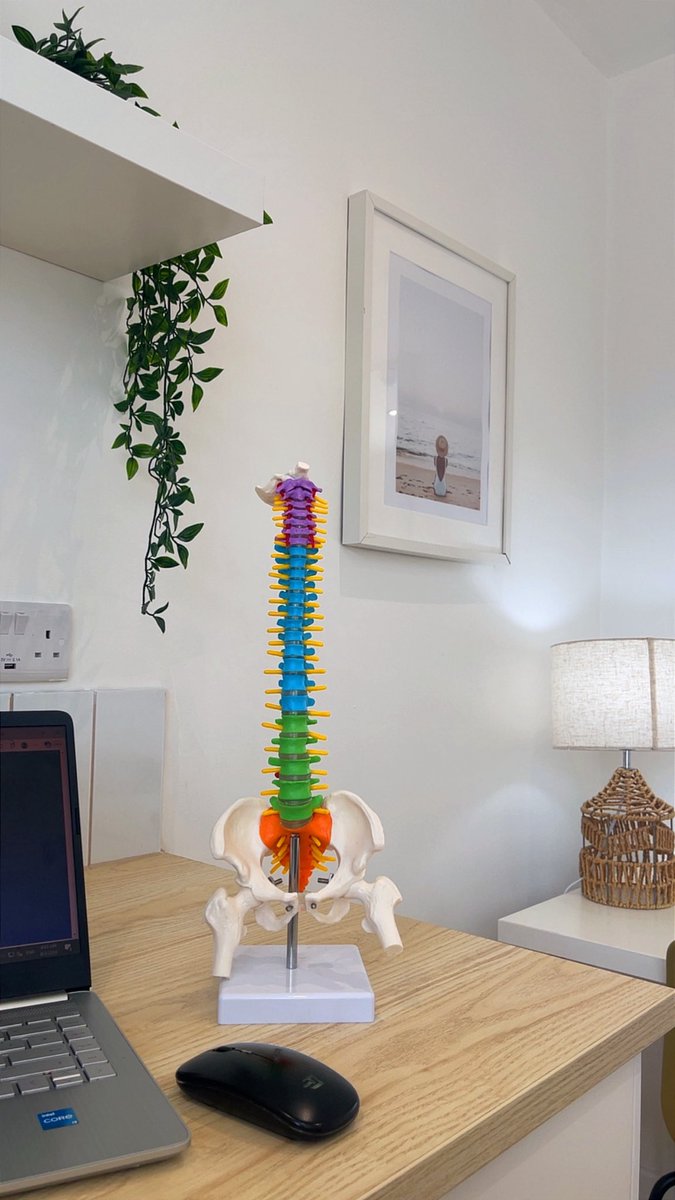
I have officially launched my Private Physiotherapy Clinic in the UK🇬🇧
Now providing private MSK services across Nottingham and Warrington
I’ve also had the privilege of helping shape how we deliver care, scale our services and integrate new technologies into clinical pathways
NdiIgbo,
I’m from Anam. Geographically located in Kogi State. Anam and Nzam which still speaks Igala, are brothers. Further West still are our cousins the Ibaji/Igala. Speaks Igbo. Bears Igbo names. Known as Olumbanasa. (True trivia: Odobo, Enekpa, Igah, Iyano, towns in present day Ibaji LGA of Kogi, are quarters in Nzam).
All in Anambra West LGA, Anambra State. In Igbo land. All physically separated from Igboland by big rivers, Niger and Omambala (the bridge connecting us to Igboland was only built in the 80s. Even today we call them, “Ndi Igbo” to distinguish from “ndi mbammili”, water people).
The entire lower Niger was once under Igala rule until the Aboh rose to prominence- as corroborated by Landers Brothers (1830s) and Baikie (1854) expeditions?
And there is nothing unusual about the Igala connection. The Abriba (small London, ndi Okpogho, Kalu ukwu na Kalu nta), the wealthiest Igbo group who control the seas and trade routes extending to Northern Europe, is Igbo mixed with Ejagham.
Igala? Like Anam, like Nsukka, Osomala, Asaba, and Okpanam (Anam’s big brother), etc, etc. The Igbo are an ancient civilization. Neighbors influence it, it influences neighbors.
We live at the edge of Igboland. Like Ikwerre, Ika, Etche etc.
And the point? Anam remained Igbo during the Biafra war. In fact, Ndi Anam were amongst the most ferocious fighters during the Biafra war (been that way since time, ask Illah and Aboh, our brothers who inhabit the other side of the River Niger, whom we terrorized in the remote past, or the Fulani who attempted entry into Anam in the recent past).
And that is precisely the point. No denial of our Igboness. No betrayal of our Igbo brothers. No abandoned property. No name change to escape Nigeria’s punishment of the Igbo after the war (like some of Ika’s prominent people, etc - “If I speak, I am in big trouble.")
If Nnamdi from Ikwerre, Uche from Ika, Amechi from Etche etc say they’re not Igbo let them be. The Guilt from betraying your brothers is a terrible thing to deal with. And people will go to great lengths to cover it up - like saying they’re from Benin. It is difficult to accept Responsibility for breach of trust. To forgive yourself and grow.
Unity is never forced upon any peoples (observe Nigeria’s condition forcing people to unite). Be patient. The Northern Irish were turned against their brothers in the South by the British. I believe the Emerald Isles will eventually be reunited.
For now remember, NdiIgbo are NOT recruiting.
Stay focused. Form a coalition of the willing. And keep pushing for regional autonomy. Our road is to Catalonia in Spain
🗣️ @IanWright0: “The way Gabriel Martinelli is being treated is making me feel uncomfortable. He always gives 100 percent, he’s scored some important goals. He’s NOT being spoken to, he doesn’t know what’s going on - I know this.” 😳🇧🇷
🎥 @SkySportsPL
Top of the morning! 👋🏽
New week mantra: Do it right!
You can do your business right by exploring the power of AWS Cloud with Arthurite today.
#Arthurite#AWS#CloudComputing
PayPal has returned to Nigeria. That is good news. But beyond the headline lies a deeper lesson for any nation seeking economic greatness. PayPal did not return because a delegation of politicians travelled to Silicon Valley to “invite” it. No. It returned because Nigeria, especially the young people, built an ecosystem that made its absence too costly. When the opportunity cost of staying away exceeded the risk of coming in, PayPal quietly joined the party.
That is how global markets work. You build capacity, enforce standards, strengthen KYC, sanitize the rails, and one day the giants will notice. Nigeria’s fintech ecosystem, shaped by pragmatic regulatory evolution and the relentless ingenuity of young people, has now matured enough for PayPal to say: “Yes, we can operate here.”
Of course, this entry will cause disruptions. Some startups in the payment-collection niche will feel the tremors. But that is the nature of markets.
“Uwa bu ahia”(the world is a marketplace) says the Igbo Nation. When a people cannot participate in global commerce, something fundamental is broken. PayPal’s return ensures that millions of young Nigerians with talent, from graphic designers to software developers to creators, can now receive payments globally, turning the world itself into their marketplace.
Payment is the operating system of economic civilization. From cowries to barter, from gold coins to banknotes, humanity has always sought more efficient ways to exchange value. In 7th-century China, the Tang dynasty gave us paper money; the Song dynasty scaled it; the Mongols globalized it. That march toward frictionless exchange is unending with the evolutions of web payment APIs and digital money.
Today, with PayPal in Nigeria, via Paga, another door has opened. But beyond celebrating access, the bigger challenge remains: Do we have products and services the world truly wants to buy? Payment rails unlock opportunity, but entrepreneurs must fill those rails with value. Yes, go and build because the market is now global https://t.co/RPwe6Ipk07
I know Igboland doesn’t start from Onitsha because Asaba, Agbor and many other places are part of it too. But there’s something about crossing the Niger Bridge that can’t be explained.
When you’re coming back home and you cross that bridge, a quiet wave hits you, a feeling that says, “I’m home.” Your shoulders drop, your heart softens, and no matter how far you’ve gone, you remember where you belong.
And when you’re leaving, the moment you cross that same bridge, you feel it again, this time heavier. You just know you’ve truly started the journey away from home.
That’s why it hurts to watch such an important bridge get worse by the day, and everyone just seems to accept it and move on😤
They are still kids. what you’re doing is inhumane and an absolute waste of everyone’s time, because you know very well that it doesn’t how many times you arrest or harass these children, they’ll be back on the streets in a few days.
This is a very complex and multi-layered problem that requires careful thinking, real empathy and deep concerted effort if we’re going to even stand a chance.
Of course I understand why there’s a lot of anger and complaint about these children and the many vices they have committed. but it’s the only way they can get our attention—A child who is not embraced by the village will burn it down to feel its warmth.
This will become an even bigger crisis with time and it’s happening insidiously. it’s the very genesis of why we have such proliferation of Area boys and thugs In every corner of the streets of Lagos. We forget that no one becomes an area boy as an adult, it’s the children neglected overtime that grow up to become the thugs and area boys we complain bitterly about.
I have given the last 8 years of my life to working with these children and I have learnt many painful lessons in this time that continue to keep me up at night.
There are thousands of homeless/street kids wandering the streets of Lagos. If you drive regularly along Lekki -Epe expressway, you must have encountered them several times. They come up to your cars, beg for money, wash your windows, sometimes they become violent and break your side mirrors. Then they go back to their crevices to sleep, then resume hustling the next day. For you it’s a simple commute, for them, it’s the only life they’ll ever know.
Before we can understand how we got to this point and what we can do differently, we need to go back in time.
There are 3 major reasons why this problem has festered:
The first reason is 70% of these kids are not from Lagos, they are mostly from the neighboring states (Ogun, Ibadan, Kwara etc) and in some cases, from Northern and eastern Nigeria. In trying to escape extreme poverty, they are falsely promised that Lagos is the land flowing with milk and honey. So the ones that are brave enough to seek greener pasture become rebellious, abandon their families and travel with friends to Lagos with high hopes of succeeding and someday return home with great wealth. For many of them, there’s no going back if this doesn’t happen. It’s the same reason many Africans try to cross the Sahara desert into Europe.
The second reason is a failure of the public education system (primary/secondary schools). Most of the kids drop out of school because they struggle academically and are dismissed as Olodos (good for nothing) by their overworked and underpaid teachers. Infact, the public secondary system is the biggest contributor to this problem.
The third and most Important reason is the failure of the family unit(Broken homes). 80 percent of the children child you see neglected and abandoned on the streets is a direct result of broken homes. (This is actual data by the way) Maybe stop one day have a conversation with any of them, and you’ll quickly realize that the stories are very similar. It’s a failure of the family system, underpinned by poverty.
Some of them are orphans, some with single parents, some abused sexually even by their own fathers. The stories are deeply painful.
Through the culmination of these three things, the kids end up on the streets of Lagos. For them it’s an escape from hell and there’s no going back home. Death is a kinder fate.
With time, it becomes clear that the promise of a better life in Lagos was a facade and the beginning of an even greater struggle. But this time without a roof over their heads…
The streets become their new home and a life of violent survival begins. There are a couple of hotspots where they begin to converge—Oshodi Underbridge, Jakande, Marwa Bustop, Osale Eko dumpsite, Mushin, Ajah roundabout, Agege, Surulere Underbridge etc.
Your heart is right, but your strategy needs adjustment. As someone who grew up watching girls like Favour, I know this: buying her pap stock for 12 months kills her daily entrepreneurial muscle and creates dependency. A better approach is to pay her school fees directly to the institution for the year. Give her mother a small capital boost to expand the pap business, perhaps better equipment or bulk buying power to increase margins. This preserves Favour's work ethic while reducing her burden.
You might not know but that N1500 daily is not just income, it's training her. She's learning pricing, customer relations, money management, and time discipline. If you strip that away entirely, you may harm her long-term resilience.
So you could consider doing it hybrid. You reduce her hours (perhaps she only sells on weekends), guarantee her fees, and add a performance-based book allowance tied to her grades. This way, it rewards her excellence without removing all struggle (the very struggle that's making her excellent).
Also, verify this story independently. Because social media charity often feeds performative giving rather than sustainable change. If it’s real, then act wisely.
Dangote unveiling a Vision 2030 to become a $100bn conglomerate honestly feels long overdue.
Aliko Dangote started what became the Dangote Group in the late 1970s as a small trading firm, and has spent nearly five decades grinding in and around Nigerian markets to build this empire.
In the same world, companies like Amazon were founded in 1994 and, within about fifteen years, had already grown into a business worth over $100 billion, all from starting as an online bookstore.
This is why when I help people come to America, I keep saying: it’s not “just” immigration. It’s about playing in an economy where effort is priced correctly.
Here, people hit seven figures selling the simplest things (dental floss, candles, lipsticks, niche products) because the system rewards scale, structure, and consistency.
I tell my clients who are running businesses in Nigeria: if you put this exact same energy into a similar business in America, you’d probably be dollar millionaires by now.
Talent and hustle are everywhere; the difference is often where you plant them.