Just listened to former President Jacob Zuma's remarks at the memorial service of the late Lieutenant General (Retired) Jabulani Sydney Mbuli, and if I'm being honest, I'm seriously unimpressed and a bit frustrated with the people around him.
They are not doing him any favours by allowing him to speak off the cuff at occasions like these. In a political rally or party gathering, that style may have its place and people may even in a way find it charming. But there are certain platforms where he needs to come across as a former Head of State and elder statesman of the Republic.
I've said this before: why does a former President not have a properly structured post-presidency office with professional support staff, including a speechwriter? A former President speaking at high-profile public events without that level of support is a recipe for unnecessary own goals.
Whatever one's political views may be, President Zuma occupies a significant place in our country's history. Those closest to him have a responsibility to protect that legacy, not expose him to situations that undermine it. I genuinely hope the people around the old man do the right thing and put a professional structure around him. He deserves that, and so does the office he once held.
I don’t think any of us can say with certainty why the former President met with @kalliekriel. But what we shouldn’t ignore in all the noise around that picture is the bigger political moment we’re in which is we are heading into a local government election at the end of the year.
Jacob Zuma is not new to this political game. He understands, probably better than most, that elections are about numbers. It’s about reaching people, breaking through the noise, and forcing yourself into conversations where others would rather keep you out in the political periphery. For a long time, sections of the political and economic elite have tried to sideline him and his party by simply not taking them seriously or not giving them attention. But with one move, he has managed to do exactly that: GET PEOPLE TALKING.
Whether people like it or not, this puts MKP in the national conversation. It gives them something they don’t usually get easily; airtime from the legacy media. And in politics, airtime is power. It’s an opportunity to speak directly to voters, to frame your own political narrative, instead of being spoken about from the outside. That alone is a strategic win.
We also have to remember the reality from 2024. Roughly 4 out of every 10 registered voters didn’t show up. That’s about 11.4 million people who stayed away. And most of those are from the Black African majority, simply because of population size. Among them are young people and parts of the black middle class; people who aren’t strongly tied to any particular party, who are tired of the constant mudslinging posturing and ideological battles, and just want basic service delivery that works. And some are conservative voters who just wants their cultural identity to be protected or acknowledged.
Even within smaller communities, like Afrikaner voters, there’s a portion and maybe somewhere between 400,000 and 700,000 who also didn’t vote in 2024. So when you look at it properly, there’s a huge pool of disengaged voters across the board that is up for grabs in November.
So it shouldn’t be surprising if Zuma is trying to speak to anyone willing to listen. If that means engaging people he doesn’t agree with, even those seen as political opponents, enemies and foes then that’s part of the strategy. It allows him to present himself not just as a fighter, but as someone willing to engage; someone who can rise above the usual political pettiness and position himself, at least in that moment, as a statesman.
In an election year, moves like this are rarely random. They’re calculated. So before we react emotionally, it helps to step back and look at all the possible angles.
And of course, there are those who won’t like seeing him back in the spotlight. Some would rather keep him boxed into KZN and continue pushing the idea that MKP is just a regional force, not a serious national player. Because the moment that perception shifts, the political landscape becomes a lot less predictable.
Now let me tell you about the most brazen heist in South African military history.
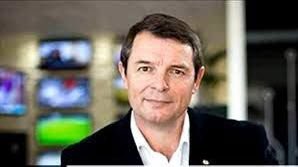
This is former Denel CEO Danie Du Toit who sold the SANDF most critical intellectual property.
The media tried to say it was the Guptas but it was not. You were fed lies. It was a few months into Ramaphosa's presidency. The timing was to blame the previous administration but that won't work anymore.
Seven senior Denel officials including—names still being protected by the very system that should jail them—got together and decided to sell our missile intellectual property to a Dubai company.
Not just any missiles. We’re talking about the Mkhonto, Ingwe, and Mokopa missile systems. The crown jewels of South African defence.
They sold the blueprints, the software, the guidance systems—everything. Then, just to add insult to injury, they all resigned from Denel and joined the company in Dubai.
So now, whenever Denel tries to build a missile for the SANDF or another country buying from Denel, these seven ghosts sit in their Dubai air-conditioned offices and collect licensing fees from Denel. For using Denel’s own technology.
They sold our country's defense to a company in Dubai.
Our government does not own its own defense, it was sold.
We are going to expose these 7 ghosts and they have nowhere to hide. Not even Dubai can keep you from our reach.
We see you Danie du Toit and we are coming for you & all your cronies. Watch this space.
By:Baas Kruger