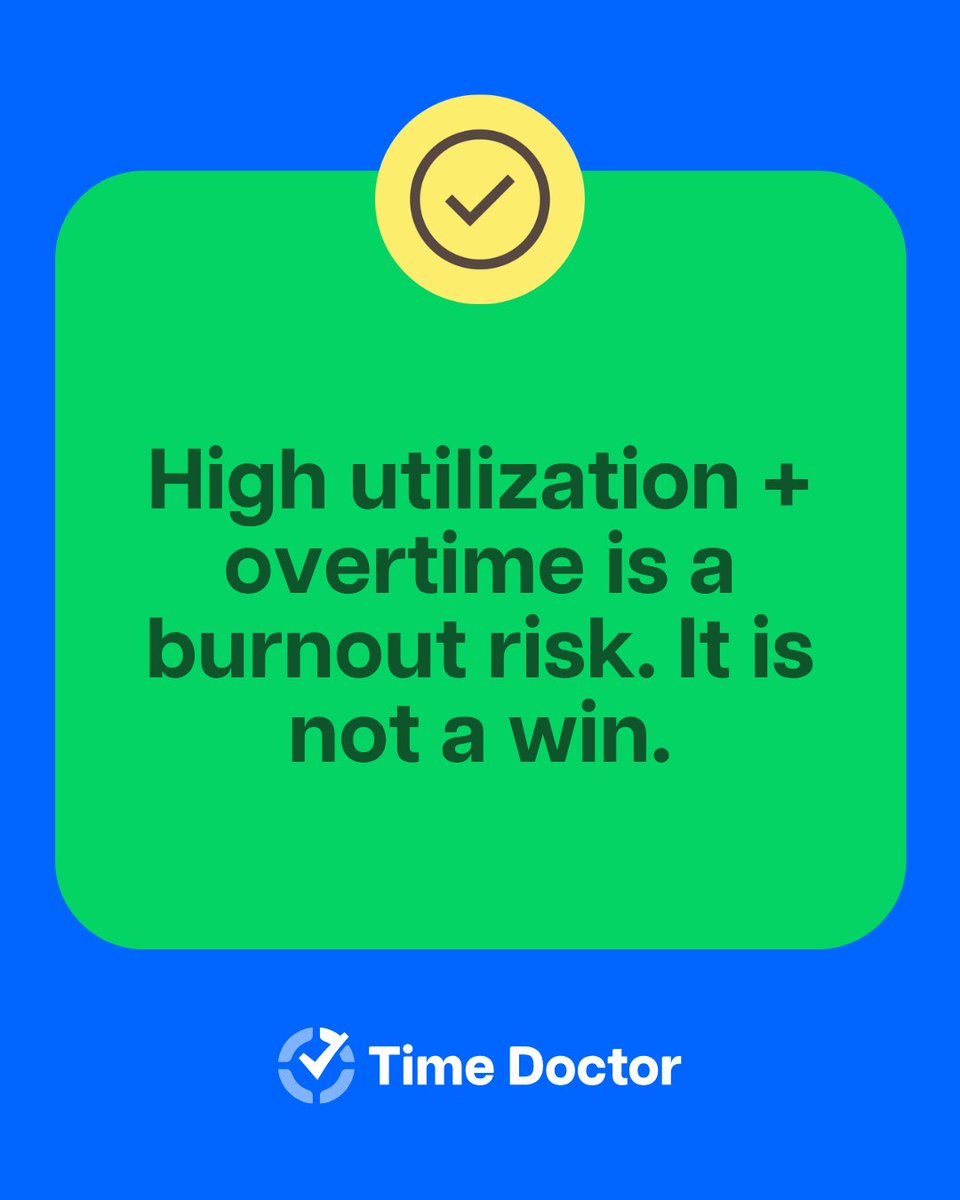
Burnout and underutilization aren't opposites.
They're the same visibility problem — just on different ends of the spectrum.
Benchmarks show you both before they become attrition.
https://t.co/YfTt5684io #HRLeadership#WorkforceAnalytics
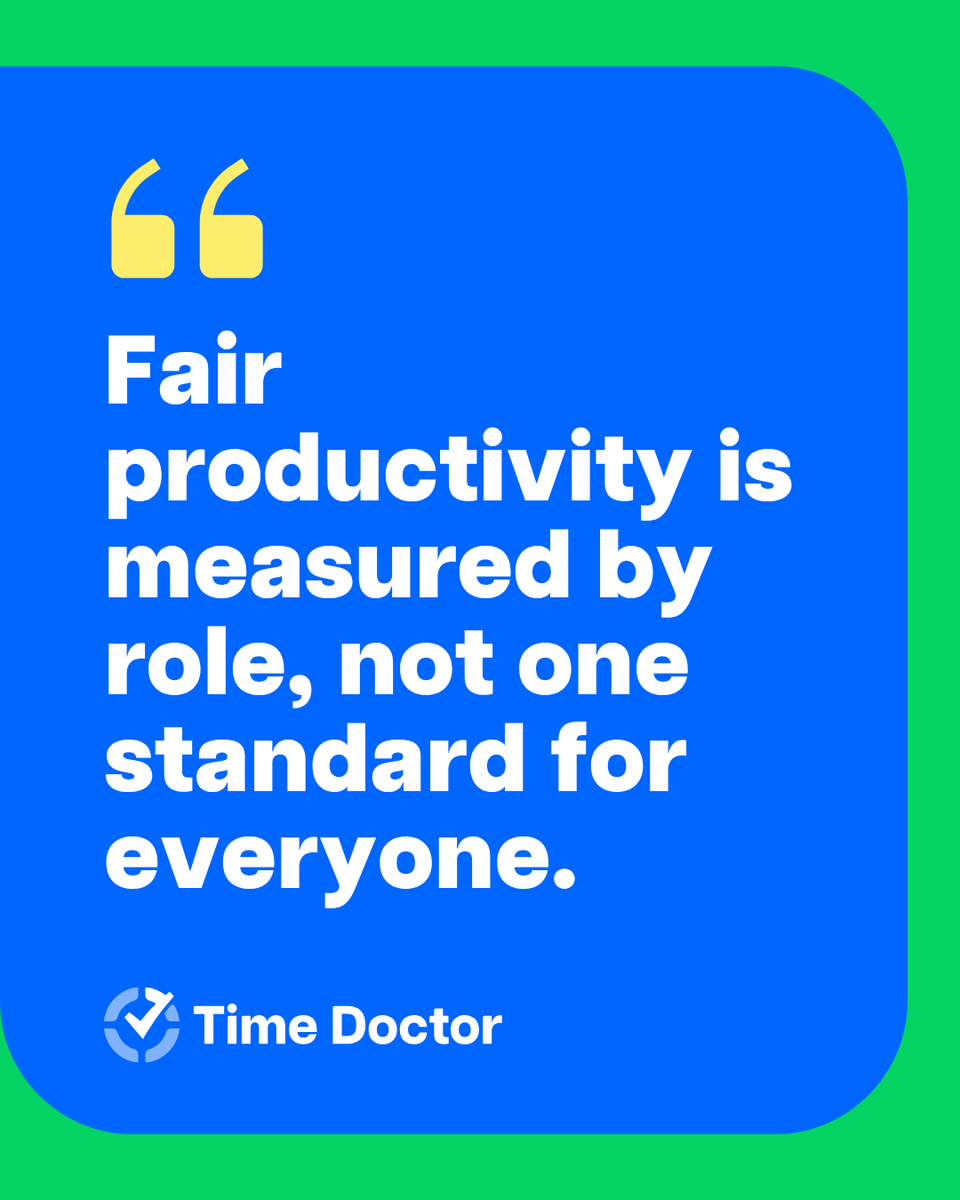
Most companies apply the same productivity standard to every role — hours, activity, presence. But a developer's deep work day looks nothing like a support agent's reactive shift. Same benchmark = unfair evaluations for both. https://t.co/rNvp9Nd3Ew #RemoteWork#Productivity
Your sales team doesn't have a productivity problem. They have a calendar problem.
59.4% of sales time goes to meetings, Slack & internal coordination.
The fix isn't more calls — it's protecting actual selling time.
Data from 260K+ employees → https://t.co/LHDst7CL8M
3 questions every leader should be able to answer before collecting workforce data.
If you can't answer all three clearly, your data strategy has a trust problem waiting to happen.
Read more here:
https://t.co/MhMqPnoAiR
Engineering teams in 2026: 83% productive time. Only 12% collaboration.
AI is great for individual output. Not great for team alignment.
Here's what the gap looks like — and how to fix it without adding more meetings 👇
https://t.co/PucP3235Cs
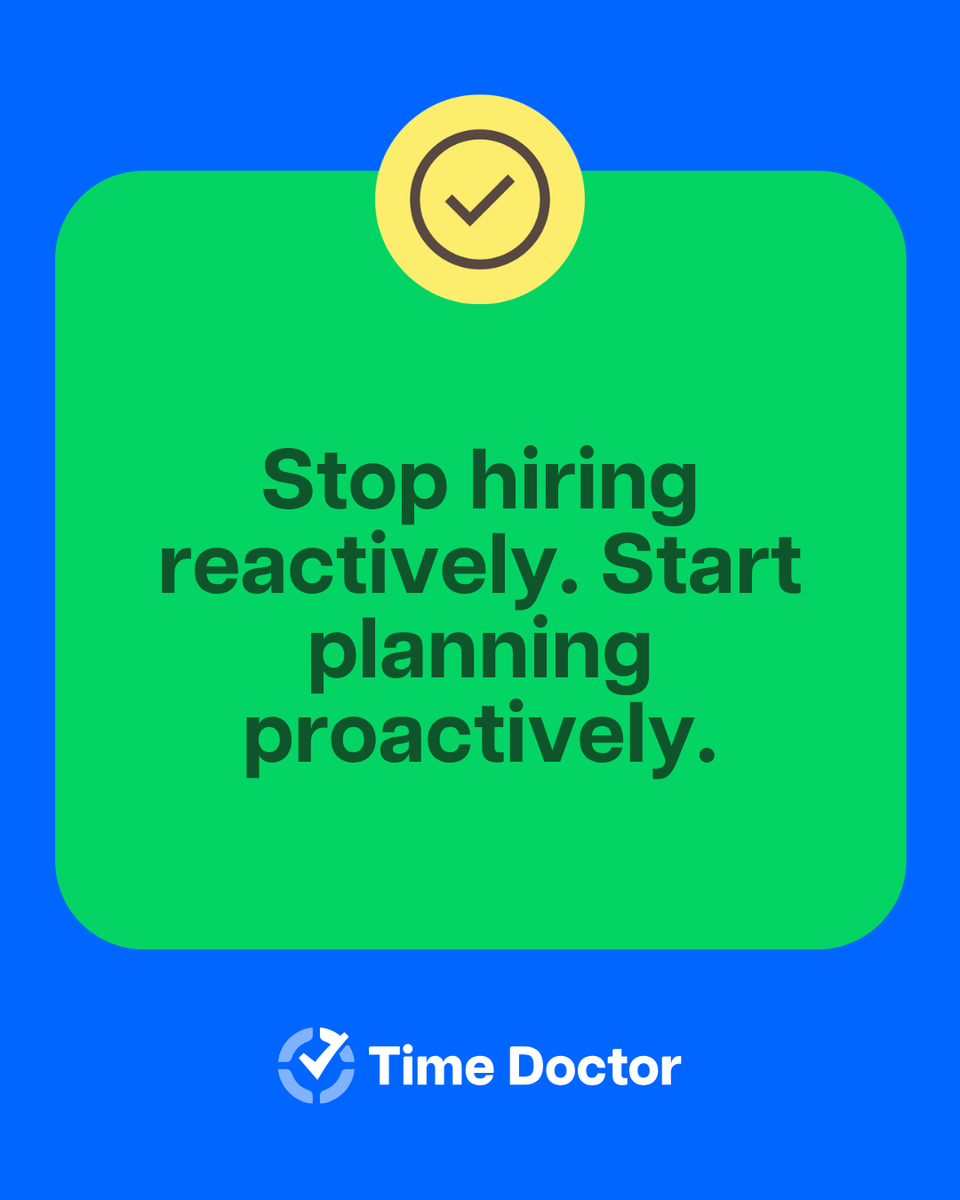
Most HR teams don't plan to hire reactively.
They just lack the visibility to do it any other way.
Productivity benchmarks show real capacity, overload signals, and gaps — before things break.
https://t.co/zLA7hzItDD
Hot take: your best support agents probably take the most breaks.
Data from 260,000+ users backs it up — top performers average 56.4 min/day in breaks and 0.43% unproductive time.
Rhythm beats hours every time.
Read this: https://t.co/0uyYrggzfm
Only 6% of companies have improved their performance reviews.
The rest run on memory, bias, and instinct. AI doesn't replace human judgment — it sharpens it.
AI for signal. Humans for judgment.
https://t.co/T6405MiC0o
Performance reviews don't fail from lack of effort. They fail from lack of data.
AI strengthens reviews by:
→ Standardizing evaluations
→ Tracking trends over time
→ Reducing bias
Better data = better judgment.
https://t.co/7XuBIt2ec0
Meta using keystrokes for AI isn't workforce analytics—it’s surveillance. Real analytics should identify bottlenecks, not control people.
Goal: Clarity.
👉 https://t.co/VWYGeKVba8
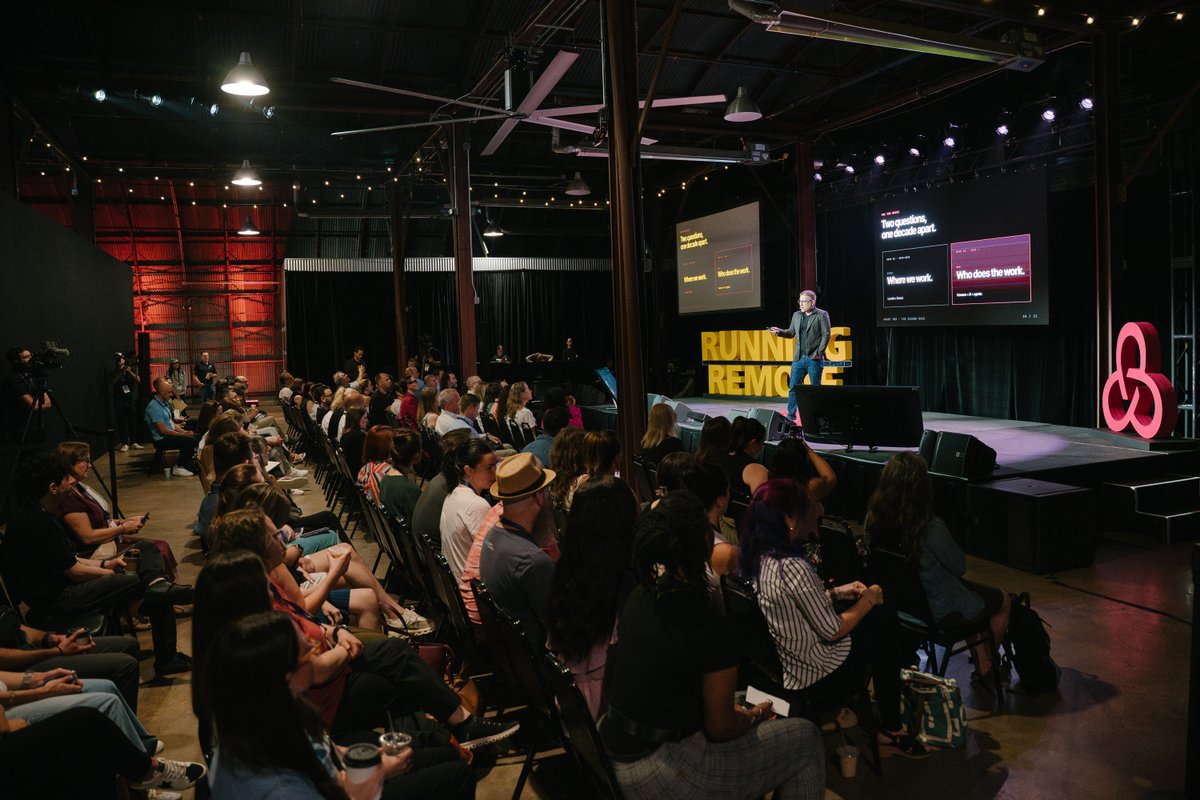
We kicked off Day 2 at Running Remote 2026 with @liamremote, co-founder of @ManageYourTime.
Remote work isn’t a trend. It’s the operating system.
Now the question is: how do we design it for an AI-driven world?
No slides. No keynote. Just remote leaders being honest about what they're still figuring out.
The Time Doctor Networking Lounge at @runningremote has been one of the realest spots on the floor.
Stop by if you're here!
#RunningRemote2026
Day 1 of @runningremote 2026 has officially kicked off! ���
It's incredible to see so many remote leaders and distributed team builders come together in Austin, TX. The energy in the room says it all.
This is going to be a great few days.
#RunningRemote2026
“Working longer does not mean working better.”
Ops teams are sustaining output with more hours—not better systems.
Low AI adoption + manual workflows =
more time → more effort → more pressure
Read more about it here:
https://t.co/3rBoYJYEwA
Top 10% of Ops teams work 51 hrs/week, but AI adoption is just 0.49%. More hours ≠ better results. It’s time to focus on output per hour, AI-supported workflows, and data-driven decisions.
https://t.co/y3ltP4U7f2
“Benchmarking becomes useful when you can act while work is still in progress.”
Performance improves in real time, not in reports.
https://t.co/2xbqWQc1Xn
A team can look productive—and still underperform.
Dashboards show activity.
Benchmarks show how you compare to teams doing the same work.
That’s the difference between reporting and improving.
https://t.co/FLpxRc0jwP
“HR teams spend… 37.9% to 74.2% of time collaborating.”
That’s not inefficiency.
That’s how HR work actually happens.
The real issue is how we measure it.
Read more here: https://t.co/JpxborPJkh
66% of leaders say their workforce data is incomplete.
Dashboards aren’t the problem. Missing context is.
One-size benchmarks make you confuse:
• activity = progress
• hours = commitment
• productivity % = impact
Role-based benchmarking fixes this → https://t.co/OJfXQo0UfE