Archpriest Stefan Wu Zhiquan (1925–1970) was a native Chinese Orthodox priest and the last rector of St Alexis Church in Harbin.
During the Cultural Revolution, he was publicly humiliated and brutally tortured by Communists: he was reportedly forced to kneel on sharp rubble, dressed in a clown-like robe and cap, his face smeared with soot, and beaten with a wooden hammer and steel rods.
After being taken half-dead to prison, he was shot on 17 May 1970. His grave is located in the Huangshan Russian Orthodox Cemetery in Harbin.
Eternal memory to the martyr of faith ☦️
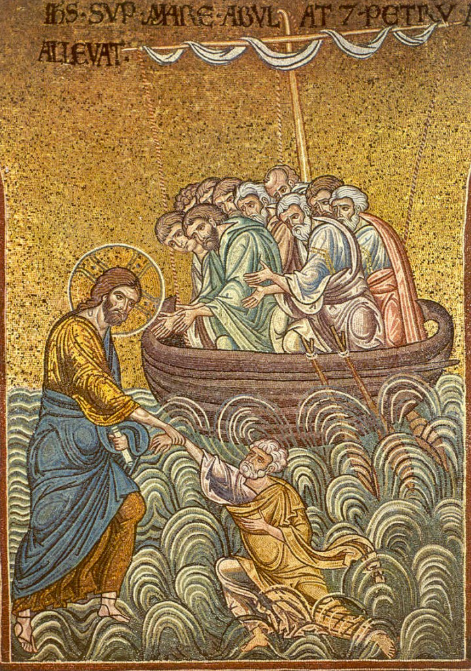
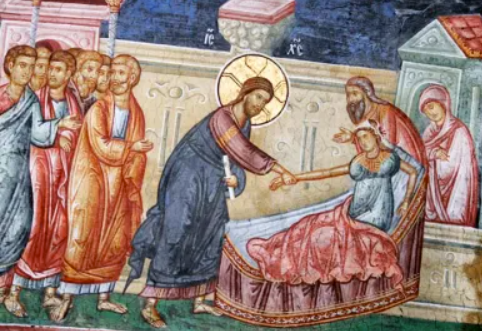
☦️ Look closely at any traditional Eastern Orthodox icon of the Resurrection (the Anastasis). Notice something specific about the hands?
Christ isn't holding hands with Adam and Eve. He’s gripping them fiercely by the wrists, and their hands are hanging completely limp.
This is known as the "life-giving grip," one of the most profoundly symbolic details in Eastern Orthodox iconography.
In Orthodox tradition, the dead have zero agency or power. Adam and Eve cannot pull themselves up by their own bootstraps; they can't even muster the strength to reach back to God. By grabbing them by the wrist (right at the pulse point), Christ is physically infusing life back into them and dragging humanity out of the grave by His own sheer power.
You can also see this in frescoes depicting Christ saving Peter from drowning or raising Jairus's daughter.
May 29, 1453. The Ottoman Empire under Sultan Mehmed II besieged Constantinople after 55 days of relentless assault.
80,000 Ottoman soldiers stood against 7,000 Christian defenders. Constantine XI Palaiologos, the last Roman Emperor, had spent years sending letters across Europe asking for military assistance.
Hungary refused. The West was consumed by its own wars. A handful of Venetian and Genoese soldiers were all that came.
He stayed anyway.
On the night before the final assault, Constantine gathered his commanders in the Hagia Sophia. Greek Orthodox and Latin Catholic Christians received Holy Communion together for the first time in centuries. They knew what the morning would bring.
When the walls were breached at dawn, Constantine removed his imperial robes and charged into the fighting as a common soldier. His last recorded words were: “The city is fallen, but I am still alive.” Then he disappeared into the battle.
His body was never positively identified. The Ottomans converted the Hagia Sophia into a mosque. Constantinople became Istanbul. The Roman Empire, which had endured for over 1,500 years in the East, ceased to exist.
Constantine XI Palaiologos had a throne, an imperial title, and a ship waiting to take him to safety. He chose none of them.
The Roman Empire died on its feet. Constantine XI died with it.