In Malaysia, the power of analytics is still underrated. Too many decisions are made without data.
That’s where we come in.
We decode chaos in politics, sports, and business - turning bottlenecks into breakthroughs.
This is Mandat Analytics.
We’re not your typical analytics firm
When drawing Constituency boundaries, regardless of Parlimen or DUN, arguably the most important principle is Equality - meaning, the size of seats should be roughly equal.
Once upon a time in 1960, SPR strictly followed a rule of ±15% for ALL seats. Unfortunately, their efforts were hijacked by the Perikatan government of the time, who annulled their redelineation exercise and subsequently amended the Constitution to reduce the independence + powers of SPR.
Today, the situation is utter chaos.
In Sarawak specifically:
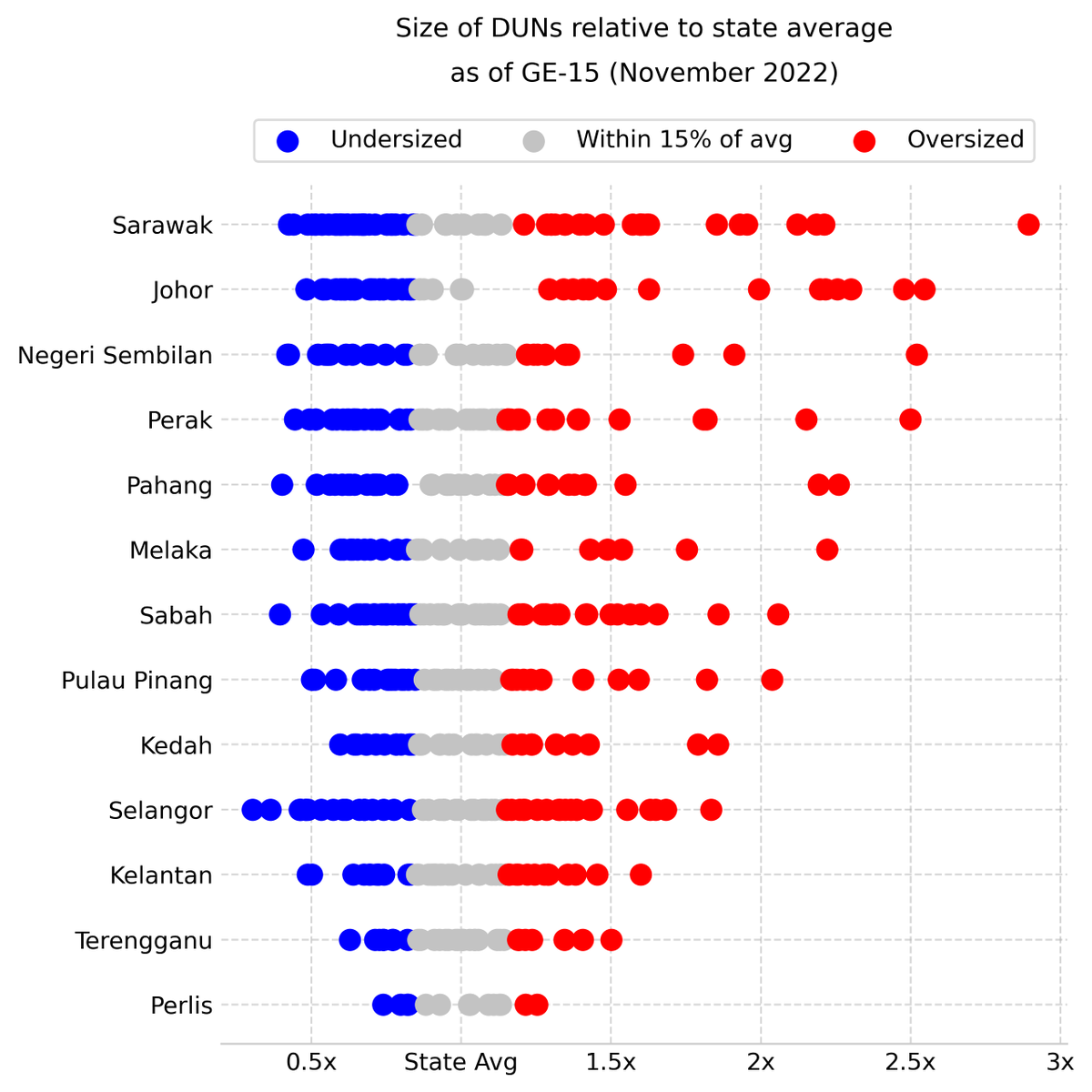
• Only 14 out of 82 seats fall within ±15%. The rest are either too small or too big.
• A voter in the biggest DUN (N.75 Senadin; 69k voters) has 7x LESS voting power than a voter in the smallest DUN (N.26 Gedong; 10k voters).
In the chart here, the goal should be for ALL DUNs to be in the grey area - nothing too small or too big.
As long as @sprgovmy does not fix this, Equality is being violated.
@aminmubarak_@fiq_kemal@pengamatnasut Thank you so much, En. Amin! and thank you for meeting us!
Really excited to collaborate with you in future projects!
Great to meet the brilliant young minds behind @Mandat_official a promising data analytics startup driven by multidisciplinary talent.
all the best @fiq_kemal@pengamatnasut and teamm
@ianwkj We quantified this. Tapis account bot and cytro, try to get an actual grassroots dan swing voters voices.
Memang terbukti.
https://t.co/jQQYAeZjUT
Brilliant read. The PKR polls clearly took a toll on public perception.
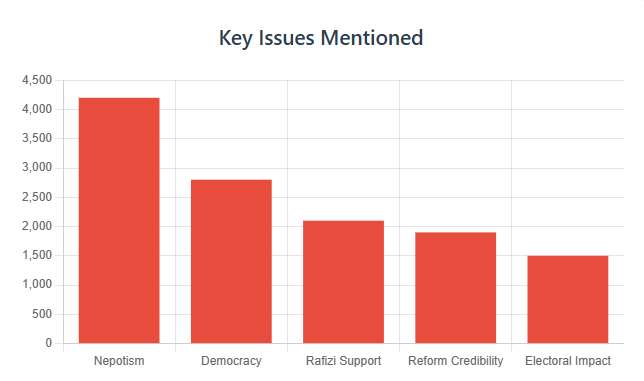
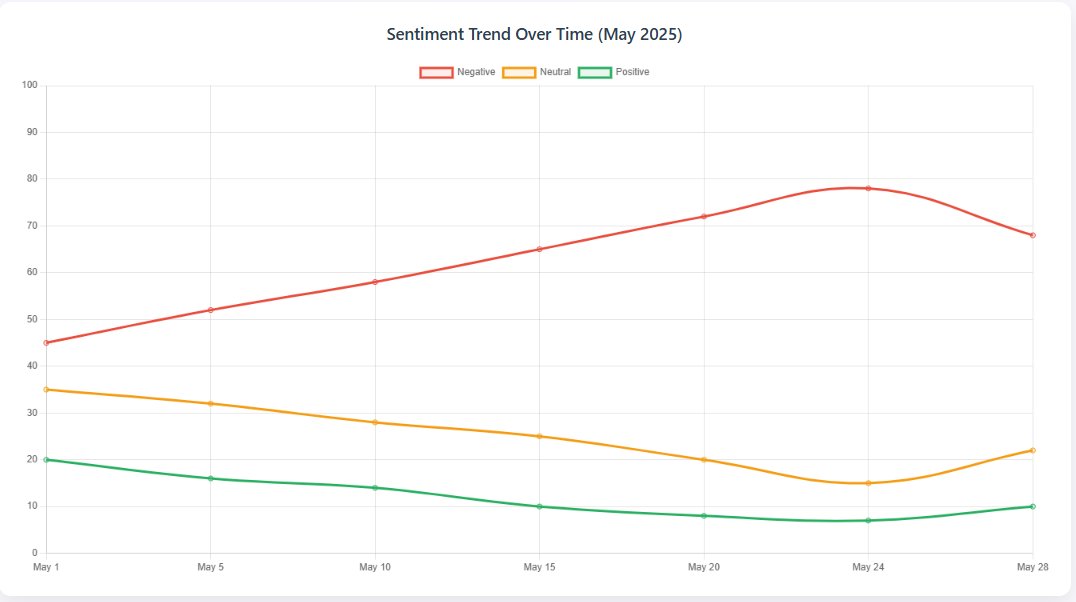
We conducted a sentiment analysis on PKR — 68% of public reactions were negative, driven by concerns over nepotism. Read our article.
Public confidence for PKR is in freefall.
https://t.co/JtZr3Ficd2
The tone was already sour. The resignation of two respected ministers may just push it lower.
This won’t be easily resolved with traditional political messaging. They need to address these fundamental concerns with a strong data-driven campaigning to restore public confidence.
Brilliant read. The PKR polls clearly took a toll on public perception.
We conducted a sentiment analysis on PKR — 68% of public reactions were negative, driven by concerns over nepotism. Read our article.
Public confidence for PKR is in freefall.
https://t.co/JtZr3Ficd2
[Quick Takes] Two ministers. One day. Both from Prime Minister Anwar Ibrahim’s PKR. And both, just days after losing party elections. Economy Minister Rafizi Ramli and Natural Resources and Environment Minister Nik Nazmi Nik Ahmad resigned this week — a move that jolts Anwar’s administration as he chairs ASEAN and prepares for state and possibly national elections.
This isn’t Sheraton Move 2.0 — but it chips away at Anwar’s carefully built image of unity. It also raises uncomfortable questions about factionalism and confidence in his leadership. Rafizi and Nik Nazmi, long aligned with PKR’s reformist wing, lost their bids for deputy president and vice president respectively. While Rafizi had signaled his intent to step down earlier, Nik Nazmi’s resignation came as a surprise, hinting at deeper dissatisfaction.
Unusually, no announcement has been made on party appointments to reconcile the factions — a step PKR typically takes swiftly post-elections. The silence suggests internal negotiations are proving difficult, and unity may remain elusive. Two cabinet positions now stand vacant. Rafizi championed data-driven economic reforms. Nik Nazmi was leading Malaysia’s green transition — both strategic portfolios. Yet replacements may not come immediately.
Trade Minister Zafrul Aziz is expected to stay through December as he leads ASEAN’s economic pillar and negotiations with the U.S. But speculation is swirling that Johari Ghani, UMNO’s technocrat and current Plantations Minister, could be tapped for a promotion — a move that could recalibrate coalition dynamics. Still, a major reshuffle risks upsetting a fragile balance of power. Anwar must tread carefully.
The PKR polls revealed a generational shift. Nurul Izzah returned as Deputy President. R. Ramanan won Vice President. Communications Minister Fahmi Fadzil and Deputy Youth and Sports Minister Adam Adli topped the Central Committee vote. Kamil Munim, Anwar’s political secretary, now leads the Youth Wing. Other names include Akmal Nasir (Deputy Energy Minister), Syed Ibrahim, and in the women’s wing — Education Minister Fadhlina Sidek retained her role, with Juwairiya Zulkifli, Anwar’s aide, as deputy. Youth Vice Chiefs include Taufiq Johari, Chiew Choon Man, and Nabil Halimi.
With Malaysia at the regional forefront, prolonged domestic uncertainty isn’t ideal. Two high-profile resignations — with no immediate successors — risk a perception of instability. Anwar appears to be consolidating his base, but party fractures don’t vanish overnight. Without reconciliation, public confidence may erode — not in governance per se, but in long-term direction.
All eyes are on the next move.
📷 Fujifilm X-T4 | Photo by Norman Goh (July 27, 2023)
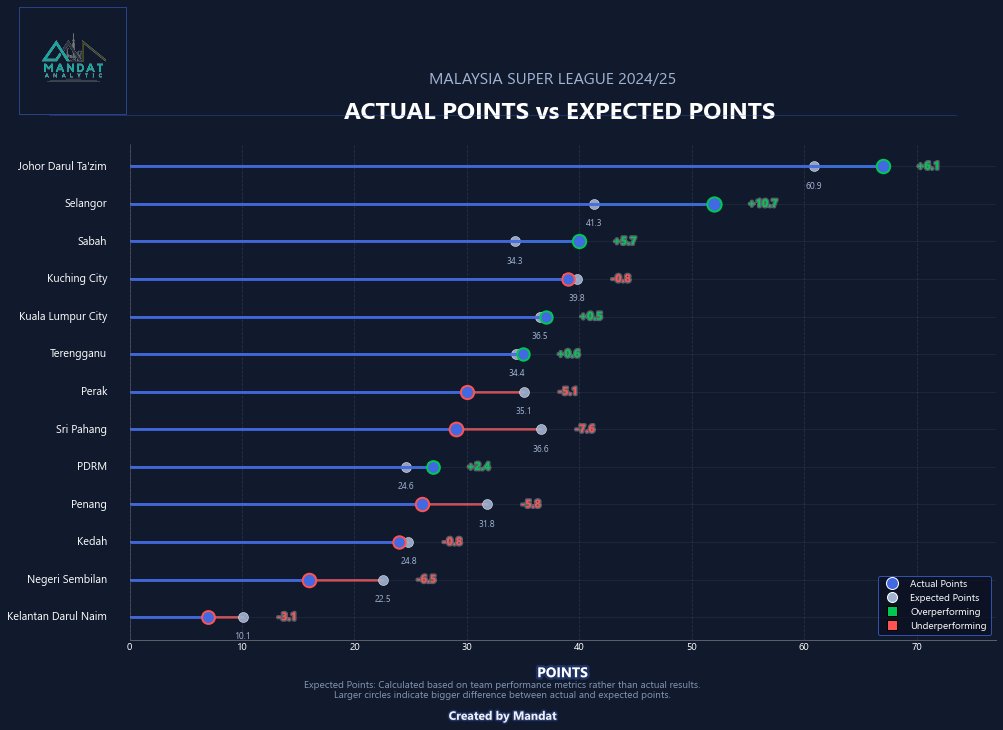
Pahang, on the other hand, is the most underperform.
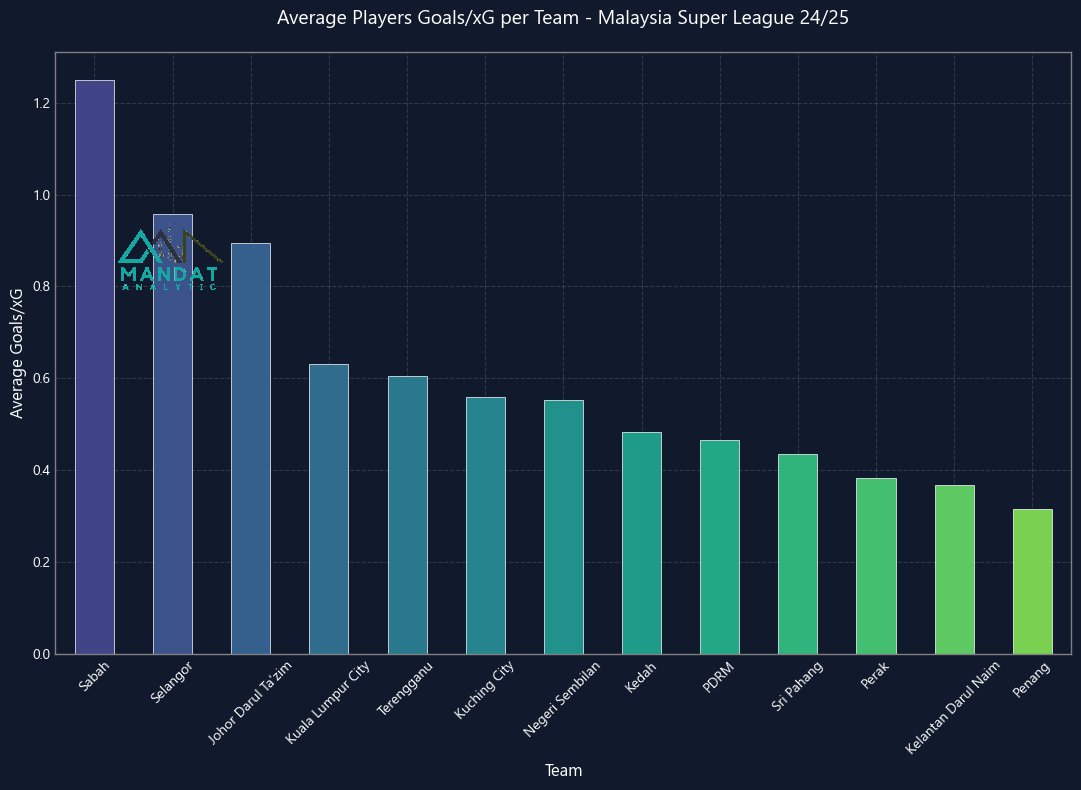
They can create chances fairly well, but their finishing is quite poor - 4th lowest in the league. This team needs a consistent finisher
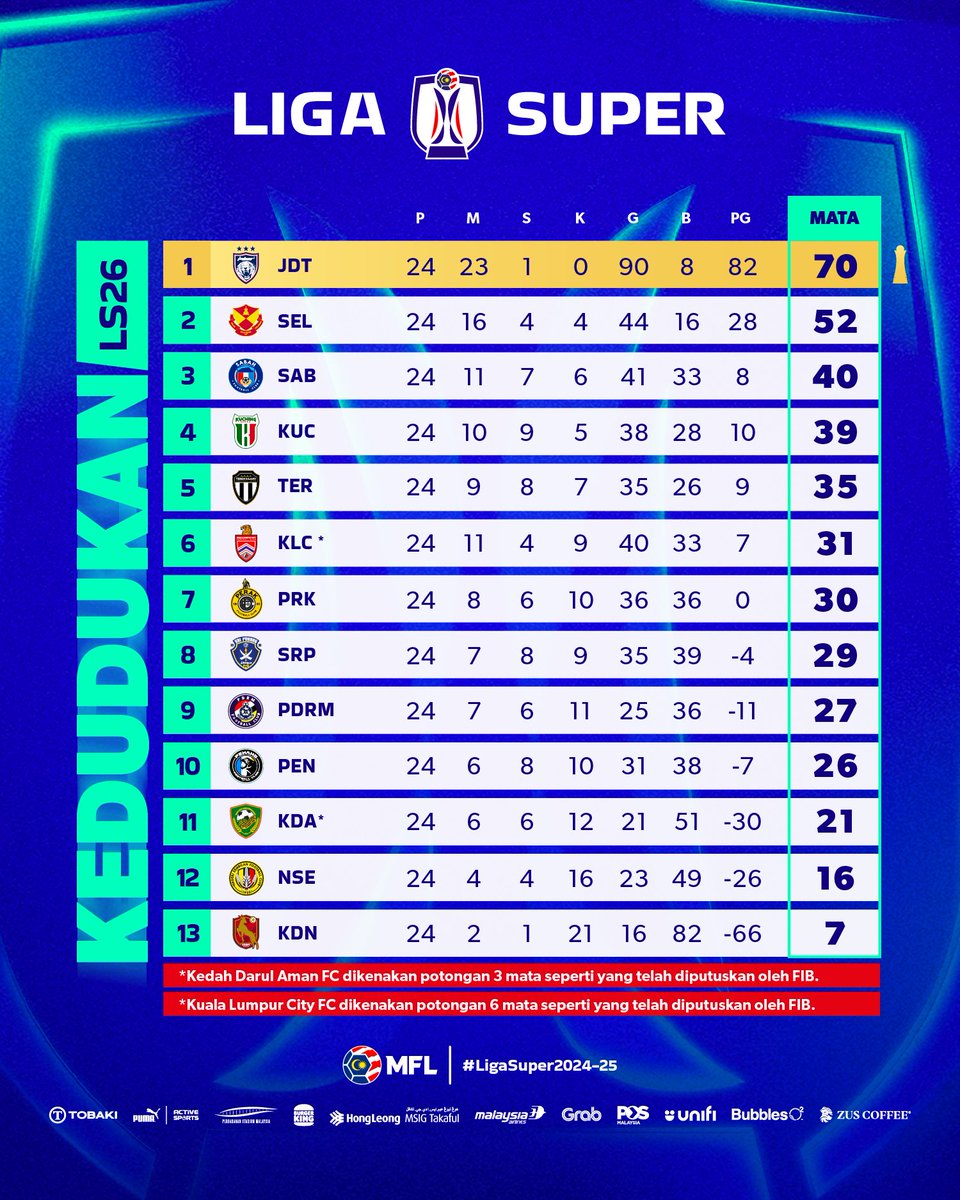
The actual position hardly pinpoint some teams' problems in Liga Super. So, we plotted Expected Points and measured how much team overperformance or underperform their metrics. Some interesting takes 🧵:
Selangor is the most overperforming team.
Their chance creation is low, ranked 4th - but they actually really efficient in front of goal - 2nd highest average of Goals to xG ratio.
They should invest more on 'Creators' profile to boost their attack, instead of expensive CF




![imnormgoh's tweet photo. [Quick Takes] Two ministers. One day. Both from Prime Minister Anwar Ibrahim’s PKR. And both, just days after losing party elections. Economy Minister Rafizi Ramli and Natural Resources and Environment Minister Nik Nazmi Nik Ahmad resigned this week — a move that jolts Anwar’s administration as he chairs ASEAN and prepares for state and possibly national elections.
This isn’t Sheraton Move 2.0 — but it chips away at Anwar’s carefully built image of unity. It also raises uncomfortable questions about factionalism and confidence in his leadership. Rafizi and Nik Nazmi, long aligned with PKR’s reformist wing, lost their bids for deputy president and vice president respectively. While Rafizi had signaled his intent to step down earlier, Nik Nazmi’s resignation came as a surprise, hinting at deeper dissatisfaction.
Unusually, no announcement has been made on party appointments to reconcile the factions — a step PKR typically takes swiftly post-elections. The silence suggests internal negotiations are proving difficult, and unity may remain elusive. Two cabinet positions now stand vacant. Rafizi championed data-driven economic reforms. Nik Nazmi was leading Malaysia’s green transition — both strategic portfolios. Yet replacements may not come immediately.
Trade Minister Zafrul Aziz is expected to stay through December as he leads ASEAN’s economic pillar and negotiations with the U.S. But speculation is swirling that Johari Ghani, UMNO’s technocrat and current Plantations Minister, could be tapped for a promotion — a move that could recalibrate coalition dynamics. Still, a major reshuffle risks upsetting a fragile balance of power. Anwar must tread carefully.
The PKR polls revealed a generational shift. Nurul Izzah returned as Deputy President. R. Ramanan won Vice President. Communications Minister Fahmi Fadzil and Deputy Youth and Sports Minister Adam Adli topped the Central Committee vote. Kamil Munim, Anwar’s political secretary, now leads the Youth Wing. Other names include Akmal Nasir (Deputy Energy Minister), Syed Ibrahim, and in the women’s wing — Education Minister Fadhlina Sidek retained her role, with Juwairiya Zulkifli, Anwar’s aide, as deputy. Youth Vice Chiefs include Taufiq Johari, Chiew Choon Man, and Nabil Halimi.
With Malaysia at the regional forefront, prolonged domestic uncertainty isn’t ideal. Two high-profile resignations — with no immediate successors — risk a perception of instability. Anwar appears to be consolidating his base, but party fractures don’t vanish overnight. Without reconciliation, public confidence may erode — not in governance per se, but in long-term direction.
All eyes are on the next move.
📷 Fujifilm X-T4 | Photo by Norman Goh (July 27, 2023)](https://pbs.twimg.com/media/GsBrAOmaUAAB_es.jpg)