An excellent short film showing the realities of a parent trying to support a child in a broken system 💔
Behind every statistic is a child
TRIGGER WARNING
'Unauthorised absence'
For parents in this situation, I see you 💜
#thisactuallyhappens
https://t.co/1fiBGOlC0e
@GMB Autism is not a mental health problem or a disease, nor is it over diagnosed. The result of diagnosis is helpful for most autistic people in understanding theirselves after years of problems including mental health issues therefor resulting in better outcomes for them!
🚨NEWS🚨
People with learning disabilities were told they wouldn’t be resuscitated or treated if they contracted COVID-19, the Covid inquiry has heard.
https://t.co/LBRrWplQoA
At this time of year I hear about a lot of children excluded from trips and events because of their attendance and behaviour over the year. It’s part of a worrying trend which an number of parents and young people tell me about, where anything enjoyable in some school is turned into a reward which has to be earned by good behaviour.
This starts with playtime, where primary school parents tell me that children are being made to sit in silence instead of going out if they haven’t been focused enough on their work.
It can include things like movement breaks and sensory circuits, set up as adjustments to help children stay in school, but then turned into something which have to be earned.
Both of these are counter-productive, because children need opportunities to move their bodies and let off steam in order to regulate their own behaviour. Playtime isn’t a reward for work, it’s a necessary part of the rhythm of the day. Just like adults, children need to get out for a breather every so often. If they have to earn those opportunities, their behaviour is likely to get worse not better.
At secondary school it’s trips to theme parks or inflatable obstacle courses at the end of term, but only for those with good attendance and behaviour throughout the year. It’s trips to water parks with photo displays on the school wall, and some children conspicuously not included. Even though they’ve already sat in detention or isolation as punishment for their behaviour. The behaviour marks are still there, never forgotten.
This can mean that those who struggle most never get to do the things which enrich the lives of the other children. It means that some children miss out year after year – and it’s often the children whose parents aren’t able to or can’t afford to take them on trips. Their school lives are less interesting and varied as a result.
School is about so much more than lessons, particularly for those who don’t get many chances to do extra things at home. Extra opportunities should be just that – opportunities and not rewards.
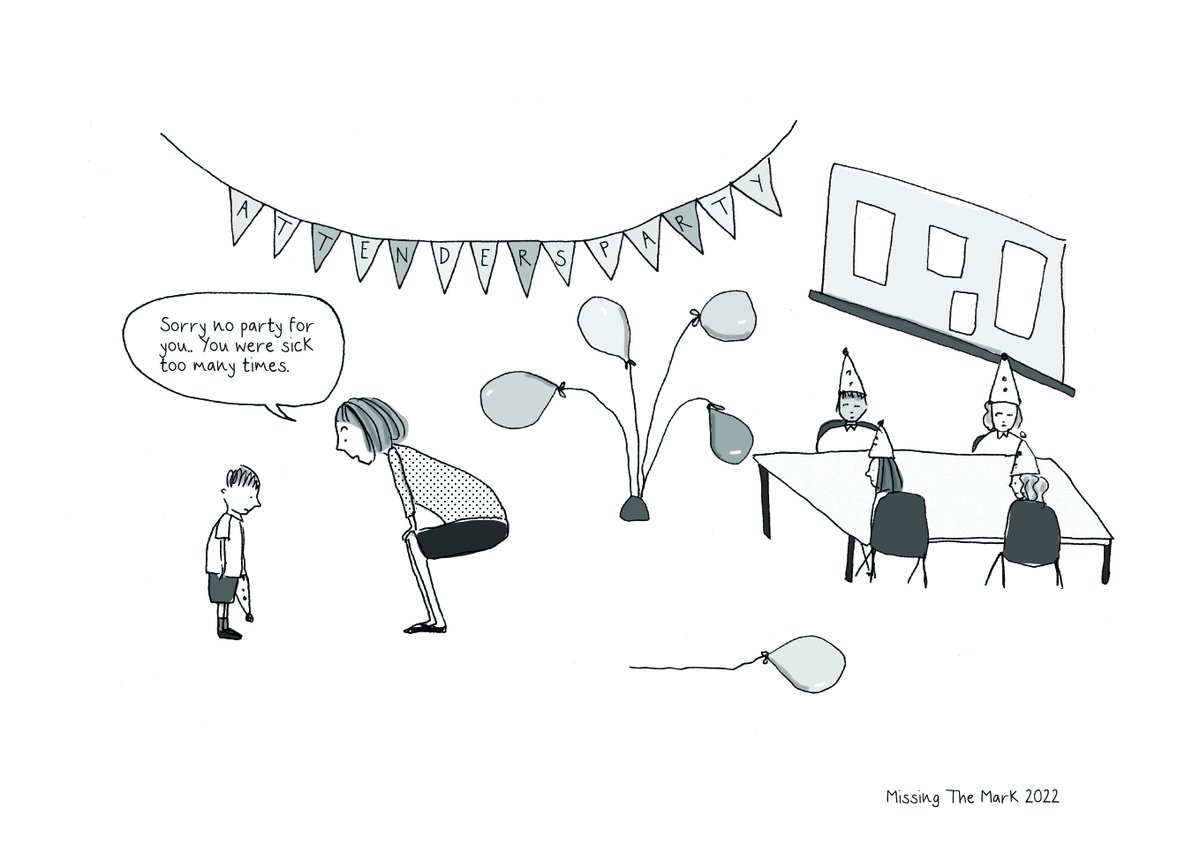
Punishments Day (with @_MissingTheMark)
A parent of a Year 7 child who is struggling with attendance has got in touch. Their school (in a deprived area) has sent a letter about the Year 7 Rewards Day, to be held in the last week of term. It is a fun activity day to be held at school, run by an external company. It is the sort of thing most of the children will not have had the opportunity to do before.
To attend, children must have above 90% attendance, not too many behaviour points and their parents must pay a significant amount of money. Payment won’t secure a place, because if the child’s behaviour or attendance isn’t good enough, they’ll be excluded regardless.
If they can’t participate in the Rewards Day, they must attend school anyway in school uniform and do a normal school day. Her child is at 80% so isn’t invited. This is a punishment. Being excluded from a Rewards day will be experienced by those children as a punishment.
Here’s why policies like this are counter-productive and unfair.
These policies reward the lucky. They reward those who find school easier, who don’t suffer from chronic illness or anxiety and whose families can find extra money. They reward those who are more able to control their behaviour (something which is highly variable at age 11). They reward those who have had a better year.
These policies shame the vulnerable. They make it highly visible to everyone who are the year’s ‘Successes’ and ‘Failures’ in the eyes of the school. They end children’s first year at secondary school by reminding them all that some of them have had a much harder time than others – and that those people are not worthy of celebration. It could lead to increased bullying and ostracisation.
These policies are a double punishment. Behaviour points are already punished by detention or isolation. There is already a system in place for attendance. To collate those points and attendance rates and then punish the children again means that the slate is never clear.
For those who are struggling this is a way of ending a difficult year on an even more difficult note. They will conclude that their school thinks the problem is them. It is very unlikely to lead to improved behaviour and attendance in Year 8, because it doesn’t address any of the reasons why school is hard for them – and it will make them feel bad about themselves and negative about school.
What’s the alternative? If you’re going to do something fun at the end of term, do it for everyone. Show them that they are all part of the school community and that they are all worthy. End the year on a positive note for all, regardless of attendance and behaviour points.
You never know, that might make a difference – and it will be the most vulnerable who most need to know.
As you watch the Aurora this evening, it’s worth reflecting that you’re getting a rare direct glimpse of the power of Nature. Those charged particles causing the atmosphere to glow came from a sunspot complex 17 times the diameter of Earth and traveled across 90 million miles at a million miles an hour. Without our magnetic field to protect us, our atmosphere would have been lost to space long ago. Those colours in the sky are Nature reminding us that we’re very lucky to be here amidst the violence. And perhaps therefore also reminding us not to shite it all up :-)
TRIGGER WARNING!! @Warwickshire_CC@MrsGolby cllr Brian Hammersley and cllr Jeff Morgan utterly vile, disgusting and albeist language used to describe #SEND children!!!!! Thank you to @ElissaNoves for highlighting this! We need answers!! #SENDcrisis
This is a banner which was hung in at least three schools in York by the South Bank Trust, a MAT. It is harmful to young people and their families, and it is dishonest. This is why. 1/
@Jo_Frost @JodieSmitten @Jo_Frost Overcoming autism?? 😮 You really need to meet with autistic adults and listen to their stories to better educate yourself!