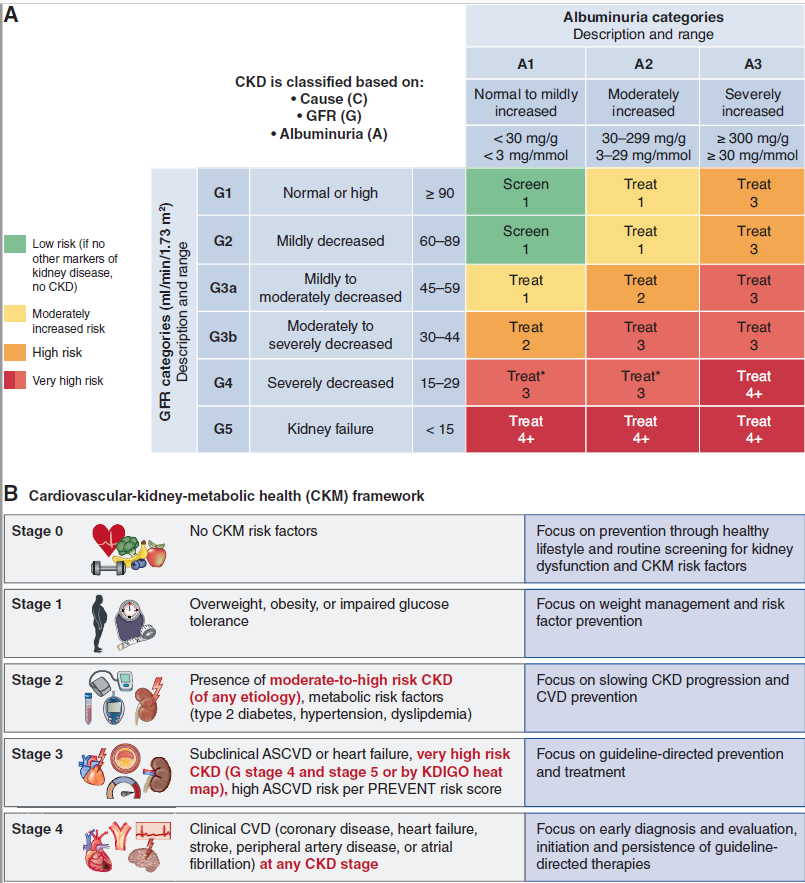
The latest ASN Kidney Health Guidance on the Cardiovascular-Kidney-Metabolic Syndrome, in #ASNJASN, addresses diagnosis and treatment of the CKM syndrome most relevant to the nephrology team and covers issues of special consideration for patients with kidney disease. https://t.co/TeWsCfAqxj
🩸🫘 Vas a Iniciar Hemodiálisis?
10 Puntos Para Hacerlo Mejor
💧Volumen y peso objetivo
💊Revisión y deprescripción de fármacos
⏱️Hemodiálisis incremental
🩸Anticoagulación
🏃Ejercicio-Nutrición
🔰📚Clinical Kidney Journal 2026
Artículo Completo👇🏻✅🆓
https://t.co/aR5SFK2xfj
⚠️ التوصيات الحديثة لنقص الحديد وضعت حدود واضحة في متى يسمى نقص حديد بغض النظر عن التغير بالهيموجلوبين 🩸
وهذه نقطة جيدة خصوصًا لبدايات المشكلة وكذلك لحل مشكلة التركيز على الهيموجلوبين فقط دون التركيز على مخزون الحديد
💡 لكن لهذا تفصيل فالرقم ليس واحد للجميع
- الاشخاص في حالات الالتهاب، القولون الالتهابي مثل كرونز والقولون التقرحي، الاورام، الأمراض المعدية والالتهابية
يشخص نقص الحديد ان كان اقل من ١٠٠
- بشكل عام للكبار يشخص نقص الحديد ان كان اقل من ٣٠ وللاطفال تحت ٤ سنوات اقل من ٢٠
- ولكن عند وجود دورة شهرية غزيرة، او حمل مع وجود فقر دم يشخص نقص الحديد ان كان اقل من ٥٠
ولابد الانتباه لنقطة (تشخيص نقص) و (رقم غير كاف لزوال الاعراض)
- فلا تزال توصية الخبراء عند بعض الاعراض مثل تساقط الشعر الكربي، او الشقيقة فان الرقم الموصى به (وشوهد تحسن معه) هو اعلى من ٧٠ (قد لا يسمى نقص حديد، لكن يعتبر غير كاف لزوال الاعراض)
🟢 مثال: امرأة تعاني من تساقط كربي مستمر، مخزون حديد ٥٠، لايوجد مسببات اخرى (يفضل رفعه اكثر من ٧٠ ومراقبة التحسن)
——
كما ان التوصيات تستمر كما هي في الطريقة العلاجية الصحيحة
- يفضل العلاج بالفم (بالحبوب والتغذية)
- العلاج الوريدي لحالات محددة فقط
وبالنهاية، اختر طبيبك بعناية، واستشر قبل اخذ اي علاج
Once a hematologist, always a hematologist.
Who does not like new guidelines on the management of iron deficiency anemia...?
Hot off the @ASH_hematology@BloodAdvances press!
https://t.co/hn2mqzhhKJ
💧 Fluid Management in Heart Failure and Cardiogenic Shock
Preload vs Congestion
This chapter explains that in acute and chronic heart failure, the challenge is not simply “giving or withholding fluids” but balancing preload to support cardiac output against the risk of venous congestion and pulmonary edema. Conventional preload markers (CVP, PAOP) are often misleading in dilated, stiff or ischemic ventricles, so the authors emphasize integrated assessment using echo, blood pressure, urine output and clinical signs of congestion.
Cardiogenic Shock Strategy
In cardiogenic shock, small, carefully tested fluid challenges may be justified early, but ongoing hypotension is usually better addressed with inotropes, vasopressors and mechanical support rather than repetitive fluid boluses. The chapter highlights how positive fluid balance worsens outcomes in decompensated heart failure and advocates early decongestive therapy and, when needed, ultrafiltration as part of a broader deresuscitation plan.
📘 Full chapter in Rational Use of Intravenous Fluids in Critically Ill Patients:
👉 https://t.co/7pvDxZGh4I
🔵 Discussed in depth at IFAD 2026 in Antwerp.
👉Registration: https://t.co/RF6JwoL40J
#HeartFailure #CardiogenicShock #FluidManagement #VEXUS #ICU
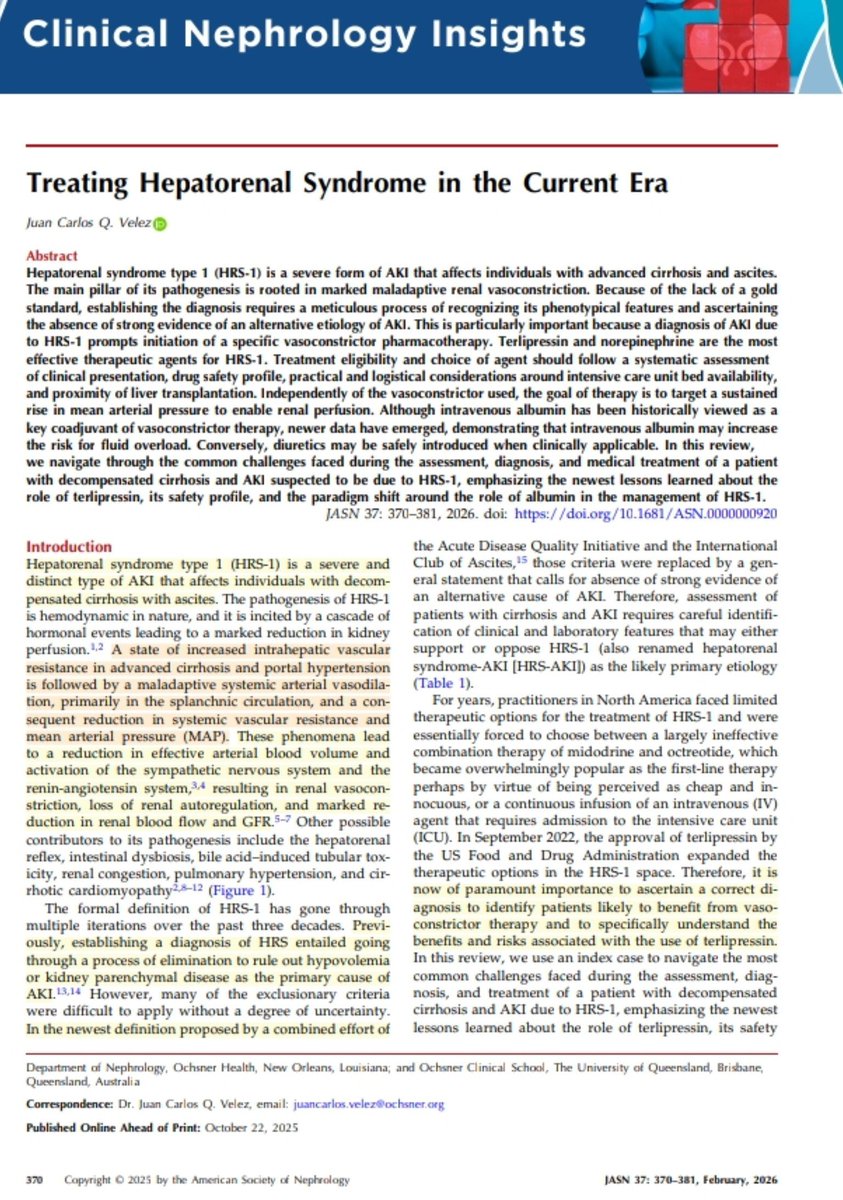
🫘🫀Manejo Actual del Síndrome Hepato-Renal
💉Terlipresina vs Norepinefrina
🎯Objetivo de Presión Arterial
💧Albúmina para Todos?
💊Diuréticos en Sobrecarga
🩸Terapia de Reemplazo Renal
📖JASN 2026
Artículo Completo👇🏻✅🆓
https://t.co/aR5SFK2xfj
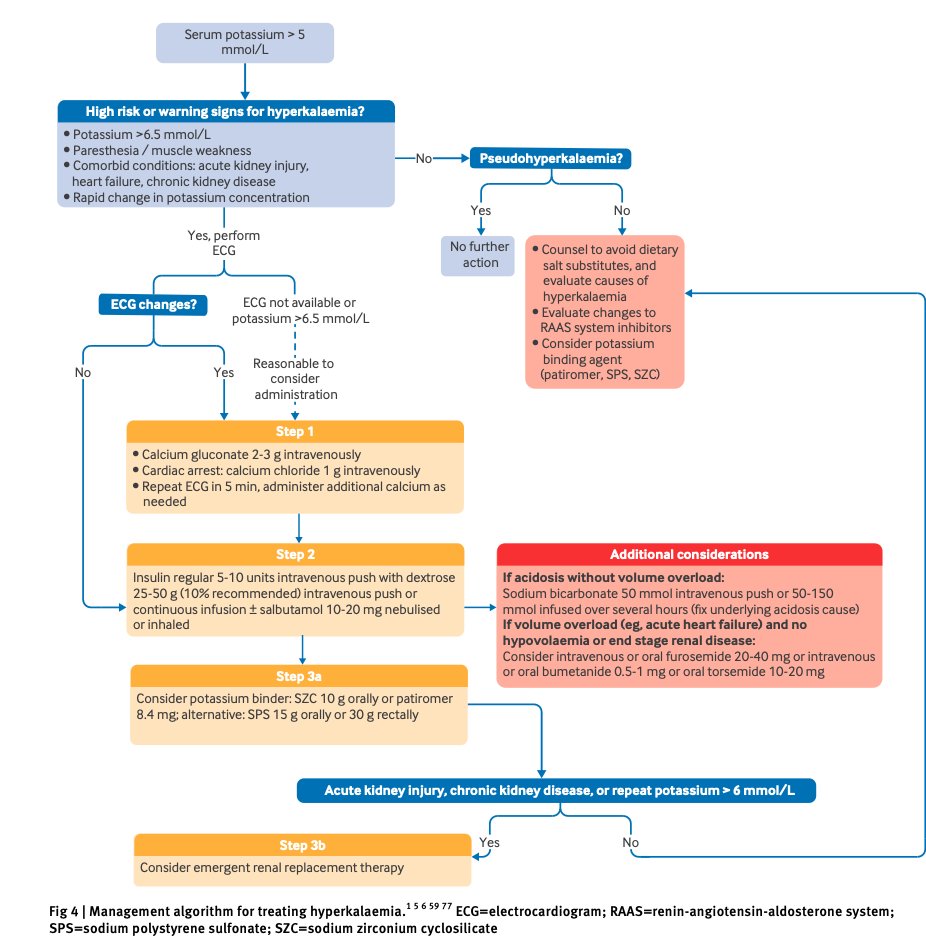
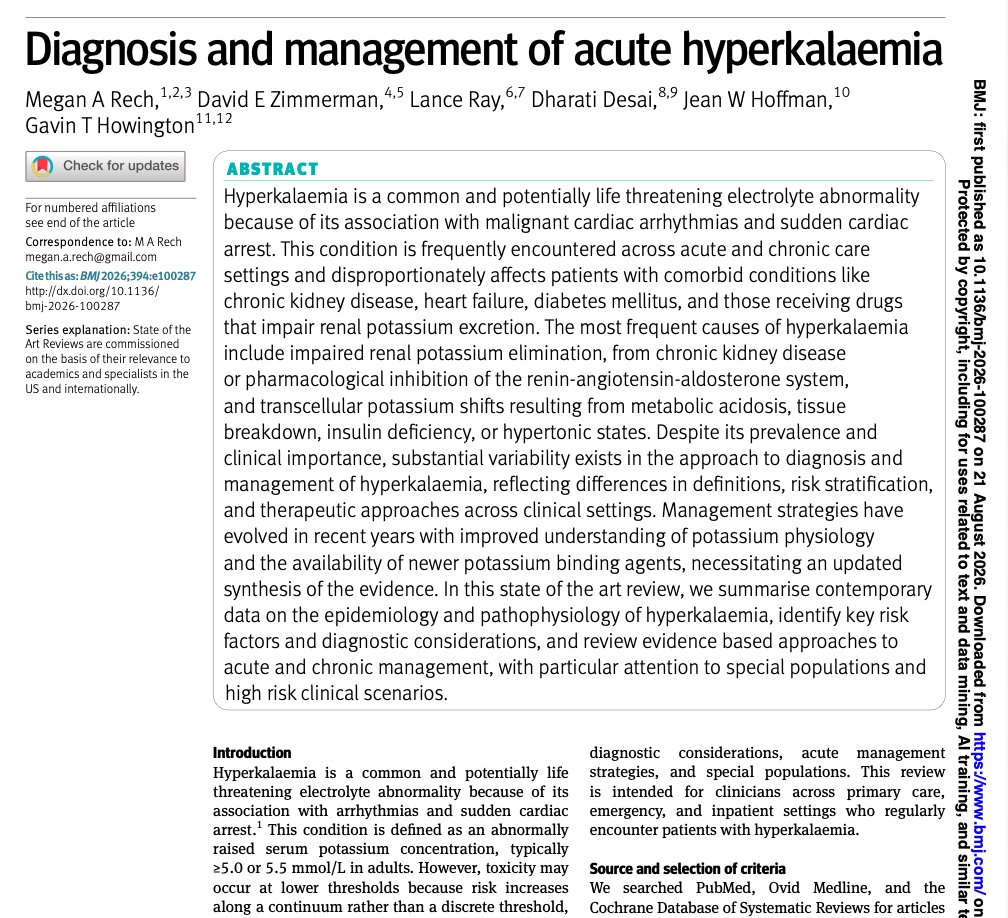
⚡🫀𝗛𝗜𝗣𝗘𝗥𝗞𝗔𝗟𝗘𝗠𝗜𝗔 𝗔𝗚𝗨𝗗𝗔‼️
@bmj_latest
👇🏼👇🏼👇🏼👇🏼
📑🔗🔑🔓
https://t.co/89ht2mBRSA
⬇️⬇️⬇️⬇️
🧵👇
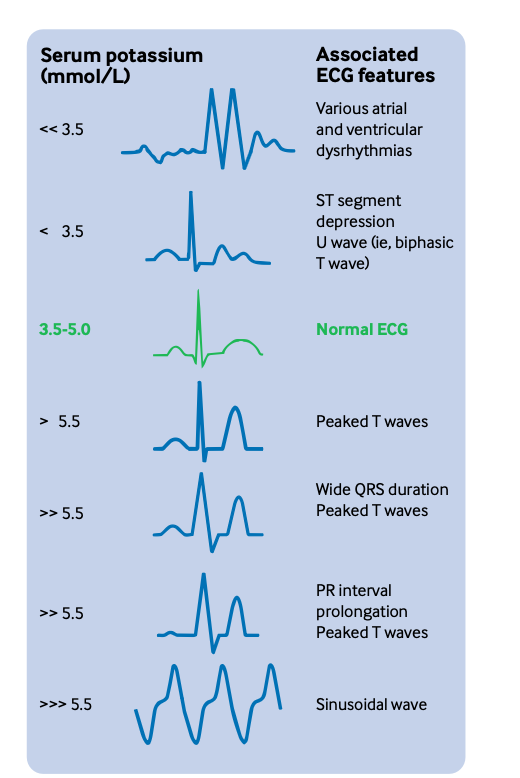
🚨 Alto riesgo: 𝙆⁺ >𝟲,𝟱 𝙢𝙢𝙤𝙡/𝙇, cambios ECG, aumento rápido, debilidad/parálisis o inestabilidad.
Pero:
❌ ondas T picudas tienen baja sensibilidad
❌ el ECG no se correlaciona bien con el nivel de K⁺
❌ no espere cambios clásicos para iniciar tratamiento
🔥 El riesgo es un 𝙘𝙤𝙣𝙩𝙞𝙣𝙪𝙤, no un número aislado.
🩺⚡ 𝙋𝙖𝙨𝙤 𝟭: 𝘾𝘼𝙇𝘾𝙄𝙊 — 𝙥𝙧𝙤𝙩𝙚𝙜𝙚 𝙚𝙡 𝙘𝙤𝙧𝙖𝙯𝙤́𝙣, 𝙥𝙚𝙧𝙤 𝙉𝙊 𝙗𝙖𝙟𝙖 𝙚𝙡 𝙥𝙤𝙩𝙖𝙨𝙞𝙤
Si hay alteraciones ECG:
💉 𝙜𝙡𝙪𝙘𝙤𝙣𝙖𝙩𝙤 𝙙𝙚 𝙘𝙖𝙡𝙘𝙞𝙤 𝙄𝙑
🫀 𝙘𝙡𝙤𝙧𝙪𝙧𝙤 𝙙𝙚 𝙘𝙖𝙡𝙘𝙞𝙤 preferido en paro cardíaco o vía central
⏱️ Inicio ≈ 𝟯 𝙢𝙞𝙣
⏳ duración: 𝟯𝟬–𝟲𝟬 𝙢𝙞𝙣
➡️ Repetir si el ECG no mejora.
🔥 El calcio restaura la conducción cardíaca; inmediatamente después hay que 𝙢𝙤𝙫𝙚𝙧 𝙮 𝙚𝙡𝙞𝙢𝙞𝙣𝙖𝙧 𝙆⁺.
💉🍬 𝙋𝙖𝙨𝙤 𝟮: 𝙢𝙤𝙫𝙚𝙧 𝙆⁺ 𝙖𝙡 𝙞𝙣𝙩𝙚𝙧𝙞𝙤𝙧 𝙘𝙚𝙡𝙪𝙡𝙖𝙧
🥇 𝙄𝙣𝙨𝙪𝙡𝙞𝙣𝙖 𝙧𝙚𝙜𝙪𝙡𝙖𝙧 𝟱–𝟭𝟬 𝙐 𝙄𝙑
➕ 𝙙𝙚𝙭𝙩𝙧𝙤𝙨𝙖 𝟮𝟱–𝟱𝟬 𝙜
📉 reducción esperada: 𝟬,𝟲–𝟭,𝟰 𝙢𝙢𝙤𝙡/𝙇
⚡ inicio: <15 min
Pero:
⚠️ hipoglucemia ocurre en ≈𝟭𝟳%
📊 monitorizar glucosa cada 30–60 min durante ≥4 h
En ERC, AKI, bajo peso, insulin-naive o glucemia <126 mg/dL:
👉 𝟱 𝙐 puede reducir hipoglucemia sin perder eficacia.
🌬️🧪 𝙎𝙖𝙡𝙗𝙪𝙩𝙖𝙢𝙤𝙡 𝙨𝙪𝙢𝙖; 𝙗𝙞𝙘𝙖𝙧𝙗𝙤𝙣𝙖𝙩𝙤 𝙉𝙊 𝙚𝙨 𝙩𝙧𝙖𝙩𝙖𝙢𝙞𝙚𝙣𝙩𝙤 𝙧𝙪𝙩𝙞𝙣𝙖𝙧𝙞𝙤
🌬️ 𝙎𝙖𝙡𝙗𝙪𝙩𝙖𝙢𝙤𝙡 𝟭𝟬–𝟮𝟬 𝙢𝙜 𝙣𝙚𝙗𝙪𝙡𝙞𝙯𝙖𝙙𝙤
→ reduce K⁺ ≈𝟬,𝟲𝟱–𝟭 𝙢𝙢𝙤𝙡/𝙇
Combinado con insulina puede lograr un efecto mayor.
🧪 𝘽𝙞𝙘𝙖𝙧𝙗𝙤𝙣𝙖𝙩𝙤: efecto pequeño e inconsistente.
🚫 No usar rutinariamente para hiperpotasemia aguda.
✅ Considerarlo solo en pacientes seleccionados con 𝙖𝙘𝙞𝙙𝙤𝙨𝙞𝙨 𝙢𝙚𝙩𝙖𝙗𝙤́𝙡𝙞𝙘𝙖 𝙨𝙞𝙜𝙣𝙞𝙛𝙞𝙘𝙖𝙩𝙞𝙫𝙖 y tolerancia a la carga de sodio.
🔥 Corregir la acidosis no equivale necesariamente a corregir la hiperpotasemia.
🎯 𝙋𝙖𝙨𝙤 𝟯: 𝙚𝙡 𝙥𝙤𝙩𝙖𝙨𝙞𝙤 𝙙𝙚𝙗𝙚 𝙎𝘼𝙇𝙄𝙍 𝙙𝙚𝙡 𝙘𝙪𝙚𝙧𝙥𝙤
💧 Diuréticos de asa → solo si existe 𝙨𝙤𝙗𝙧𝙚𝙘𝙖𝙧𝙜𝙖 𝙙𝙚 𝙫𝙤𝙡𝙪𝙢𝙚𝙣 + 𝙛𝙪𝙣𝙘𝙞𝙤́𝙣 𝙧𝙚𝙣𝙖𝙡 𝙪́𝙩𝙞𝙡
🧲 Quelantes:
* 𝙎𝙕𝘾: inicio ≈1 h
* 𝙋𝙖𝙩𝙞𝙧𝙤𝙢𝙚𝙧: 2–7 h
* SPS: evidencia limitada y riesgo gastrointestinal
⚠️ Ninguno sustituye la terapia definitiva en hiperpotasemia grave.
🩸 𝙃𝙚𝙢𝙤𝙙𝙞𝙖́𝙡𝙞𝙨𝙞𝙨 = 𝙢𝙚́𝙩𝙤𝙙𝙤 𝙢𝙖́𝙨 𝙚𝙛𝙞𝙘𝙖𝙯
📉 ≈1 mmol/L en la primera hora
📉 hasta ≈2 mmol/L en 3 h
Indicaciones especialmente importantes:
🚨 hiperpotasemia refractaria
🫘 AKI grave/oliguria
🩸 enfermedad renal terminal
⚡ alteraciones ECG persistentes
📌𝙂𝙪𝙖𝙧𝙙𝙖 𝙥𝙖𝙧𝙖 𝙩𝙪 𝙥𝙧𝙤́𝙭𝙞𝙢𝙖 𝙜𝙪𝙖𝙧𝙙𝙞𝙖❤️
📚📖 Más en 𝕏 @MarlonVFZR y en el blog 👉 [https://t.co/i9GkW3SQFI]
‼️Si te sirve: ❤️ Me gusta | 🔁 Repost | ➕ Follow para más👇🏼👇🏼👇🏼👇🏼
📚📖#ClubCrit👨🏻⚕️👨🏻🏫🧠🫶
#Hiperpotasemia #Hyperkalemia
#FOAMed #FOAMcc #CriticalCare #CriticalCare #CuidadoCritico #MedTwitter #MedX #IntensiveCare #MedXCommunity #MedED
✅ GUÍA INTERNACIONAL DE PRÁCTICA CLÍNICA PARA EL MANEJO DE LA TVP. 2026.
PDF libre acceso‼️👇
📖 International Clinical Practice Guidelines for Acute Deep Vein Thrombosis: A Comparative Review of Recommendations, Evidence Gaps, and Emerging Trends https://t.co/eVORBFv8Ti
🦠 Sepsis management is moving away from rigid protocols and toward physiology guided care.
A new international multidisciplinary Delphi consensus brings together 164 experts from 22 countries, 12 specialties and 105 scientific societies to address some of the most controversial areas of sepsis management. Forty statements ultimately reached consensus across seven domains.
Several findings deserve attention.
For early recognition, NEWS 2 emerged as the preferred bedside tool with 89% agreement, while Sepsis 2, Sepsis 3 and qSOFA did not reach consensus as early recognition tools. Structured sepsis programs, rapid response systems and earlier detection beginning outside the hospital were strongly supported. Interestingly, predictive AI models were also considered potentially useful, although evidence for their clinical impact remains limited.
The hemodynamic recommendations are particularly relevant for critical care.
Capillary refill time received 96% agreement for assessment during the first 3 hours. Venous-arterial CO₂ gradients reached 91% agreement. SvO2, cardiac output derived variables when invasive access is available, and echocardiography for initial assessment were supported. However, echocardiography was not considered a replacement for continuous hemodynamic monitoring.
The same physiology first philosophy appears in fluid management. The panel favored individualized fluid therapy rather than a universal fixed volume, balanced crystalloids and dynamic parameters to guide further fluid administration. Restrictive strategies were preferred after 72 hours. Norepinephrine remained the first line vasopressor and should be initiated early alongside fluids, while vasopressin was supported as an adjunct at norepinephrine doses around 0.25 to 0.5 μg/kg/min.
Another striking recommendation concerns source control: drainage or surgery within 6 hours received 95% agreement, including proceeding despite hemodynamic instability, which received 90% agreement.
Antimicrobial therapy also becomes more individualized: adequate early coverage, PK/PD guided dosing, prolonged infusion of time dependent antibiotics, early adaptation to microbiological results and de escalation when clinical and biomarker evolution permits it. Universal combination therapy was not supported.
The central message is compelling:
Recognize sepsis early. Control the source early. Treat infection adequately. But resuscitate the patient according to physiology, not according to a fixed recipe.
An important limitation should remain in mind. This is expert consensus, not randomized evidence. The authors explicitly acknowledge that some recommendations reflect clinical conviction more strongly than trial data, and representation from low income settings was limited.
Reference 📚
Borges Sa M et al. 2026. International multidisciplinary consensus statement on sepsis code guidelines: A Delphi approach. Journal of Internal Medicine.
https://t.co/7nV82NS5HZ
🧠⚡𝗦𝗧𝗥𝗢𝗞𝗘: 𝗹𝗮 𝗿𝗲𝗽𝗲𝗿𝗳𝘂𝘀𝗶𝗼́𝗻 𝘆𝗮 𝗻𝗼 𝗱𝗲𝗽𝗲𝗻𝗱𝗲 𝘀𝗼𝗹𝗼 𝗱𝗲𝗹 𝗿𝗲𝗹𝗼𝗷‼️
👇🏼👇🏼👇🏼👇🏼
📑🔗🔑🔓
https://t.co/89ht2mBRSA
⬇️⬇️⬇️⬇️
🧵👇
Dentro de 𝟰,𝟱 𝙝:
💉 𝘼𝙡𝙩𝙚𝙥𝙡𝙖𝙨𝙖: 0,9 mg/kg, máx. 90 mg
⚡ 𝙏𝙚𝙣𝙚𝙘𝙩𝙚𝙥𝙡𝙖𝙨𝙖: 0,25 mg/kg en bolo, máx. 25 mg
Tenecteplasa ofrece administración más simple y, según metaanálisis, mayor probabilidad de excelente resultado funcional frente a alteplasa.
🔥 𝘾𝙪𝙖𝙣𝙩𝙤 𝙖𝙣𝙩𝙚𝙨 𝙨𝙚 𝙧𝙚𝙥𝙚𝙧𝙛𝙪𝙣𝙙𝙖, 𝙢𝙚𝙟𝙤𝙧.
🧲⏱️ 𝙒𝙖𝙠𝙚-𝙪𝙥 𝙨𝙩𝙧𝙤𝙠𝙚: 𝙡𝙖 𝙞𝙢𝙖𝙜𝙚𝙣 𝙥𝙪𝙚𝙙𝙚 “𝙧𝙚𝙘𝙤𝙣𝙨𝙩𝙧𝙪𝙞𝙧 𝙚𝙡 𝙩𝙞𝙚𝙢𝙥𝙤”
Patrón:
✅ 𝘿𝙒𝙄 𝙥𝙤𝙨𝙞𝙩𝙞𝙫𝙖
✅ 𝙁𝙇𝘼𝙄𝙍 𝙣𝙚𝙜𝙖𝙩𝙞𝙫𝙖
Este 𝘿𝙒𝙄–𝙁𝙇𝘼𝙄𝙍 𝙢𝙞𝙨𝙢𝙖𝙩𝙘𝙝 identifica pacientes probablemente dentro de una ventana biológica temprana y puede apoyar trombólisis en tiempo de inicio desconocido.
También puede utilizarse perfusión favorable en ventanas extendidas.
🩸🧠 𝙏𝙧𝙤𝙢𝙗𝙚𝙘𝙩𝙤𝙢𝙞́𝙖: 𝙚𝙡 “𝙡𝙖𝙧𝙜𝙚 𝙘𝙤𝙧𝙚” 𝙙𝙚𝙟𝙤́ 𝙙𝙚 𝙨𝙚𝙧 𝙪𝙣𝙖 𝙚𝙭𝙘𝙡𝙪𝙨𝙞𝙤́𝙣 𝙖𝙪𝙩𝙤𝙢𝙖́𝙩𝙞𝙘𝙖
La evidencia reciente apoya trombectomía en:
✅ oclusión ICA/M1 proximal
✅ hasta 𝟮𝟰 𝙝 en pacientes seleccionados
✅ incluso con 𝘼𝙎𝙋𝙀𝘾𝙏𝙎 𝟯–𝟱
Y en casos muy seleccionados:
⚠️ 𝘼𝙎𝙋𝙀𝘾𝙏𝙎 𝟬–𝟮
⏱️ <6 h
👤 <80 años
📊 NIHSS ≥6
✅ buena función previa
🫀🧠 𝘾𝙞𝙧𝙘𝙪𝙡𝙖𝙘𝙞𝙤́𝙣 𝙥𝙤𝙨𝙩𝙚𝙧𝙞𝙤𝙧 𝙨𝙞́; 𝙫𝙖𝙨𝙤𝙨 𝙙𝙞𝙨𝙩𝙖𝙡𝙚𝙨, 𝙩𝙤𝙙𝙖𝙫𝙞́𝙖 𝙘𝙤𝙣 𝙘𝙖𝙪𝙩𝙚𝙡𝙖
Para 𝙤𝙘𝙡𝙪𝙨𝙞𝙤́𝙣 𝙗𝙖𝙨𝙞𝙡𝙖𝙧:
✅ trombectomía puede considerarse hasta 𝟮𝟰 𝙝
✅ especialmente con 𝙉𝙄𝙃𝙎𝙎 ≥𝟭𝟬
En cambio, para oclusiones medianas/distales:
🚫 ESCAPE-MeVO, DISTAL y DISCOUNT no demostraron beneficio global claro.
Aunque estudios recientes muestran señales prometedoras, la selección sigue siendo individualizada.
🎯 𝘼𝙣𝙩𝙞𝙩𝙧𝙤𝙢𝙗𝙤́𝙩𝙞𝙘𝙤𝙨 𝙩𝙚𝙢𝙥𝙧𝙖𝙣𝙤𝙨: 𝙥𝙧𝙚𝙫𝙚𝙣𝙞𝙧 𝙚𝙡 𝙨𝙞𝙜𝙪𝙞𝙚𝙣𝙩𝙚 𝙞𝙘𝙩𝙪𝙨 𝙚𝙢𝙥𝙞𝙚𝙯𝙖 𝙙𝙚𝙨𝙙𝙚 𝙡𝙖𝙨 𝙥𝙧𝙞𝙢𝙚𝙧𝙖𝙨 𝙝𝙤𝙧𝙖𝙨
📌 𝘼𝙨𝙥𝙞𝙧𝙞𝙣𝙖: iniciar dentro de 𝟰𝟴 𝙝, dosis inicial 𝟭𝟲𝟬–𝟯𝟮𝟱 𝙢𝙜
📌 𝙉𝙄𝙃𝙎𝙎 ≤𝟯 o 𝘼𝙄𝙏 𝘼𝘽𝘾𝘿² ≥𝟰:
AAS + clopidogrel por 𝟮𝟭 𝙙𝙞́𝙖𝙨
📌 Alternativa en NIHSS ≤5 o ABCD² ≥6:
AAS + ticagrelor por 𝟯𝟬 𝙙𝙞́𝙖𝙨
📌 Estenosis intracraneal sintomática grave:
DAPT hasta 𝟵𝟬 𝙙𝙞́𝙖𝙨 + control intensivo de factores de riesgo.
📌𝙂𝙪𝙖𝙧𝙙𝙖 𝙥𝙖𝙧𝙖 𝙩𝙪 𝙥𝙧𝙤́𝙭𝙞𝙢𝙖 𝙜𝙪𝙖𝙧𝙙𝙞𝙖❤️
📚📖 Más en 𝕏 @MarlonVFZR y en el blog 👉 [https://t.co/i9GkW3SQFI]
‼️Si te sirve: ❤️ Me gusta | 🔁 Repost | ➕ Follow para más👇🏼👇🏼👇🏼👇🏼
📚📖#ClubCrit👨🏻⚕️👨🏻🏫🧠🫶
#Stroke #NeurocriticalCare
#FOAMed #FOAMcc #CriticalCare #CriticalCare #CuidadoCritico #MedTwitter #MedX #IntensiveCare #MedXCommunity #MedED
Critical Physiology Series #59
Cardiorenal Syndrome and Renal Congestion: When the Kidney Fails Because the Heart Cannot Drain It
Traditionally, we explained this mainly through forward failure:
Low cardiac output → low renal blood flow → reduced GFR.
But renal function depends on much more than arterial inflow, the kidney also needs an adequate outflow pressure gradient.
A useful physiological concept is:
Renal perfusion pressure ≈ MAP minus renal venous pressure
As right atrial pressure and central venous pressure rise, renal venous pressure increases and the kidney becomes congested.
This creates a vicious circle:
Venous congestion → reduced natriuresis → volume retention → more congestion.
This is why worsening kidney function in acute heart failure can occur even when cardiac output and MAP appear acceptable.
Neurohormonal activation amplifies the problem.
Reduced effective arterial blood volume activates the sympathetic nervous system, renin angiotensin aldosterone system and vasopressin.
The kidney becomes sodium avid.
Proximal and distal tubular sodium reabsorption increase.
Diuretic delivery to the nephron may fall.
The result is diuretic resistance despite obvious volume overload.
How do we monitor this physiology?
Creatinine remains the most widely used marker of kidney filtration.
But creatinine is a functional marker, not a direct marker of tubular injury.
Studies measuring tubular injury biomarkers such as NGAL, KIM-1 and NAG have shown that modest worsening renal function during aggressive diuresis may occur without evidence of increased tubular injury.
Cystatin C provides another estimate of GFR and is less dependent on muscle mass than creatinine, although inflammation, corticosteroids, thyroid disease and other factors can influence it.
Then there is a very practical biomarker:
Urinary sodium...After a loop diuretic, the kidney should excrete sodium.
Spot urinary sodium measured after IV loop diuretic administration can therefore provide much earlier information about diuretic response than waiting several hours for weight or cumulative urine output.
Venous congestion should also be evaluated directly. VExUS, can help identify the transmission of right-sided pressure into abdominal organs.
But the opposite phenotype must not be forgotten.
If renal dysfunction occurs with true low-output shock, hypotension, cold peripheral perfusion, rising lactate and low SvO₂, simply intensifying diuresis may worsen organ perfusion.
Then restoring effective cardiac output and perfusion pressure becomes the priority.
Fluid removal and perfusion support are therefore not competing doctrines.
They depend on the phenotype.
Recommended lectures 📚
Rangaswami, 2019, https://t.co/ricnrlP2FK
Mullens, 2009, https://t.co/L8ljTYeBjQ
Ahmad, 2018, https://t.co/4K1drqZVjS
Meekers, 2025, https://t.co/P3E66o0gEs
Bart, 2012, https://t.co/4fgLIXUug2
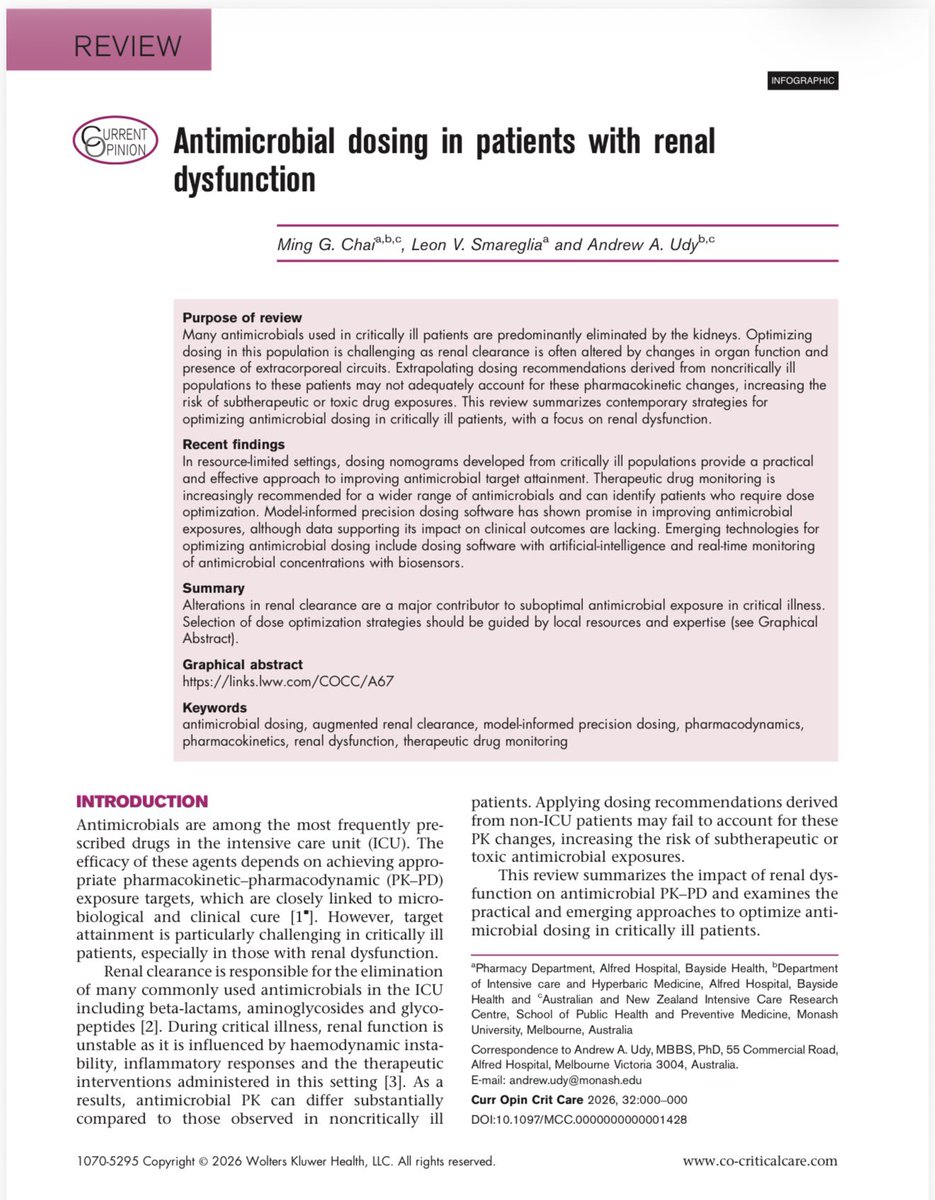
En crítico con “disfunción renal”, el reflejo de bajar la dosis puede ser un error.
La función renal en UCI va de falla aguda hasta clearance aumentado. Muchos pacientes necesitan la MISMA dosis o incluso MÁS (no menos) para evitar subdosificación y fallo del tratamiento.
Bajar dosis por defecto no es una buena práctica en el paciente crítico.
https://t.co/KCt7YLnyr1
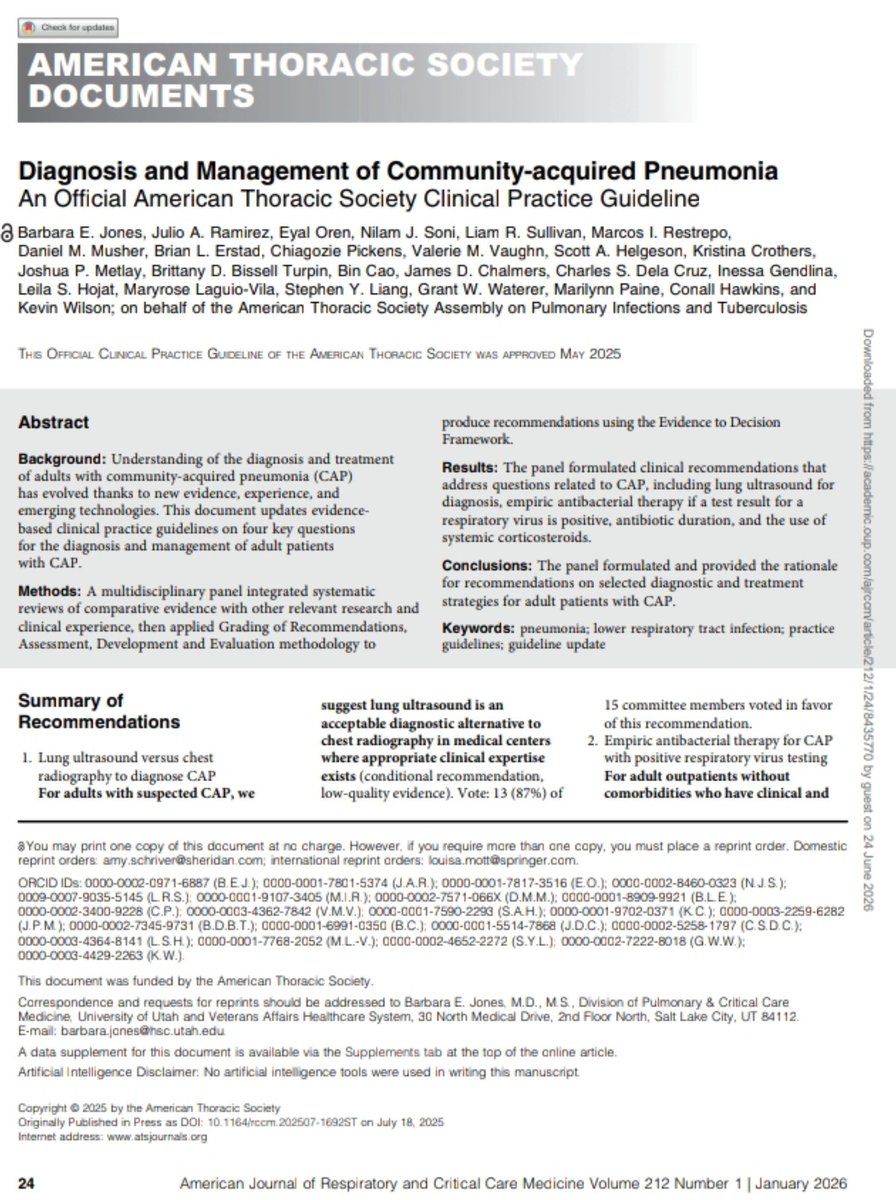
🫁🦠Qué Hay de Nuevo en Neumonía Adquirida en la Comunidad?
🧪Diagnóstico Microbiológico
💊Tratamiento Antibiótico
⏱️Duración de Tratamiento
🦠Cobertura de Patógenos Resistentes
🏥Manejo Paciente Hospitalizado
📖Guía ATS 2026
Artículo Completo👇🏻✅🆓
https://t.co/aR5SFK2xfj
Acute coronary syndrome: initial management
1️⃣ Aspirin: Give an initial loading dose of 162-325 mg orally as soon as possible, unless contraindicated.
2️⃣ Oxygen: Do not give routinely.
Give supplemental oxygen when SpO₂ <90% or the patient is hypoxic.
3️⃣ Nitrates Useful for relief of ongoing ischemic chest pain.
❌ Avoid or use extreme caution with hypotension, suspected right ventricular infarction, or recent PDE-5 inhibitor use.
4️⃣ Morphine: Not routine therapy.
Consider only for severe pain that persists despite appropriate anti-ischemic treatment.
And remember: ACS management is not just symptom control.
Rapid ECG, high-sensitivity troponin assessment, antithrombotic therapy and timely reperfusion/invasive management when indicated are central to treatment.
Nueva revisión de hiperkalemia aguda (BMJ 2026). Lo que cambió, y que probablemente sigas haciendo:
🔴 Dextrosa al 10%, no al 50%. La glucosada hipertónica puede EMPEORAR la hiperkalemia.
🔴 Insulina 5 U (o 0.1 U/kg, máximo 10 U). Misma caída de potasio que con 10 U, con casi la mitad de hipoglucemias (OR 0.55).
🔴 1 g de gluconato de calcio no sirve. 97% necesitó tres dosis de 1 g y una sola dosis no funcionó en NINGUNO. Dosis: 1-3 g.
🔴 El calcio no "estabiliza la membrana". Restaura la conducción por canales de calcio. Traducción práctica: sirve cuando hay QRS ancho, no en la onda T picuda aislada.
🔴 Bicarbonato: no se recomienda de rutina.
🔴 La onda T picuda aparece en menos del 25% de los pacientes con K de 5.5-7.0. Un ECG normal NO descarta hiperkalemia.
🔴 Reevalúa el potasio a los 60 min y otra vez a las 2-4 horas. El rebote es frecuente
El tema ya está re-escrito y actualizado en Memodi y Accio. Completo en el canal (https://t.co/3O93s10lns).


![MarlonVFZR's tweet photo. ⚡🫀𝗛𝗜𝗣𝗘𝗥𝗞𝗔𝗟𝗘𝗠𝗜𝗔 𝗔𝗚𝗨𝗗𝗔‼️
@bmj_latest
👇🏼👇🏼👇🏼👇🏼
📑🔗🔑🔓
https://t.co/89ht2mBRSA
⬇️⬇️⬇️⬇️
🧵👇
🚨 Alto riesgo: 𝙆⁺ >𝟲,𝟱 𝙢𝙢𝙤𝙡/𝙇, cambios ECG, aumento rápido, debilidad/parálisis o inestabilidad.
Pero:
❌ ondas T picudas tienen baja sensibilidad
❌ el ECG no se correlaciona bien con el nivel de K⁺
❌ no espere cambios clásicos para iniciar tratamiento
🔥 El riesgo es un 𝙘𝙤𝙣𝙩𝙞𝙣𝙪𝙤, no un número aislado.
🩺⚡ 𝙋𝙖𝙨𝙤 𝟭: 𝘾𝘼𝙇𝘾𝙄𝙊 — 𝙥𝙧𝙤𝙩𝙚𝙜𝙚 𝙚𝙡 𝙘𝙤𝙧𝙖𝙯𝙤́𝙣, 𝙥𝙚𝙧𝙤 𝙉𝙊 𝙗𝙖𝙟𝙖 𝙚𝙡 𝙥𝙤𝙩𝙖𝙨𝙞𝙤
Si hay alteraciones ECG:
💉 𝙜𝙡𝙪𝙘𝙤𝙣𝙖𝙩𝙤 𝙙𝙚 𝙘𝙖𝙡𝙘𝙞𝙤 𝙄𝙑
🫀 𝙘𝙡𝙤𝙧𝙪𝙧𝙤 𝙙𝙚 𝙘𝙖𝙡𝙘𝙞𝙤 preferido en paro cardíaco o vía central
⏱️ Inicio ≈ 𝟯 𝙢𝙞𝙣
⏳ duración: 𝟯𝟬–𝟲𝟬 𝙢𝙞𝙣
➡️ Repetir si el ECG no mejora.
🔥 El calcio restaura la conducción cardíaca; inmediatamente después hay que 𝙢𝙤𝙫𝙚𝙧 𝙮 𝙚𝙡𝙞𝙢𝙞𝙣𝙖𝙧 𝙆⁺.
💉🍬 𝙋𝙖𝙨𝙤 𝟮: 𝙢𝙤𝙫𝙚𝙧 𝙆⁺ 𝙖𝙡 𝙞𝙣𝙩𝙚𝙧𝙞𝙤𝙧 𝙘𝙚𝙡𝙪𝙡𝙖𝙧
🥇 𝙄𝙣𝙨𝙪𝙡𝙞𝙣𝙖 𝙧𝙚𝙜𝙪𝙡𝙖𝙧 𝟱–𝟭𝟬 𝙐 𝙄𝙑
➕ 𝙙𝙚𝙭𝙩𝙧𝙤𝙨𝙖 𝟮𝟱–𝟱𝟬 𝙜
📉 reducción esperada: 𝟬,𝟲–𝟭,𝟰 𝙢𝙢𝙤𝙡/𝙇
⚡ inicio: <15 min
Pero:
⚠️ hipoglucemia ocurre en ≈𝟭𝟳%
📊 monitorizar glucosa cada 30–60 min durante ≥4 h
En ERC, AKI, bajo peso, insulin-naive o glucemia <126 mg/dL:
👉 𝟱 𝙐 puede reducir hipoglucemia sin perder eficacia.
🌬️🧪 𝙎𝙖𝙡𝙗𝙪𝙩𝙖𝙢𝙤𝙡 𝙨𝙪𝙢𝙖; 𝙗𝙞𝙘𝙖𝙧𝙗𝙤𝙣𝙖𝙩𝙤 𝙉𝙊 𝙚𝙨 𝙩𝙧𝙖𝙩𝙖𝙢𝙞𝙚𝙣𝙩𝙤 𝙧𝙪𝙩𝙞𝙣𝙖𝙧𝙞𝙤
🌬️ 𝙎𝙖𝙡𝙗𝙪𝙩𝙖𝙢𝙤𝙡 𝟭𝟬–𝟮𝟬 𝙢𝙜 𝙣𝙚𝙗𝙪𝙡𝙞𝙯𝙖𝙙𝙤
→ reduce K⁺ ≈𝟬,𝟲𝟱–𝟭 𝙢𝙢𝙤𝙡/𝙇
Combinado con insulina puede lograr un efecto mayor.
🧪 𝘽𝙞𝙘𝙖𝙧𝙗𝙤𝙣𝙖𝙩𝙤: efecto pequeño e inconsistente.
🚫 No usar rutinariamente para hiperpotasemia aguda.
✅ Considerarlo solo en pacientes seleccionados con 𝙖𝙘𝙞𝙙𝙤𝙨𝙞𝙨 𝙢𝙚𝙩𝙖𝙗𝙤́𝙡𝙞𝙘𝙖 𝙨𝙞𝙜𝙣𝙞𝙛𝙞𝙘𝙖𝙩𝙞𝙫𝙖 y tolerancia a la carga de sodio.
🔥 Corregir la acidosis no equivale necesariamente a corregir la hiperpotasemia.
🎯 𝙋𝙖𝙨𝙤 𝟯: 𝙚𝙡 𝙥𝙤𝙩𝙖𝙨𝙞𝙤 𝙙𝙚𝙗𝙚 𝙎𝘼𝙇𝙄𝙍 𝙙𝙚𝙡 𝙘𝙪𝙚𝙧𝙥𝙤
💧 Diuréticos de asa → solo si existe 𝙨𝙤𝙗𝙧𝙚𝙘𝙖𝙧𝙜𝙖 𝙙𝙚 𝙫𝙤𝙡𝙪𝙢𝙚𝙣 + 𝙛𝙪𝙣𝙘𝙞𝙤́𝙣 𝙧𝙚𝙣𝙖𝙡 𝙪́𝙩𝙞𝙡
🧲 Quelantes:
* 𝙎𝙕𝘾: inicio ≈1 h
* 𝙋𝙖𝙩𝙞𝙧𝙤𝙢𝙚𝙧: 2–7 h
* SPS: evidencia limitada y riesgo gastrointestinal
⚠️ Ninguno sustituye la terapia definitiva en hiperpotasemia grave.
🩸 𝙃𝙚𝙢𝙤𝙙𝙞𝙖́𝙡𝙞𝙨𝙞𝙨 = 𝙢𝙚́𝙩𝙤𝙙𝙤 𝙢𝙖́𝙨 𝙚𝙛𝙞𝙘𝙖𝙯
📉 ≈1 mmol/L en la primera hora
📉 hasta ≈2 mmol/L en 3 h
Indicaciones especialmente importantes:
🚨 hiperpotasemia refractaria
🫘 AKI grave/oliguria
🩸 enfermedad renal terminal
⚡ alteraciones ECG persistentes
📌𝙂𝙪𝙖𝙧𝙙𝙖 𝙥𝙖𝙧𝙖 𝙩𝙪 𝙥𝙧𝙤́𝙭𝙞𝙢𝙖 𝙜𝙪𝙖𝙧𝙙𝙞𝙖❤️
📚📖 Más en 𝕏 @MarlonVFZR y en el blog 👉 [https://t.co/i9GkW3SQFI]
‼️Si te sirve: ❤️ Me gusta | 🔁 Repost | ➕ Follow para más👇🏼👇🏼👇🏼👇🏼
📚📖#ClubCrit👨🏻⚕️👨🏻🏫🧠🫶
#Hiperpotasemia #Hyperkalemia
#FOAMed #FOAMcc #CriticalCare #CriticalCare #CuidadoCritico #MedTwitter #MedX #IntensiveCare #MedXCommunity #MedED](https://pbs.twimg.com/media/HRxtQTUWoAATsV8.jpg)
![MarlonVFZR's tweet photo. ⚡🫀𝗛𝗜𝗣𝗘𝗥𝗞𝗔𝗟𝗘𝗠𝗜𝗔 𝗔𝗚𝗨𝗗𝗔‼️
@bmj_latest
👇🏼👇🏼👇🏼👇🏼
📑🔗🔑🔓
https://t.co/89ht2mBRSA
⬇️⬇️⬇️⬇️
🧵👇
🚨 Alto riesgo: 𝙆⁺ >𝟲,𝟱 𝙢𝙢𝙤𝙡/𝙇, cambios ECG, aumento rápido, debilidad/parálisis o inestabilidad.
Pero:
❌ ondas T picudas tienen baja sensibilidad
❌ el ECG no se correlaciona bien con el nivel de K⁺
❌ no espere cambios clásicos para iniciar tratamiento
🔥 El riesgo es un 𝙘𝙤𝙣𝙩𝙞𝙣𝙪𝙤, no un número aislado.
🩺⚡ 𝙋𝙖𝙨𝙤 𝟭: 𝘾𝘼𝙇𝘾𝙄𝙊 — 𝙥𝙧𝙤𝙩𝙚𝙜𝙚 𝙚𝙡 𝙘𝙤𝙧𝙖𝙯𝙤́𝙣, 𝙥𝙚𝙧𝙤 𝙉𝙊 𝙗𝙖𝙟𝙖 𝙚𝙡 𝙥𝙤𝙩𝙖𝙨𝙞𝙤
Si hay alteraciones ECG:
💉 𝙜𝙡𝙪𝙘𝙤𝙣𝙖𝙩𝙤 𝙙𝙚 𝙘𝙖𝙡𝙘𝙞𝙤 𝙄𝙑
🫀 𝙘𝙡𝙤𝙧𝙪𝙧𝙤 𝙙𝙚 𝙘𝙖𝙡𝙘𝙞𝙤 preferido en paro cardíaco o vía central
⏱️ Inicio ≈ 𝟯 𝙢𝙞𝙣
⏳ duración: 𝟯𝟬–𝟲𝟬 𝙢𝙞𝙣
➡️ Repetir si el ECG no mejora.
🔥 El calcio restaura la conducción cardíaca; inmediatamente después hay que 𝙢𝙤𝙫𝙚𝙧 𝙮 𝙚𝙡𝙞𝙢𝙞𝙣𝙖𝙧 𝙆⁺.
💉🍬 𝙋𝙖𝙨𝙤 𝟮: 𝙢𝙤𝙫𝙚𝙧 𝙆⁺ 𝙖𝙡 𝙞𝙣𝙩𝙚𝙧𝙞𝙤𝙧 𝙘𝙚𝙡𝙪𝙡𝙖𝙧
🥇 𝙄𝙣𝙨𝙪𝙡𝙞𝙣𝙖 𝙧𝙚𝙜𝙪𝙡𝙖𝙧 𝟱–𝟭𝟬 𝙐 𝙄𝙑
➕ 𝙙𝙚𝙭𝙩𝙧𝙤𝙨𝙖 𝟮𝟱–𝟱𝟬 𝙜
📉 reducción esperada: 𝟬,𝟲–𝟭,𝟰 𝙢𝙢𝙤𝙡/𝙇
⚡ inicio: <15 min
Pero:
⚠️ hipoglucemia ocurre en ≈𝟭𝟳%
📊 monitorizar glucosa cada 30–60 min durante ≥4 h
En ERC, AKI, bajo peso, insulin-naive o glucemia <126 mg/dL:
👉 𝟱 𝙐 puede reducir hipoglucemia sin perder eficacia.
🌬️🧪 𝙎𝙖𝙡𝙗𝙪𝙩𝙖𝙢𝙤𝙡 𝙨𝙪𝙢𝙖; 𝙗𝙞𝙘𝙖𝙧𝙗𝙤𝙣𝙖𝙩𝙤 𝙉𝙊 𝙚𝙨 𝙩𝙧𝙖𝙩𝙖𝙢𝙞𝙚𝙣𝙩𝙤 𝙧𝙪𝙩𝙞𝙣𝙖𝙧𝙞𝙤
🌬️ 𝙎𝙖𝙡𝙗𝙪𝙩𝙖𝙢𝙤𝙡 𝟭𝟬–𝟮𝟬 𝙢𝙜 𝙣𝙚𝙗𝙪𝙡𝙞𝙯𝙖𝙙𝙤
→ reduce K⁺ ≈𝟬,𝟲𝟱–𝟭 𝙢𝙢𝙤𝙡/𝙇
Combinado con insulina puede lograr un efecto mayor.
🧪 𝘽𝙞𝙘𝙖𝙧𝙗𝙤𝙣𝙖𝙩𝙤: efecto pequeño e inconsistente.
🚫 No usar rutinariamente para hiperpotasemia aguda.
✅ Considerarlo solo en pacientes seleccionados con 𝙖𝙘𝙞𝙙𝙤𝙨𝙞𝙨 𝙢𝙚𝙩𝙖𝙗𝙤́𝙡𝙞𝙘𝙖 𝙨𝙞𝙜𝙣𝙞𝙛𝙞𝙘𝙖𝙩𝙞𝙫𝙖 y tolerancia a la carga de sodio.
🔥 Corregir la acidosis no equivale necesariamente a corregir la hiperpotasemia.
🎯 𝙋𝙖𝙨𝙤 𝟯: 𝙚𝙡 𝙥𝙤𝙩𝙖𝙨𝙞𝙤 𝙙𝙚𝙗𝙚 𝙎𝘼𝙇𝙄𝙍 𝙙𝙚𝙡 𝙘𝙪𝙚𝙧𝙥𝙤
💧 Diuréticos de asa → solo si existe 𝙨𝙤𝙗𝙧𝙚𝙘𝙖𝙧𝙜𝙖 𝙙𝙚 𝙫𝙤𝙡𝙪𝙢𝙚𝙣 + 𝙛𝙪𝙣𝙘𝙞𝙤́𝙣 𝙧𝙚𝙣𝙖𝙡 𝙪́𝙩𝙞𝙡
🧲 Quelantes:
* 𝙎𝙕𝘾: inicio ≈1 h
* 𝙋𝙖𝙩𝙞𝙧𝙤𝙢𝙚𝙧: 2–7 h
* SPS: evidencia limitada y riesgo gastrointestinal
⚠️ Ninguno sustituye la terapia definitiva en hiperpotasemia grave.
🩸 𝙃𝙚𝙢𝙤𝙙𝙞𝙖́𝙡𝙞𝙨𝙞𝙨 = 𝙢𝙚́𝙩𝙤𝙙𝙤 𝙢𝙖́𝙨 𝙚𝙛𝙞𝙘𝙖𝙯
📉 ≈1 mmol/L en la primera hora
📉 hasta ≈2 mmol/L en 3 h
Indicaciones especialmente importantes:
🚨 hiperpotasemia refractaria
🫘 AKI grave/oliguria
🩸 enfermedad renal terminal
⚡ alteraciones ECG persistentes
📌𝙂𝙪𝙖𝙧𝙙𝙖 𝙥𝙖𝙧𝙖 𝙩𝙪 𝙥𝙧𝙤́𝙭𝙞𝙢𝙖 𝙜𝙪𝙖𝙧𝙙𝙞𝙖❤️
📚📖 Más en 𝕏 @MarlonVFZR y en el blog 👉 [https://t.co/i9GkW3SQFI]
‼️Si te sirve: ❤️ Me gusta | 🔁 Repost | ➕ Follow para más👇🏼👇🏼👇🏼👇🏼
📚📖#ClubCrit👨🏻⚕️👨🏻🏫🧠🫶
#Hiperpotasemia #Hyperkalemia
#FOAMed #FOAMcc #CriticalCare #CriticalCare #CuidadoCritico #MedTwitter #MedX #IntensiveCare #MedXCommunity #MedED](https://pbs.twimg.com/media/HRxtQISW4AAv07a.jpg)
![MarlonVFZR's tweet photo. ⚡🫀𝗛𝗜𝗣𝗘𝗥𝗞𝗔𝗟𝗘𝗠𝗜𝗔 𝗔𝗚𝗨𝗗𝗔‼️
@bmj_latest
👇🏼👇🏼👇🏼👇🏼
📑🔗🔑🔓
https://t.co/89ht2mBRSA
⬇️⬇️⬇️⬇️
🧵👇
🚨 Alto riesgo: 𝙆⁺ >𝟲,𝟱 𝙢𝙢𝙤𝙡/𝙇, cambios ECG, aumento rápido, debilidad/parálisis o inestabilidad.
Pero:
❌ ondas T picudas tienen baja sensibilidad
❌ el ECG no se correlaciona bien con el nivel de K⁺
❌ no espere cambios clásicos para iniciar tratamiento
🔥 El riesgo es un 𝙘𝙤𝙣𝙩𝙞𝙣𝙪𝙤, no un número aislado.
🩺⚡ 𝙋𝙖𝙨𝙤 𝟭: 𝘾𝘼𝙇𝘾𝙄𝙊 — 𝙥𝙧𝙤𝙩𝙚𝙜𝙚 𝙚𝙡 𝙘𝙤𝙧𝙖𝙯𝙤́𝙣, 𝙥𝙚𝙧𝙤 𝙉𝙊 𝙗𝙖𝙟𝙖 𝙚𝙡 𝙥𝙤𝙩𝙖𝙨𝙞𝙤
Si hay alteraciones ECG:
💉 𝙜𝙡𝙪𝙘𝙤𝙣𝙖𝙩𝙤 𝙙𝙚 𝙘𝙖𝙡𝙘𝙞𝙤 𝙄𝙑
🫀 𝙘𝙡𝙤𝙧𝙪𝙧𝙤 𝙙𝙚 𝙘𝙖𝙡𝙘𝙞𝙤 preferido en paro cardíaco o vía central
⏱️ Inicio ≈ 𝟯 𝙢𝙞𝙣
⏳ duración: 𝟯𝟬–𝟲𝟬 𝙢𝙞𝙣
➡️ Repetir si el ECG no mejora.
🔥 El calcio restaura la conducción cardíaca; inmediatamente después hay que 𝙢𝙤𝙫𝙚𝙧 𝙮 𝙚𝙡𝙞𝙢𝙞𝙣𝙖𝙧 𝙆⁺.
💉🍬 𝙋𝙖𝙨𝙤 𝟮: 𝙢𝙤𝙫𝙚𝙧 𝙆⁺ 𝙖𝙡 𝙞𝙣𝙩𝙚𝙧𝙞𝙤𝙧 𝙘𝙚𝙡𝙪𝙡𝙖𝙧
🥇 𝙄𝙣𝙨𝙪𝙡𝙞𝙣𝙖 𝙧𝙚𝙜𝙪𝙡𝙖𝙧 𝟱–𝟭𝟬 𝙐 𝙄𝙑
➕ 𝙙𝙚𝙭𝙩𝙧𝙤𝙨𝙖 𝟮𝟱–𝟱𝟬 𝙜
📉 reducción esperada: 𝟬,𝟲–𝟭,𝟰 𝙢𝙢𝙤𝙡/𝙇
⚡ inicio: <15 min
Pero:
⚠️ hipoglucemia ocurre en ≈𝟭𝟳%
📊 monitorizar glucosa cada 30–60 min durante ≥4 h
En ERC, AKI, bajo peso, insulin-naive o glucemia <126 mg/dL:
👉 𝟱 𝙐 puede reducir hipoglucemia sin perder eficacia.
🌬️🧪 𝙎𝙖𝙡𝙗𝙪𝙩𝙖𝙢𝙤𝙡 𝙨𝙪𝙢𝙖; 𝙗𝙞𝙘𝙖𝙧𝙗𝙤𝙣𝙖𝙩𝙤 𝙉𝙊 𝙚𝙨 𝙩𝙧𝙖𝙩𝙖𝙢𝙞𝙚𝙣𝙩𝙤 𝙧𝙪𝙩𝙞𝙣𝙖𝙧𝙞𝙤
🌬️ 𝙎𝙖𝙡𝙗𝙪𝙩𝙖𝙢𝙤𝙡 𝟭𝟬–𝟮𝟬 𝙢𝙜 𝙣𝙚𝙗𝙪𝙡𝙞𝙯𝙖𝙙𝙤
→ reduce K⁺ ≈𝟬,𝟲𝟱–𝟭 𝙢𝙢𝙤𝙡/𝙇
Combinado con insulina puede lograr un efecto mayor.
🧪 𝘽𝙞𝙘𝙖𝙧𝙗𝙤𝙣𝙖𝙩𝙤: efecto pequeño e inconsistente.
🚫 No usar rutinariamente para hiperpotasemia aguda.
✅ Considerarlo solo en pacientes seleccionados con 𝙖𝙘𝙞𝙙𝙤𝙨𝙞𝙨 𝙢𝙚𝙩𝙖𝙗𝙤́𝙡𝙞𝙘𝙖 𝙨𝙞𝙜𝙣𝙞𝙛𝙞𝙘𝙖𝙩𝙞𝙫𝙖 y tolerancia a la carga de sodio.
🔥 Corregir la acidosis no equivale necesariamente a corregir la hiperpotasemia.
🎯 𝙋𝙖𝙨𝙤 𝟯: 𝙚𝙡 𝙥𝙤𝙩𝙖𝙨𝙞𝙤 𝙙𝙚𝙗𝙚 𝙎𝘼𝙇𝙄𝙍 𝙙𝙚𝙡 𝙘𝙪𝙚𝙧𝙥𝙤
💧 Diuréticos de asa → solo si existe 𝙨𝙤𝙗𝙧𝙚𝙘𝙖𝙧𝙜𝙖 𝙙𝙚 𝙫𝙤𝙡𝙪𝙢𝙚𝙣 + 𝙛𝙪𝙣𝙘𝙞𝙤́𝙣 𝙧𝙚𝙣𝙖𝙡 𝙪́𝙩𝙞𝙡
🧲 Quelantes:
* 𝙎𝙕𝘾: inicio ≈1 h
* 𝙋𝙖𝙩𝙞𝙧𝙤𝙢𝙚𝙧: 2–7 h
* SPS: evidencia limitada y riesgo gastrointestinal
⚠️ Ninguno sustituye la terapia definitiva en hiperpotasemia grave.
🩸 𝙃𝙚𝙢𝙤𝙙𝙞𝙖́𝙡𝙞𝙨𝙞𝙨 = 𝙢𝙚́𝙩𝙤𝙙𝙤 𝙢𝙖́𝙨 𝙚𝙛𝙞𝙘𝙖𝙯
📉 ≈1 mmol/L en la primera hora
📉 hasta ≈2 mmol/L en 3 h
Indicaciones especialmente importantes:
🚨 hiperpotasemia refractaria
🫘 AKI grave/oliguria
🩸 enfermedad renal terminal
⚡ alteraciones ECG persistentes
📌𝙂𝙪𝙖𝙧𝙙𝙖 𝙥𝙖𝙧𝙖 𝙩𝙪 𝙥𝙧𝙤́𝙭𝙞𝙢𝙖 𝙜𝙪𝙖𝙧𝙙𝙞𝙖❤️
📚📖 Más en 𝕏 @MarlonVFZR y en el blog 👉 [https://t.co/i9GkW3SQFI]
‼️Si te sirve: ❤️ Me gusta | 🔁 Repost | ➕ Follow para más👇🏼👇🏼👇🏼👇🏼
📚📖#ClubCrit👨🏻⚕️👨🏻🏫🧠🫶
#Hiperpotasemia #Hyperkalemia
#FOAMed #FOAMcc #CriticalCare #CriticalCare #CuidadoCritico #MedTwitter #MedX #IntensiveCare #MedXCommunity #MedED](https://pbs.twimg.com/media/HRxtQH2XQAAXuQZ.jpg)


![MarlonVFZR's tweet photo. 🧠⚡𝗦𝗧𝗥𝗢𝗞𝗘: 𝗹𝗮 𝗿𝗲𝗽𝗲𝗿𝗳𝘂𝘀𝗶𝗼́𝗻 𝘆𝗮 𝗻𝗼 𝗱𝗲𝗽𝗲𝗻𝗱𝗲 𝘀𝗼𝗹𝗼 𝗱𝗲𝗹 𝗿𝗲𝗹𝗼𝗷‼️
👇🏼👇🏼👇🏼👇🏼
📑🔗🔑🔓
https://t.co/89ht2mBRSA
⬇️⬇️⬇️⬇️
🧵👇
Dentro de 𝟰,𝟱 𝙝:
💉 𝘼𝙡𝙩𝙚𝙥𝙡𝙖𝙨𝙖: 0,9 mg/kg, máx. 90 mg
⚡ 𝙏𝙚𝙣𝙚𝙘𝙩𝙚𝙥𝙡𝙖𝙨𝙖: 0,25 mg/kg en bolo, máx. 25 mg
Tenecteplasa ofrece administración más simple y, según metaanálisis, mayor probabilidad de excelente resultado funcional frente a alteplasa.
🔥 𝘾𝙪𝙖𝙣𝙩𝙤 𝙖𝙣𝙩𝙚𝙨 𝙨𝙚 𝙧𝙚𝙥𝙚𝙧𝙛𝙪𝙣𝙙𝙖, 𝙢𝙚𝙟𝙤𝙧.
🧲⏱️ 𝙒𝙖𝙠𝙚-𝙪𝙥 𝙨𝙩𝙧𝙤𝙠𝙚: 𝙡𝙖 𝙞𝙢𝙖𝙜𝙚𝙣 𝙥𝙪𝙚𝙙𝙚 “𝙧𝙚𝙘𝙤𝙣𝙨𝙩𝙧𝙪𝙞𝙧 𝙚𝙡 𝙩𝙞𝙚𝙢𝙥𝙤”
Patrón:
✅ 𝘿𝙒𝙄 𝙥𝙤𝙨𝙞𝙩𝙞𝙫𝙖
✅ 𝙁𝙇𝘼𝙄𝙍 𝙣𝙚𝙜𝙖𝙩𝙞𝙫𝙖
Este 𝘿𝙒𝙄–𝙁𝙇𝘼𝙄𝙍 𝙢𝙞𝙨𝙢𝙖𝙩𝙘𝙝 identifica pacientes probablemente dentro de una ventana biológica temprana y puede apoyar trombólisis en tiempo de inicio desconocido.
También puede utilizarse perfusión favorable en ventanas extendidas.
🩸🧠 𝙏𝙧𝙤𝙢𝙗𝙚𝙘𝙩𝙤𝙢𝙞́𝙖: 𝙚𝙡 “𝙡𝙖𝙧𝙜𝙚 𝙘𝙤𝙧𝙚” 𝙙𝙚𝙟𝙤́ 𝙙𝙚 𝙨𝙚𝙧 𝙪𝙣𝙖 𝙚𝙭𝙘𝙡𝙪𝙨𝙞𝙤́𝙣 𝙖𝙪𝙩𝙤𝙢𝙖́𝙩𝙞𝙘𝙖
La evidencia reciente apoya trombectomía en:
✅ oclusión ICA/M1 proximal
✅ hasta 𝟮𝟰 𝙝 en pacientes seleccionados
✅ incluso con 𝘼𝙎𝙋𝙀𝘾𝙏𝙎 𝟯–𝟱
Y en casos muy seleccionados:
⚠️ 𝘼𝙎𝙋𝙀𝘾𝙏𝙎 𝟬–𝟮
⏱️ <6 h
👤 <80 años
📊 NIHSS ≥6
✅ buena función previa
🫀🧠 𝘾𝙞𝙧𝙘𝙪𝙡𝙖𝙘𝙞𝙤́𝙣 𝙥𝙤𝙨𝙩𝙚𝙧𝙞𝙤𝙧 𝙨𝙞́; 𝙫𝙖𝙨𝙤𝙨 𝙙𝙞𝙨𝙩𝙖𝙡𝙚𝙨, 𝙩𝙤𝙙𝙖𝙫𝙞́𝙖 𝙘𝙤𝙣 𝙘𝙖𝙪𝙩𝙚𝙡𝙖
Para 𝙤𝙘𝙡𝙪𝙨𝙞𝙤́𝙣 𝙗𝙖𝙨𝙞𝙡𝙖𝙧:
✅ trombectomía puede considerarse hasta 𝟮𝟰 𝙝
✅ especialmente con 𝙉𝙄𝙃𝙎𝙎 ≥𝟭𝟬
En cambio, para oclusiones medianas/distales:
🚫 ESCAPE-MeVO, DISTAL y DISCOUNT no demostraron beneficio global claro.
Aunque estudios recientes muestran señales prometedoras, la selección sigue siendo individualizada.
🎯 𝘼𝙣𝙩𝙞𝙩𝙧𝙤𝙢𝙗𝙤́𝙩𝙞𝙘𝙤𝙨 𝙩𝙚𝙢𝙥𝙧𝙖𝙣𝙤𝙨: 𝙥𝙧𝙚𝙫𝙚𝙣𝙞𝙧 𝙚𝙡 𝙨𝙞𝙜𝙪𝙞𝙚𝙣𝙩𝙚 𝙞𝙘𝙩𝙪𝙨 𝙚𝙢𝙥𝙞𝙚𝙯𝙖 𝙙𝙚𝙨𝙙𝙚 𝙡𝙖𝙨 𝙥𝙧𝙞𝙢𝙚𝙧𝙖𝙨 𝙝𝙤𝙧𝙖𝙨
📌 𝘼𝙨𝙥𝙞𝙧𝙞𝙣𝙖: iniciar dentro de 𝟰𝟴 𝙝, dosis inicial 𝟭𝟲𝟬–𝟯𝟮𝟱 𝙢𝙜
📌 𝙉𝙄𝙃𝙎𝙎 ≤𝟯 o 𝘼𝙄𝙏 𝘼𝘽𝘾𝘿² ≥𝟰:
AAS + clopidogrel por 𝟮𝟭 𝙙𝙞́𝙖𝙨
📌 Alternativa en NIHSS ≤5 o ABCD² ≥6:
AAS + ticagrelor por 𝟯𝟬 𝙙𝙞́𝙖𝙨
📌 Estenosis intracraneal sintomática grave:
DAPT hasta 𝟵𝟬 𝙙𝙞́𝙖𝙨 + control intensivo de factores de riesgo.
📌𝙂𝙪𝙖𝙧𝙙𝙖 𝙥𝙖𝙧𝙖 𝙩𝙪 𝙥𝙧𝙤́𝙭𝙞𝙢𝙖 𝙜𝙪𝙖𝙧𝙙𝙞𝙖❤️
📚📖 Más en 𝕏 @MarlonVFZR y en el blog 👉 [https://t.co/i9GkW3SQFI]
‼️Si te sirve: ❤️ Me gusta | 🔁 Repost | ➕ Follow para más👇🏼👇🏼👇🏼👇🏼
📚📖#ClubCrit👨🏻⚕️👨🏻🏫🧠🫶
#Stroke #NeurocriticalCare
#FOAMed #FOAMcc #CriticalCare #CriticalCare #CuidadoCritico #MedTwitter #MedX #IntensiveCare #MedXCommunity #MedED](https://pbs.twimg.com/media/HRnZ-i2W0AA1yHB.jpg)
![MarlonVFZR's tweet photo. 🧠⚡𝗦𝗧𝗥𝗢𝗞𝗘: 𝗹𝗮 𝗿𝗲𝗽𝗲𝗿𝗳𝘂𝘀𝗶𝗼́𝗻 𝘆𝗮 𝗻𝗼 𝗱𝗲𝗽𝗲𝗻𝗱𝗲 𝘀𝗼𝗹𝗼 𝗱𝗲𝗹 𝗿𝗲𝗹𝗼𝗷‼️
👇🏼👇🏼👇🏼👇🏼
📑🔗🔑🔓
https://t.co/89ht2mBRSA
⬇️⬇️⬇️⬇️
🧵👇
Dentro de 𝟰,𝟱 𝙝:
💉 𝘼𝙡𝙩𝙚𝙥𝙡𝙖𝙨𝙖: 0,9 mg/kg, máx. 90 mg
⚡ 𝙏𝙚𝙣𝙚𝙘𝙩𝙚𝙥𝙡𝙖𝙨𝙖: 0,25 mg/kg en bolo, máx. 25 mg
Tenecteplasa ofrece administración más simple y, según metaanálisis, mayor probabilidad de excelente resultado funcional frente a alteplasa.
🔥 𝘾𝙪𝙖𝙣𝙩𝙤 𝙖𝙣𝙩𝙚𝙨 𝙨𝙚 𝙧𝙚𝙥𝙚𝙧𝙛𝙪𝙣𝙙𝙖, 𝙢𝙚𝙟𝙤𝙧.
🧲⏱️ 𝙒𝙖𝙠𝙚-𝙪𝙥 𝙨𝙩𝙧𝙤𝙠𝙚: 𝙡𝙖 𝙞𝙢𝙖𝙜𝙚𝙣 𝙥𝙪𝙚𝙙𝙚 “𝙧𝙚𝙘𝙤𝙣𝙨𝙩𝙧𝙪𝙞𝙧 𝙚𝙡 𝙩𝙞𝙚𝙢𝙥𝙤”
Patrón:
✅ 𝘿𝙒𝙄 𝙥𝙤𝙨𝙞𝙩𝙞𝙫𝙖
✅ 𝙁𝙇𝘼𝙄𝙍 𝙣𝙚𝙜𝙖𝙩𝙞𝙫𝙖
Este 𝘿𝙒𝙄–𝙁𝙇𝘼𝙄𝙍 𝙢𝙞𝙨𝙢𝙖𝙩𝙘𝙝 identifica pacientes probablemente dentro de una ventana biológica temprana y puede apoyar trombólisis en tiempo de inicio desconocido.
También puede utilizarse perfusión favorable en ventanas extendidas.
🩸🧠 𝙏𝙧𝙤𝙢𝙗𝙚𝙘𝙩𝙤𝙢𝙞́𝙖: 𝙚𝙡 “𝙡𝙖𝙧𝙜𝙚 𝙘𝙤𝙧𝙚” 𝙙𝙚𝙟𝙤́ 𝙙𝙚 𝙨𝙚𝙧 𝙪𝙣𝙖 𝙚𝙭𝙘𝙡𝙪𝙨𝙞𝙤́𝙣 𝙖𝙪𝙩𝙤𝙢𝙖́𝙩𝙞𝙘𝙖
La evidencia reciente apoya trombectomía en:
✅ oclusión ICA/M1 proximal
✅ hasta 𝟮𝟰 𝙝 en pacientes seleccionados
✅ incluso con 𝘼𝙎𝙋𝙀𝘾𝙏𝙎 𝟯–𝟱
Y en casos muy seleccionados:
⚠️ 𝘼𝙎𝙋𝙀𝘾𝙏𝙎 𝟬–𝟮
⏱️ <6 h
👤 <80 años
📊 NIHSS ≥6
✅ buena función previa
🫀🧠 𝘾𝙞𝙧𝙘𝙪𝙡𝙖𝙘𝙞𝙤́𝙣 𝙥𝙤𝙨𝙩𝙚𝙧𝙞𝙤𝙧 𝙨𝙞́; 𝙫𝙖𝙨𝙤𝙨 𝙙𝙞𝙨𝙩𝙖𝙡𝙚𝙨, 𝙩𝙤𝙙𝙖𝙫𝙞́𝙖 𝙘𝙤𝙣 𝙘𝙖𝙪𝙩𝙚𝙡𝙖
Para 𝙤𝙘𝙡𝙪𝙨𝙞𝙤́𝙣 𝙗𝙖𝙨𝙞𝙡𝙖𝙧:
✅ trombectomía puede considerarse hasta 𝟮𝟰 𝙝
✅ especialmente con 𝙉𝙄𝙃𝙎𝙎 ≥𝟭𝟬
En cambio, para oclusiones medianas/distales:
🚫 ESCAPE-MeVO, DISTAL y DISCOUNT no demostraron beneficio global claro.
Aunque estudios recientes muestran señales prometedoras, la selección sigue siendo individualizada.
🎯 𝘼𝙣𝙩𝙞𝙩𝙧𝙤𝙢𝙗𝙤́𝙩𝙞𝙘𝙤𝙨 𝙩𝙚𝙢𝙥𝙧𝙖𝙣𝙤𝙨: 𝙥𝙧𝙚𝙫𝙚𝙣𝙞𝙧 𝙚𝙡 𝙨𝙞𝙜𝙪𝙞𝙚𝙣𝙩𝙚 𝙞𝙘𝙩𝙪𝙨 𝙚𝙢𝙥𝙞𝙚𝙯𝙖 𝙙𝙚𝙨𝙙𝙚 𝙡𝙖𝙨 𝙥𝙧𝙞𝙢𝙚𝙧𝙖𝙨 𝙝𝙤𝙧𝙖𝙨
📌 𝘼𝙨𝙥𝙞𝙧𝙞𝙣𝙖: iniciar dentro de 𝟰𝟴 𝙝, dosis inicial 𝟭𝟲𝟬–𝟯𝟮𝟱 𝙢𝙜
📌 𝙉𝙄𝙃𝙎𝙎 ≤𝟯 o 𝘼𝙄𝙏 𝘼𝘽𝘾𝘿² ≥𝟰:
AAS + clopidogrel por 𝟮𝟭 𝙙𝙞́𝙖𝙨
📌 Alternativa en NIHSS ≤5 o ABCD² ≥6:
AAS + ticagrelor por 𝟯𝟬 𝙙𝙞́𝙖𝙨
📌 Estenosis intracraneal sintomática grave:
DAPT hasta 𝟵𝟬 𝙙𝙞́𝙖𝙨 + control intensivo de factores de riesgo.
📌𝙂𝙪𝙖𝙧𝙙𝙖 𝙥𝙖𝙧𝙖 𝙩𝙪 𝙥𝙧𝙤́𝙭𝙞𝙢𝙖 𝙜𝙪𝙖𝙧𝙙𝙞𝙖❤️
📚📖 Más en 𝕏 @MarlonVFZR y en el blog 👉 [https://t.co/i9GkW3SQFI]
‼️Si te sirve: ❤️ Me gusta | 🔁 Repost | ➕ Follow para más👇🏼👇🏼👇🏼👇🏼
📚📖#ClubCrit👨🏻⚕️👨🏻🏫🧠🫶
#Stroke #NeurocriticalCare
#FOAMed #FOAMcc #CriticalCare #CriticalCare #CuidadoCritico #MedTwitter #MedX #IntensiveCare #MedXCommunity #MedED](https://pbs.twimg.com/media/HRnZ-iTWcAEvQGX.jpg)
![MarlonVFZR's tweet photo. 🧠⚡𝗦𝗧𝗥𝗢𝗞𝗘: 𝗹𝗮 𝗿𝗲𝗽𝗲𝗿𝗳𝘂𝘀𝗶𝗼́𝗻 𝘆𝗮 𝗻𝗼 𝗱𝗲𝗽𝗲𝗻𝗱𝗲 𝘀𝗼𝗹𝗼 𝗱𝗲𝗹 𝗿𝗲𝗹𝗼𝗷‼️
👇🏼👇🏼👇🏼👇🏼
📑🔗🔑🔓
https://t.co/89ht2mBRSA
⬇️⬇️⬇️⬇️
🧵👇
Dentro de 𝟰,𝟱 𝙝:
💉 𝘼𝙡𝙩𝙚𝙥𝙡𝙖𝙨𝙖: 0,9 mg/kg, máx. 90 mg
⚡ 𝙏𝙚𝙣𝙚𝙘𝙩𝙚𝙥𝙡𝙖𝙨𝙖: 0,25 mg/kg en bolo, máx. 25 mg
Tenecteplasa ofrece administración más simple y, según metaanálisis, mayor probabilidad de excelente resultado funcional frente a alteplasa.
🔥 𝘾𝙪𝙖𝙣𝙩𝙤 𝙖𝙣𝙩𝙚𝙨 𝙨𝙚 𝙧𝙚𝙥𝙚𝙧𝙛𝙪𝙣𝙙𝙖, 𝙢𝙚𝙟𝙤𝙧.
🧲⏱️ 𝙒𝙖𝙠𝙚-𝙪𝙥 𝙨𝙩𝙧𝙤𝙠𝙚: 𝙡𝙖 𝙞𝙢𝙖𝙜𝙚𝙣 𝙥𝙪𝙚𝙙𝙚 “𝙧𝙚𝙘𝙤𝙣𝙨𝙩𝙧𝙪𝙞𝙧 𝙚𝙡 𝙩𝙞𝙚𝙢𝙥𝙤”
Patrón:
✅ 𝘿𝙒𝙄 𝙥𝙤𝙨𝙞𝙩𝙞𝙫𝙖
✅ 𝙁𝙇𝘼𝙄𝙍 𝙣𝙚𝙜𝙖𝙩𝙞𝙫𝙖
Este 𝘿𝙒𝙄–𝙁𝙇𝘼𝙄𝙍 𝙢𝙞𝙨𝙢𝙖𝙩𝙘𝙝 identifica pacientes probablemente dentro de una ventana biológica temprana y puede apoyar trombólisis en tiempo de inicio desconocido.
También puede utilizarse perfusión favorable en ventanas extendidas.
🩸🧠 𝙏𝙧𝙤𝙢𝙗𝙚𝙘𝙩𝙤𝙢𝙞́𝙖: 𝙚𝙡 “𝙡𝙖𝙧𝙜𝙚 𝙘𝙤𝙧𝙚” 𝙙𝙚𝙟𝙤́ 𝙙𝙚 𝙨𝙚𝙧 𝙪𝙣𝙖 𝙚𝙭𝙘𝙡𝙪𝙨𝙞𝙤́𝙣 𝙖𝙪𝙩𝙤𝙢𝙖́𝙩𝙞𝙘𝙖
La evidencia reciente apoya trombectomía en:
✅ oclusión ICA/M1 proximal
✅ hasta 𝟮𝟰 𝙝 en pacientes seleccionados
✅ incluso con 𝘼𝙎𝙋𝙀𝘾𝙏𝙎 𝟯–𝟱
Y en casos muy seleccionados:
⚠️ 𝘼𝙎𝙋𝙀𝘾𝙏𝙎 𝟬–𝟮
⏱️ <6 h
👤 <80 años
📊 NIHSS ≥6
✅ buena función previa
🫀🧠 𝘾𝙞𝙧𝙘𝙪𝙡𝙖𝙘𝙞𝙤́𝙣 𝙥𝙤𝙨𝙩𝙚𝙧𝙞𝙤𝙧 𝙨𝙞́; 𝙫𝙖𝙨𝙤𝙨 𝙙𝙞𝙨𝙩𝙖𝙡𝙚𝙨, 𝙩𝙤𝙙𝙖𝙫𝙞́𝙖 𝙘𝙤𝙣 𝙘𝙖𝙪𝙩𝙚𝙡𝙖
Para 𝙤𝙘𝙡𝙪𝙨𝙞𝙤́𝙣 𝙗𝙖𝙨𝙞𝙡𝙖𝙧:
✅ trombectomía puede considerarse hasta 𝟮𝟰 𝙝
✅ especialmente con 𝙉𝙄𝙃𝙎𝙎 ≥𝟭𝟬
En cambio, para oclusiones medianas/distales:
🚫 ESCAPE-MeVO, DISTAL y DISCOUNT no demostraron beneficio global claro.
Aunque estudios recientes muestran señales prometedoras, la selección sigue siendo individualizada.
🎯 𝘼𝙣𝙩𝙞𝙩𝙧𝙤𝙢𝙗𝙤́𝙩𝙞𝙘𝙤𝙨 𝙩𝙚𝙢𝙥𝙧𝙖𝙣𝙤𝙨: 𝙥𝙧𝙚𝙫𝙚𝙣𝙞𝙧 𝙚𝙡 𝙨𝙞𝙜𝙪𝙞𝙚𝙣𝙩𝙚 𝙞𝙘𝙩𝙪𝙨 𝙚𝙢𝙥𝙞𝙚𝙯𝙖 𝙙𝙚𝙨𝙙𝙚 𝙡𝙖𝙨 𝙥𝙧𝙞𝙢𝙚𝙧𝙖𝙨 𝙝𝙤𝙧𝙖𝙨
📌 𝘼𝙨𝙥𝙞𝙧𝙞𝙣𝙖: iniciar dentro de 𝟰𝟴 𝙝, dosis inicial 𝟭𝟲𝟬–𝟯𝟮𝟱 𝙢𝙜
📌 𝙉𝙄𝙃𝙎𝙎 ≤𝟯 o 𝘼𝙄𝙏 𝘼𝘽𝘾𝘿² ≥𝟰:
AAS + clopidogrel por 𝟮𝟭 𝙙𝙞́𝙖𝙨
📌 Alternativa en NIHSS ≤5 o ABCD² ≥6:
AAS + ticagrelor por 𝟯𝟬 𝙙𝙞́𝙖𝙨
📌 Estenosis intracraneal sintomática grave:
DAPT hasta 𝟵𝟬 𝙙𝙞́𝙖𝙨 + control intensivo de factores de riesgo.
📌𝙂𝙪𝙖𝙧𝙙𝙖 𝙥𝙖𝙧𝙖 𝙩𝙪 𝙥𝙧𝙤́𝙭𝙞𝙢𝙖 𝙜𝙪𝙖𝙧𝙙𝙞𝙖❤️
📚📖 Más en 𝕏 @MarlonVFZR y en el blog 👉 [https://t.co/i9GkW3SQFI]
‼️Si te sirve: ❤️ Me gusta | 🔁 Repost | ➕ Follow para más👇🏼👇🏼👇🏼👇🏼
📚📖#ClubCrit👨🏻⚕️👨🏻🏫🧠🫶
#Stroke #NeurocriticalCare
#FOAMed #FOAMcc #CriticalCare #CriticalCare #CuidadoCritico #MedTwitter #MedX #IntensiveCare #MedXCommunity #MedED](https://pbs.twimg.com/media/HRnZ-gVX0AIKyCa.jpg)









![MarlonVFZR's tweet photo. ⚡🫀𝗛𝗜𝗣𝗘𝗥𝗞𝗔𝗟𝗘𝗠𝗜𝗔 𝗔𝗚𝗨𝗗𝗔‼️
@bmj_latest
👇🏼👇🏼👇🏼👇🏼
📑🔗🔑🔓
https://t.co/89ht2mBRSA
⬇️⬇️⬇️⬇️
🧵👇
🚨 Alto riesgo: 𝙆⁺ >𝟲,𝟱 𝙢𝙢𝙤𝙡/𝙇, cambios ECG, aumento rápido, debilidad/parálisis o inestabilidad.
Pero:
❌ ondas T picudas tienen baja sensibilidad
❌ el ECG no se correlaciona bien con el nivel de K⁺
❌ no espere cambios clásicos para iniciar tratamiento
🔥 El riesgo es un 𝙘𝙤𝙣𝙩𝙞𝙣𝙪𝙤, no un número aislado.
🩺⚡ 𝙋𝙖𝙨𝙤 𝟭: 𝘾𝘼𝙇𝘾𝙄𝙊 — 𝙥𝙧𝙤𝙩𝙚𝙜𝙚 𝙚𝙡 𝙘𝙤𝙧𝙖𝙯𝙤́𝙣, 𝙥𝙚𝙧𝙤 𝙉𝙊 𝙗𝙖𝙟𝙖 𝙚𝙡 𝙥𝙤𝙩𝙖𝙨𝙞𝙤
Si hay alteraciones ECG:
💉 𝙜𝙡𝙪𝙘𝙤𝙣𝙖𝙩𝙤 𝙙𝙚 𝙘𝙖𝙡𝙘𝙞𝙤 𝙄𝙑
🫀 𝙘𝙡𝙤𝙧𝙪𝙧𝙤 𝙙𝙚 𝙘𝙖𝙡𝙘𝙞𝙤 preferido en paro cardíaco o vía central
⏱️ Inicio ≈ 𝟯 𝙢𝙞𝙣
⏳ duración: 𝟯𝟬–𝟲𝟬 𝙢𝙞𝙣
➡️ Repetir si el ECG no mejora.
🔥 El calcio restaura la conducción cardíaca; inmediatamente después hay que 𝙢𝙤𝙫𝙚𝙧 𝙮 𝙚𝙡𝙞𝙢𝙞𝙣𝙖𝙧 𝙆⁺.
💉🍬 𝙋𝙖𝙨𝙤 𝟮: 𝙢𝙤𝙫𝙚𝙧 𝙆⁺ 𝙖𝙡 𝙞𝙣𝙩𝙚𝙧𝙞𝙤𝙧 𝙘𝙚𝙡𝙪𝙡𝙖𝙧
🥇 𝙄𝙣𝙨𝙪𝙡𝙞𝙣𝙖 𝙧𝙚𝙜𝙪𝙡𝙖𝙧 𝟱–𝟭𝟬 𝙐 𝙄𝙑
➕ 𝙙𝙚𝙭𝙩𝙧𝙤𝙨𝙖 𝟮𝟱–𝟱𝟬 𝙜
📉 reducción esperada: 𝟬,𝟲–𝟭,𝟰 𝙢𝙢𝙤𝙡/𝙇
⚡ inicio: <15 min
Pero:
⚠️ hipoglucemia ocurre en ≈𝟭𝟳%
📊 monitorizar glucosa cada 30–60 min durante ≥4 h
En ERC, AKI, bajo peso, insulin-naive o glucemia <126 mg/dL:
👉 𝟱 𝙐 puede reducir hipoglucemia sin perder eficacia.
🌬️🧪 𝙎𝙖𝙡𝙗𝙪𝙩𝙖𝙢𝙤𝙡 𝙨𝙪𝙢𝙖; 𝙗𝙞𝙘𝙖𝙧𝙗𝙤𝙣𝙖𝙩𝙤 𝙉𝙊 𝙚𝙨 𝙩𝙧𝙖𝙩𝙖𝙢𝙞𝙚𝙣𝙩𝙤 𝙧𝙪𝙩𝙞𝙣𝙖𝙧𝙞𝙤
🌬️ 𝙎𝙖𝙡𝙗𝙪𝙩𝙖𝙢𝙤𝙡 𝟭𝟬–𝟮𝟬 𝙢𝙜 𝙣𝙚𝙗𝙪𝙡𝙞𝙯𝙖𝙙𝙤
→ reduce K⁺ ≈𝟬,𝟲𝟱–𝟭 𝙢𝙢𝙤𝙡/𝙇
Combinado con insulina puede lograr un efecto mayor.
🧪 𝘽𝙞𝙘𝙖𝙧𝙗𝙤𝙣𝙖𝙩𝙤: efecto pequeño e inconsistente.
🚫 No usar rutinariamente para hiperpotasemia aguda.
✅ Considerarlo solo en pacientes seleccionados con 𝙖𝙘𝙞𝙙𝙤𝙨𝙞𝙨 𝙢𝙚𝙩𝙖𝙗𝙤́𝙡𝙞𝙘𝙖 𝙨𝙞𝙜𝙣𝙞𝙛𝙞𝙘𝙖𝙩𝙞𝙫𝙖 y tolerancia a la carga de sodio.
🔥 Corregir la acidosis no equivale necesariamente a corregir la hiperpotasemia.
🎯 𝙋𝙖𝙨𝙤 𝟯: 𝙚𝙡 𝙥𝙤𝙩𝙖𝙨𝙞𝙤 𝙙𝙚𝙗𝙚 𝙎𝘼𝙇𝙄𝙍 𝙙𝙚𝙡 𝙘𝙪𝙚𝙧𝙥𝙤
💧 Diuréticos de asa → solo si existe 𝙨𝙤𝙗𝙧𝙚𝙘𝙖𝙧𝙜𝙖 𝙙𝙚 𝙫𝙤𝙡𝙪𝙢𝙚𝙣 + 𝙛𝙪𝙣𝙘𝙞𝙤́𝙣 𝙧𝙚𝙣𝙖𝙡 𝙪́𝙩𝙞𝙡
🧲 Quelantes:
* 𝙎𝙕𝘾: inicio ≈1 h
* 𝙋𝙖𝙩𝙞𝙧𝙤𝙢𝙚𝙧: 2–7 h
* SPS: evidencia limitada y riesgo gastrointestinal
⚠️ Ninguno sustituye la terapia definitiva en hiperpotasemia grave.
🩸 𝙃𝙚𝙢𝙤𝙙𝙞𝙖́𝙡𝙞𝙨𝙞𝙨 = 𝙢𝙚́𝙩𝙤𝙙𝙤 𝙢𝙖́𝙨 𝙚𝙛𝙞𝙘𝙖𝙯
📉 ≈1 mmol/L en la primera hora
📉 hasta ≈2 mmol/L en 3 h
Indicaciones especialmente importantes:
🚨 hiperpotasemia refractaria
🫘 AKI grave/oliguria
🩸 enfermedad renal terminal
⚡ alteraciones ECG persistentes
📌𝙂𝙪𝙖𝙧𝙙𝙖 𝙥𝙖𝙧𝙖 𝙩𝙪 𝙥𝙧𝙤́𝙭𝙞𝙢𝙖 𝙜𝙪𝙖𝙧𝙙𝙞𝙖❤️
📚📖 Más en 𝕏 @MarlonVFZR y en el blog 👉 [https://t.co/i9GkW3SQFI]
‼️Si te sirve: ❤️ Me gusta | 🔁 Repost | ➕ Follow para más👇🏼👇🏼👇🏼👇🏼
📚📖#ClubCrit👨🏻⚕️👨🏻🏫🧠🫶
#Hiperpotasemia #Hyperkalemia
#FOAMed #FOAMcc #CriticalCare #CriticalCare #CuidadoCritico #MedTwitter #MedX #IntensiveCare #MedXCommunity #MedED](https://pbs.twimg.com/media/HRxtQXFXcAA9NqT.jpg)


![MarlonVFZR's tweet photo. 🧠⚡𝗦𝗧𝗥𝗢𝗞𝗘: 𝗹𝗮 𝗿𝗲𝗽𝗲𝗿𝗳𝘂𝘀𝗶𝗼́𝗻 𝘆𝗮 𝗻𝗼 𝗱𝗲𝗽𝗲𝗻𝗱𝗲 𝘀𝗼𝗹𝗼 𝗱𝗲𝗹 𝗿𝗲𝗹𝗼𝗷‼️
👇🏼👇🏼👇🏼👇🏼
📑🔗🔑🔓
https://t.co/89ht2mBRSA
⬇️⬇️⬇️⬇️
🧵👇
Dentro de 𝟰,𝟱 𝙝:
💉 𝘼𝙡𝙩𝙚𝙥𝙡𝙖𝙨𝙖: 0,9 mg/kg, máx. 90 mg
⚡ 𝙏𝙚𝙣𝙚𝙘𝙩𝙚𝙥𝙡𝙖𝙨𝙖: 0,25 mg/kg en bolo, máx. 25 mg
Tenecteplasa ofrece administración más simple y, según metaanálisis, mayor probabilidad de excelente resultado funcional frente a alteplasa.
🔥 𝘾𝙪𝙖𝙣𝙩𝙤 𝙖𝙣𝙩𝙚𝙨 𝙨𝙚 𝙧𝙚𝙥𝙚𝙧𝙛𝙪𝙣𝙙𝙖, 𝙢𝙚𝙟𝙤𝙧.
🧲⏱️ 𝙒𝙖𝙠𝙚-𝙪𝙥 𝙨𝙩𝙧𝙤𝙠𝙚: 𝙡𝙖 𝙞𝙢𝙖𝙜𝙚𝙣 𝙥𝙪𝙚𝙙𝙚 “𝙧𝙚𝙘𝙤𝙣𝙨𝙩𝙧𝙪𝙞𝙧 𝙚𝙡 𝙩𝙞𝙚𝙢𝙥𝙤”
Patrón:
✅ 𝘿𝙒𝙄 𝙥𝙤𝙨𝙞𝙩𝙞𝙫𝙖
✅ 𝙁𝙇𝘼𝙄𝙍 𝙣𝙚𝙜𝙖𝙩𝙞𝙫𝙖
Este 𝘿𝙒𝙄–𝙁𝙇𝘼𝙄𝙍 𝙢𝙞𝙨𝙢𝙖𝙩𝙘𝙝 identifica pacientes probablemente dentro de una ventana biológica temprana y puede apoyar trombólisis en tiempo de inicio desconocido.
También puede utilizarse perfusión favorable en ventanas extendidas.
🩸🧠 𝙏𝙧𝙤𝙢𝙗𝙚𝙘𝙩𝙤𝙢𝙞́𝙖: 𝙚𝙡 “𝙡𝙖𝙧𝙜𝙚 𝙘𝙤𝙧𝙚” 𝙙𝙚𝙟𝙤́ 𝙙𝙚 𝙨𝙚𝙧 𝙪𝙣𝙖 𝙚𝙭𝙘𝙡𝙪𝙨𝙞𝙤́𝙣 𝙖𝙪𝙩𝙤𝙢𝙖́𝙩𝙞𝙘𝙖
La evidencia reciente apoya trombectomía en:
✅ oclusión ICA/M1 proximal
✅ hasta 𝟮𝟰 𝙝 en pacientes seleccionados
✅ incluso con 𝘼𝙎𝙋𝙀𝘾𝙏𝙎 𝟯–𝟱
Y en casos muy seleccionados:
⚠️ 𝘼𝙎𝙋𝙀𝘾𝙏𝙎 𝟬–𝟮
⏱️ <6 h
👤 <80 años
📊 NIHSS ≥6
✅ buena función previa
🫀🧠 𝘾𝙞𝙧𝙘𝙪𝙡𝙖𝙘𝙞𝙤́𝙣 𝙥𝙤𝙨𝙩𝙚𝙧𝙞𝙤𝙧 𝙨𝙞́; 𝙫𝙖𝙨𝙤𝙨 𝙙𝙞𝙨𝙩𝙖𝙡𝙚𝙨, 𝙩𝙤𝙙𝙖𝙫𝙞́𝙖 𝙘𝙤𝙣 𝙘𝙖𝙪𝙩𝙚𝙡𝙖
Para 𝙤𝙘𝙡𝙪𝙨𝙞𝙤́𝙣 𝙗𝙖𝙨𝙞𝙡𝙖𝙧:
✅ trombectomía puede considerarse hasta 𝟮𝟰 𝙝
✅ especialmente con 𝙉𝙄𝙃𝙎𝙎 ≥𝟭𝟬
En cambio, para oclusiones medianas/distales:
🚫 ESCAPE-MeVO, DISTAL y DISCOUNT no demostraron beneficio global claro.
Aunque estudios recientes muestran señales prometedoras, la selección sigue siendo individualizada.
🎯 𝘼𝙣𝙩𝙞𝙩𝙧𝙤𝙢𝙗𝙤́𝙩𝙞𝙘𝙤𝙨 𝙩𝙚𝙢𝙥𝙧𝙖𝙣𝙤𝙨: 𝙥𝙧𝙚𝙫𝙚𝙣𝙞𝙧 𝙚𝙡 𝙨𝙞𝙜𝙪𝙞𝙚𝙣𝙩𝙚 𝙞𝙘𝙩𝙪𝙨 𝙚𝙢𝙥𝙞𝙚𝙯𝙖 𝙙𝙚𝙨𝙙𝙚 𝙡𝙖𝙨 𝙥𝙧𝙞𝙢𝙚𝙧𝙖𝙨 𝙝𝙤𝙧𝙖𝙨
📌 𝘼𝙨𝙥𝙞𝙧𝙞𝙣𝙖: iniciar dentro de 𝟰𝟴 𝙝, dosis inicial 𝟭𝟲𝟬–𝟯𝟮𝟱 𝙢𝙜
📌 𝙉𝙄𝙃𝙎𝙎 ≤𝟯 o 𝘼𝙄𝙏 𝘼𝘽𝘾𝘿² ≥𝟰:
AAS + clopidogrel por 𝟮𝟭 𝙙𝙞́𝙖𝙨
📌 Alternativa en NIHSS ≤5 o ABCD² ≥6:
AAS + ticagrelor por 𝟯𝟬 𝙙𝙞́𝙖𝙨
📌 Estenosis intracraneal sintomática grave:
DAPT hasta 𝟵𝟬 𝙙𝙞́𝙖𝙨 + control intensivo de factores de riesgo.
📌𝙂𝙪𝙖𝙧𝙙𝙖 𝙥𝙖𝙧𝙖 𝙩𝙪 𝙥𝙧𝙤́𝙭𝙞𝙢𝙖 𝙜𝙪𝙖𝙧𝙙𝙞𝙖❤️
📚📖 Más en 𝕏 @MarlonVFZR y en el blog 👉 [https://t.co/i9GkW3SQFI]
‼️Si te sirve: ❤️ Me gusta | 🔁 Repost | ➕ Follow para más👇🏼👇🏼👇🏼👇🏼
📚📖#ClubCrit👨🏻⚕️👨🏻🏫🧠🫶
#Stroke #NeurocriticalCare
#FOAMed #FOAMcc #CriticalCare #CriticalCare #CuidadoCritico #MedTwitter #MedX #IntensiveCare #MedXCommunity #MedED](https://pbs.twimg.com/media/HRnZ-trWAAAG3Ea.jpg)