The evolution continues.
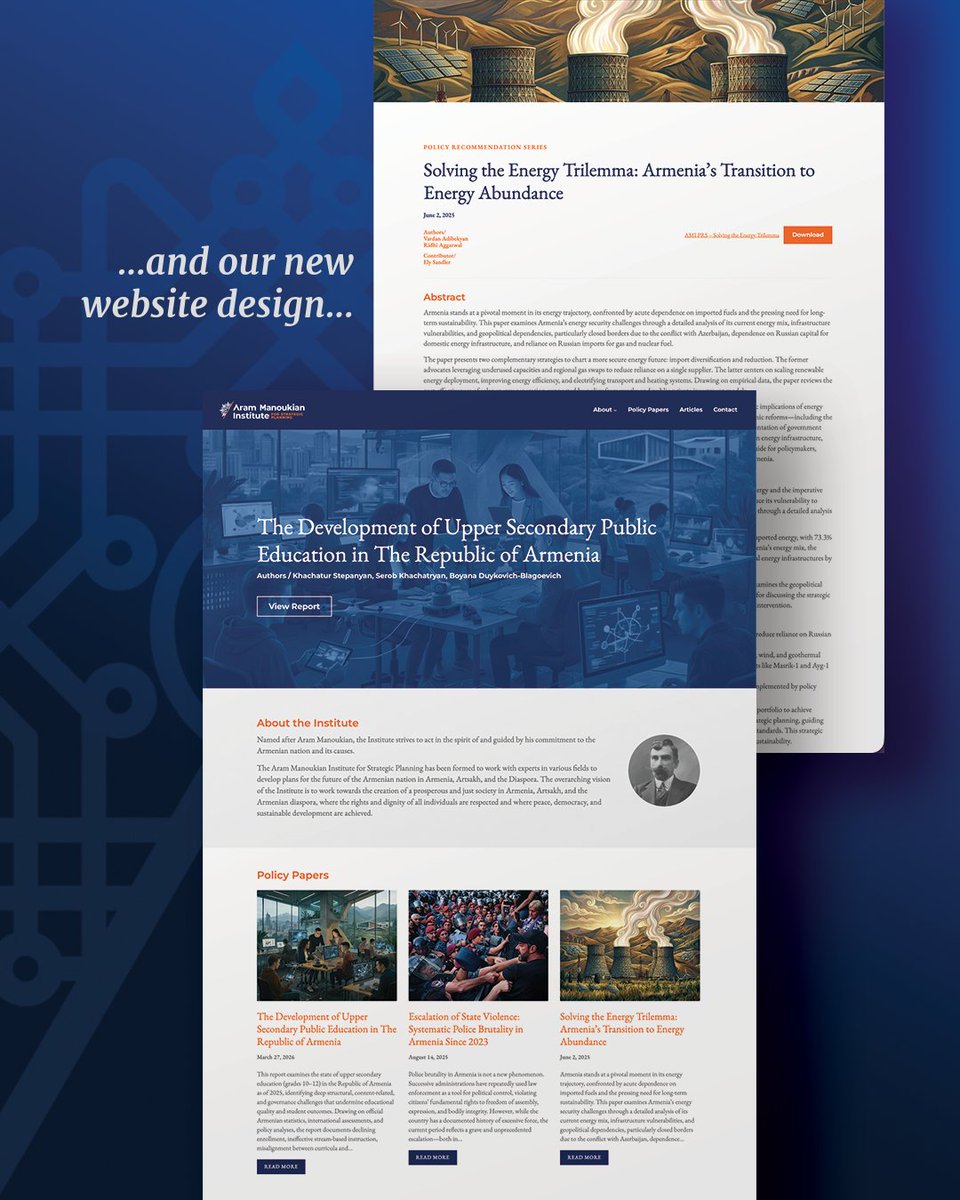
Explore the new redesigned website of the Aram Manoukian Institute for Strategic Planning, designed and built to better deliver the strategic thinking behind our work.
Visit the new site and see what’s next. https://t.co/tC3alyfdqi
With a renewed identity, we are evolving to meet the challenges of a rapidly changing world, bringing forward-thinking analysis and a stronger voice to the issues that matter most.
Stay with us to see what comes next and how we will shape the conversation.
“Escalation of State Violence: Systematic Police Brutality in Armenia Since 2023”, details a sustained pattern of excessive force, mass arbitrary detentions and intimidation directed at peaceful demonstrators, journalists, clergy and opposition figures.
https://t.co/Bp6sCbQR6H
With over 73% of its energy imported, Armenia remains vulnerable to external shocks and political leverage. This white paper offers a compelling vision to transition away from these dependencies toward a self-sustaining and diversified energy model.
The latest policy paper, “Solving the Energy Trilemma: Armenia’s Transition to Energy Abundance” provides a roadmap for transforming Armenia’s energy landscape amid mounting geopolitical and environmental challenges.
Read the policy paper by visiting: https://t.co/oHOw3Zq1Cp
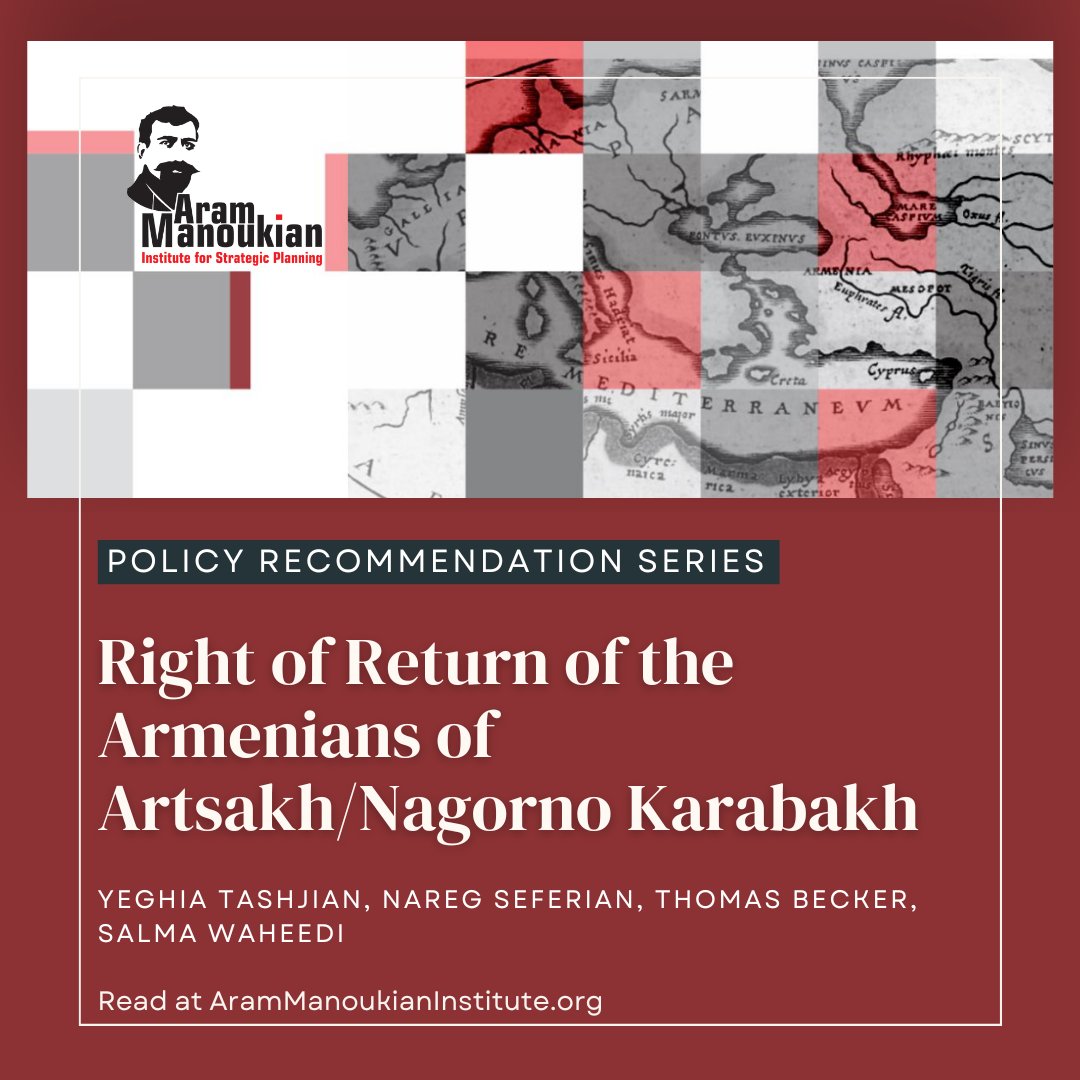
@yeghig@mrtommybecker The paper examines the ethnic cleansing of Armenians from Artsakh by Azerbaijan & offers recommendations for the U.S. govt to support the right of return, including advocating for the preservation of Armenian cultural sites & holding Azeri officials accountable for war crimes.
The Aram Manoukian Institute publishes its policy paper “Right of Return of the Armenians of Artsakh (Nagorno-Karabakh),” authored by Yeghia Tashjian @yeghig, Nareg Seferian, Thomas Becker @mrtommybecker, & Salma Waheedi.
Read the policy paper by visiting https://t.co/4dih0dnBYN
Does energy shape American strategy? @yeghig, @benyamin_poghos, & @mrubin1971 analyze America’s dependence on Azeri oil in the policy paper "U.S. Strategic Interest in the South Caucasus and its Post-2020 War Policy Towards America".
Read more by visiting https://t.co/JBGx9lxOM5
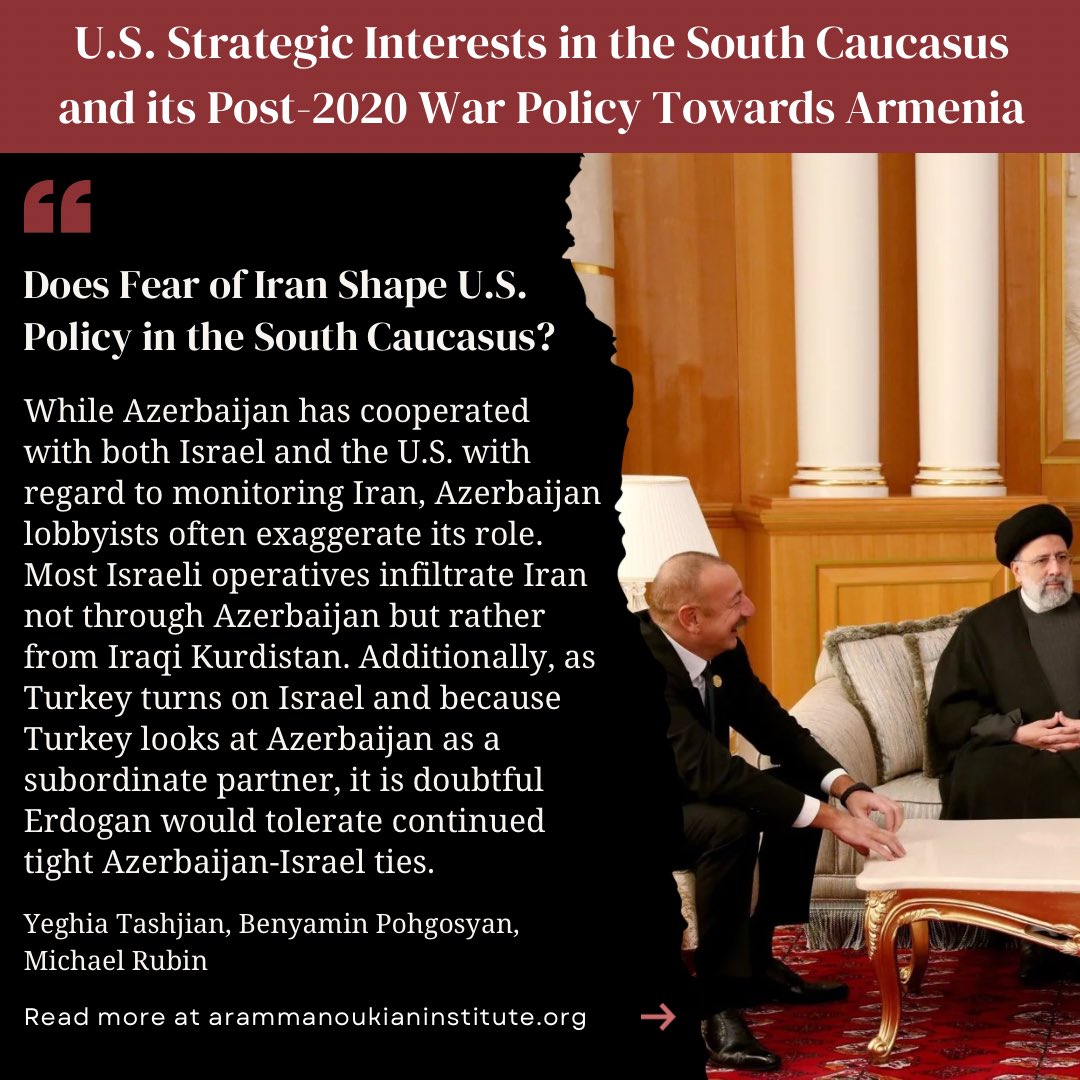
Given the weakened ties between #Turkey and #Israel, coupled with Turkey's influence over Azerbaijan's alliances, they question the sustainability of the strong ties between Azerbaijan and Israel.
Read more from the policy paper by visiting https://t.co/JBGx9lxOM5
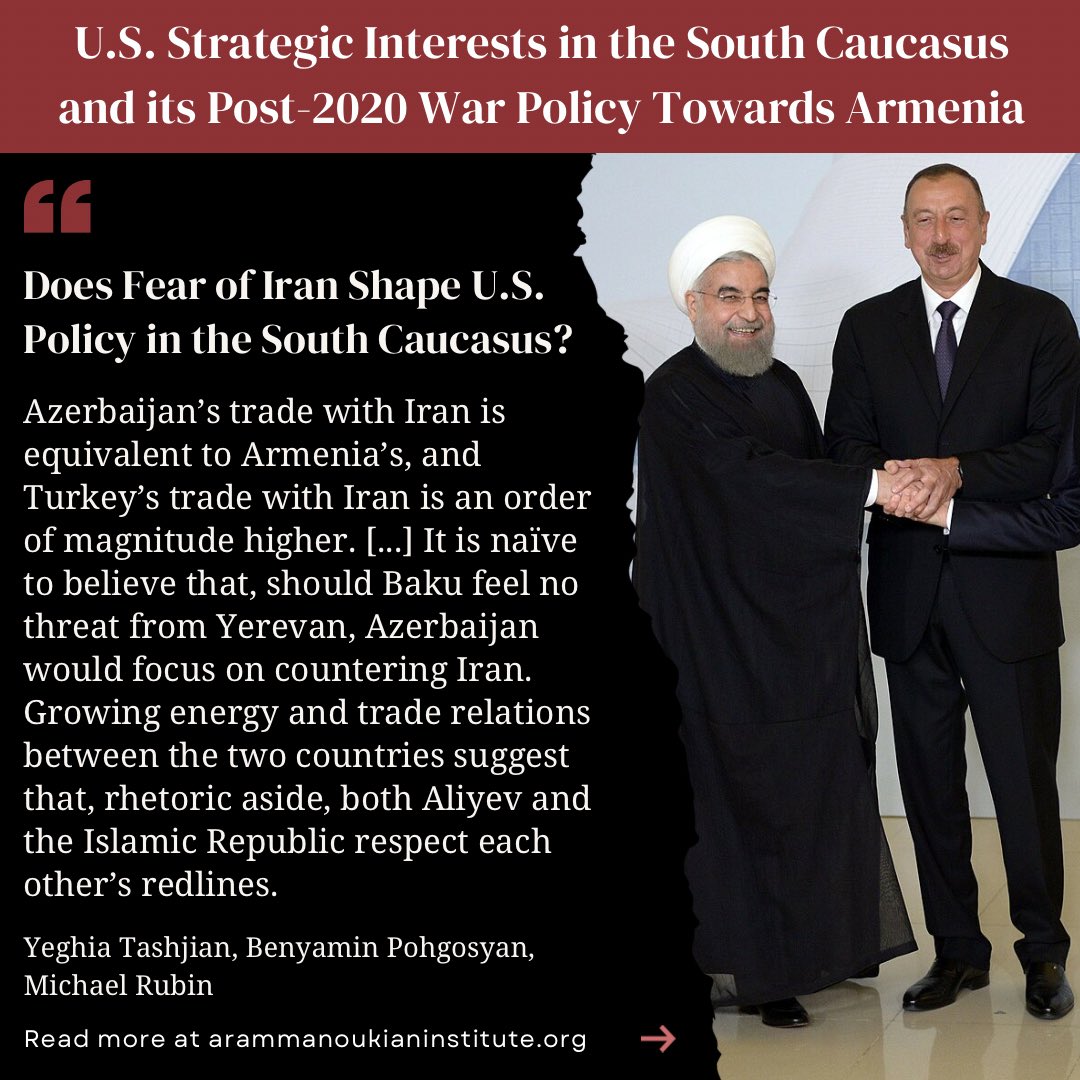
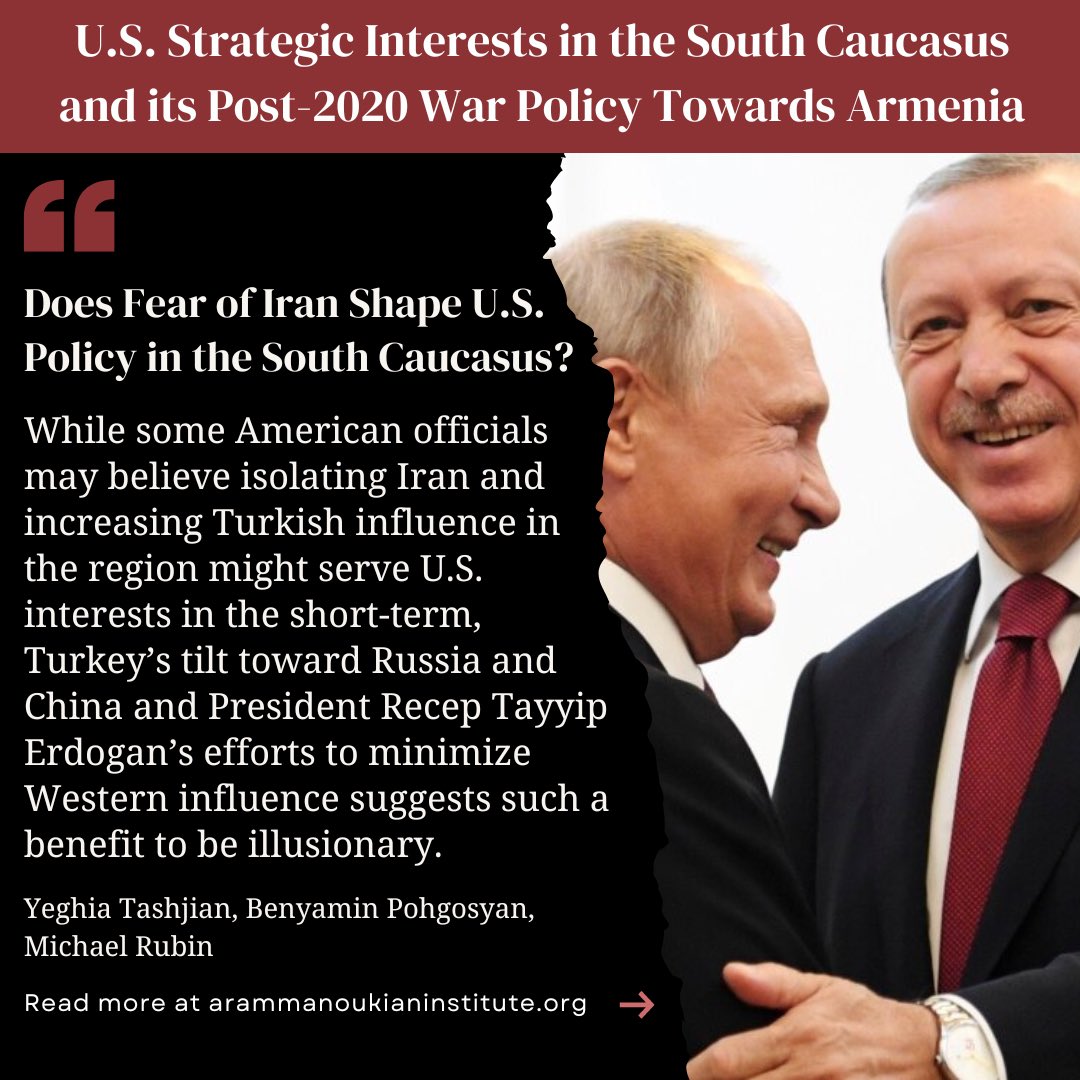
.@yeghig, @benyamin_poghos, and @mrubin1971 examine the expanding relations between Azerbaijan, Turkey, and Iran, despite America's efforts to isolate Iran.
Read more from the policy paper by visiting https://t.co/JBGx9lxOM5
In the recently released policy paper, @yeghig, @benyamin_poghos, and @mrubin1971 emphasize that the United States has historically relied on Turkey to counterbalance Iranian influence in the region, however, Erdogan persists in adopting a progressively anti-American stance.
Demand the U.S. hold Aliyev accountable by taking action at https://t.co/aatOaTADjk
Stop U.S. aid to Azerbaijan by taking action at https://t.co/ET3vClp66N
Azerbaijan violated international law & remains unaccountable for the Artsakh Genocide, which forcibly displaced 120,000 Armenians from their ancestral homeland. @yeghig, @benyamin_poghos, @mrubin1971 emphasize the US' failure to act in response to Aliyev's genocidal campaign.
In our newly released policy paper, @yeghig, @benyamin_poghos, and @mrubin1971 underscore the United States' aim to diminish the influence of Russia, China, and Iran in Armenia.
Read the full policy paper by visiting https://t.co/5qSjfDD8R6
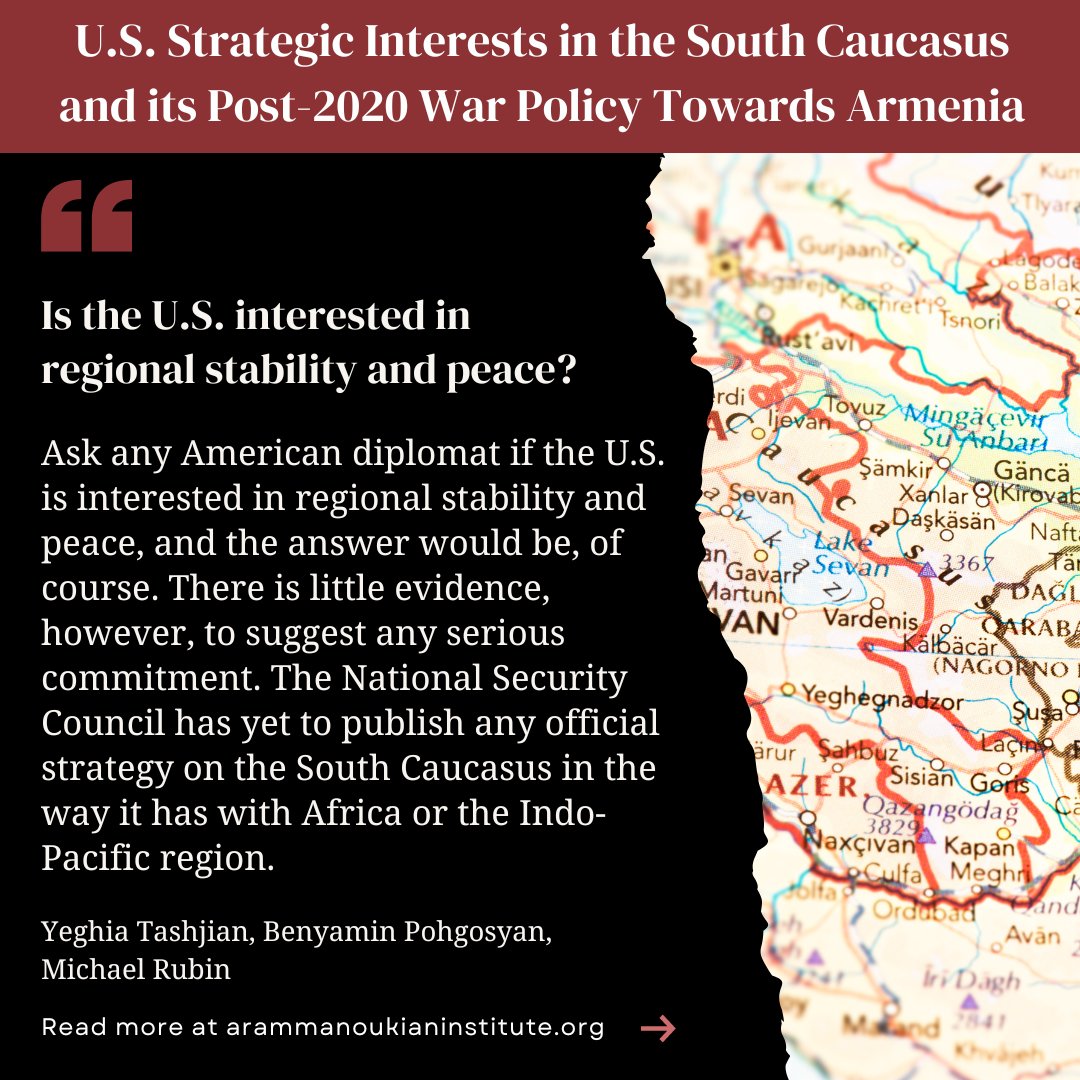
Highlights from our inaugural policy paper “US Strategic Interests in the South Caucasus and its Post-2020 War Policy towards Armenia.” In this analysis, @yeghig, @benyamin_poghos, and @mrubin1971 explore the extent of U.S. commitment to stability and peace in the Caucus region.
The Aram Manoukian Institute for Strategic Planning releases its inaugural policy paper “US Strategic Interests in the South Caucasus and its Post-2020 War Policy towards Armenia,” written by Yeghia Tashjian, M.A., Benyamin Poghosyan, Ph.D., Michael Rubin, Ph.D.