At RMEC, PA automation cut the team from five specialists to one. Not a headcount story: the one left handles exceptions and judgment calls, not status checks and hold music.
Northstar saw a 93% drop in payer phone calls doing the same.
https://t.co/QbbWDmw5BD
A six-week-old coverage check is like bread from the same week: fine when bought, stale by service day.
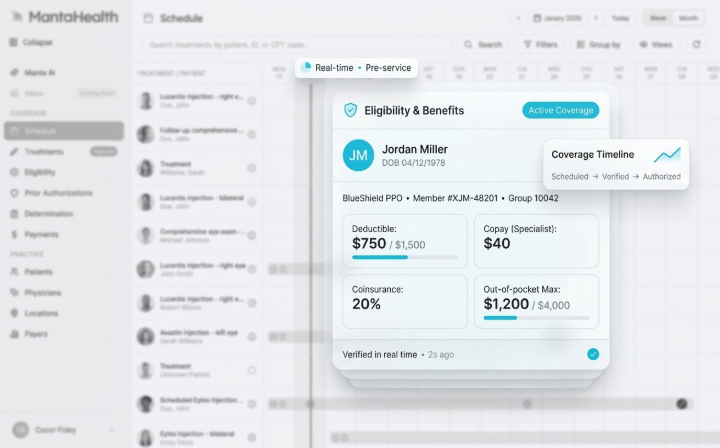
Plans lapse. Deductibles reset. Manta re-verifies eligibility automatically through the workflow, not just at scheduling.
https://t.co/xjDZXh9nfP
Security by design: easy to say, hard to do.
Manta enforces tenant isolation at four independent layers: database, storage, messaging, application. Each holds the boundary alone. No single layer has to be perfect.
https://t.co/uTG8NuOLZ9
Collection calls usually happen after the patient forgot the quote and moved on.
Manta collects payment before the visit from a verified estimate, while the patient's engaged.
Up to 25% fewer cancellations. Near-zero collections risk.
https://t.co/Vja8wWKVQf
$23,000: average annual cost of PA administration per physician. It never shows as a line item, just write-offs and untracked staff hours.
We built an 8-question assessment that maps where your exposure starts, by pillar.
https://t.co/euGibFsaxs
Denials often sit while staff move to the next case.
Appealing means starting over, so most practices skip it.
Manta's appeals team reuses documentation from the original PA.
Nothing gets rebuilt.
RMEC: net denial rate 3% to 0.5%. https://t.co/H10RnkP4UQ
The operations team selected Manta. Now it lands on your desk.
HIPAA-aligned. SOC 2 Type II audit underway. Four-layer tenant isolation. TLS 1.3. MFA enforced platform-wide. BAA available on request.
https://t.co/wWyeX3C09E
Cataract authorization gets pulled two days before surgery. OR sits empty, or you proceed and risk a denial.
The payer changed a rule weeks earlier. Nobody was tracking it against the schedule.
Manta flags it before the OR is at risk.
https://t.co/MCQNZM7zFv
What does Manta implementation actually look like?
Manta leads the setup. Your team confirms the details and approves the configuration. After go-live, Customer Success and Operations stay with you.
No lengthy IT engagement. No abandoned onboarding docs.
https://t.co/5Vnyo0fxzo
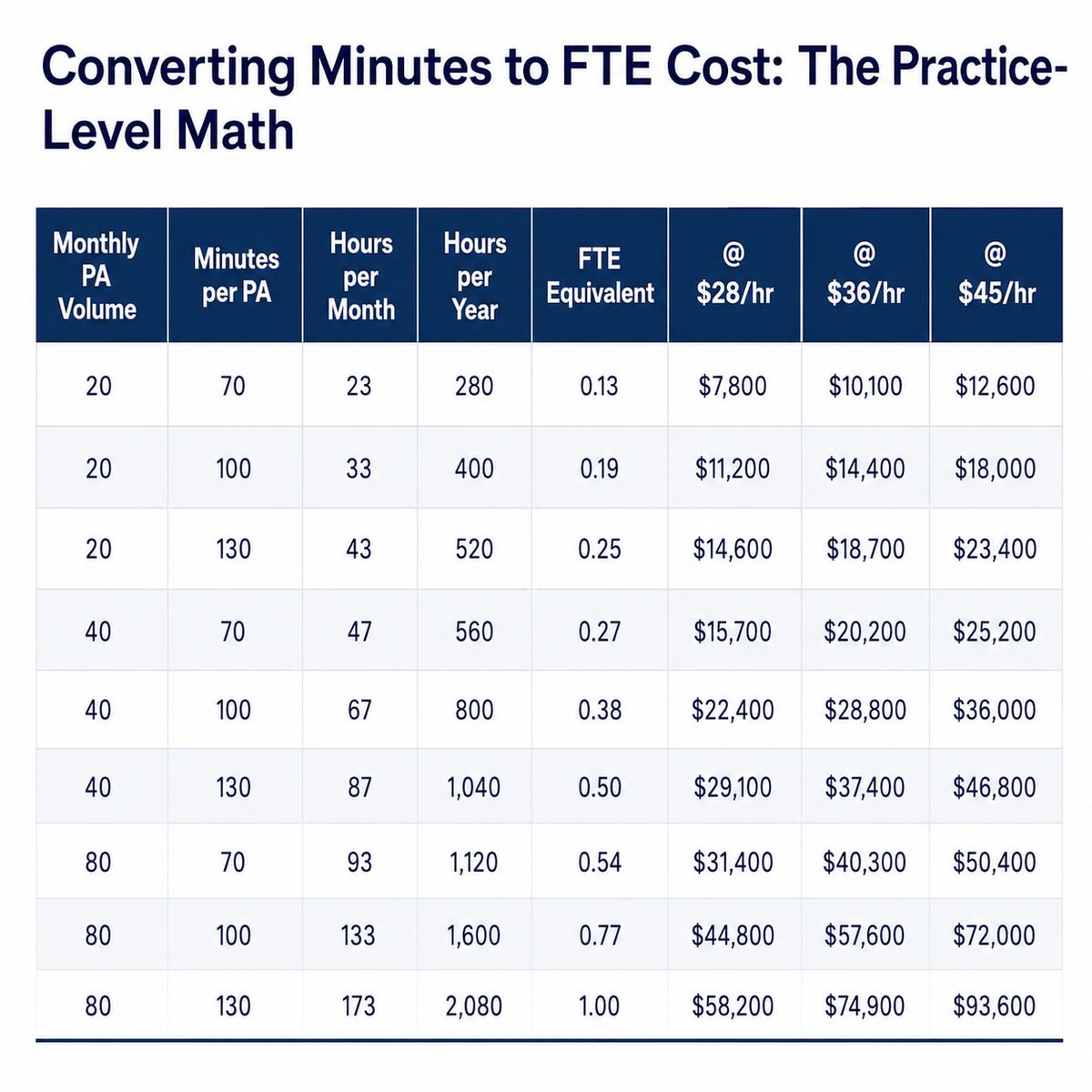
A JAMA Ophthalmology study tracked 2,225 anti-VEGF PA requests across nine US retina practices. Median staff time per request: 100 minutes.
Allan did the math. https://t.co/A328Zd7SrJ
Evaluating revenue cycle tools for a specialty practice? Elion Health is worth bookmarking.
Clean directory. Vetted solutions. Manta Health is now listed if you want to see how we fit in the landscape.
https://t.co/2jRQthpFGV
If you run a specialty practice and want to know where your upstream revenue exposure sits, we built something for that.
Eight questions. Five pillars. Three minutes.
https://t.co/euGibFrCHU
Prior authorization determination in under 10 seconds. Documentation assembled and validated automatically. Submission routed to portal, fax, or phone without your staff logging in anywhere.
https://t.co/QbbWDmw5BD
Becker's asked five revenue cycle leaders for their favorite KPI. Cash collections, AR days, net collection ratio.
The story not yet told is where the score was set.
Conor's latest covers the execution needed to get it right.
https://t.co/LdhGlsp4gg
Every eligibility check returns a 271 response. Raw 271 data requires interpretation to be actionable.
Manta's AI interprets it against the specific CPT code and planned treatment.
https://t.co/xjDZXh8Pqh
Mondays. Few words conjure up more dread in a billing office.
Patients seen, treated, and sent home without paying. Statements to send. Balances aging.
Manta emails and SMS' payment instructions to patient. All before your first latte.
https://t.co/Vja8wWKo0H
A clean 271 eligibility response confirms a patient has active coverage.
But this is just the beginning.
For specialty practices, that gap is where pre-service revenue risk lives.
Allan's latest: https://t.co/ydsaRu2bJb
We are pleased to share what Manta does across our new product pages.
Four pillars, one connected workflow.
This is what Coverage Intelligence looks like in practice.
https://t.co/uSnK77V0dI
Most practices treat no-shows as a scheduling problem.
Better reminders. Shorter confirmation windows. Waitlists.
The root cause is usually simpler: the patient had no financial stake in the appointment.
Conor wrote the longer version today.
https://t.co/X0FkFwX9p7
Prior authorization secures the payer's commitment.
Patient financial clearance secures the patient's.
Most practices complete one before care. Fewer complete both. That gap is where the revenue goes. https://t.co/09KAZIFEaN